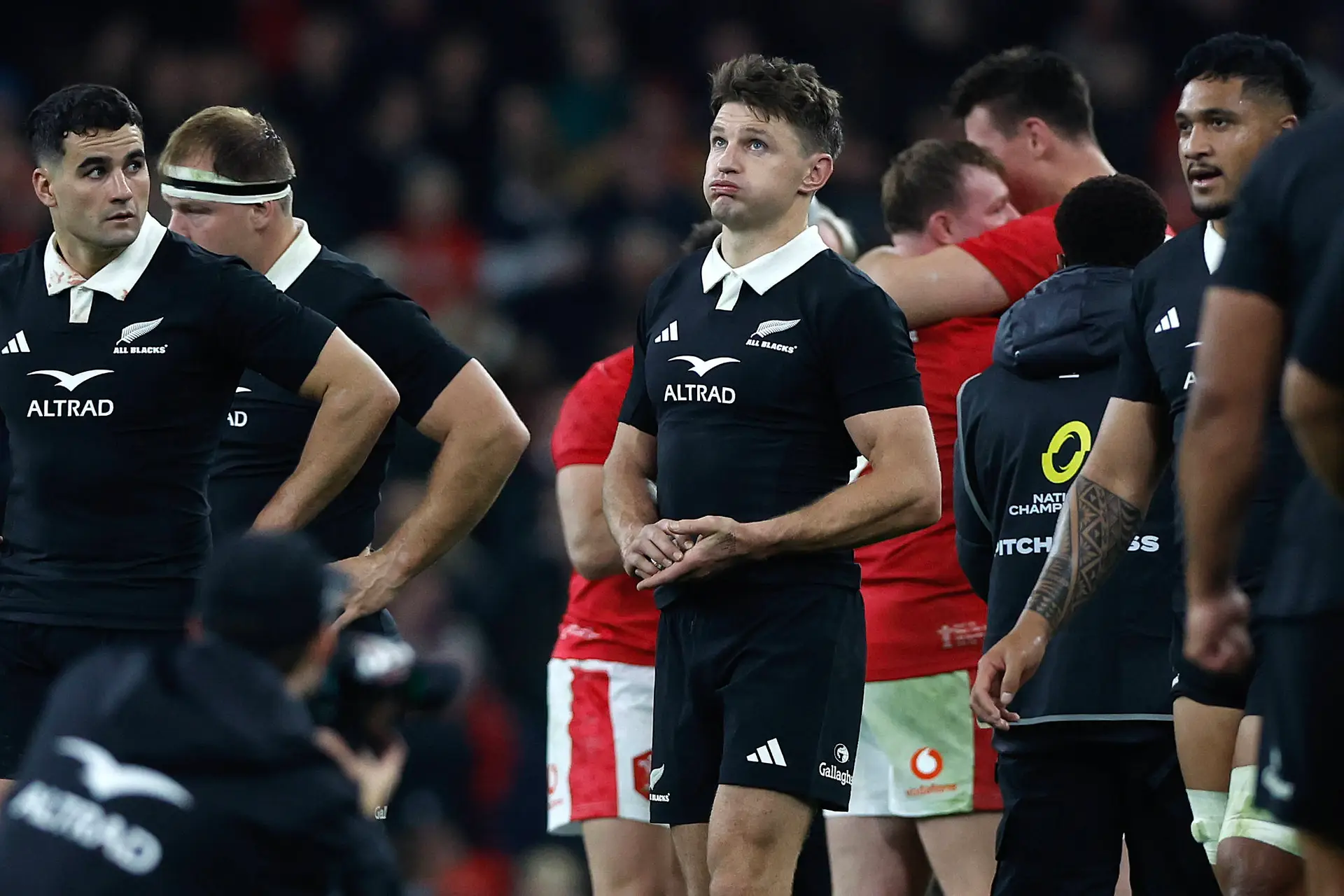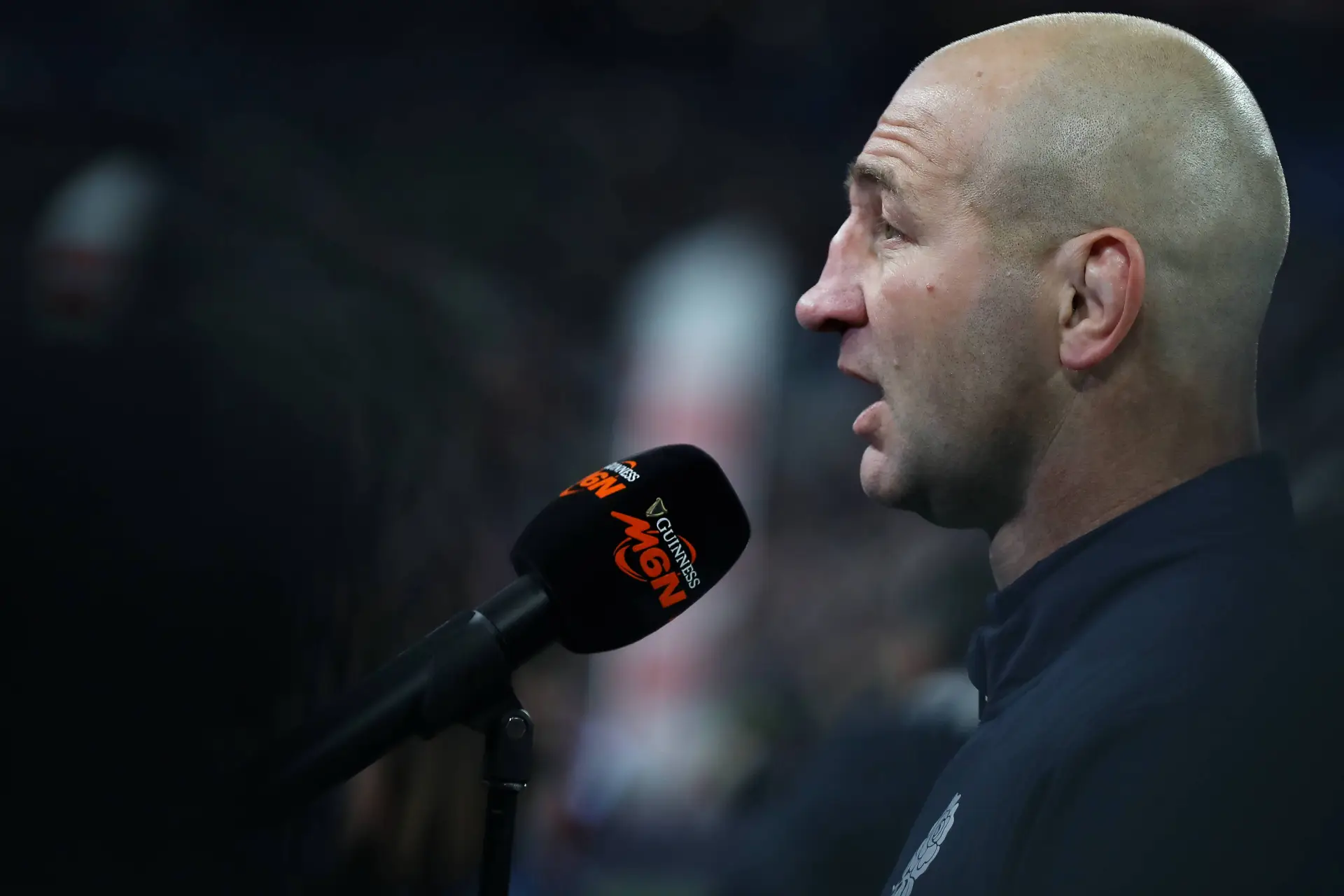

Will Joseph is the name on every England rugby fan's lips after his incredible five-try performance against Japan. But behind his remarkable rise is a hidden disability that many supporters may know little about.
The 24-year-old Gloucester star equalled England's single-match try-scoring record during Saturday's stunning 78-15 victory over Japan.
He scored a hat-trick inside 20 minutes before adding two more tries to complete an extraordinary return to international rugby.
But Joseph's journey back to the England side has been anything but straightforward.
In 2024, he permanently lost hearing in his left ear following an autoimmune response.
The condition forced him to adapt how he plays rugby, particularly when communicating with teammates and spotting defenders approaching from his blind side.
And he isn't the only England international to reach the top while managing a condition that supporters cannot immediately see.
Henry Slade has spent his career managing type 1 diabetes, while Ellis Genge has spoken openly about living with dyspraxia.
Here, RUCK looks at three England stars whose stories extend far beyond what supporters see on the pitch.
1. Will Joseph – Permanent hearing loss
Joseph's five-try masterclass against Japan was one of the most remarkable individual performances in recent England history.
But it came after four difficult years that included serious injuries, the collapse of London Irish and a frustrating spell at Harlequins.
Then came an even bigger setback.
During a pre-season training session, Joseph suddenly lost hearing in his left ear.
Speaking to The Telegraph, his older brother and former England centre Jonathan Joseph explained what happened

"The whistle went and he felt something go in his ear," Jonathan recalled.
Doctors identified an autoimmune response that had damaged his hearing, leaving him permanently deaf in one ear.
The impact on his rugby was immediate.
Joseph initially struggled to hear defenders approaching from his blind side. He has since adapted by scanning the pitch more frequently, turning his head and asking teammates to communicate more loudly.
The setbacks did not stop there.
His father was diagnosed with Parkinson's disease, while his twin brother Alex was placed in an induced coma following serious seizures.
Jonathan explained that the public rarely sees what players experience away from rugby.
"It is a lot for anyone between the ages of 21 and 24 to deal with," he said.
Yet Joseph has fought his way back.
Speaking to ITV after his five-try performance against Japan, the Gloucester star struggled to contain his excitement.
"Today was firstly, a very special day and I loved every minute of that."
He also made sure his teammates received credit for his record-equalling achievement.
"Pretty special day, but I am grateful for the team."
Now Joseph is in contention to retain his place for England's blockbuster clash with New Zealand.
2. Henry Slade – Type 1 diabetes
England centre Henry Slade has spent his entire professional career managing type 1 diabetes.
Diagnosed at 18, the Exeter Chiefs star discovered he had the condition after testing his blood glucose levels using a friend's testing kit.
Speaking to The Guardian in November 2026, Slade recalled the moment he realised something was wrong.
"I just woke up and felt really bad one day."

Henry Slade of England during the Six Nations match between England and Wales at Twickenham, Richmond, United Kingdom on 10 February 2024.
Further tests confirmed his diagnosis.
Fortunately, his father John had also lived with diabetes for years, giving Slade someone who understood the challenges ahead.
The condition requires constant monitoring of blood glucose levels, careful management of food and regular insulin treatment.
For an international rugby player, that presents challenges most supporters never see.
Slade admitted that he occasionally needs to eat Jelly Babies before matches to prevent his blood sugar dropping too low.
But he believes the experience has also made him more resilient.
He has also spoken openly about living with obsessive-compulsive disorder (OCD), which affects some of his everyday routines.
Despite those challenges, Slade has become one of England's most accomplished centres, winning domestic and European honours with Exeter.
3. Ellis Genge – Dyspraxia
England prop Ellis Genge has built a reputation as one of the toughest forwards in world rugby.
But the Bristol Bears star has achieved that while living with dyspraxia, a neurological condition that can affect coordination, movement and fine motor skills.
Diagnosed at 14, Genge struggled with everyday tasks growing up and was frequently labelled lazy or clumsy.
Speaking to Sky Sports in March 2025, he explained how the condition affected his childhood.

"I didn't know I had it until I was 14."
Genge admitted that his coordination was particularly poor when he first started playing rugby.
He has since learned how to manage the condition, although he stressed that dyspraxia affects people in different ways.
The powerful prop has gone on to captain England, win major domestic honours and represent the British and Irish Lions.
Now he hopes speaking openly about his diagnosis will encourage other young people.
"The messages I get now, it's not necessarily 'can you help me?' It's more 'you have helped me'," he explained.
For Genge, knowing that his story has helped others is one of the most rewarding parts of his career.
"If kids are thinking, 'well if Ellis Genge did it, then I can do it too', yeah, that fills me with joy!"
Read also


🏉 Think you can pick the ultimate rugby XV?
Legends, current stars and some seriously tough choices. Draft your dream team and see if you can top the leaderboard.