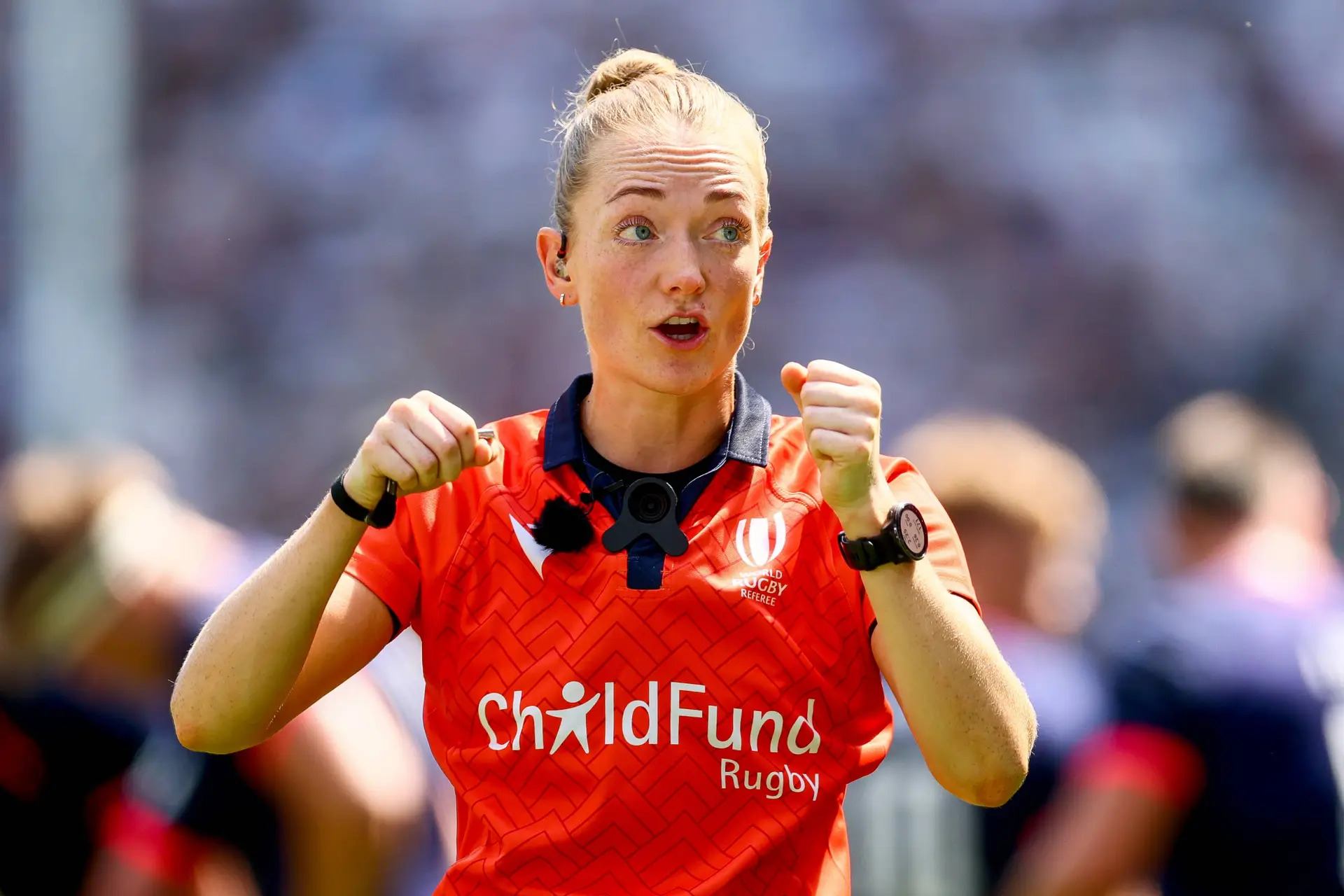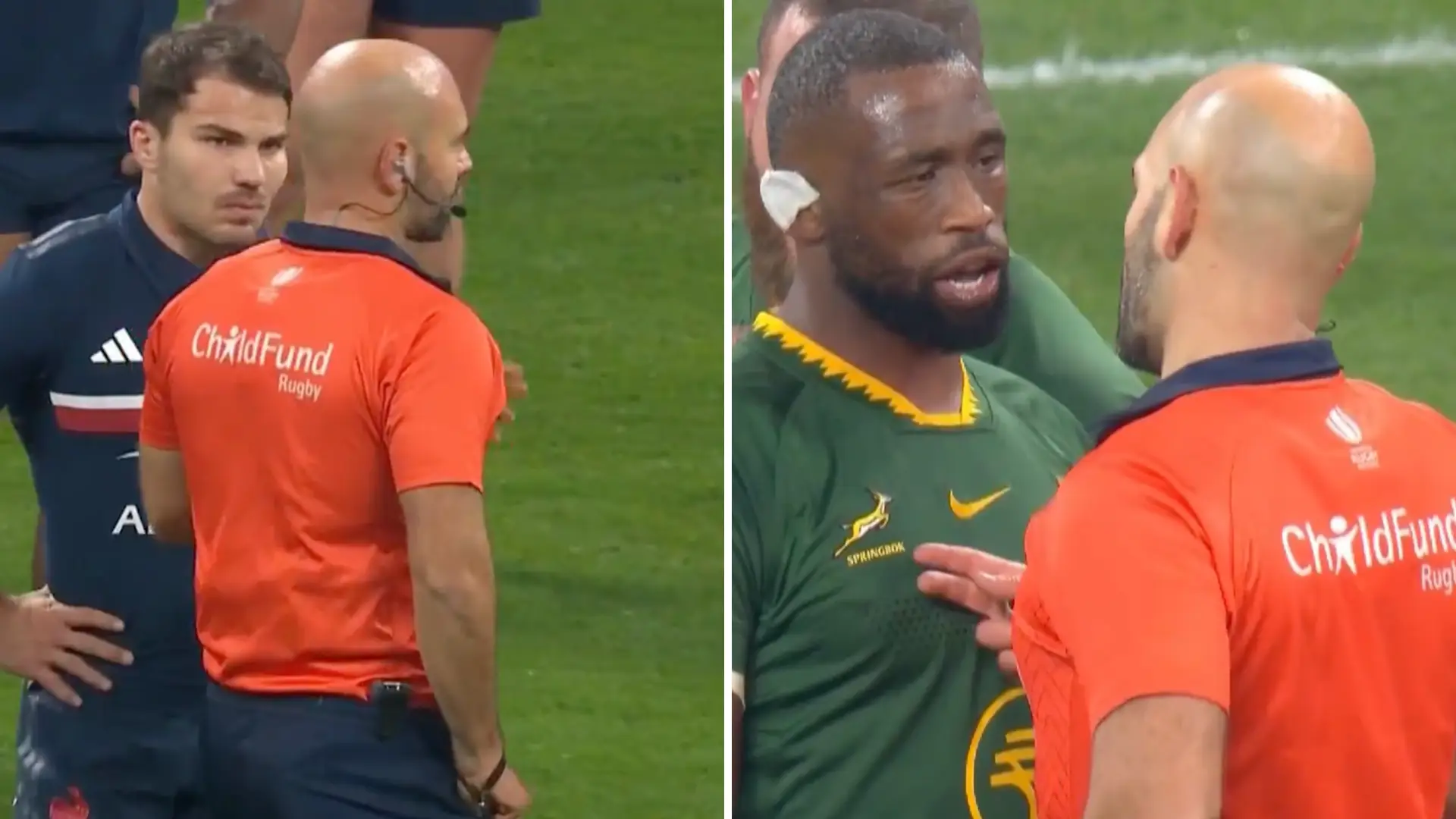

Andrea Piardi has been graded by RUCK following South Africa's dramatic 21-19 defeat to France, with furious Springboks supporters questioning several controversial decisions.
The Italian referee found himself at the centre of another chaotic Test in Paris.
Five cards, a bizarre try and repeated scrum penalties kept Piardi busy throughout the evening.
Rassie Erasmus's side fought back from 21-7 down at half-time, only to fall agonisingly short.
But while some decisions angered supporters, others were absolutely correct.
Here is our verdict on Piardi's performance.
Six controversial decisions from France v Springboks – Piardi graded
1. France's bizarre try off the head – A
Let's start with the decision that left Springboks supporters scratching their heads.
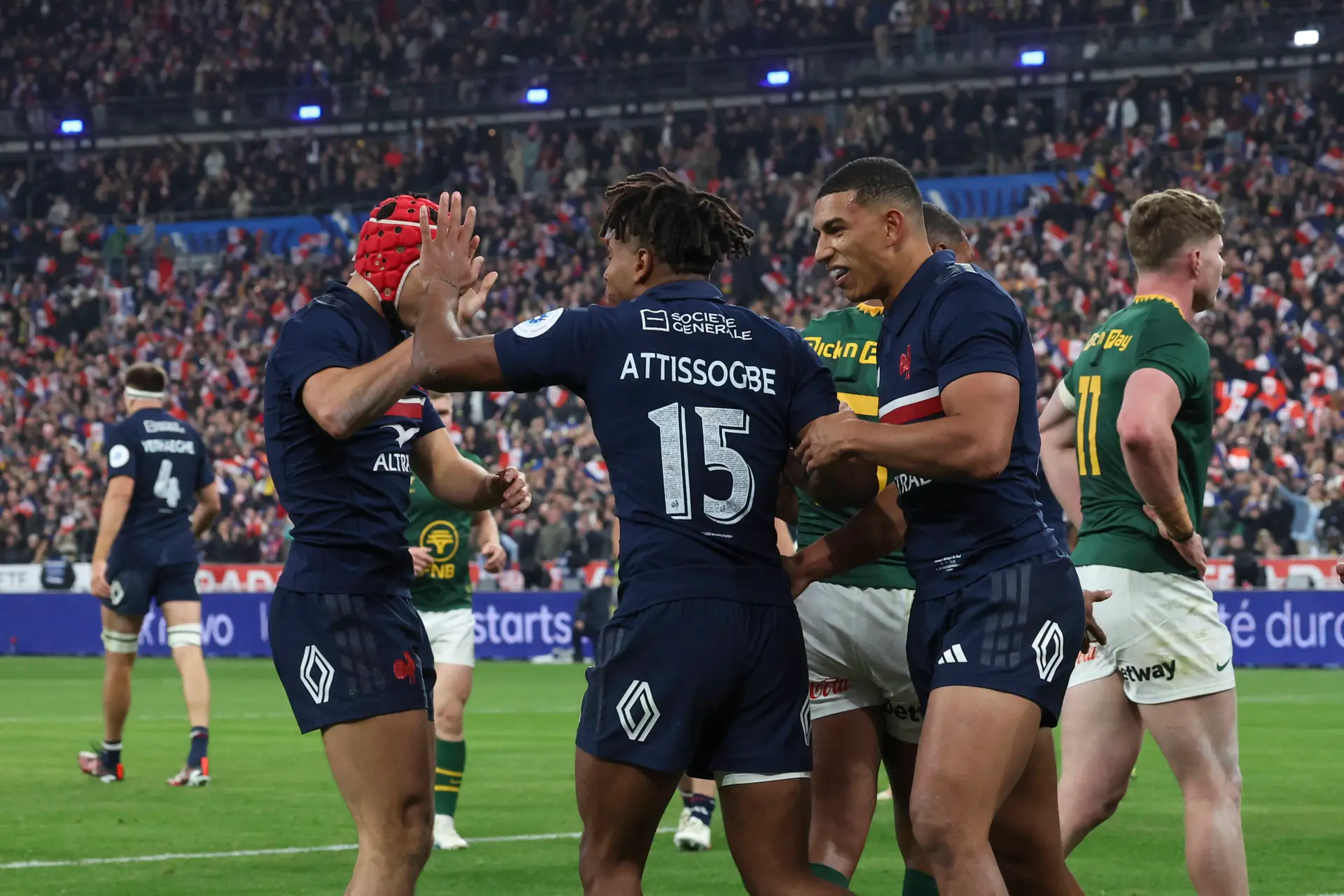
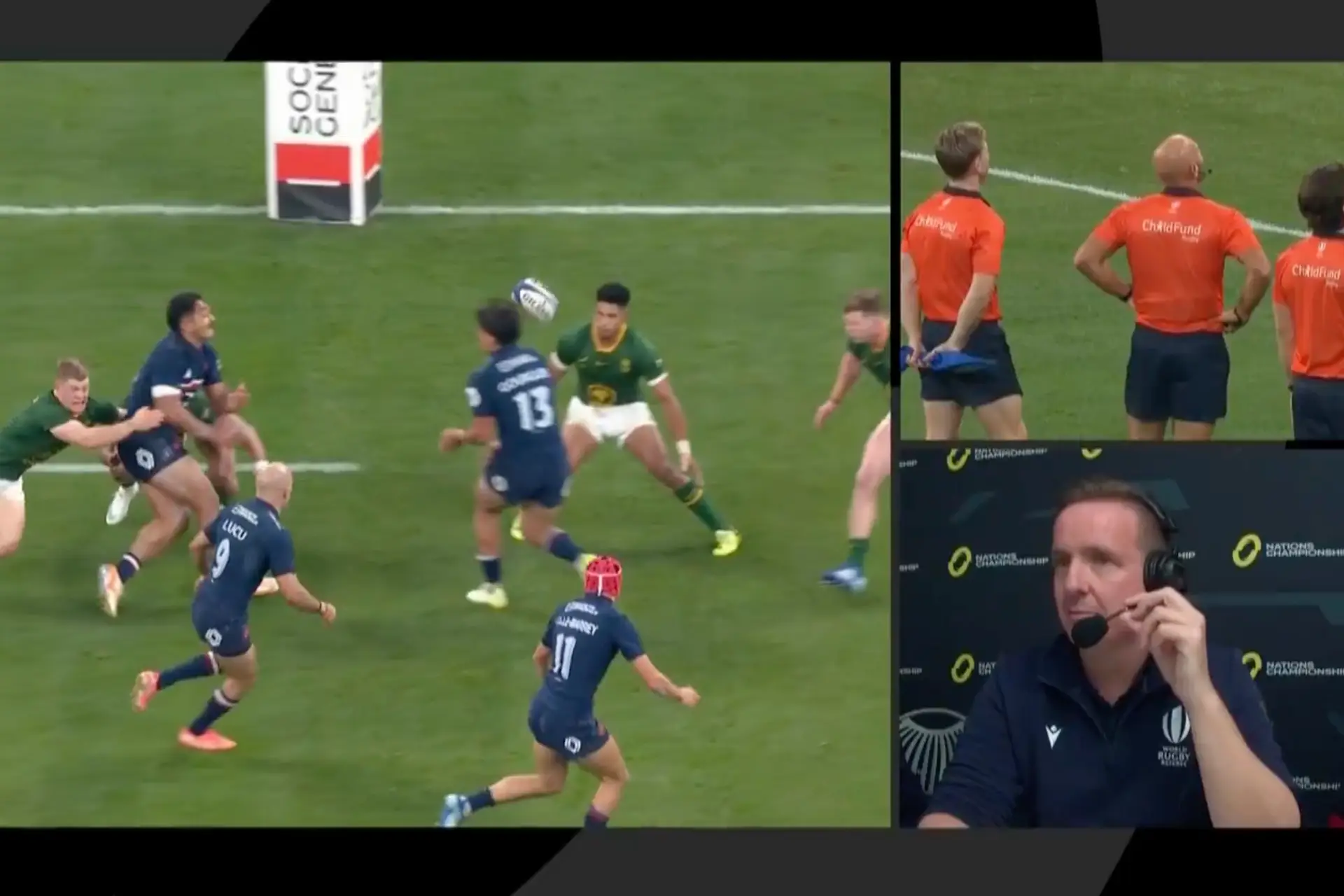
France's second try came in extraordinary circumstances.
A pass struck Kalvin Gourgues in the face before bouncing forward into the path of Théo Attissogbe.
The French winger collected the loose ball and scored.
Piardi awarded the try.
And he was absolutely right.
Under World Rugby's laws, accidental contact with the head does not constitute a knock-on.
RUCK verdict: A – Correct decision. No complaints about the refereeing.
However, that doesn't mean everyone has to agree with the law.
Should an accidental forward deflection off a teammate's face really be allowed to create a try?
That's a debate worth having.
But Piardi cannot be criticised for applying the law correctly.
2. Maxime Lucu yellow card – D
This was a far more questionable decision.
France scrum-half Maxime Lucu received a yellow card shortly before half-time following a high tackle on Sacha Feinberg-Mngomezulu.
But did the Springboks fly-half contribute to the collision?
Feinberg-Mngomezulu appeared to lower his body height as Lucu approached.
That movement potentially changed the point of contact and made the challenge look worse.
Piardi still decided the tackle warranted a yellow.
The key question is whether the change in height provided sufficient mitigation.
RUCK verdict: D – A harsh-looking decision that deserved greater consideration of the ball-carrier's movement.
There is no clear evidence Feinberg-Mngomezulu deliberately exaggerated the contact.
However, the incident highlights how difficult these decisions have become for referees.
3. Potential Springboks penalty try – D
This could have been the biggest decision of the night.
Early in the second half, Aaron Grandidier-Nkanang deliberately knocked down a South African pass inside the French 22.
Piardi immediately showed the winger a yellow card.
So far, so good.
But the Springboks appeared to have a two-man overlap, with an excellent opportunity to score.
Why wasn't a penalty try awarded?
Under World Rugby's laws, a penalty try can be awarded when foul play prevents a probable try.
Daily Maverick also questioned the decision.
The crucial distinction is that a likely scoring opportunity is not automatically a probable try.
However, the available space and defensive cover deserved close examination.
RUCK verdict: D – Correct yellow card, but serious questions about the absence of a penalty try.
In a match decided by two points, it was a potentially enormous moment.
4. Jasper Wiese red card – B
South Africa suffered another setback shortly after the restart.
Jasper Wiese was shown a yellow card following a dangerous clear-out on Gourgues.
The incident was referred for further review.
His punishment was subsequently upgraded to a 20-minute red card.
It was another significant moment in a bruising encounter.
However, dangerous contact with the head requires serious intervention.
RUCK verdict: B – Correct to refer the incident for further review.
The ultimate sanction was determined through the foul-play review process rather than Piardi alone.
5. Four scrum penalties and repeated warnings – D
This was arguably Piardi's weakest spell.
South Africa's replacement front row completely transformed the contest.
France simply couldn't cope.
Between the 61st and 65th minutes, the Springboks won four consecutive scrum penalties.
Piardi repeatedly warned the French pack.
But another yellow card failed to arrive during that sequence.
According to Daily Maverick's match analysis, the referee issued two final warnings without immediately producing a card.
Replacement prop Régis Montagne was eventually sent to the sin-bin later in the half.
RUCK verdict: D – Too many warnings and not enough decisive action.
Repeated infringements do not always demand an immediate yellow card.
However, once a referee issues a final warning, consistency becomes particularly important.
Piardi's management of that sequence left plenty to be desired.
Read also
6. Final three minutes spark fury – C
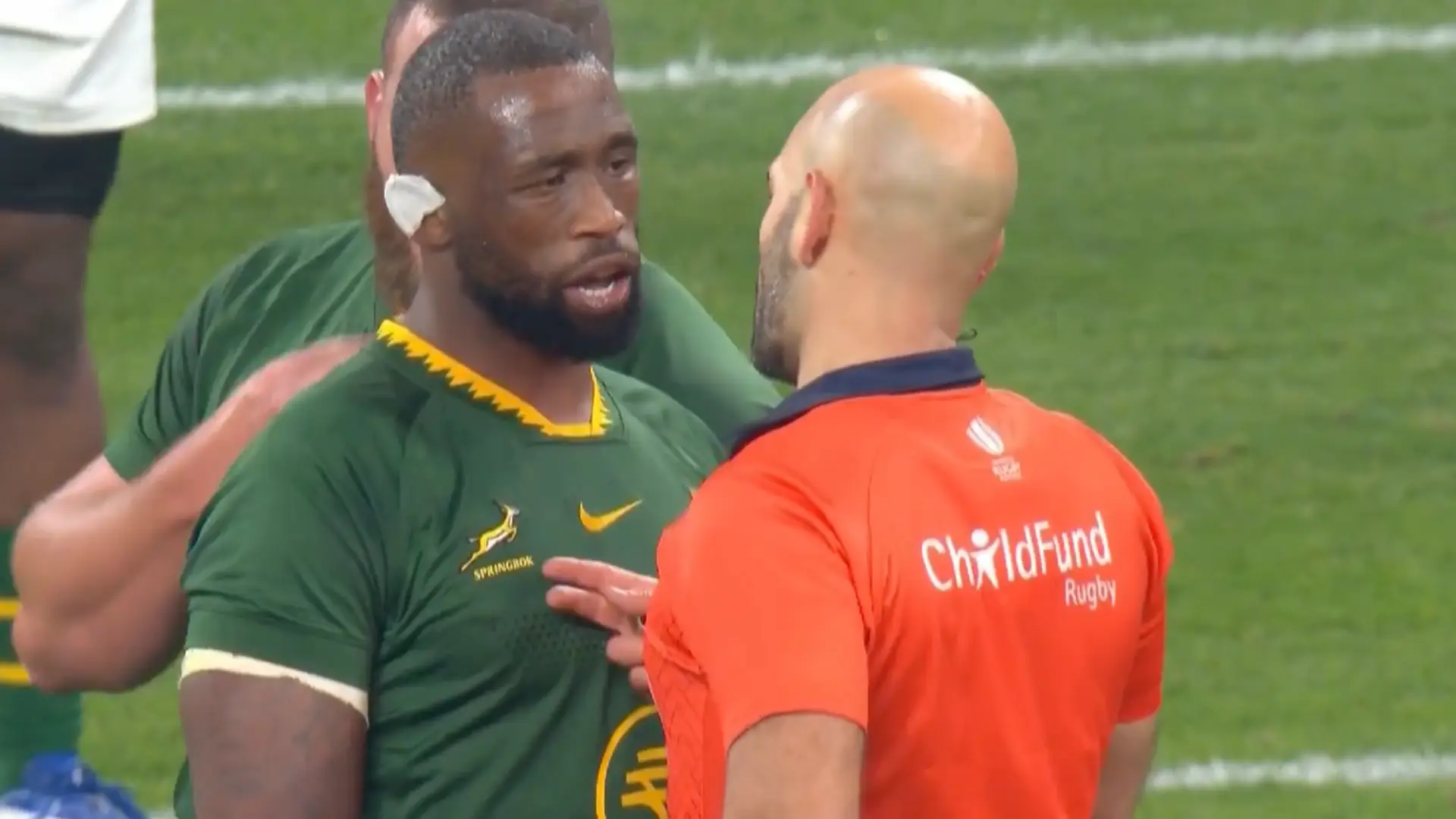
The final three minutes left Springboks supporters absolutely furious.
South Africa needed just one scoring opportunity to snatch victory.
With France defending a 21-19 lead, Piardi allowed play to continue.
Several supporters believed the hosts were escaping punishment at the breakdown.
One fan, @rahgby1, questioned why the referee had not penalised France at the ruck during the closing stages.
The frustration was understandable.
A single kickable penalty could have changed everything.
But there is an important distinction between a controversial decision and a proven mistake.
No specific missed infringement has yet been established from the available footage and match reporting.
RUCK verdict: C – Frustrating for South Africa, but insufficient evidence to condemn Piardi's final decisions.
France also deserve credit for their defensive effort.
Their final turnover ended South Africa's hopes of a remarkable comeback.
Springboks fans furious with Andrea Piardi
The reaction on social media was fierce.
One supporter, posting as Test Rugby's Truth, claimed:
"The Springboks were robbed by Andrea Piardi."
Another fan, @NkonyakazJunior, questioned why the Italian continued to receive major international appointments.
Neil Emslie was equally unhappy, suggesting the performance had left him questioning whether he wanted to continue watching rugby.
But not everyone agreed.
One supporter, @wadesgotit, argued that Piardi had been imperfect but France deserved the victory.
Another, Edward Jenkins, pointed towards Manie Libbok's missed conversion rather than the referee.
That kick could have levelled the scores at 21-21.
What Rassie Erasmus said
Erasmus refused to pin the defeat entirely on the referee.
The Springboks coach acknowledged that his side had been second best for large periods of the opening half.
Speaking after the match, he admitted:
"We weren't just outplayed, we were out-thought."
South Africa had conceded three first-half tries and given themselves a mountain to climb.
Despite dominating the second half, they couldn't find the winning score.
Final verdict: Andrea Piardi – D
Piardi got some major decisions absolutely right.
France's bizarre try was perfectly legal, while the dangerous clear-out involving Wiese warranted further review.
However, his management of repeated scrum penalties was far less convincing.
The decision not to award a penalty try also raised legitimate questions.
And although the anger surrounding the final three minutes was understandable, supporters' frustration alone does not establish a refereeing error.
RUCK referee grade: D – Correct on several big calls, but questionable scrum management and a potentially costly penalty-try decision.
France deserve enormous credit for surviving the Springboks' second-half onslaught.
South Africa also have themselves to blame for their first-half mistakes.
But Piardi's performance will remain one of the biggest talking points from an extraordinary night in Paris.
Have your say
Was Jasper Wiese South Africa's biggest disappointment, or did Manie Libbok's costly miss deserve even more criticism?
Check out our full Springboks player ratings and see how every player performed.
You can also read our France player ratings to discover which French stars made the difference in Paris.