Combined South Africa–England All-Time XV Sparks Controversy
Rugby NewsMonday, 13 October 2025 at 20:48

With South Africa boasting four Rugby World Cup titles in 1995, 2007, 2019 and 2023, and England holding their proud 2003 crown, both nations carry rich rugby legacies and have had plenty of top-quality players over the years.
Join the RUCK’s WhatsApp community here and get the latest news sent straight to your messages.
But what if we merged their talent into one team? Here’s a look at a combined XV built on power, passion, and pride.
15 Jason Robinson
Speed, style, and spark—few players have lit up both codes of rugby quite like Jason Robinson. Nicknamed ‘Billy Whizz’ for his dizzying pace and electric footwork, Robinson first made waves in rugby league with Wigan before switching to union in 2000.
It didn’t take long for him to leave a mark. Fast-tracked into the England set-up, he debuted in 2001 and became a key figure in England’s 2003 World Cup-winning squad—scoring in the final and finishing his international career with 30 tries in 56 caps. He later captained England and added a Premiership title with Sale Sharks to his accolades. The first player to win both a Rugby League Grand Final and a Premiership crown, Robinson edges out Percy Montgomery, whose steady brilliance just couldn’t match Robinson’s all-around impact.
14 Rory Underwood
For sheer try-scoring prowess, few wingers can touch Rory Underwood. England’s all-time leading try-scorer with 49 tries in 85 caps, Underwood’s blistering pace and sharp instincts made him a constant threat. But his story goes beyond the stats—he was also a Royal Air Force pilot, balancing service to his country with top-flight rugby in the amateur era. A vital cog in three Grand Slam-winning England teams and a standout for Leicester Tigers with 134 club tries, Underwood brought professionalism and intelligence to the wing.
He made history alongside his brother Tony as the first male siblings to play together for England since 1937. Cheslin Kolbe dazzled in spurts, but Underwood’s consistency over a decade earns him the nod.
13 Jeremy Guscott
They called him “The Prince of Centres,” and for good reason. Jeremy Guscott brought an elegance to outside centre that redefined the position. With 30 tries in 65 Tests, his pace, vision, and silky footwork lit up the international stage during England’s successful runs in the early 1990s. Guscott played a vital role in three Grand Slam victories and produced one of the sport’s most iconic moments—a drop goal in the 1997 Lions tour that clinched the series against South Africa.
His grace under pressure, combined with his ability to unlock defences with ease, made him more than just a threat—he was a game-changer. While Jacques Fourie pushed him close, Guscott’s flair and big-match temperament seal his place.
12 Will Greenwood
As one of the brains behind England’s 2003 World Cup triumph, Will Greenwood brought more than muscle to the midfield—he brought mastery. With 31 tries in 55 Tests, Greenwood was a creative force, tactically astute and capable of unlocking any defence. He had the unique ability to read the game several phases ahead, making him indispensable to England’s golden era.
Whether partnering Jeremy Guscott, Mike Catt, or Mike Tindall, Greenwood added control and class. Rangy and deceptively quick, he could switch between direct running and intricate passing with ease. Jean de Villiers was seriously considered, but Greenwood’s influence in shaping England’s most successful period gives him the edge.
11 Bryan Habana
When it comes to speed, Bryan Habana was in a league of his own. The Springbok flyer terrified defences for over a decade, racking up 67 international tries—second only in Test history. His eight tries in the 2007 World Cup helped drive South Africa to the title, earning him IRB Player of the Year.
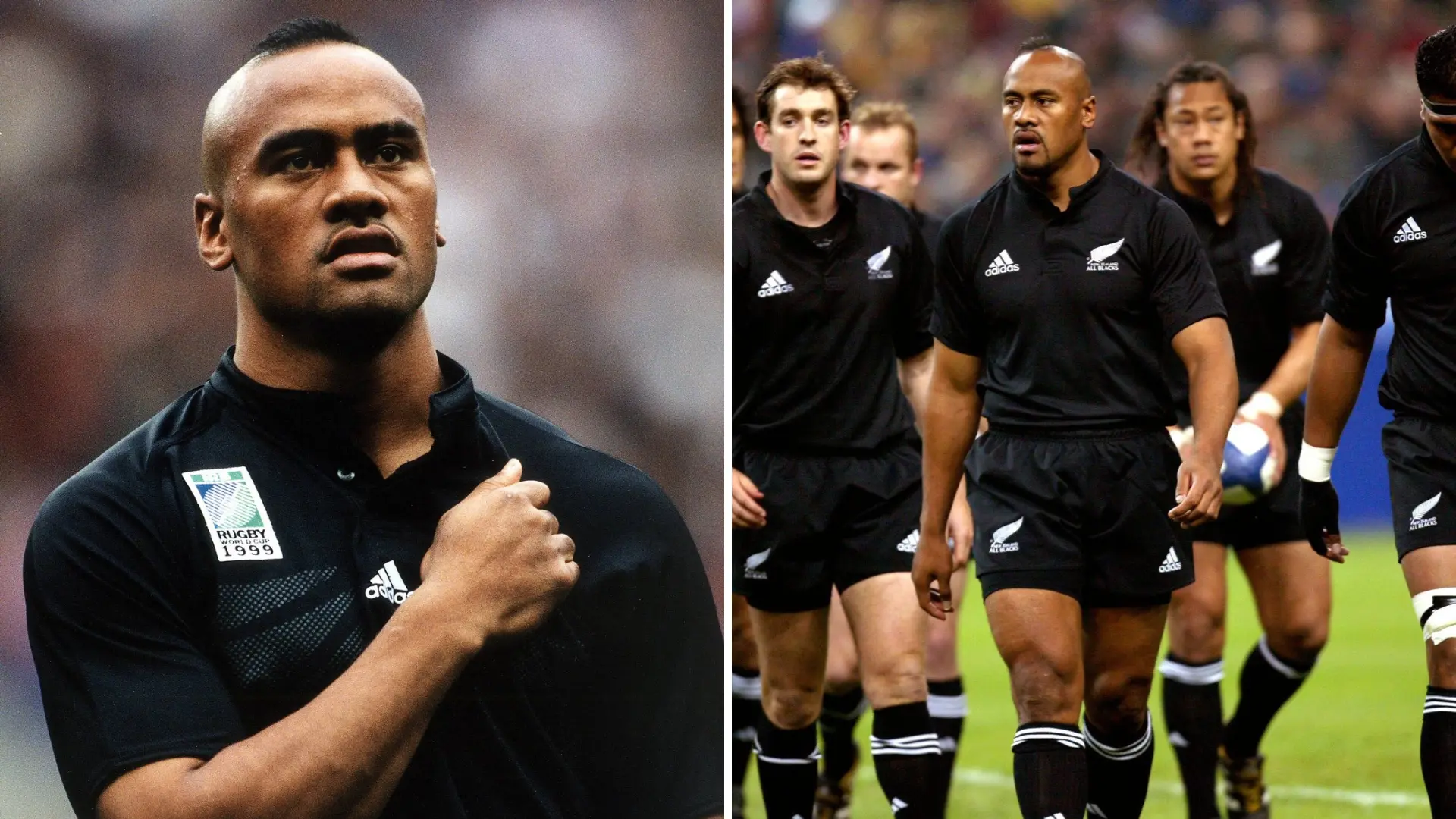
He matched Jonah Lomu’s all-time World Cup try record in 2015 and became one of the sport’s true global icons. With a club career that spanned South Africa and France, Habana was always lethal, no matter the stage. Jonny May might be England’s modern pace merchant, but Habana's longevity, finishing, and influence on the game make this one a clear-cut decision.
10 Jonny Wilkinson
There’s no debate here—Jonny Wilkinson is the undisputed choice at fly-half. His defining moment? That unforgettable drop goal in the dying seconds of the 2003 Rugby World Cup final. But Wilkinson was so much more than a single kick. With 1,179 points in 91 caps, he was a tactical maestro, a metronome from the tee, and an enforcer in defence. Injuries threatened to derail his career, but his determination and professionalism only enhanced his legend. Wilkinson changed what was expected of a modern fly-half. His precision, leadership, and nerves of steel made him the spine of England’s most successful era.
9 Joost van der Westhuizen
Fierce and undeniably brilliant, Joost van der Westhuizen was the heartbeat of the 1995 Springbok World Cup-winning team. With 38 tries in 89 Tests, he brought a rare mix of physicality and guile to scrum-half. Tall for his position and relentlessly aggressive, Joost was more than just a general—he was a weapon.
After rugby, he fought motor neurone disease with the same courage he showed on the pitch, inspiring millions before his passing in 2017. Few players have combined passion, skill, and legacy quite like Joost, and it’s why he stands above all contenders in the No.9 jersey.
1 Os du Randt
Os du Randt was a titan of the game, anchoring South Africa’s scrum across two World Cup victories—1995 and 2007. His longevity was extraordinary; by the time he lifted the Webb Ellis Cup a second time, he was the last active player from the '95 squad.
His career spanned both the amateur and professional eras, and he retired having played 80 Tests, then the most for a Springbok forward. Du Randt combined brute strength with technical excellence, outlasting fierce competition like Jason Leonard to claim his spot. He wasn't just a prop—he was a pillar of Springbok success.
2 John Smit
John Smit led South Africa to World Cup glory in 2007 and brought leadership in every jersey he wore—be it as a hooker or occasionally at prop. He played 111 times for the Boks, retiring as their most-capped player and leaving a legacy of unity and composure.
Smit’s strength wasn’t just in his physicality but in his influence—on teammates, opponents, and the game itself. His induction into the IRB Hall of Fame in 2011 was a fitting tribute to a man who embodied what it meant to lead from the front.
3 Phil Vickery
Nicknamed “The Raging Bull,” Phil Vickery was all heart and horsepower. A cornerstone of England’s 2003 World Cup-winning pack, he started all seven matches of that iconic campaign. With 73 caps and leadership duties in the 2007 tournament, Vickery was a warrior in every sense. His scrummaging power and relentless drive made him one of the finest tightheads of his generation. Tendai “Beast” Mtawarira made this a tight call, but Vickery’s consistent excellence and World Cup pedigree tip the scale in his favour.
4 Martin Johnson
Martin Johnson didn’t just play rugby—he embodied it. As England’s captain in their 2003 World Cup win, Johnson’s presence was colossal, both in stature and influence. With five Premiership titles and two Heineken Cups for Leicester, his club achievements were just as impressive.
But it was his unrelenting physicality, iron will, and stoic leadership that made him a legend. Johnson defined the ethos of English rugby: no-nonsense, fiercely proud, and impossible to intimidate.
5 Victor Matfield
There’s no lineout master quite like Victor Matfield. His aerial supremacy became a central weapon in South Africa’s tactics, and his performance in the 2007 World Cup earned him the IRB Player of the Tournament.
With over 120 caps, he was more than just a set-piece specialist—his reading of the game and disruptive defence made him indispensable. Even with Eben Etzebeth challenging in recent years, Matfield’s longevity and intelligence set him apart.
6 Pieter-Steph du Toit
A relentless machine in the modern game, Pieter-Steph du Toit’s inclusion is non-negotiable. Twice named World Rugby Player of the Year (2019, 2024), his stamina, strength, and all-around dominance make him one of the best flankers ever.
Whether it’s tackling himself into the ground or covering every inch of grass, Du Toit was the engine of South Africa’s most recent successes. Richard Hill, a legend in his own right, was a close contender, but Du Toit’s individual accolades and consistency gave him the edge.
7 Siya Kolisi
More than just a flanker, Siya Kolisi is a symbol of hope and progress. The first black captain of the Springboks, he led them to World Cup victories in 2019 and 2023, changing the face of South African rugby forever. His play speaks volumes—physical, relentless, and always around the ball. But it’s his leadership that elevates him. Kolisi’s story is one of resilience and inspiration, making him an irreplaceable figure in this combined XV.
8 Lawrence Dallaglio
Powerful and passionate, Lawrence Dallaglio was the cornerstone of England’s pack during their most successful era. A World Cup winner in 2003 and England’s most capped number eight, Dallaglio’s presence always raised the standard.
He played with grit and played with heart, delivering in the tight exchanges and the loose. Duane Vermeulen came close to unseating him, but Dallaglio’s legacy of leadership, longevity, and triumph makes him the final piece in this ultimate XV.
EDITORS PICKS:
- “Hit different” – Dan Carter has ranked his SIX toughest ever opponents
- England forward stood down with immediate effect after ‘cardiac incident’
- The reason why Jonah Lomu’s son declared for Six Nations side, not All Blacks
- The 15 Greatest Fly-Halves in Rugby History (Ranked 15-1)
- Ex-Wife of 2003 Rugby World Cup Winner Mocks His Current Struggles
TRENDING

LATEST NEWS

LATEST COMMENTS
- Jordie Barrett over Damian de Allende is far from being correct. The hype around Dupont is also overreaching, he's probably 4th in the world and has been since the 2023 WC. He also avoids certain matchups which is strange. The rest of the list is pretty good apart from minor subjective biases.JasonMarlow16-09-2026
Loading