
From bone-crunching scrums to the subtle dark arts of the set piece, the front row has always been rugby’s ultimate proving ground.
While backs grab the headlines, championships are built on dominance up front.
Here, we look back at the greatest front-row trios the game has produced – combinations whose understanding, power and craft didn’t just win trophies, but defined eras and demonstrated what true excellence in rugby’s engine room looks like.
Join RUCK’s Instagram broadcast channel and get the latest rugby news straight to your phone.
10. Alex Corbisiero / Richard Hibbard / Adam Jones (British & Irish Lions, 2013)
The opening Test in Brisbane hinted at what Alex Corbisiero could offer, but it was in the decisive third Test in Sydney that he delivered a performance for the ages.
From the start of the 2012/13 season, a place on the Lions tour had been his clear ambition. Injuries disrupted his campaign and cost him a Six Nations place with England – traditionally the key audition for Lions selection – leaving him little margin for error.
By the time the series reached its climax, Corbisiero had earned his chance. Alongside Richard Hibbard and Adam Jones, he started in the front row as the British & Irish Lions dismantled Australia 41–16 to clinch the series.
The trio’s influence was overwhelming. The scrum became a weapon, forcing repeated penalties and a Wallabies yellow card, while Corbisiero crossed for an early try. They may not have played together often, but for one night they were irresistible.
9. Charlie Faulkner / Bobby Windsor / Graham Price (Wales & Pontypool, 1975–1979)
Few combinations in rugby history are as iconic as the “Pontypool Front Row”. During the 1970s, this Welsh trio formed the backbone of both club and country success.
Between 1975 and 1979, Charlie Faulkner, Bobby Windsor and Graham Price started together 19 times for Wales, losing only four matches. Their cohesion was forged at Pontypool RFC, where their partnership became legendary.
That era delivered two Grand Slams (1976 and 1978) and three Triple Crowns. All three also toured with the British & Irish Lions in 1977, with Graham Price later setting a Lions record by earning 12 consecutive Test caps as a prop.
Away from the spotlight, they embodied the working-class roots of Welsh rugby, each earning a living as steelworkers while dominating the international game.
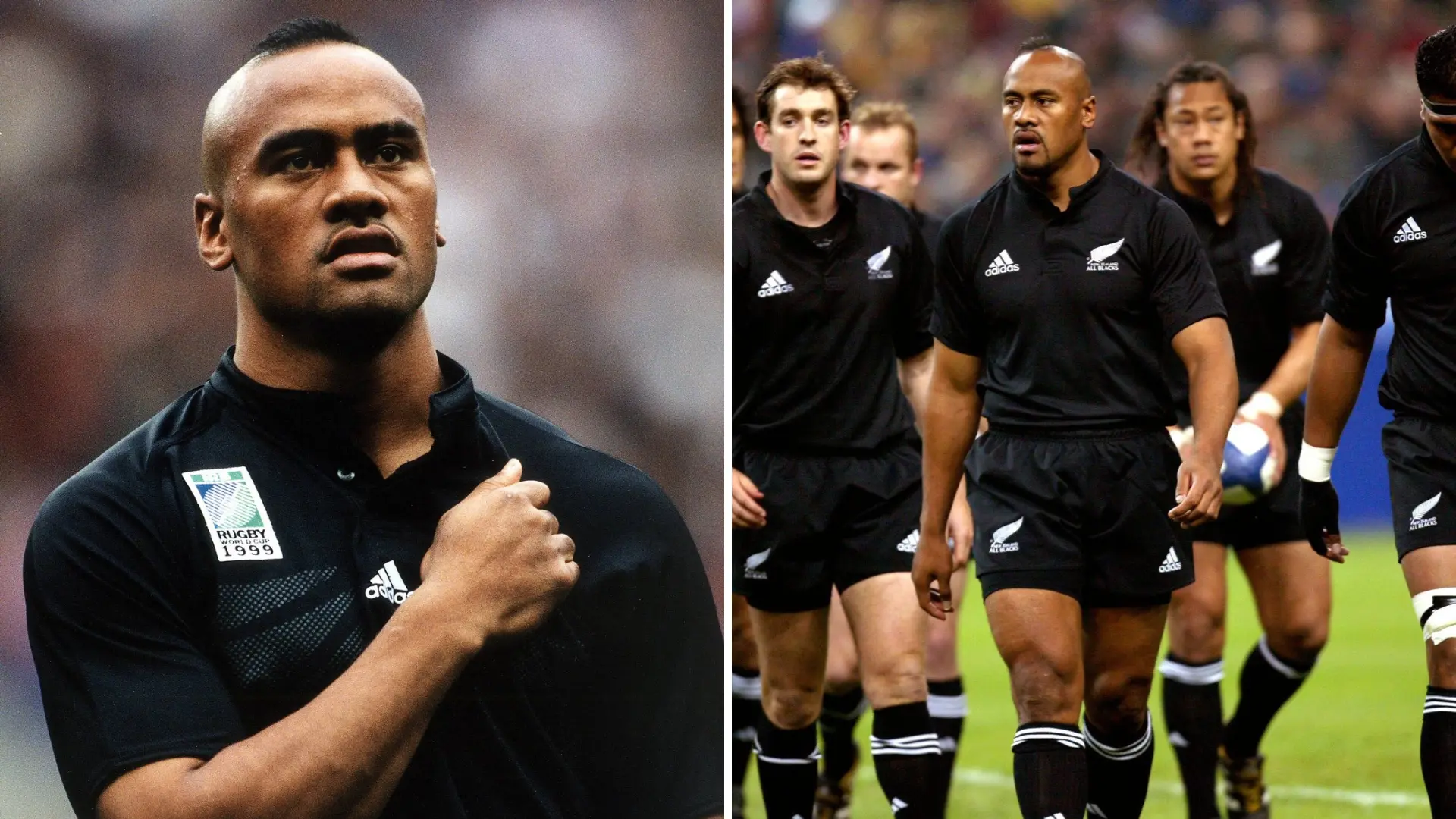
8. Craig Dowd / Sean Fitzpatrick / Olo Brown (New Zealand, 1994–1999)
Throughout the 1990s, New Zealand’s scrum revolved around one remarkably stable combination.
Craig Dowd, Sean Fitzpatrick and Olo Brown became the defining All Blacks front row of the early professional era, featuring prominently at both the 1995 and 1999 Rugby World Cups.
Their reputation was built on sheer power, technical precision and unmatched consistency, setting standards for New Zealand forward play that endured long after their time together ended.
7. Trevor Woodman / Steve Thompson / Phil Vickery (England, 2002–2004)
England’s 2003 World Cup triumph was built on power, precision and control, nowhere more evident than in the front row.
Trevor Woodman, Steve Thompson and Phil Vickery provided a rare blend of technical scrummaging, mobility and skill. Rather than functioning as static enforcers, they were active contributors across the pitch.
Their ability to combine set-piece dominance with the subtleties of the professional game – from lineout lifting to intelligent support play – set them apart. At their peak, they were widely regarded as the finest front row in world rugby.
6. Rodrigo Roncero / Mario Ledesma / Omar Hasan (Argentina, 2003–2007)
Scrummaging supremacy defined Argentina’s rise in the early 2000s, and this all-Pumas front row sat at the heart of it.
Rodrigo Roncero, Mario Ledesma and Omar Hasan became synonymous with power, technique and relentlessness, eventually earning a place in the Rugby World Cup All-Time Dream Team following a 2015 fan vote.
Their mastery of the famed Argentine “Bajada” scrum allowed them to consistently overpower opponents, most memorably during Argentina’s run to the semi-finals of the 2007 World Cup.
5. Tony Woodcock / Keven Mealamu / Owen Franks (New Zealand, 2010–2015)
Consistency and longevity are hallmarks of great front rows, and few embodied those qualities better than this All Blacks trio.
Across two Rugby World Cup-winning campaigns in 2011 and 2015, Tony Woodcock, Keven Mealamu and Owen Franks anchored New Zealand’s scrum with relentless efficiency.
Exceptional technique, immense strength and durability over multiple seasons ensured they remained first-choice selections, providing the foundation for one of the most dominant periods in All Blacks history.
4. Andrew Sheridan / Sébastien Bruno / Carl Hayman (Toulon, 2012–2014)
At club level, few front rows have struck the same balance of star power and effectiveness as Toulon’s early-2010s unit.
Andrew Sheridan, Sébastien Bruno and Carl Hayman brought international pedigree and elite experience to a Toulon side overflowing with talent.
Their influence peaked in the 2013 Heineken Cup Final, where Sheridan and Bruno started in a narrow 16–15 victory over Clermont Auvergne. The trio also formed part of the squad that secured multiple European titles.
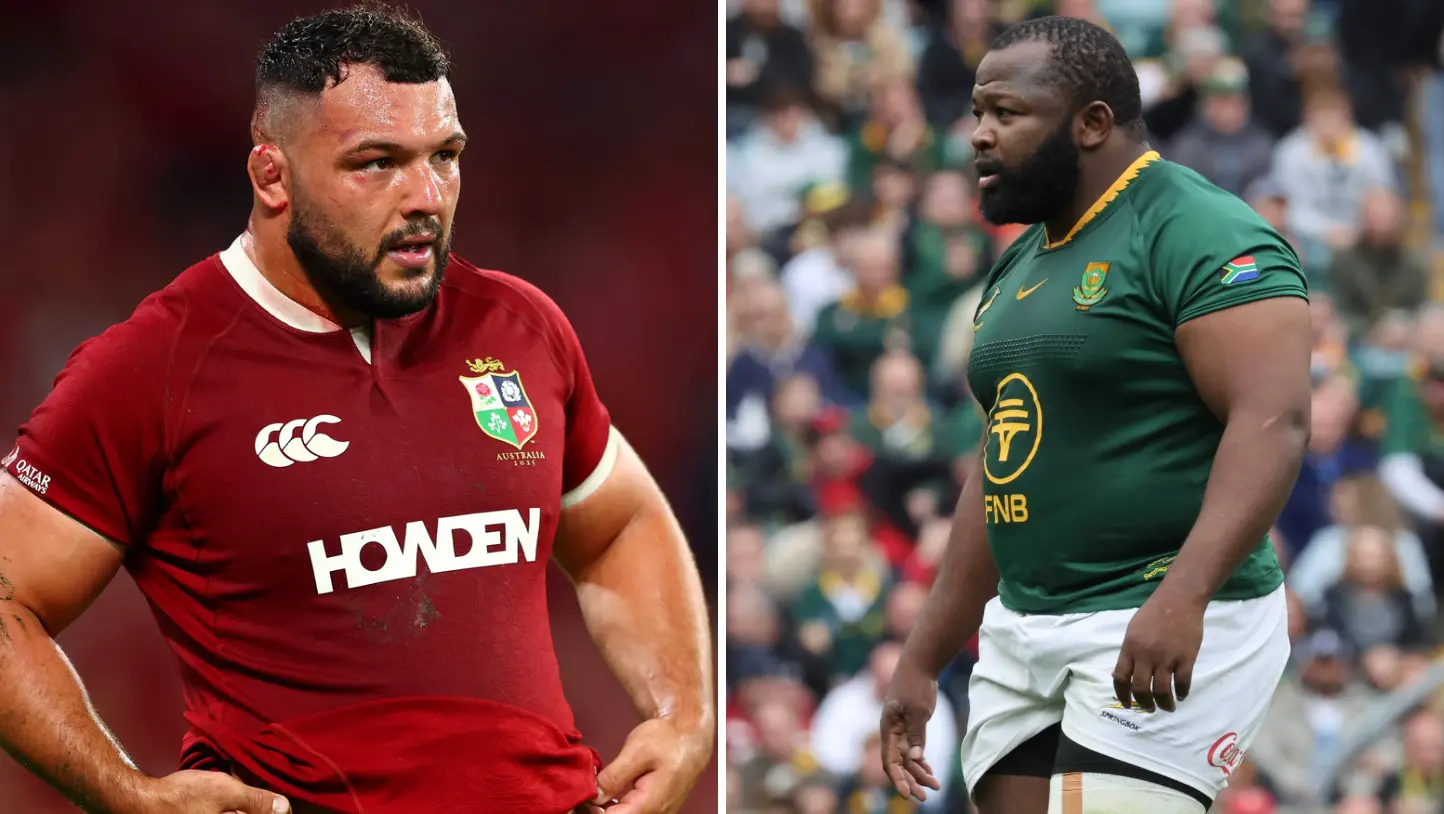
3. Tendai Mtawarira / Bismarck du Plessis / John Smit (South Africa, 2008–2012)
Few Springbok front rows have imposed themselves on opponents quite as emphatically as this trio did at their peak.
During the 2009 series against the British & Irish Lions, Tendai Mtawarira, Bismarck du Plessis and John Smit were central to South Africa’s 2–1 victory.
Their success extended beyond that series. Smit lifted the 2007 Rugby World Cup, while Mtawarira later played a key role in South Africa’s 2019 triumph, delivering a commanding performance in the final against England.
2. Tom Smith / Keith Wood / Paul Wallace (British & Irish Lions, 1997)
Before the 1997 Lions tour, doubts surrounded whether finesse could survive against brute force. This front row provided the definitive answer.
Written off as too lightweight to cope with the world-champion Springboks, Tom Smith, Keith Wood and Paul Wallace instead delivered a masterclass in technique, mobility and intelligence.
By consistently getting underneath the South African scrum, they neutralised a significant weight disadvantage and laid the platform for iconic moments such as Matt Dawson’s try and Jeremy Guscott’s series-winning drop goal. Their success reshaped perceptions of front-row play, proving that skill and cohesion could triumph over sheer size.
1. Frans Malherbe / Bongi Mbonambi / Steven Kitshoff (South Africa, 2018–2023)
Few front rows in the modern era have combined raw power and technical excellence as effectively as this Springbok trio.
Frans Malherbe, Bongi Mbonambi and Steven Kitshoff became the cornerstone of South Africa’s forward dominance under Rassie Erasmus and Jacques Nienaber.
Their impact was central to back-to-back Rugby World Cup triumphs in 2019 and 2023, where their scrummaging repeatedly set the platform for victory.
Relentless at the set piece and powerful in contact, they embodied the modern Springbok identity. At their peak, they were widely regarded as the most dominant starting front row in world rugby.
LATEST RUGBY NEWS
- Team of the Week: Champions Cup & Challenge Cup Semi-Finals
- Twickenham pitch invader handed lengthy jail sentence after viral stunt
- Statement: England make Steve Borthwick sack decision after review
- Jamie Ritchie to depart France after just one season
- Worst pound-for-pound rugby signings of all-time (Ranked 15-1)
LIVE TRANSFER BLOG
TRENDING


LATEST NEWS

LATEST COMMENTS
- Jordie Barrett over Damian de Allende is far from being correct. The hype around Dupont is also overreaching, he's probably 4th in the world and has been since the 2023 WC. He also avoids certain matchups which is strange. The rest of the list is pretty good apart from minor subjective biases.JasonMarlow16-09-2026
Loading