
World Rugby has confirmed that Rugby World Cup 2023 in France will feature the Foul Play Review Official (Bunker) and shot clock, aimed at supporting match officials in their decision-making, promoting ball-in-flow and enhancing fan experience.
A number of other law trials first tested back inJ January will be adopted for the tournament.
#1. Bunker system
Following successful and extensive trials in the Summer Nations Series, World Rugby U20 Championship, The Rugby Championship and Super Rugby Pacific, the international federation’s Executive Board has approved an extension of the trial to feature across all 48 matches in France, operating out of the International Broadcast Centre located in Paris.
Referees will remain the lead decision-maker during matches but will now have the ability to refer any foul play incident where a red card is not clear and obvious following two big screen replays, to the Foul Play Review Official located in the ‘Bunker’ for formal review.
If the officiating team is unable to determine whether an incident warrants a red card, but does meet at least a yellow card threshold, the referee will cross their arms, signaling a formal review and the player will leave the field for 10 minutes as per the current sin-bin laws. The Foul Play Review Official will then have up to eight minutes to review the incident using all footage produced by the independent host broadcaster (World Rugby) and technology, including Hawk-Eye split screen and zoom technology, to determine the outcome.
The Foul Play Review Official will then communicate the decision back to the officials in the stadium. The referee will either uphold the yellow card and enable the player to return or award a red card whereby the player stays off the field and is unable to be replaced. All decisions will be communicated via the big screen in stadia and via broadcast graphics.
#2. Speeding up the game
Players and match officials are reminded of the following existing laws which need to be strictly adhered to across the game at all levels:
Law 8.8d Conversion. The kicker takes the kick within 90 seconds (playing time) from the time the try was awarded, even if the ball rolls over and has to be placed again. Sanction: Kick is disallowed.
Law 8.21: Penalty Goal: The kick must be taken within 60 seconds (playing time) from the time the team indicated their intention to do so, even if the ball rolls over and has to be placed again. Sanction: Kick is disallowed and a scrum is awarded.
Law 9.7d A player must not waste time. Sanction: Free Kick
Law 18.12 Lineout: Teams form the lineout without delay. Sanction: Free-kick.
Law 19.4 Scrum: Teams must be ready to form the scrum within 30 seconds of the mark being made. Sanction: Free-kick.
For elite rugby, we encourage broadcasters and match hosts to implement on-screen (TV and stadia) shot clocks, usually administered by the Time Keeper, for penalties and conversion to ensure referees, players and spectators can monitor the adherence of these laws.
We also encourage Unions/Competitions to apply to trial reduced times for kicks at goal to speed the game up. The outcomes of these trials can then be fed into the law review process for 2023-27.
#3. TMO Protocol
Match officials are reminded that the TMO process is for identifying and ensuring Clear and Obvious offences are dealt with on-field. The match official teams, led by the referee, should attempt to make speedier decisions and limit replays where not necessary.
#4. Water Carriers
The Global Law Trial on limiting the number of water carriers to two, and reducing the times they enter the field, has successfully reduced unnecessary stoppages and unnecessary influence by water carriers on players and match officials. However, creating set windows for water has created the impression of disrupting the game, even if that water was taken during a natural stoppage (try/injury/TMO review)
After taking feedback from stakeholders, we will be amending the Global Law Trial to allow water carriers onto the field when a try is scored. The timings will match the length of the kick taken. Only in a game with no tries in the first 20 minutes, should another natural stoppage be used. If an injury stoppage is used, the water carriers must leave the field when the medic does so.
#5. Players on the ground
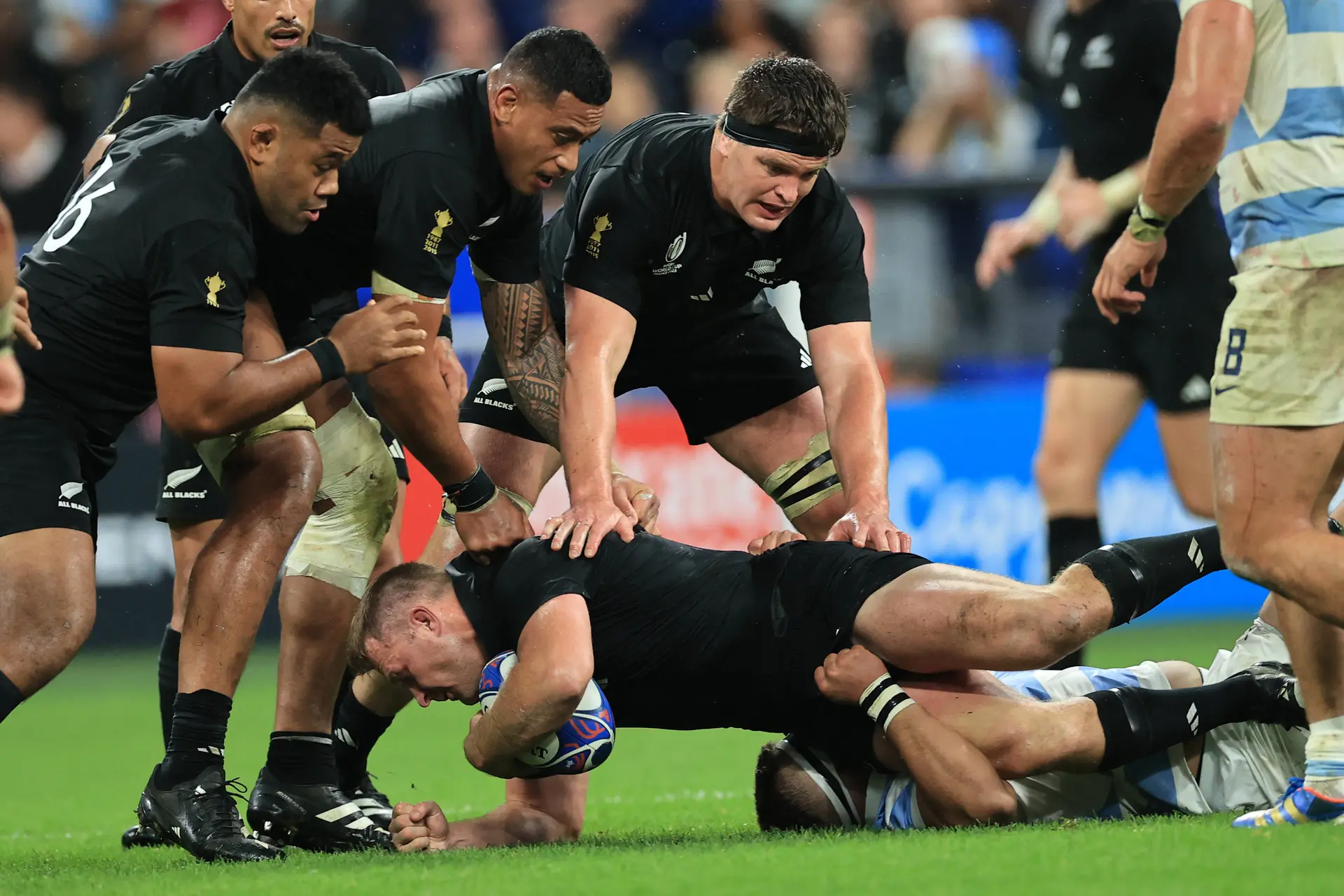
Players who put their hands on the floor at tackles, rucks and mauls are subject to sanction, although judgement can be used if the player is using the ground briefly to maintain their own balance and stability.