Rugby set for major change as TMO scrapped and replaced by new RRS
Rugby NewsMonday, 04 May 2026 at 15:43
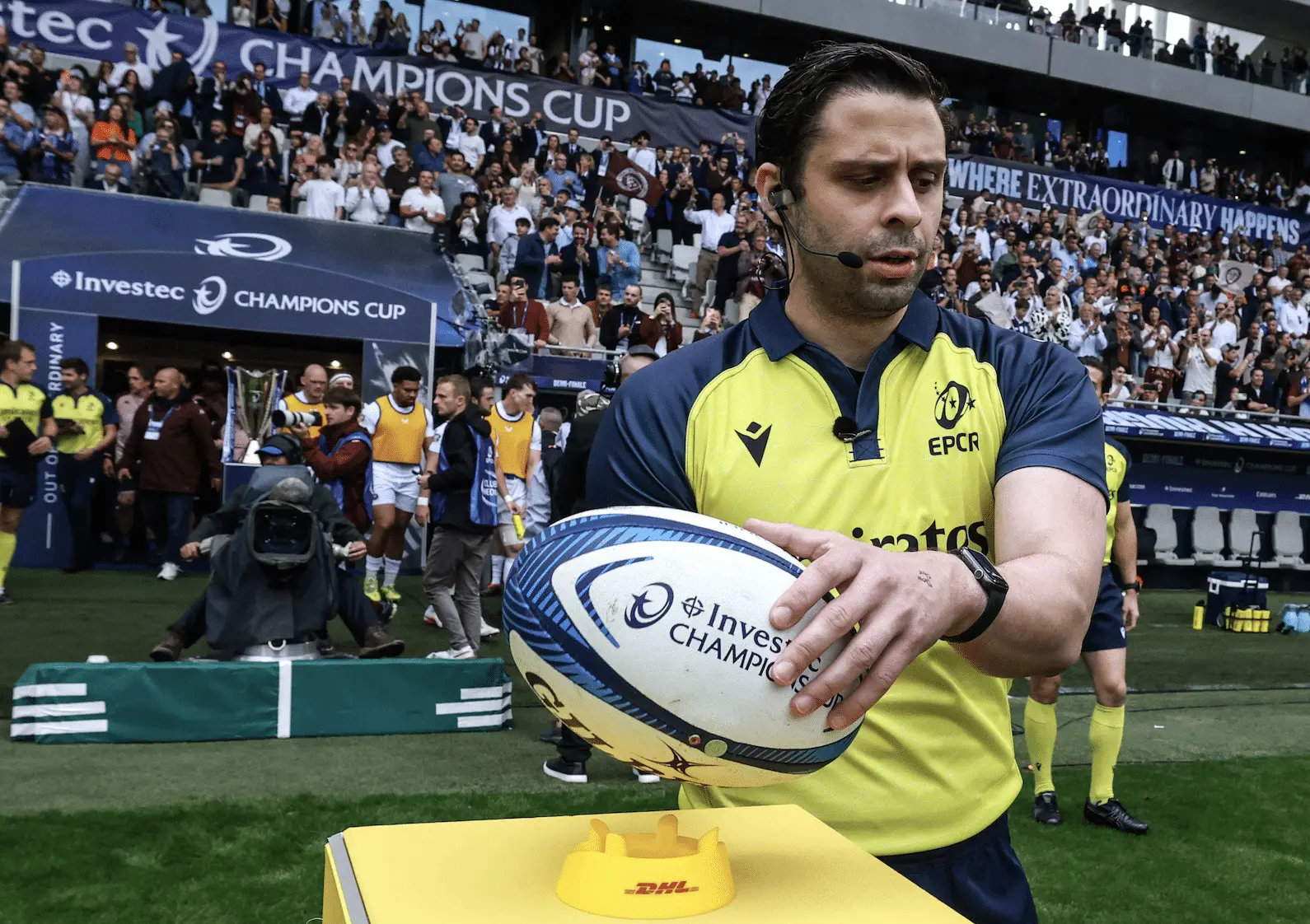

Major League Rugby has unveiled a bold officiating shake-up for 2026, replacing the traditional Television Match Official with a more dynamic Referee Review System.
⭐ Save RUCK to your Google Favourites for nonstop RUCK content!
Major League Rugby is betting that giving referees — and crucially, teams — more control over reviews will speed up the game and sharpen decision-making.
Under the RRS, reviews can be initiated either by match officials or via a team challenge, echoing systems seen in American football. Coaches will throw a challenge flag before a restart, with captains specifying the incident in question. Each side gets two challenges, retaining them if successful — but wasting them carries consequences, particularly late in each half.
The process itself remains grounded in video technology, with a neutral In-Stadium Replay Operator assisting the referee using live feeds. Only “clear and obvious” errors will overturn decisions, and the referee will communicate outcomes directly to fans, ensuring transparency.
Importantly, reviews are limited to incidents within two phases of play, except for foul play, which can be checked at any time before the next restart. The clock stops during reviews, and teams cannot make substitutions — a move designed to prevent gamesmanship.
MLR will trial the system in preseason before a full rollout in Round One.
Join RUCK’s Instagram broadcast channel and get the latest rugby news straight to your phone.
Champions Cup Context: Barbeary Incident Highlights Need for Change
The debate around officiating has only intensified following yesterday’s European Rugby Champions Cup clash involving Alfie Barbeary, where a contentious moment went largely unchecked in real time.
Barbeary appeared to be involved in a borderline incident at the breakdown that sparked frustration among players and fans, with many questioning why the TMO did not intervene more decisively. The lack of clarity — and delay in communication — became a talking point after the match, once again highlighting inconsistencies in how incidents are reviewed.
Situations like this underline exactly why leagues such as MLR are experimenting with alternatives. A system like the RRS, where teams can directly challenge decisions and force a review, could have ensured the incident was examined immediately and transparently, rather than becoming a post-match controversy.
“Bye, caterpillar ruck” – Five more rugby law changes for 2026
Here, we look at four laws worth revisiting—suggested with respect for the sport and a belief that rugby is at its best when it evolves.
1. No more draws
Rugby is one of the most thrilling sports in the world, but draws often leave players and fans frustrated. After 80 minutes of hard-fought action, neither team winning can feel unsatisfying and anticlimactic. Introducing golden point—where the first score in extra time wins—would give matches a clear, decisive ending.
Golden point also encourages attacking rugby. Teams would be pushed to take risks, go for tries, or attempt drop goals rather than playing safe for a draw. Every possession would matter even more, and fans would be treated to the kind of high-stakes drama that other sports, like rugby league and AFL, have long enjoyed.
It would make competitions simpler and fairer too. League tables, knockout tournaments, and international fixtures often rely on tiebreakers to separate teams after draws. Golden point ensures there’s always a winner on the scoreboard, rewarding performance rather than chance or points difference.
Player welfare concerns can be managed by limiting extra time to short bursts—say two five-minute halves or a first-score-wins rule within 10 minutes—keeping the game exciting without overtaxing athletes.
Golden point wouldn’t just make rugby more exciting—it would make it fairer, more competitive, and in tune with the modern expectation that every game should have a winner. With more tight contests in both club and international rugby, there’s never been a better time to adopt it.
2. Fewer Substitutions
Rugby has changed significantly over the years, and one of the biggest shifts is how the bench is used. These days, teams often bring on almost an entirely new forward pack late in the game. Big, fresh players crash into tired defenders, making the final 20 minutes less about skill and endurance, and more about brute force. Many fans and former players feel this has turned rugby into a collision sport rather than a contest of stamina and intelligence.
Reducing the number of substitutions would encourage players to pace themselves. Space would open up in the second half, creating more opportunities for creative play rather than endless phases of pick-and-go. It would reward fitness, smart decision-making, and those capable of performing for the full 80 minutes.
Fewer substitutions wouldn’t just make the game more exciting—it would make it fairer, safer, and more in line with the spirit of what rugby has always been about.
With the rise of 6–2 and even 7–1 bench splits, pioneered by Rassie Erasmus, the trend seems to be heading in the opposite direction. That’s all the more reason to act now.
2. Scrap the Caterpillar Ruck
The caterpillar ruck is one of those tactics that, while legal, just doesn’t sit right with many who love the game. It involves players lining up behind a ruck in a queue, giving the scrum-half extra time and space to kick.
It slows the game to a crawl, gives the defence no real chance to compete, and often feels more like a way to kill momentum than build it.
It may be clever, but it’s not entertaining. Fans want to see fast, hard-fought rugby—not box-kick after box-kick with a queue of bodies shielding the kicker. Eliminating or limiting the caterpillar ruck would speed up the game and reintroduce unpredictability at the breakdown.
This isn’t about removing strategy. It’s about keeping the game flowing and true to what makes rugby exciting: dynamic, contested play.
Referees have improved at calling “use it” earlier, which helps speed things up, but more needs to be done. Getting rid of the caterpillar ruck would go a long way toward fixing the issue.
3. Remove the 20-Minute Red Card
The 20-minute red card was introduced as a middle ground—punishing dangerous play without completely ruining a match. But let’s be honest: it sends the wrong message. If a player commits a reckless or dangerous act, 20 minutes off the field doesn’t always feel like enough—especially for serious offenses, like a high tackle that could end an opponent’s game or season.
Rugby has made major strides in protecting players, especially around the head and neck. Keeping the full red card—where the offending team plays a man down for the rest of the match—reaffirms that commitment. It makes the consequences clear: cross the line, and your team suffers. That’s how you change behaviour.
Yes, it’s tough. Sometimes it may seem harsh. But safety must come first. It’s about respecting the game and the long-term health of every player on the field.
In many ways, the 20-minute red gives officials a cop-out. It’s often seen as the easy option to avoid controversy—even when a full red card is justified.
4. Outlaw the Lineout Maul
Few things in rugby divide opinion quite like the driving maul from a lineout. For some, it’s a show of power and coordination. But for many fans, it feels like a loophole — a near-guaranteed way to score that sucks the creativity and unpredictability out of the game.
A well-drilled pack can set up a maul five metres out, trundle forward almost unstoppably, and fall over the line for a try. Where’s the skill in that? It’s become rugby’s cheat code — more about physics and numbers than ingenuity or flair.
Outlawing the maul as a direct scoring weapon would open the game up. Instead of endless rolling rucks towards the try-line, teams would need to find inventive ways to use space, pass under pressure, or outsmart the defence. That’s what gets fans on their feet.
Defenders, too, would benefit. At the moment, they’re often left with little option but to illegally collapse a maul, leading to a penalty or yellow card. Take away the automatic try-machine, and we’d see fewer cynical infringements, less frustration, and a fairer contest.
The maul will always have a place as a tactical tool in the middle of the pitch — but when it’s allowed to dominate the scoreboard, it turns rugby into something it was never meant to be.
TRENDING






LATEST NEWS





LATEST COMMENTS
- Jordie Barrett over Damian de Allende is far from being correct. The hype around Dupont is also overreaching, he's probably 4th in the world and has been since the 2023 WC. He also avoids certain matchups which is strange. The rest of the list is pretty good apart from minor subjective biases.JasonMarlow16-09-2026
Loading

