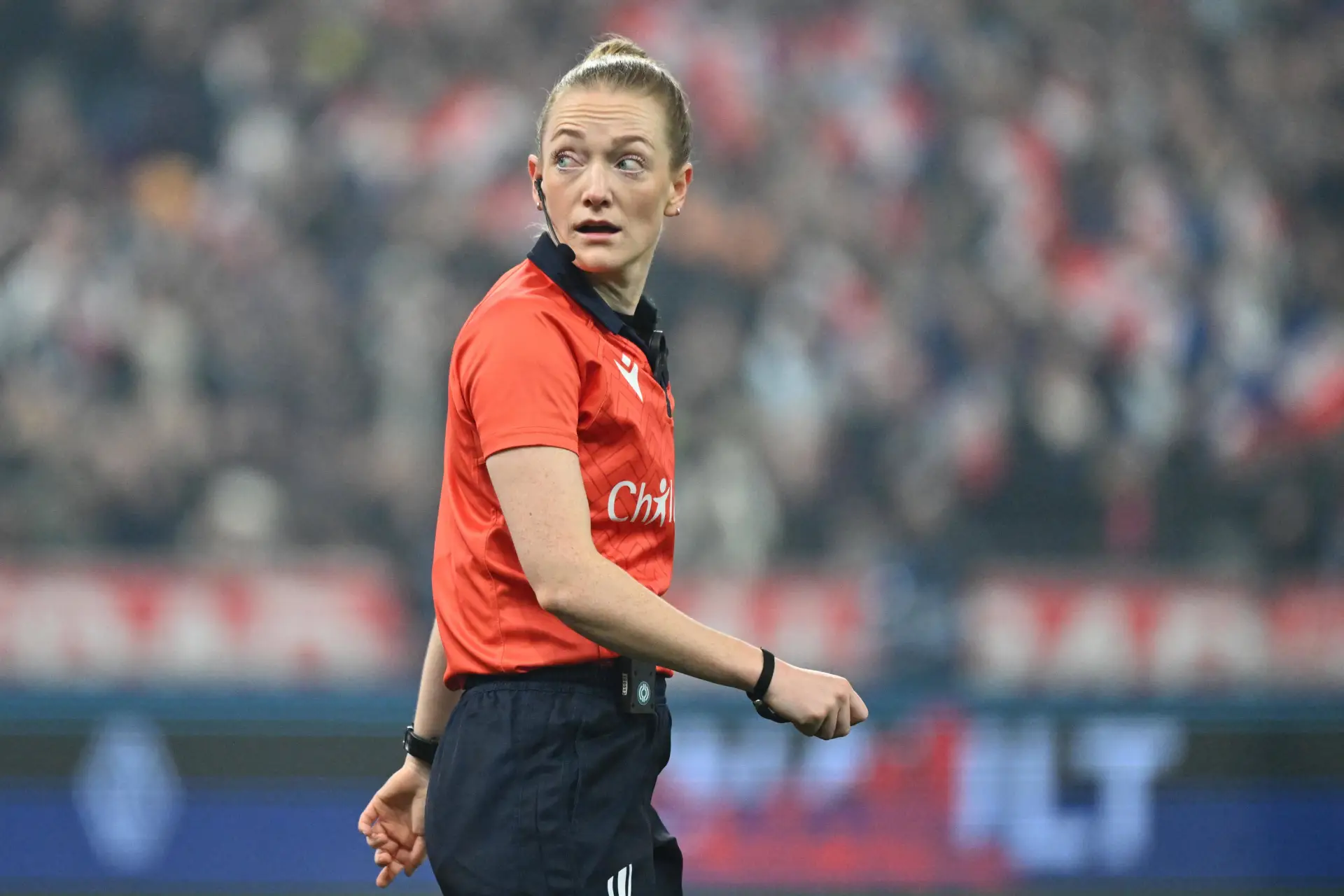

Chrissy
Clark’s journey has taken her from being a relatively new official at the
INSPIRE event in 2022 to a Level 6 match official with a key role in player
welfare at the RFU.
As part of
our ‘Life after INSPIRE’ series, alongside our partners at ACME Whistles we sat down with Chrissy to get to know the woman behind the
whistle, how she’s working to support other women and girls in rugby and how
INSPIRE led her to meet female officials at different stages of their
refereeing journeys creating a community she still turns to for discussing
challenges, sharing experiences and reflecting on performances.
“The
most impactful thing about INSPIRE was it boosted my confidence seeing other women
succeeding in match officiating. It also built an amazing sense of belonging so now I’m very
fortunate to have a group of women in my phone who, if I want to debrief after
a game, or just talk about games coming up, things I'm excited for, or am
anticipating, I can reach out and get support or encouragement,” she said.
“I know I have the support of my coaches in my society, but for
me, it's really important I have that community of women who I can touch base
with. I always come out of those conversations feeling in a better place for
the game or the competition that I'm moving into.”
Chrissy became a
member of RFU staff as the Rugby Safe Officer around the time of the INSPIRE campaign
in 2022. Despite incredible achievements that she feels make her a better match
official, such as becoming a Level 6 referee in Oxfordshire, officiating in the
women's BUCS university league through the RFU Match Official Development Team
and being selected on the pathway group for the new Every Rose Match Official
programme, her professional role focuses on player welfare and female health in
rugby.
Clark and her team at
the RFU have been developing toolkits of resources that help female rugby
athletes understand their health and how it may affect their participation and
performance.

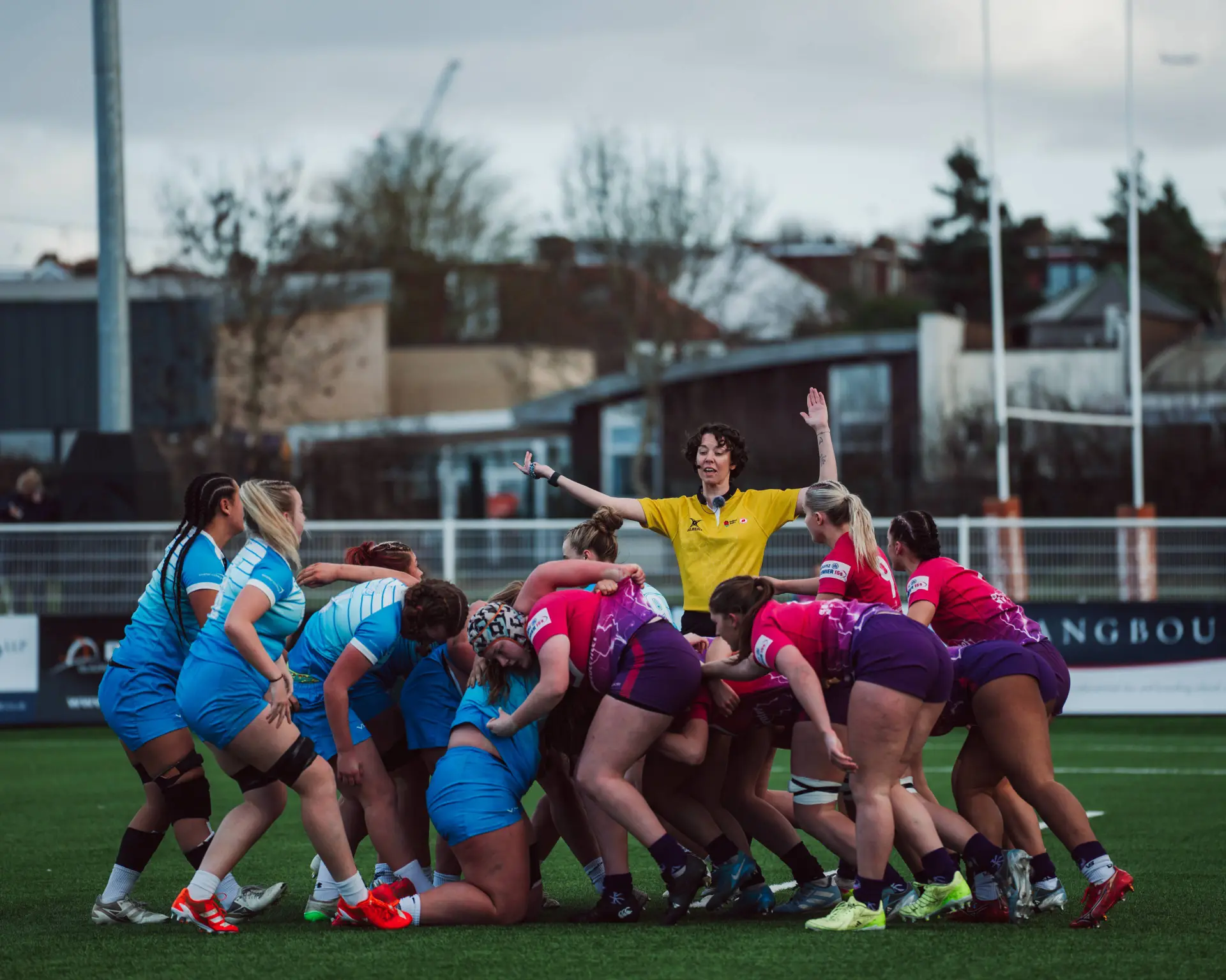
Chrissy refereeing a game
“The reason why they're so important is as a female rugby
athlete, whether you're a player, a very active female coach or a female match
official, the idea that when we get to a rugby club, whatever might be going on
in our day-to-day life, whether that's being busy with work or an aspect of
uniquely being a female athlete in rugby, that doesn't stop when we get to the
rugby pitch,” she explains.
“The idea that when you get to a rugby club, anything you’re
dealing with physically or mentally magically goes away and you're going to
have a brilliant session is just not realistic. The aim of the toolkits was to
give them information, because I still think there are a lot of misnomers out
there as to what's normal and what's not normal.
“So, we wanted the toolkits to have a strong evidence base
behind them. And we're very fortunate to work with some fantastic subject
matter experts to make sure that the information is accurate but also practical
from the athlete perspective.
“It's not just about enabling them to understand their health
journey, but it's the ‘so what’ of it. What can I actually do?
“From an athlete perspective, the toolkits are providing
information and empowering female rugby athletes to understand that how they’re
feeling today is valid and in a lot of cases this is normal or for some people,
maybe it's something they don't just have to manage alone and they can get
support.
“We also wanted the toolkits to appropriately equip the
community who support female rugby athletes and we wanted to ensure that the
language was accessible for male coaches, male club volunteers who want to
support their women and girls teams.”
The toolkits include
resources such as a sports bra fitting guide to help female rugby athletes
understand fit, comfort and what to look for; information about menstrual
health and its relationship with rugby and a postpartum return-to-rugby
resource to support women returning after childbirth.
The intention is not
simply to provide information, but to empower women and girls to make informed
decisions about their own sporting journeys.
Clark states that
feedback from the rugby community about the toolkits has been positive,
especially in building confidence around initiating conversations about female
health between coaches and players, coaches and match officials and the wider
rugby community.
The toolkits are an
important step in the right direction towards attracting and retaining more
women and girls within rugby, both as players and officials, but Clark admits
there is still work to be done.
“From a retention point of view, I think inclusivity in clubs
can have such a positive impact on the retention of players,” she states.
“We have taken great steps forward in ensuring that when a new
player steps through a club, it feels like a more inclusive place or somewhere
they can see that they fit in and can be part of the community. But that's not
to say that we're at a point where inclusivity has been done, tick box, we
don't need to continue reflecting and maybe asking ourselves the difficult
questions or the challenging questions and being curious.
“I always think if I came into our club today and I didn't know
anyone, is this a place where someone feels welcome?
“It would be really great if there was signposting to the
resources in clubhouses, and potentially we're a little way off from that being
in every club, but I would love to get to a point where a new female player or
parents bringing their daughter to a rugby club can see that there's
advertising for the female health resources that can support them and their
athletes are enjoying engaging in rugby at that club.”
Clark has worked with
the RFU to create nine toolkits with plans to Improve the existing resources,
ensure the content remains evidence-based and up to date and ensure the
resources are getting into the hands of athletes, coaches and clubs.
The RFU has also
worked with the Red Roses to discuss female health issues in the context of
elite rugby which Clark believes is particularly powerful because elite
athletes sharing their experiences of female health challenges can help
normalise conversations and reassure younger athletes that they are not alone.
About England Rugby's
ambition to increase the number of women and girls playing at clubs to 70,000
by 2030, with numbers currently approaching 50,000, Clark is optimistic that
this target is achievable.
“If you think about how the game has developed in the last three
or four years, I do believe it is achievable,” she says.
“As well as the growth we've already seen recently, we're now
engaging across the community games, including schools, colleges, universities.
And we now have colleagues who are engaging with Girl Guides and Scouting which
means there are more opportunities for girls and women to get hold of a rugby
ball and start having a throw around and start understanding the game, I think
is really exciting.
“I'm optimistic for the 70,000 and I think in terms of the
benefit of having more women and girls in the game, obviously from a community
perspective, having more people coming into your clubhouse with everything that
comes along with that in terms of the social space, but also their skill set
and knowledge from outside of the game.
“We know a lot of rugby only takes place because of volunteers.
So having people coming into the club with different skill sets that might
really add value and having a greater breadth of society within your rugby
community is always going to make things more positive and more vibrant and
ultimately does make our game better.”

Chrissy with fellow referees
When it comes to
female officials she has met and admires Clark highlights three women for
different reasons, saying “Holly Wood for demonstrating that it is possible to
juggle a family with performing at such a high level; Hollie Davidson for being
a flag bearer for women operating in the match official space and Amie
Barrett-Theron for her courage in sharing her health journey to help other
women.”
Clark’s message to
women considering refereeing is simple: "Just do it,” she said.
“This is a sweeping generalisation, but sometimes as women we
can overthink things and feel, ‘I don't see how I can fit into that space’. I
don't think it’s our job to fit into a space. It's for us just to put ourselves
out there, pick up a whistle. There is a growing and very supportive community
of female match officials out there and we want more women and girls to pick up
the whistle.
“Don't feel that there isn't a space for you or that you don't
have something to give to match officiating. You absolutely do - just do it,
just crack on. Obviously, the match official development guys have created a
huge amount of online learning to support you on the pitch now so there is a
whole resource package behind if you want to wrap your head around the theory
first, but don't let a perception that there isn't space for you be the reason
you don't do it.”
For more information
on refereeing and to get started, visit https://www.englandrugby.com/run/refereeing/become-referee and www.acmewhistles.co.uk