
At 21, I never imagined that I would have the privilege of covering the Springbok Women in an international rugby fixture.
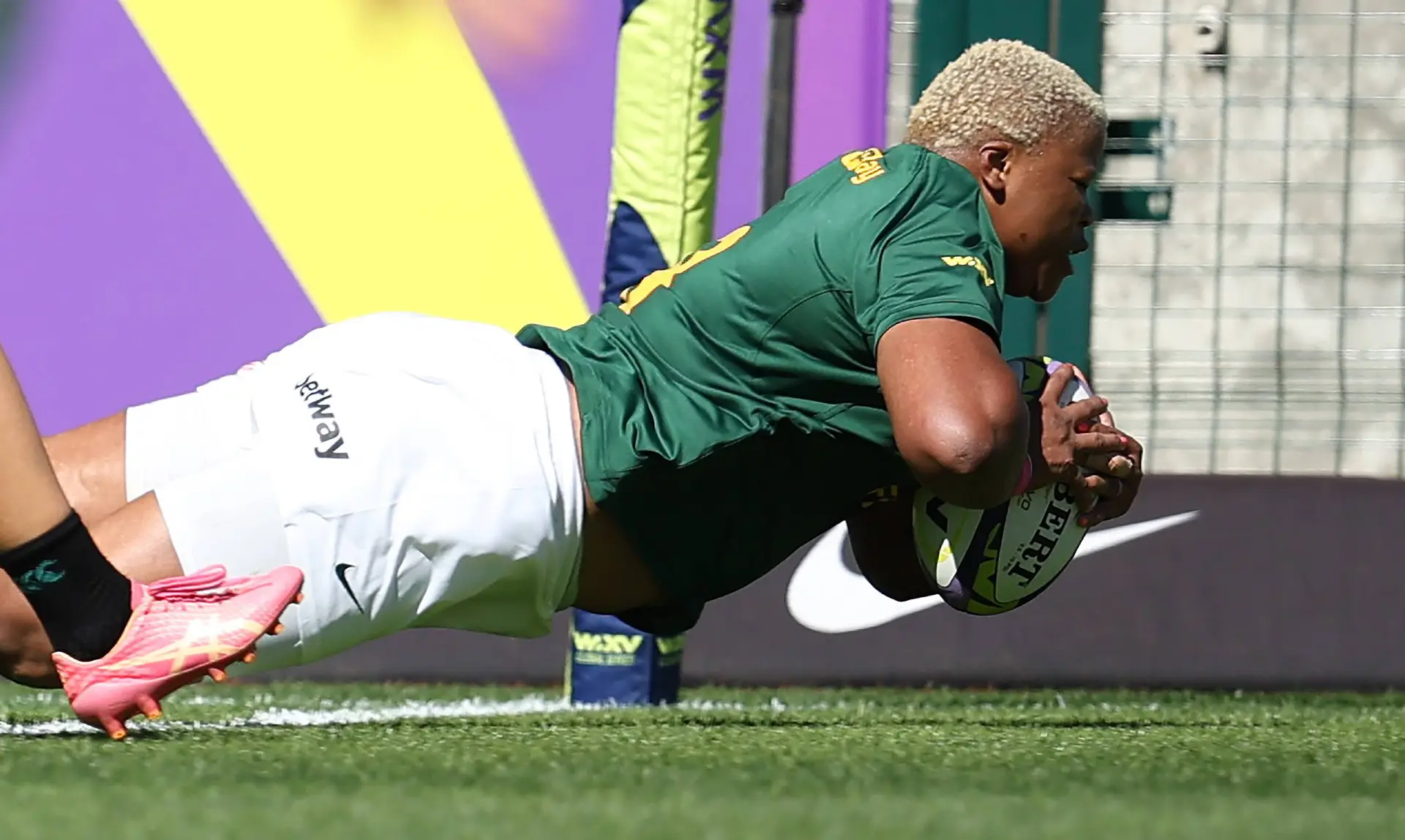
Yet, there I was, covering their final two WXV Global Series matches against Ireland at Athlone Stadium in Cape Town. For me, this was more than an opportunity to report on rugby.
This article is from Faith Mashiya - Check out her blog here
It was an important milestone in my journey as a sports journalist, one that allowed me to experience the game from a different perspective.
One of the things that stood out to me was the Springbok Women's belief in themselves. At the time, South Africa were ranked 10th in the world, while Ireland were fifth.
Yet, rankings did not define the Springbok Women's belief in what they could achieve together. What I saw was a team that continued to fight, not only as players but as family.
I also had the opportunity to interview some of the players, which allowed me to appreciate them beyond their performances on the field.
One player who particularly caught my attention was Maria Tshiremba, a young talent whose performances during the WXV Global Series impressed me.
Watching players like her reminds me of the incredible talent that exists within women's rugby and the potential these athletes have to take the game even further.
However, my experience covering these matches also left me thinking about something that extends beyond the field: what happens to these women when the final whistle blows?
Talent is not the problem
After covering the matches, I had an interesting conversation with a friend about men's and women's sports.
Our discussion eventually turned to the visibility of female athletes and the sponsorship opportunities available to them.
My friend argued that women's sports might struggle to attract sponsors because they do not offer enough entertainment. I understood the point he was trying to make, but I found myself disagreeing.
Are women's sports genuinely less entertaining, or have we become accustomed to giving men's sports more attention?
I believe women's sports have historically received less exposure than their male counterparts.
This raises an important question: how can we expect audiences and potential sponsors to recognise female athletes when they are not consistently given the same opportunities to be seen?
Entertainment, audience reach and commercial returns can influence sponsorship decisions. I do not dismiss that reality.
However, I question whether the industry has done enough to give women's sports the visibility needed to attract those audiences in the first place.
It seems unfair to judge the commercial potential of a sport without considering the investment, marketing and media coverage it receives.
Women's rugby is not short of talent. The Springbok Women have players who represent their country with determination, skill and pride.
Their achievements deserve to be recognised, and their abilities should not have to be continually defended simply because they are women.
Fifty caps, but still no sponsor?
One moment that stayed with me involved Springbok Women prop Yonela Ngxingolo.
After interviewing her, I had a conversation with her about sponsorship. Although that discussion took place after I had stopped recording, it left me thinking about the challenges female rugby players face beyond representing their country.
Ngxingolo later shared a TikTok post about reaching the milestone of 50 Test caps while still not having a sponsor.
That struck a nerve with me.
Reaching 50 international caps is a significant achievement. It represents years of dedication, sacrifice, physical effort and commitment to the game.
For an athlete to reach such a milestone and still highlight the absence of personal sponsorship raises questions about the commercial opportunities available to female rugby players.
Sponsorship is about more than having a brand's logo associated with an athlete. Depending on the agreement, it can provide financial support, equipment, products, promotional opportunities and access to professional networks.
It can also help athletes build their public profiles and prepare for life beyond their sporting careers.
For players, particularly those whose sporting careers may not provide long-term financial security, that support can make a meaningful difference.
Without it, athletes may have to find other ways to meet the costs associated with their careers and secure their financial futures.
The extent of that challenge differs from player to player, but it is worth asking whether female athletes have access to the same commercial opportunities as their male counterparts.
What makes Ngxingolo's situation particularly thought-provoking is that her achievement came while representing South Africa at the highest level of the game.
How can an athlete be good enough to represent her country, reach a remarkable international milestone and still struggle to attract the sponsorship she says she needs?
More importantly, how many other talented female athletes face similar challenges without having the platform to speak about them publicly?
How long must women keep asking to be seen?
Another example that comes to mind is former Springbok Women captain Nolusindiso Booi.
In April 2025, Booi became the first Springbok Women player to reach 50 Test caps. She eventually retired with 55 caps after a career spanning 15 seasons, having represented South Africa at four Rugby World Cups.
Her career is a testament to dedication and perseverance. Yet, her achievements also make me think about how women's sporting milestones are celebrated and remembered.
How many people outside the rugby community know the names of the women who have contributed to South African rugby?
I cannot speak for every South African, nor can I assume that these achievements go unnoticed by everyone. However, I do question whether female athletes receive the same level of sustained attention that male athletes often receive.
When a male athlete emerges as a promising young talent, there can be considerable excitement about his future. His performances might attract media coverage, public interest and commercial opportunities.
Female athletes deserve that same possibility.
Why should a woman have to repeatedly announce her achievements on social media to attract attention? Why should athletes have to become their own publicists simply to ensure that their accomplishments are noticed?
Social media has given female athletes an important platform to tell their own stories, build audiences and approach potential sponsors.
That is valuable. But it should not become a substitute for the consistent media coverage, institutional support and commercial investment that help a sport grow.
During my conversation with my friend, one question kept coming back to me:
How long will it take before women no longer have to keep putting themselves out there just to be recognised? How long until they are recognised simply for their talent?
The bigger issue goes beyond rugby
For me, this conversation is about more than sponsorship deals or the popularity of a particular sport.
It reflects a wider question about the spaces women are allowed to occupy and the recognition they receive when they excel in them.
We live in the 21st century, yet women still face expectations and stereotypes that question their place in certain professions and industries. Sport is no exception.
The idea that women belong in the kitchen, should prioritise being wives and mothers, or are somehow less suited to physically demanding environments might not always be expressed openly.
However, the broader assumptions surrounding women's abilities and roles are worth challenging wherever they persist.
Female athletes are not asking for their achievements to be celebrated simply because they are women. They are asking for their talent, dedication and contributions to be taken seriously.
And I believe that distinction matters.
Equal opportunity does not mean pretending that men's and women's sports face identical commercial circumstances.
It means examining those differences honestly and asking what can be done to create more equitable opportunities.
If women's sports receive less exposure, there needs to be a conversation about broadcasting and wider media coverage.
If sponsors are concerned about audience reach, there needs to be investment in marketing, storytelling and making competitions more accessible to the public.
If female athletes are expected to demonstrate their commercial value, they must also be given a fair opportunity to build that value.
We cannot continually ask why women's sports are not attracting the same attention as men's sports without questioning how that attention is generated in the first place.
Beyond the final whistle
Covering the Springbok Women against Ireland reminded me why I love sports journalism. I get to witness extraordinary athletes, tell stories that matter and ask questions that extend beyond the result of a match.
My experience also reminded me that there is still so much work to be done in women's sport.
Maria Tshiremba represents the exciting talent emerging within women's rugby.
Yonela Ngxingolo's public comments about sponsorship raise questions about the support available to established international players.
Nolusindiso Booi's career reminds us of the milestones women have already achieved in South African rugby.
These women have given us plenty of reasons to pay attention.
The challenge is ensuring that their achievements are met with meaningful recognition and opportunities.
I do not believe that the solution is simply to tell people to watch women's sports.
We need to make those sports accessible, invest in their growth, tell their stories and give their athletes the platforms they deserve.
Sponsors, broadcasters, sporting organisations, journalists and audiences all have a role to play.
As a young sports journalist, I want to contribute to that change.
I want to tell stories that help people see female athletes as more than names on a team sheet. I want to highlight their talent, their achievements and the realities they face beyond the field.
Most importantly, I want to challenge the assumption that women's sports must somehow prove their worth before they can receive the same attention and investment.
Because if a woman can dedicate years of her life to representing her country, reach international milestones and demonstrate extraordinary talent, why should she still have to fight so hard to be seen?
Perhaps the question is not whether women's sports are entertaining enough. Perhaps it is whether we have given them a fair enough chance to show us what they can be.