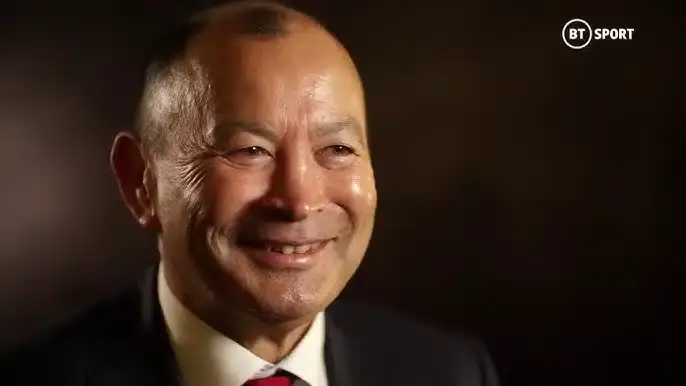

Eddie Jones is back in the spotlight, but this time in the commentary box. The former England boss has been announced as part of ITV’s punditry team for the 2025 Six Nations, which kicks off on January 31.
Find your local Greene King and settle in for the 2025 Six Nations!
From the Coach’s Box to the Commentary Box
The 64-year-old will swap the playbook for the microphone, joining a star-studded panel featuring Jonny Wilkinson, Ugo Monye, and Irish legend Brian O’Driscoll. Expect sharp insights, bold opinions, and maybe even a few fiery exchanges along the way.
ITV and BBC Share the Rugby Stage
This year could mark the last hurrah for ITV and BBC’s joint free-to-air coverage of the Six Nations. Of England’s five matches, ITV will broadcast four, including their blockbuster opener against Ireland at the Aviva Stadium on February 1.
England’s campaign will also feature clashes with France, Scotland, and Italy at Twickenham, before finishing with a showdown against Wales in Cardiff, live on the BBC.
Jones’ Winning Formula
Eddie Jones knows a thing or two about lifting trophies. As England head coach from 2015 to 2022, he bagged three Six Nations titles, including a Grand Slam in 2016, and famously led England to the 2019 Rugby World Cup final.
Japan Calling… Again
Currently in his second stint as Japan’s head coach, Jones briefly returned to helm Australia in 2023. Now, he’s balancing international coaching with his ITV duties. With his tactical brain and fiery personality, his punditry promises to be just as entertaining as his touchline antics.
EDITORS PICKS:
- I Was Borthwick’s First England Debutant – Now I Want to Switch Nations
- England legend’s son declares for rivals ahead of 2025 Six Nations
- England Land in 2027 Rugby World Cup Group of Death After Rankings Shocker
- The first openly gay All Black has got married
- Wales legend Adam Jones offered Six Nations job
40 Greatest England Rugby players in history: Ranked
From Rugby World Cup champions to modern-day icons, we’ve compiled a definitive list celebrating England’s finest players.
Get ready to relive the magic as we count down the top 40 English rugby legends.
#40. Wade Dooley – The ‘Blackpool Tower’
Standing tall in England’s second row, Dooley’s height and physicality made him a linchpin during the late 1980s.
#39. Manu Tuilagi – The Human Bulldozer
Tuilagi’s devastating ball-carrying and try-scoring ability have left defenders trembling for over a decade.
#38. Dylan Hartley – Captain Combative
England’s fiery hooker and leader under Eddie Jones, Hartley’s tenacity helped steer England to glory.
#37. Maggie Alphonsi – ‘The Machine’
A trailblazer in women’s rugby, Alphonsi’s bone-crunching tackles and relentless energy inspired a generation.
#36. Trevor Woodman – Scrum Maestro
Part of the 2003 World Cup-winning pack, Woodman’s technical prowess anchored England’s scrum.
#35. Kyran Bracken – The Ice-Cold Scrum-Half
Bracken’s sharp decision-making and calmness under pressure made him a standout in the late ’90s.
#34. Billy Vunipola – The Powerhouse
England’s go-to man for hard metres, Billy’s ball-carrying has been a cornerstone of England’s pack.
#33. Joe Marler – The Scrummaging Joker
With elite scrummaging skills and a larger-than-life personality, Marler has become a modern cult hero.
#32. Steve Thompson – The Relentless Hooker
Thompson’s dynamic play was crucial in England’s 2003 World Cup success, and he remains a legend of the game.
#31. Will Carling – The Nation’s Leader
England’s youngest-ever captain, Carling led his team to three Grand Slam titles in the ’90s.
#30. Josh Lewsey – Mr Versatile
Whether at fullback, wing, or centre, Lewsey dazzled with his speed, defensive grit, and game-changing moments.
#29. Rocky Clark – The Evergreen Warrior
A legend of the women’s game, Clark’s unmatched durability and skill have seen her cap record soar.
#28. Lewis Moody – Mad Dog Extraordinaire
Moody’s fearless style and unrelenting pursuit of the ball made him a fan favourite and World Cup hero.
#27. Ben Cohen – Try-Scoring Machine
One of the stars of the 2003 World Cup squad, Cohen’s explosive power lit up the pitch.
#26. Matt Dawson – The Dancing Scrum-Half
Dawson’s quick wit and creative flair made him one of England’s most entertaining playmakers.
#25. Ben Youngs – The Record Setter
England’s most-capped scrum-half, Youngs’ agility and vision have kept him at the top for years.
#24. Mike Tindall – The Midfield Rock
A physical and dependable centre, Tindall was integral to England’s 2003 success.
#23. Rob Andrew – The Silent Assassin
Andrew’s precision kicking and tactical brain made him a crucial cog in England’s ’90s setup.
#22. Brian Moore – The Pitbull
Known for his fiery competitiveness, Moore was a World Cup finalist whose passion embodied English rugby.
#21. Bill Beaumont – The Grand Slam Icon
Beaumont’s towering presence and leadership defined England’s dominance in the early ’80s.
#20. Maro Itoje – The Modern Marvel
Athletic, skilful, and tactically brilliant, Itoje has become one of England’s finest forwards in recent history. English rugby.
#19. Will Greenwood – The Master of the Offload
Will Greenwood was an England centre with an eye for a gap and a flair for creativity. Known for his precise running lines and unselfish offloads, Greenwood’s contributions were crucial in England’s 2003 World Cup win. His ability to read the game and create opportunities made him one of the finest in his position.
#18. Jonny May – The Lightning Bolt
Jonny May's blistering pace and try-scoring ability have made him one of England's most exciting wingers. Always a threat on the outside, May has electrified Twickenham with his pace, agility, and knack for being in the right place at the right time.
#17. Dean Richards – The Dominator
Big, brutal, and always up for a battle, Dean Richards was England’s rock at number eight. A force in the scrum and the back row, Richards’ leadership on the field was legendary. Whether for his work in the tight or his impact as a coach post-playing days, Richards' legacy in English rugby remains undeniable.
#16. David Duckham – The Swerver
David Duckham was a winger with a remarkable ability to slip through defences with ease. A key figure in the 1970s, Duckham’s agility and evasive running style made him a dangerous player. In an era of big hits and bruising forwards, Duckham’s finesse shone bright.
#15. Neil Back – The Ball-Snatcher
Neil Back’s relentless work rate and ability to disrupt opposition ball made him a fearsome flanker. A World Cup winner in 2003, Back was the type of player you could always rely on—whether it was a crucial turnover or a massive defensive shift. His contributions to England’s success were immense.
#14. Fran Cotton – The Prop with Power
Fran Cotton was England’s rock in the scrum. A prop who knew how to dominate his opponent, Cotton’s scrummaging expertise and physical presence made him a key member of the 1974 Lions tour. He was a pillar of strength and one of the most respected figures in rugby history.
#13. Jeremy Guscott – The Smooth Operator
Jeremy Guscott was the epitome of skill and elegance. A centre with an eye for creating space and scoring opportunities, Guscott’s vision was a crucial part of England’s success in the 1990s. His silky skills and cool-headed nature made him one of the game's most sophisticated players.
#12. Emily Scarratt – The Goal-Kicking Dynamo
Emily Scarratt is the cornerstone of England’s women’s rugby team. Known for her speed, skill, and reliable goal-kicking, Scarratt’s ability to control the game and score from anywhere made her a critical player in England's triumphs. A true leader on the field, she’s inspired many with her consistency and resilience.
#11. Rory Underwood – The Speedster
The record-holder for the most tries scored by an English player, Rory Underwood’s speed was his trademark. His ability to break through defences with lightning quickness and his knack for finishing tries made him a constant threat in the English backline. Underwood’s legacy as one of the most dangerous wingers in rugby is secure.
#10. Owen Farrell – The Ice in the Veins
Owen Farrell is the heartbeat of the England team. A fly-half with exceptional game management, composure, and a pinpoint kicking game, Farrell has consistently guided England with his leadership. His performances in key matches, especially the 2019 World Cup, have showcased his mettle under pressure.
#9. Phil Vickery – The Iron Wall
Phil Vickery, also known as “The Raging Bull,” was a prop who could take on anyone in the scrum. A World Cup winner in 2003, Vickery’s strength and durability were his trademarks. His leadership and work ethic in the front row set the standard for future props, earning him respect from teammates and opponents alike.
#8. Peter Winterbottom – The Workhorse
Peter Winterbottom was the epitome of a hard-working flanker. Known for his tireless efforts and strong defensive abilities, Winterbottom was a cornerstone in the England back row during the 1980s. His presence in the breakdown and ability to disrupt opposition attacks made him invaluable to the team.
#7. Richard Hill – The Silent Assassin
Richard Hill’s name was often said in hushed tones—his quiet yet impactful play spoke volumes. Known for his superb defensive skills and work rate, Hill played an essential role in England’s 2003 World Cup win. His ability to do the unseen work, like turning over possession and stopping opposition momentum, made him an irreplaceable part of the team.
#6. Jason Robinson – The Human Rocket
Jason Robinson wasn’t just a winger—he was a game-changer. From his time in rugby league to his scintillating try-scoring performances for England, Robinson’s speed, agility, and ability to break through defences made him a fan favourite. He was a key player in England’s 2003 World Cup-winning team.
#5. Sarah Hunter – The Warrior Queen
Sarah Hunter led with both heart and strength. As one of England’s most influential players, Hunter's leadership and tactical brilliance were key to the success of the national women’s rugby team. Her powerful performances and determination helped guide England to many victories, including a World Cup triumph.
#4. Jason Leonard – The Prop Legend
Jason Leonard’s longevity and strength in the scrum made him a key figure in England's World Cup-winning squad. Known for his powerful scrummaging and his ability to anchor the English front row, Leonard's career spanned more than 100 caps, making him one of the greatest props in rugby history.
#3. Lawrence Dallaglio – The Heart of the Pack
Lawrence Dallaglio wasn’t just a back-row forward—he was the spine of England’s 2003 World Cup-winning team. His leadership, physicality, and tactical awareness made him a force to be reckoned with. A true England legend, Dallaglio's contributions both on and off the field will be remembered for generations.
#2. Martin Johnson – The Captain Fantastic
There’s only one Martin Johnson, and his impact on England rugby is immeasurable. The giant lock and captain of the 2003 World Cup-winning team, Johnson’s leadership, toughness, and ability to dominate the forward pack made him the ultimate rugby icon. His presence on the field inspired a generation of players.
#1. Jonny Wilkinson – The Golden Boot
Jonny Wilkinson defined an era of English rugby. Known for his immaculate kicking and calm under pressure, it was thatdrop goal in 2003 that cemented his place as one of rugby’s greatest-ever players. A true icon, Wilkinson’s legacy goes far beyond his playing days, with his humility and dedication inspiring millions.
Quiz: Can you all of the Guinness Six Nations winning captains?
Securing victory in the Guinness Six Nations is undoubtedly special, but achieving this triumph as a captain is a feat that remains a distant dream for many.
In the storied history of Rugby's Greatest Championship, exceptional leaders have emerged—warriors of various forms, be they agile half-backs, towering second rows, or fearless flankers.
Our latest quiz invites you to identify those who have captained their nations to Guinness Six Nations glory. It's worth noting that in certain instances, there may be multiple captains from the same year due to factors such as injuries and rotation.
Surnames only will be accepted.
TRENDING


LATEST NEWS

LATEST COMMENTS
- Jordie Barrett over Damian de Allende is far from being correct. The hype around Dupont is also overreaching, he's probably 4th in the world and has been since the 2023 WC. He also avoids certain matchups which is strange. The rest of the list is pretty good apart from minor subjective biases.JasonMarlow16-09-2026
Loading