“Split opinion” – Every Nations Championship referee graded after Round Two
Rugby NewsSaturday, 11 July 2026 at 08:40
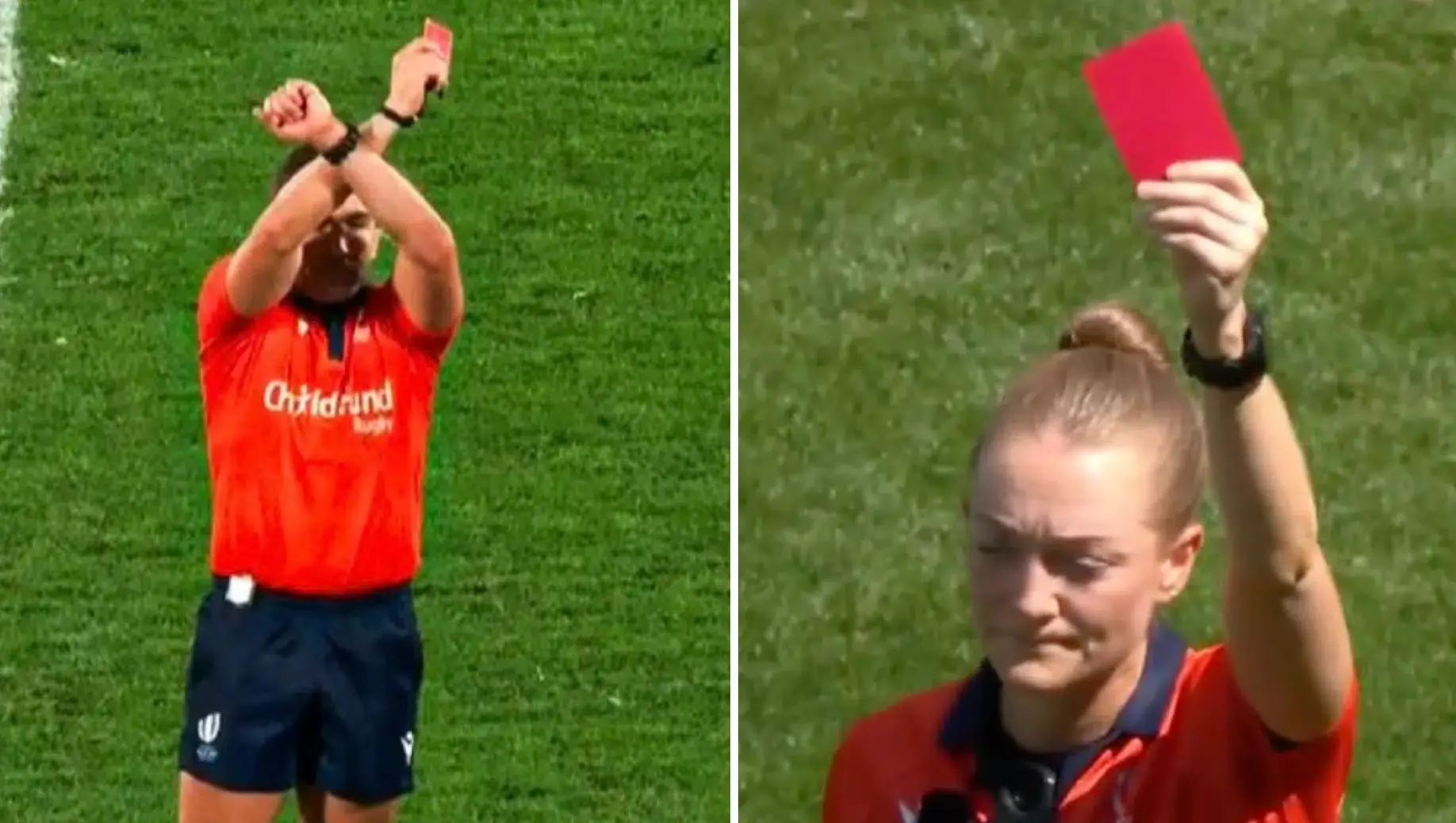

The second round of the 2026 Nations Championship is underway, and the match officials are already making headlines.
With six huge Tests taking place across the day, we’ll be grading every referee based on their biggest decisions, game management and overall performance.
This page will be updated throughout the day as each match reaches full-time, starting with Luc Ramos’ controversial display in New Zealand’s clash with Italy.
⭐ Save us to your Google Favourites for nonstop RUCK content!
LUC RAMOS: New Zealand vs Italy – D-
By Steve Smith
Luc Ramos never looked in control of this Test. From the opening exchanges, he appeared flustered, with several key decisions creating more confusion than clarity.
The All Blacks seemed to get the rub of the green throughout the first half, with Will Jordan’s controversial try the standout moment. New Zealand also appeared to enjoy plenty of freedom around the offside line – Richie McCaw would have been proud.
The biggest flashpoint came with Niccolò Cannone’s yellow card, which was eventually upgraded to a red. Cannone was penalised for head contact while being held on the ground, despite Law 15 making it illegal to grab, pull or hold a player to prevent them from leaving a ruck once they are no longer part of it.
Had that offence been penalised first, many will argue the subsequent All Blacks try should never have counted.
The confusion continued late on when All Blacks full-back Ruben Love was shown a yellow card for a deliberate knock-on.
During the review, assistant referee Luke Pearce argued that the yellow card should stand, believing Love had deliberately prevented the Italy player from catching the pass and continuing a promising attack.
Despite Pearce’s view, Ramos eventually overturned the decision and allowed Love to return. For me, there wasn’t enough evidence to reverse the original call, and the lengthy discussion between the officials only reinforced the feeling that Ramos lacked conviction in some of the biggest moments.
By full-time, the officiating had become one of the major talking points. Ramos’ handling of several key incidents felt hesitant, inconsistent and ultimately detracted from the contest with fans online accusing him of being 'clearly bias' to the All Blacks.
Grade: D-
PIERRE BROUSSET: South Africa vs Scotland – TBC
To be updated after full-time.
KARL DICKSON: Australia vs France – B
I don't say this very often, but Karl Dickson had an excellent game.
From the opening whistle he was calm, decisive and never looked like losing control, even when tempers briefly flared during a few first-half handbags. He communicated clearly with the players, made his decisions quickly and rarely left anyone waiting around.
Not every call was perfect, and there were one or two decisions that could certainly be debated. The biggest criticism is that the game became quite stop-start at times, with Dickson quick to blow his whistle rather than allowing play to develop where possible.
That said, consistency is often what players ask for, and Dickson largely delivered it. Both Australia and France will probably feel they had decisions go against them, but neither side can have too many complaints about the overall officiating.
Grade: B
HOLLIE DAVIDSON: England vs Fiji – C
By Charlie Elliott
Davidson made a few early scrum calls against Fiji and correctly allowed England's opening try after ruling the ball had remained in play despite hitting the corner post.
Although there were claims she had blown the whistle before another England score, replays showed she had not. A lengthy TMO review before half-time resulted in a controversial but ultimately correct red card for Fiji.
While Davidson relied heavily on the TMO throughout the match, the key decisions were ultimately accurate. The main criticism was the number of lengthy reviews, which slowed the game down and prevented the contest from developing any real flow. Social media reaction to her performance was mixed, with some praising her calm, decisive approach and accuracy, while others felt the constant TMO interventions disrupted the spectacle and made the game overly stop-start.
Overall, Davidson remained in control throughout a physical encounter and neither side will have too many complaints about the major decisions. A solid performance, even if the flow of the match suffered.
POLL:
NIC BERRY: Argentina vs Wales – TBC
To be updated after full-time.
ANDREA PIARDI: Japan vs Ireland – C
By Tom Sansom
The Italian was handed the whistle for the second round clash in the Nations Championship, and the smaller stature crowd enabled him to get his point across without being drowned out by the noise. With around 10,000 in attendance, it was by no means the biggest crowd Piardi had refereed in front of.
Missed a possible high tackle in the early goings, as Ciaran Frawley took a cheap shot from a Japanese defender. This was followed by Piardi seeing no foul play in a blatant line-out obstruction on Tadhg Beirne in the 13th minute, that led to an Irish knock on.
A harsh call then followed on Stuart McCloskey, who was adjudged to be 'playing the scrum half' at the back of a ruck. However, there was plenty of daylight between the Japan nine and the breakdown and was a valid tackle attempt. Went to the TMO just before half-time, and Piardi made the right call as Ireland squandered a strong attacking position with a knock-on, after Nick Timoney and Sean Jansen's great line break.
Piardi's second half performance began with a correct forward pass assessment from Japan. There were few big calls to make for Piardi in the second half, yet the repeated Japanese penalty count wore thin on the Italian. The Brave Blossoms dropped to 14 men, as Japan gave away too many infringements for his liking, with try-scoring replacement hooker Era heading back to the bench. The scrums went uncontested in the end of the match, as Japan could not field a competitive front row with Era in the bin.
EDITORS PICKS:
TRENDING


LATEST NEWS



LATEST COMMENTS
- Jordie Barrett over Damian de Allende is far from being correct. The hype around Dupont is also overreaching, he's probably 4th in the world and has been since the 2023 WC. He also avoids certain matchups which is strange. The rest of the list is pretty good apart from minor subjective biases.JasonMarlow16-09-2026
Loading
