England will play in final Six Nations match broadcast by the BBC
Rugby NewsFriday, 21 February 2025 at 21:32
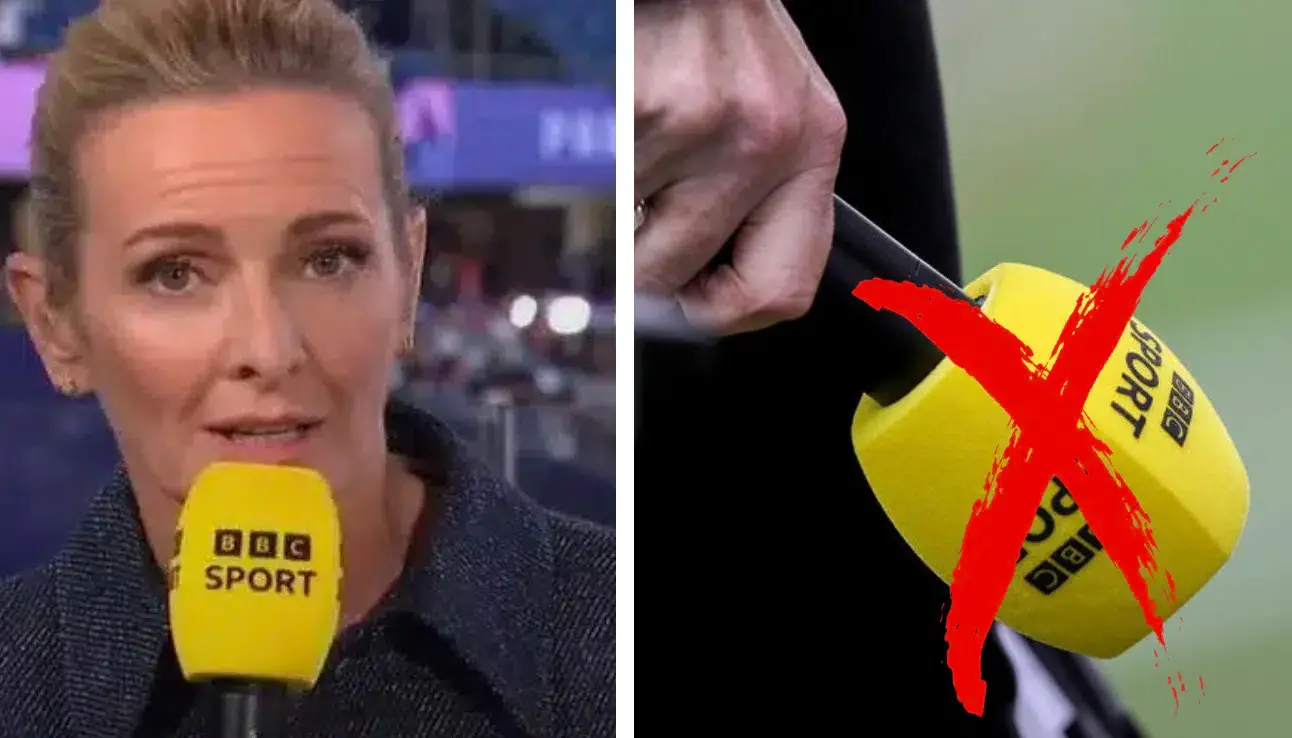
BBC insiders are reportedly bracing themselves for a major loss, with fears growing that the broadcaster will lose its Six Nations TV rights after this year's tournament.
If that happens, the Wales vs. England clash on the final day of the 2025 Six Nations could mark the end of an era for BBC's coverage.
Subscription Incoming?
The current rights agreement splits the tournament between BBC and ITV, with the former showing Wales and Scotland’s home fixtures while ITV airs games in England, Ireland, France, and Italy. But with TNT Sports circling, fans may soon have to pay a subscription to watch the tournament live. Even within the BBC, there’s little optimism about keeping hold of the rights.
TNT to Blow Up Free-to-Air Coverage?
According to The Telegraph, BBC staff covering this year’s tournament expect it to be their last, with mounting concerns over the level of interest shown by the corporation’s new director of sport, Alex Kay-Jelski. However, free-to-air broadcasters are still in the running, as the next deal won’t necessarily go to the highest bidder.
From Free to Fee?
The Six Nations has historically been a fixture of terrestrial TV, apart from a brief period between 1998 and 2001 when England’s matches aired on Sky Sports. But a final decision on the rights will rest with the six unions, and with the BBC facing financial struggles, the fear is that they simply won’t be able to compete with TNT and ITV.
Slater’s Warning: BBC Can’t Keep Up
Former BBC sport director Barbara Slater previously warned that the corporation could no longer afford the Six Nations, pointing out that its budget had shrunk by 30% in real terms while sports rights fees had more than doubled in the past decade. Unlike events such as the Rugby World Cup final, Olympics, and Wimbledon final, the Six Nations isn’t protected under the UK’s 'crown jewels' list, meaning it doesn’t have to be offered to free-to-air broadcasters.
TNT Responds to £100m Speculation
Earlier this month, TNT responded to speculation about a potential £100m deal—£10m more than the BBC and ITV’s current joint agreement. A spokesperson told Broadcast Sport:
"While we think the Six Nations is the best international rugby competition in the world, its important partnership with free-to-air television across the UK and Ireland, but particularly in markets like Wales and Ireland, would make our involvement very challenging."
EDITORS PICKS:
- Six Nations stadium has been left abandoned and overgrown
- Nigel Owens ranks the FIVE best captains he has refereed
- England ditch Umbro for new kit manufacturer deal worth £5m per season
- Former Scotland star Stuart Hogg welcomes fifth child weeks after conviction
Brian O’Driscoll didn’t even blink when asked who his toughest opponent was
orn in Dublin on January 21, 1979, O’Driscoll amassed 141 Test caps for Ireland and the Lions, captaining his country a record 83 times. His dazzling footwork, intelligent running lines, and incredible ability to read the game made him a nightmare for opposition defences. Over his career, he won multiple Six Nations titles, including a Grand Slam in 2009, and left an indelible mark on the sport.
Throughout his time at the top, O’Driscoll faced some of the best players to ever step on a rugby pitch. In interviews spanning several years, including a Q&A with the Six Nations website, he revealed the five opponents who pushed him to the limit.
5. Ma’a Nonu (New Zealand)
Few players in rugby history have evolved as dramatically as Ma’a Nonu. Initially known more for his signature braids and heavy-handed running style, the All Blacks centre developed into a complete midfielder, adding a sharp passing and kicking game to his powerful ball-carrying. His transformation was instrumental in New Zealand’s dominance, culminating in back-to-back World Cup triumphs in 2011 and 2015.
Nonu finished his Test career with 103 caps, forming an iconic partnership with Conrad Smith that was the bedrock of the All Blacks’ midfield for nearly a decade.
Brian O'Driscoll SAID: "Same height as me [5-foot-11] and still 16-stone. Probably the most complete centre in the modern game."
4. Conrad Smith (New Zealand)
Nicknamed ‘The Snake’ for his uncanny ability to glide through defensive gaps with minimal effort, Conrad Smith was the brains of the All Blacks midfield for over a decade. His intelligence, composure, and defensive awareness made him an indispensable part of New Zealand’s success.
Winning two Rugby World Cups (2011, 2015) and earning 94 Test caps, Smith was the ultimate team player. While his attacking flair often flew under the radar, his sharp decision-making and ability to link play made him one of the best centres of his generation.
Brian O'Driscoll SAID: “I thought Conrad Smith was always one of the really difficult ones. He was nicknamed ‘Snake’ I think because of his hips and it doesn’t look like he’s going that fast but jeez, he can travel.”
3. Richard Hill (England)
If ever a player epitomised the term ‘unsung hero,’ it was Richard Hill. A master of the unseen work, Hill was England’s defensive enforcer and breakdown specialist, making life easier for his teammates with his relentless graft.
A key figure in England’s 2003 World Cup-winning squad, Hill could play anywhere across the back row and never sought the limelight—he simply did his job with brutal efficiency. Across 71 caps for England and five for the Lions, his influence was immeasurable.
Brian O'Driscoll SAID: "Richard Hill, England No.6 that won the World Cup in 2003. He was a brilliant teammate but he made that team tick. He was the unsung hero in that World Cup win. He was hard! I always liked playing with guys that were nails in the team, that really stood up and never took a backwards step."
2. Yannick Jauzion (France)
A towering figure at 6-foot-4 and nearly 17-stone, Yannick Jauzion was the archetype of a complete centre. A key part of France’s golden era in the early 2000s, he combined power, finesse, and a sublime offloading game that tormented defences.
With 73 caps for France, Jauzion was instrumental in Toulouse’s European dominance, winning the Heineken Cup twice. His standout moment came in the 2005 Heineken Cup Final, where he was named Man of the Match in Toulouse’s triumph over Stade Français.
Brian O'Driscoll SAID: "Jauzion was just incredible and was so hard to stop, with his offloading ability. France built so much off and around him. 6-foot-4 and probably 17-stone."
1. Jonny Wilkinson (England)
A generational talent, Jonny Wilkinson will forever be remembered for his extra-time drop goal in the 2003 Rugby World Cup final. But that moment only scratches the surface of his influence on the game.
Wilkinson was the ultimate perfectionist, a relentless competitor who combined pinpoint accuracy with fearless tackling and tactical mastery. Across 97 caps for England and the Lions, he scored an astonishing 1,246 points, cementing his legacy as one of the sport’s greatest fly-halves.
Brian O'Driscoll SAID: “Even to just get a snapshot of what his mind works like now and how he thinks about things is pretty eye-opening as to what sort of detail he went into as a player.”
Fan creates insanely tough quiz about Six Nations and says ‘you won’t get all five’
Since its origins as the Home Nations Championship in 1883, the Six Nations has grown into one of the most iconic tournaments in rugby, filled with legendary moments, unforgettable upsets, and record-breaking performances.
Think you know your Six Nations history? Test your knowledge and see if you can prove them wrong!
MORE QUIZZES
TRENDING

LATEST NEWS
LATEST COMMENTS
- Jordie Barrett over Damian de Allende is far from being correct. The hype around Dupont is also overreaching, he's probably 4th in the world and has been since the 2023 WC. He also avoids certain matchups which is strange. The rest of the list is pretty good apart from minor subjective biases.JasonMarlow16-09-2026
Loading