England's 1991 Rugby World Cup finalists: Where are they now?
Rugby NewsMonday, 05 November 2018 at 15:28
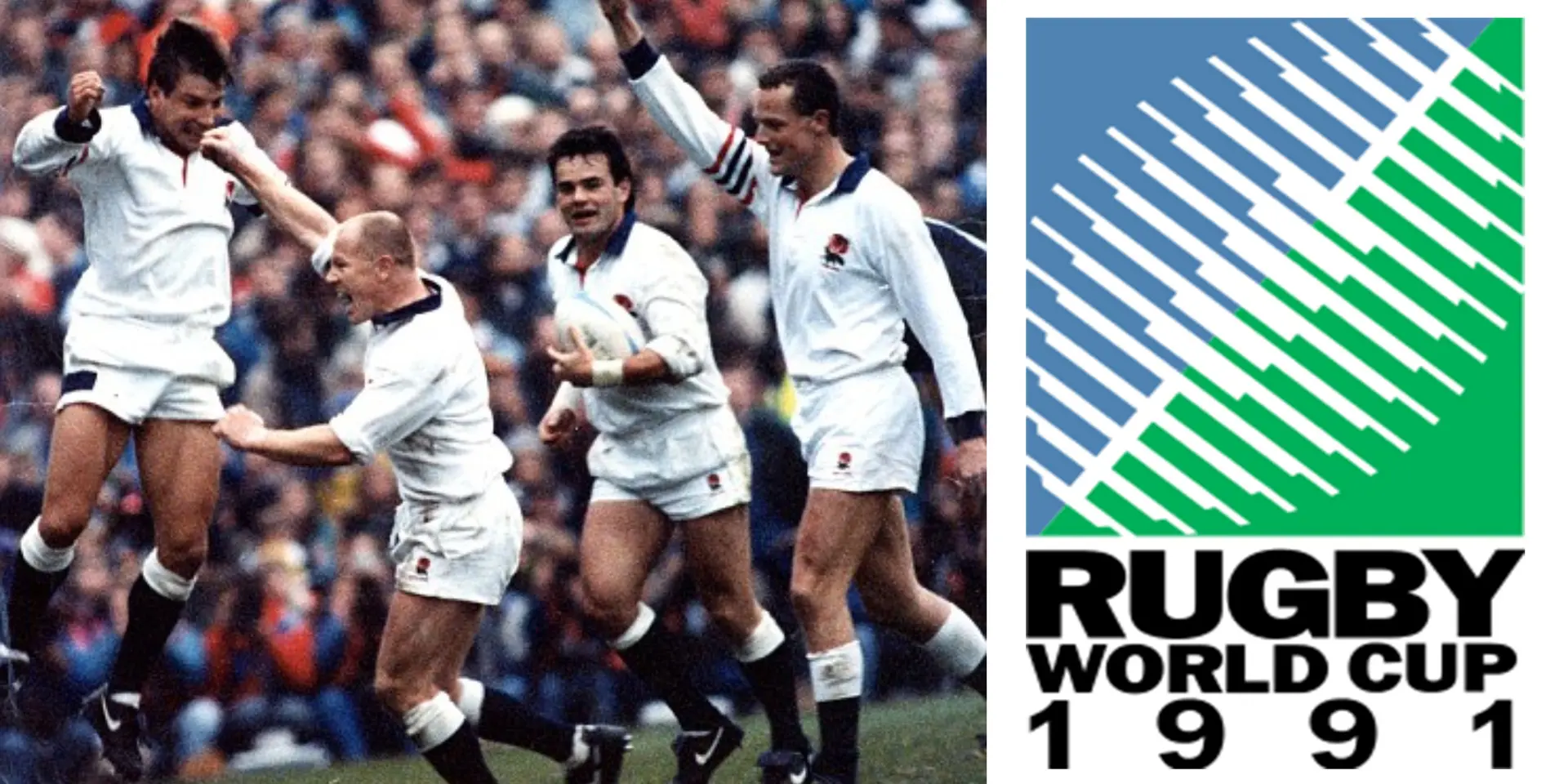
We take a look at what happened to the 15 players following their narrow defeat against Australia in the 1991 Rugby World Cup final.
Beaten by the All Blacks in their opening game, Geoff Cooke’s side decided on a more pragmatic style which took them past France in a tumultuous quarter-final in Paris and Scotland in a semi reeking of revenge at Murrayfield. But it was a case of so near, yet so far in the Twickenham final against Australia after a change of tactics.
Here's where the starting team is now:
FB 15 Jonathan Webb
Since retiring in 1993, Webb has developed a career in knee surgery and sports medicine, specialising in keyhole surgery and knee ligament reconstruction. In 1996 he undertook a year-long fellowship at the North Sydney Orthopaedic and Sports Medicine Centre in Australia.
In 1999 he was named an Honorary Senior Lecturer at the University of Bristol. In 2011 Webb co-founded Fortius Clinic in London along with fellow surgeons Andy Williams and James D. F. Calder, where he practices as a consultant orthopaedic knee surgeon. In 2014 he became a patron of the Southern Spinal Injuries Trust.
RW 14 Simon Halliday
From 1981 to 1990, Halliday made a total of 170 appearances for Bath, including five successful Cup Finals. In 1990 he moved to Harlequins before retiring in 1992 because of long-term injuries. Halliday published the book City Centre in 2013, a book about rugby. It won the 2014 British Sports Book Awards in the "Rugby" category.
He's currently the Chairman of European Professional Club Rugby (EPCR) and is the co-owner of the Sporting Wine Club along with his business partner Chris Mariner.
IC 13 Will Carling (c)
In the run-up to the 1995 World Cup, after England returned to form with their third Grand Slam in five years, Carling famously described the Rugby Football Union general committee as "57 old farts" which led to his sacking as captain. He was however quickly reinstated due to public pressure and following a public apology was able to go to the 1995 Rugby World Cup.
They were however well beaten by New Zealand in the semi-final, largely thanks to four tries from Jonah Lomu. Although Carling himself scored two tries towards the end of that game, and set up two more for Rory Underwood, England lost 45-29.
After his rugby career ended he became a TV pundit on rugby union. He has also worked as a motivational speaker and in 2001 founded Will Carling Management Ltd, a corporate hospitality company. In October 2018, the former captain joined Eddie Jones staff as a mentor.
OC 12 Jeremy Guscott
In 1999, he was accused of assaulting a pedestrian shopkeeper during a road rage incident in which the man's ankle was shattered, but was cleared of actual bodily harm by Bristol Crown Court. Guscott now works full-time for the BBC as a pundit on their Rugby Special, Scrum V and 6 Nations programmes.
LW 11 Rory Underwood
Despite planning to hang up his boots in 1992, Underwood changed his mind and opted to carry on, initially for the next match against South Africa (their first match since their readmission to international sport), and eventually for several more years - playing mostly now on the left, to accommodate his younger brother, Tony, on the right wing. They were the first brothers to represent England at the same time since 1937.
Off the pitch, the England speedster was a Fast Jet pilot in the RAF from 1983 to 2001 before becoming a Director of UPH Ltd, a management and teamwork training company, from 2001 to 2009. He now combines being a Non- Executive director of Leicester Tigers with owning Wingman Ltd, which is a is a team development and performance consultancy built on the high-performance experience Underwood’s international rugby and fast jet flying careers.
FH 10 Rob Andrew
The following year he played a season with Toulouse before returning to Wasps and in 1993 featured in all three Tests on the Lions tour to New Zealand. Having equalled Didier Camberabero’s then world record with 30 points in the 1994 win over Canada he then played in every international during 1995 as England notched their third Five Nations Grand Slam in five years and reached the semi-finals of the World Cup in South Africa.
That year he was awarded the MBE, having retired from international rugby and also agreed to join Newcastle as playing rugby development director. He came out of international retirement in 1997, coming on as replacement in England’s March win over Wales. That year Newcastle Falcons won promotion into the Premiership and then won the title at their first attempt in 1998. Under Rob’s guidance Falcons also beat Harlequins and Sale Sharks respectively in two RFU Knock Out Cup Finals. After 10 years at Newcastle Falcons, Rob Andrew joined the RFU in September 2006.
He resigned as the RFU's director of professional rugby in February 2016 before being appointed cthe hief executive of Sussex County Cricket Club.
SH 9 Richard Hill
After assistant posts at Gloucester and Harlequins, Hill also spent a season as head coach of England Students and the backs coach as Ebbw Vale RFC. In 2002 he was appointed head coach of Newport RFC. A year later he joined Bristol Rugby, leading them back to the Guinness Premiership after two seasons, and then to third place and the playoffs in the 2006–7 season. In July 2009, he agreed to join French third division side Chalon-sur-Saône as head coach.
In May 2010, Hill was named as head coach for Worcester Warriors and in his first year as head coach, guided them back into the Aviva Premiership. However, Hill was sacked from his post at Worcester "following the club's recent run of form".
N8 8 Mike Teague

Teague finished his international career by making a second Lions tour to New Zealand in 1993, making his last international appearance as a substitute in the Lions 20-7 victory over New Zealand in Wellington on 26 June 1993.
Post rugby, Teague has opened two pubs with his brother Gary, one directly opposite Kingsholm Stadium in Gloucester and one more recently in nearby Cheltenham, both called Teagues Bar.
At Teagues Bar in Gloucester there is a section devoted to his Lions tour in 1989 when he was named player of the series, along with programmes, jerseys, boots, balls and photographs of Gloucester teams dating back to the 1800s. He now divides his time between running the pub and developing property.
OF 7 Peter Winterbottom
He made his England debut on 2 January 1982 against Australia, and his final appearance on 20 March 1993 against Ireland. The flanker was the second England player to reach 50 caps, after Rory Underwood, and was inducted onto the Twickenham "Wall of Fame" in November 2005.
Since his playing career ended, Winterbottom carved out a career in finance. He worked as a money broker for BGC Partners alongside England teammate Ben Clarke, but left BGC in 2008 to join interdealer broker Creditex.
BF 6 Michael Skinner
During his career Skinner won a total of 21 caps for England. He made his England debut on 16 January 1988 in England's 10-9 defeat to France in Paris during the Five Nations. His final game for England was on 7 March 1992 against Wales at Twickenham as part of the Five Nations tournament.
Since leaving the game, Skinner has worked as a media pundit and became famous amongst fans for his interesting choices of waistcoat. He also featured in a video in which he introduces some of rugby's best tackles. He is an active supporter of Wooden Spoon charity.
RL 5 Paul Ackford
He retired from international rugby after the 1991 World Cup,won by Australia, becoming a journalist and writing for the Sunday Telegraph.
LL 4 Wade Dooley
The second-row went on the 1993 British Lions tour to New Zealand, but left the tour to return home for the funeral of his father. He was replaced on the tour by the young Leicester England lock Martin Johnson, and decided to retire.
Dooley was a police officer for “about 33 years” before retiring in 2007 and embarking on a career as a landscape designer.
TP 3 Jeff Probyn
Probyn is also a regular on talkSPORT as their expert on Full Contact. The 62-year-old is also a regular columnist in The Rugby Paper.
HK 2 Brian Moore
After retirement, Moore continued his legal career as a lawyer, but was asked regularly by the BBC to supplement their rugby commentary team. He does not mince his words: in 2008, he was heard to yell "They've kicked it away again, for God's sake!", when England did not run the ball in Rome, and shouted "You halfwit!" when an England forward played a French restart which had fallen short of the required ten metres, causing England to lose possession when they would otherwise have been awarded a scrum.
Moore covered the 2011 Rugby World Cup for TalkSport Radio as lead co-commentator. He commentated on this tournament alongside Michael Owen, Scott Quinnell, Gavin Hastings, Paul Wallace, Phil Vickery John Taylor, Andrew McKenna & David Campese. The coverage was shortlisted in the Broadcast of the Year category in the 2011 Sport's Journalists Awards.
Moore has had books published by Simon & Schuster. His updated version of his autobiography, Beware of the Dog (2009), won the 2010 William Hill Sports Book of the Year award, among what was described as one of the strongest shortlists ever assembled.
LP 1 Jason Leonard
Leonard played in England teams which won four Grand Slams (1991, 1992, 1995 and 2003) and the 2003 Rugby World Cup, and was part of the British and Irish Lions squad that won the test series during their 1997 tour of South Africa.
Leonard is involved in several charities. In Jan 2009 he became Lead Ambassador of the Wooden Spoon Society, a charity for disadvantaged children and young persons that has its roots founded in rugby. In 2011, he became President of Sparks, the children's medical research charity which funds pioneering research into conditions affecting the health of babies, children and pregnant women. Jason started his own charity, The Atlas Foundation, in 2015. It focuses on creating social change for poor children around the world using rugby as the vehicle.
TRENDING


LATEST NEWS
LATEST COMMENTS
- Jordie Barrett over Damian de Allende is far from being correct. The hype around Dupont is also overreaching, he's probably 4th in the world and has been since the 2023 WC. He also avoids certain matchups which is strange. The rest of the list is pretty good apart from minor subjective biases.JasonMarlow16-09-2026
Loading