Argentina vs England referee Angus Gardner graded as every official is ranked after Round Three
Rugby NewsSaturday, 18 July 2026 at 14:16
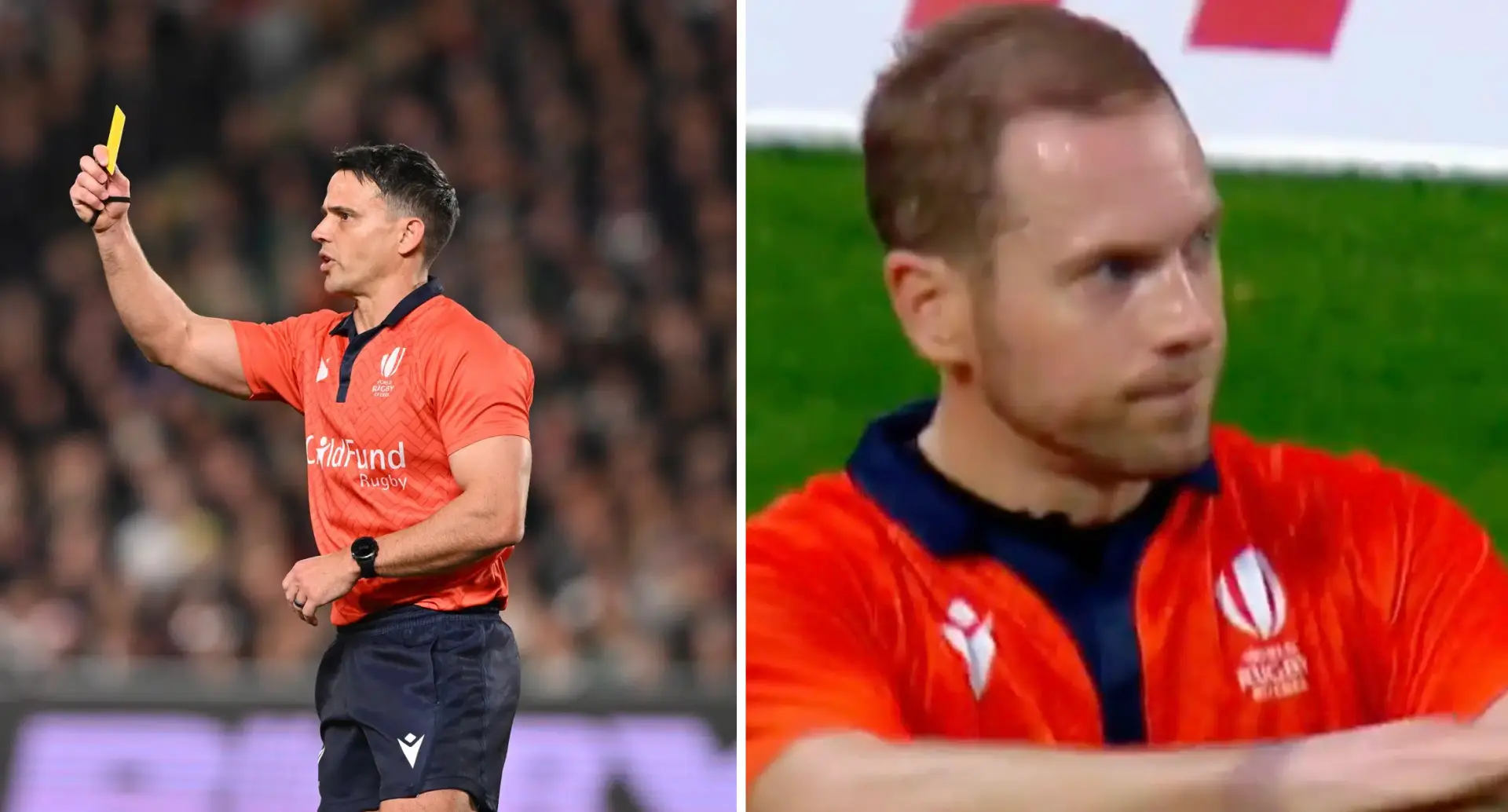

The third round of the Nations Championship sees another experienced group of officials take charge across six huge Test matches.
Throughout the weekend, we'll be grading and ranking every referee's performance, with scores updated as each game is completed. The rankings won't be based solely on technical accuracy or law interpretation, but also on overall match management, consistency, communication, game flow and how each official's display is viewed by supporters.
and get the latest rugby news straight to your phone.
Check back after every fixture as the latest grades and rankings are updated live.
Australia v Italy – Referee: Christophe Ridley (England)
Grade: B
Allowed Australia to Play
Christophe Ridley oversaw an extremely one-sided contest as Australia ended its losing run with a 57-10 victory over Italy in Perth. He allowed the Wallabies to play at tempo and generally avoided interrupting their attacking momentum with unnecessary whistles.
Australia’s dominance came primarily through its forwards, so Ridley faced repeated decisions around the scrum, maul and goal-line breakdown. He managed those areas reasonably well and communicated clearly enough during a match that threatened to become increasingly ill-tempered.
Questionable Try Decision
The major concern came immediately before half-time, when Len Ikitau’s try was awarded despite several possible Australian knock-ons during a messy passage of play.
The TMO reviewed the sequence but could not find sufficiently clear evidence to overturn Ridley’s on-field decision. Australia therefore entered the interval leading 38-5. It was not necessarily an outright error, but the footage appeared to provide enough doubt to make the final decision feel unconvincing.
Ridley and his assistants also missed an Italian hand knocking the ball from Ryan Lonergan’s possession during the second half, instead awarding Italy the scrum.
Handled the Chaos Correctly
Ridley’s strongest moment came when a touchline confrontation spilled into the Italian technical area. Marco Riccioni, who had already been replaced, struck Miles Amatosero and was shown an off-field red card.
Although Amatosero had helped escalate the confrontation by dragging an Italian player towards the bench, Riccioni’s involvement clearly required serious punishment. Ridley took his time, consulted the other officials and ultimately reached the correct outcome.
Verdict
Ridley remained composed and correctly dealt with the match’s ugliest incident. However, the questionable Ikitau try and several smaller inaccuracies prevent a higher score.
Report:
- Assistant Referees: Karl Dickson (England) & Morné Ferreira (South Africa)
- TMO: Marius van der Westhuizen (South Africa)
- FPRO: Ian Tempest (England)
New Zealand v Ireland – Referee: Nic Berry (Australia)
Grade: D+
Kept the Game Moving
Nic Berry allowed the Test to flow and generally communicated clearly with both sides. He avoided constant whistles, managed the scrum reasonably well and was correct to sin-bin Luke Jacobson for his dangerous clean-out in the first half.
Missed the Biggest Calls
Nic Berry kept the game moving and generally communicated well, but the biggest decisions of the afternoon left Ireland with genuine grievances.
The most controversial came midway through the second half when Quinn Tupaea deliberately knocked the ball down to halt a promising Irish attack. Berry awarded only a penalty when many felt a yellow card was inevitable.
Earlier in the match, Berry also opted to show Luke Jacobson only a yellow card for a dangerous clear-out that made direct contact with Josh van der Flier's head. While the mitigation was enough for the officials to downgrade the sanction, there was a strong argument that the incident met the threshold for a 20-minute red card.
Too Lenient at the Breakdown
Ireland were also left frustrated by Berry's breakdown interpretations. New Zealand were allowed to slow possession on several occasions without sanction, while a number of marginal calls appeared to favour the home side. None were decisive individually, but together they contributed to Ireland's growing frustration.
Verdict
Berry never lost control of the contest, but referees are judged on the biggest moments. Missing a possible red card, failing to sin-bin Tupaea and allowing too much at the breakdown overshadowed an otherwise competent display.
- Assistant Referees: Luc Ramos (France) & Damon Murphy (Australia)
- TMO: Ben Whitehouse (Wales)
- FPRO: Andrew Jackson (England)
South Africa v Wales – Referee: Andrew Brace (Ireland)
Grade: B
Calm and composed from the off
Andrew Brace was handed a contest that never threatened to boil over thanks to South Africa's dominance. The Irish referee let the game flow where possible, communicated clearly with both captains and avoided becoming the centre of attention during the opening exchanges.
Consistent interpretation
Brace was consistent at the breakdown and set piece, applying the same standard to both sides throughout. While there were plenty of penalties in a physical contest, there were few decisions that drew significant complaints, allowing the match to maintain a steady rhythm.
Correct disciplinary decision
The biggest officiating moment came in the second half when Wales replacement Ben Warren was shown a yellow card for a high tackle on Marco van Staden. Brace dealt with the incident swiftly, with the sanction matching the level of foul play and preventing any unnecessary escalation.
Verdict
Compared to the controversy surrounding some of the other Round Three officials, Brace enjoyed a relatively quiet afternoon. He communicated well, stayed consistent with his interpretations and handled the game with minimal fuss. There were no major errors to overshadow a straightforward, professional performance.
Report:
- Assistant Referees: Pierre Brousset (France) & James Doleman (New Zealand)
- TMO: Olly Hodges (Ireland)
- FPRO: Richard Kelly (New Zealand)
Argentina v England – Referee: Angus Gardner (Australia)
Grade: C
Angus Gardner had an incredibly busy afternoon, with numerous stoppages, penalties and disciplinary moments to manage.
Despite the game threatening to boil over at times, particularly with Argentina attempting to unsettle England, he dealt with the pressure well and remained assertive.
Perhaps his assertiveness boiled over a little bit and he seemed to be a little bit unfriendly towards a few players at times, although justified with the amount of chat he was given.
His scrum management and communication were strong, though some yellow cards and decisions sparked debate. Overall, he helped take the sting out of the contest and maintained control in a challenging fixture, even if he was close to losing it at the end.
Seven yellows overall may look like he'd lost control, but was more a reflection of player infringements.
Consistent Interpretation
Gardner was generally consistent in applying his interpretations, particularly at the scrum where he clearly communicated his expectations and managed players effectively.
He kept a close eye on repeated offences, including offsides and breakdown incidents, although some decisions felt harsh, such as Alex Coles’ deliberate knock-on penalty try and Santi Carreras’ yellow card, although that does show consistency.
While he made some controversial calls, his overall approach remained steady.
Correct Disciplinary
The referee was tested heavily in this area, with multiple flashpoints and four yellow cards to issue. The Mateo Carreras yellow card was slow to reach a decision but was ultimately the correct outcome after reviewing several angles.
The Joaquin Oviedo card for the croc roll was also justified. However, some disciplinary calls, particularly against Coles and Santi Carreras, appeared overly severe. Gardner managed a difficult disciplinary workload well overall.
His decision to effectively override the TMO and disallow the potential equalising try was controversial to say the least, and while some Argentines may disagree, it ultimately seems like the correct call.
Verdict
A demanding match for Gardner, who was incredibly busy but seemed to deal with the volume of incidents effectively. While a few decisions will be debated, he maintained authority, communicated well and prevented the game from escalating.
His management of the contest was a positive overall, despite some frustrations around TMO delays and questionable disciplinary calls. Regardless, he was a busy ref and was not helped by a lot of backchat from the players.
Right at the end he was dealt an extremely difficult decision to disallow Argentina's try, however it seems like he made the right call, although arguing with the TMO was not a good look.
POLL:
Report:
- Assistant Referees: Nika Amashukeli (Georgia) & Paul Williams (New Zealand)
- TMO: Brett Cronan (Australia)
- FPRO: Tual Trainini (France)
Japan v France – Referee: Ben O’Keeffe (New Zealand)
Grade: B+
Strong Control
Ben O'Keeffe produced a composed display in Japan, keeping an entertaining contest moving with minimal intervention. His communication was clear throughout and players from both sides appeared to understand where the line had been drawn.
Good Use of Advantage
One of O'Keeffe's biggest strengths was his willingness to play advantage. Rather than blowing his whistle at every opportunity, he allowed attacks to develop while remaining quick to return for penalties when no benefit materialised. It made for a fast, enjoyable spectacle.
A Few Inconsistencies
There were one or two breakdown decisions that frustrated both teams, while a couple of marginal calls at the scrum could have gone either way. However, none had a significant bearing on the outcome and he remained consistent with his overall interpretation.
Verdict
O'Keeffe rarely became the story, which is usually the sign of a good refereeing performance. While not flawless, he controlled the game well, communicated effectively and made the vast majority of the big calls correctly.
Report:
- Assistant Referees: Andrea Piardi (Italy) & Luke Pearce (England)
- TMO: Glenn Newman (New Zealand)
- FPRO: Matteo Liperini (Italy)
Fiji v Scotland (Murrayfield, Edinburgh) – Referee: Matthew Carley (England)
Grade: C
Kept up with the frenzy
Matthew Carley had certainly been getting the cardio in ahead of this thrilling clash, as the Flying Fijians were in full flight with end-to-end action on display at Murrayfield. With a plethora of handling errors, thumping tackles and pulsating phases of play, Carley had his hands full to make sure he ran a tight ship in the Scottish sunshine.
Overuse of the TMO was a drawback
His first point of call was to determine the outcome of Scotland's opening surge across the Fijian try-line, as Jonny Gray batterned down the hatches for a close range drive. A swifdt check with the TMO confirmed the score, in what was a solid start on the whistle for the Englishman.
There was plenty of TMO checks and close-calls from Matthew Carley, with the Scots repeatedly driving over the line and into Fijian defenders. Whilst Josh Bayliss was denied his five-pointer in the second half, Carely worked well with the TMO to award Jamie Dobie's sniping effort at the hour mark. A needless TMO check on Scott Cummings try delayed the inevitable try, with the referee happy to slow down the pace and go to the TV studio quite a few times.
Tagitagivalu was let off the hook
Carley sent Fijian back row Lekima Tagitagivalu to the sin bin for a dangerous collision with George Horne, as the scrum half took a blow to the head at the back of a ruck. Tagitagivalu's sanction was left to the disgression of the off-field review, before the yellow card became the final decision for a latter return.
Report:
- Assistant Referees: Eoghan Cross (Ireland) & Anthony Woodthorpe (England)
- TMO: Eric Gauzins (France)
- FPRO: Leo Colgan (Ireland)
TRENDING



LATEST NEWS




LATEST COMMENTS
- Jordie Barrett over Damian de Allende is far from being correct. The hype around Dupont is also overreaching, he's probably 4th in the world and has been since the 2023 WC. He also avoids certain matchups which is strange. The rest of the list is pretty good apart from minor subjective biases.JasonMarlow16-09-2026
Loading

