Fans are only now discovering why New Zealand wears black, even though it’s not a color on their flag
Rugby NewsMonday, 01 July 2024 at 20:15
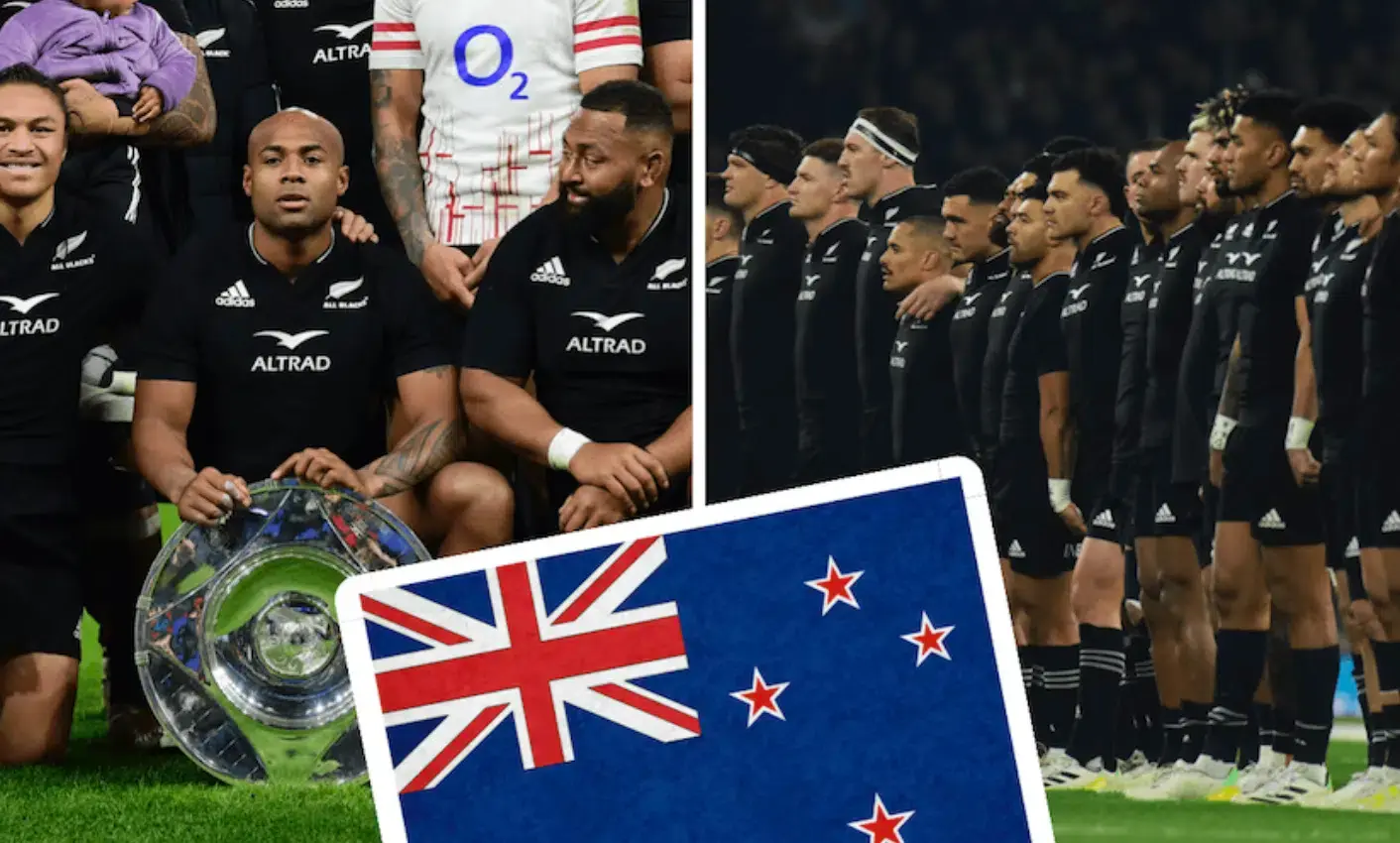

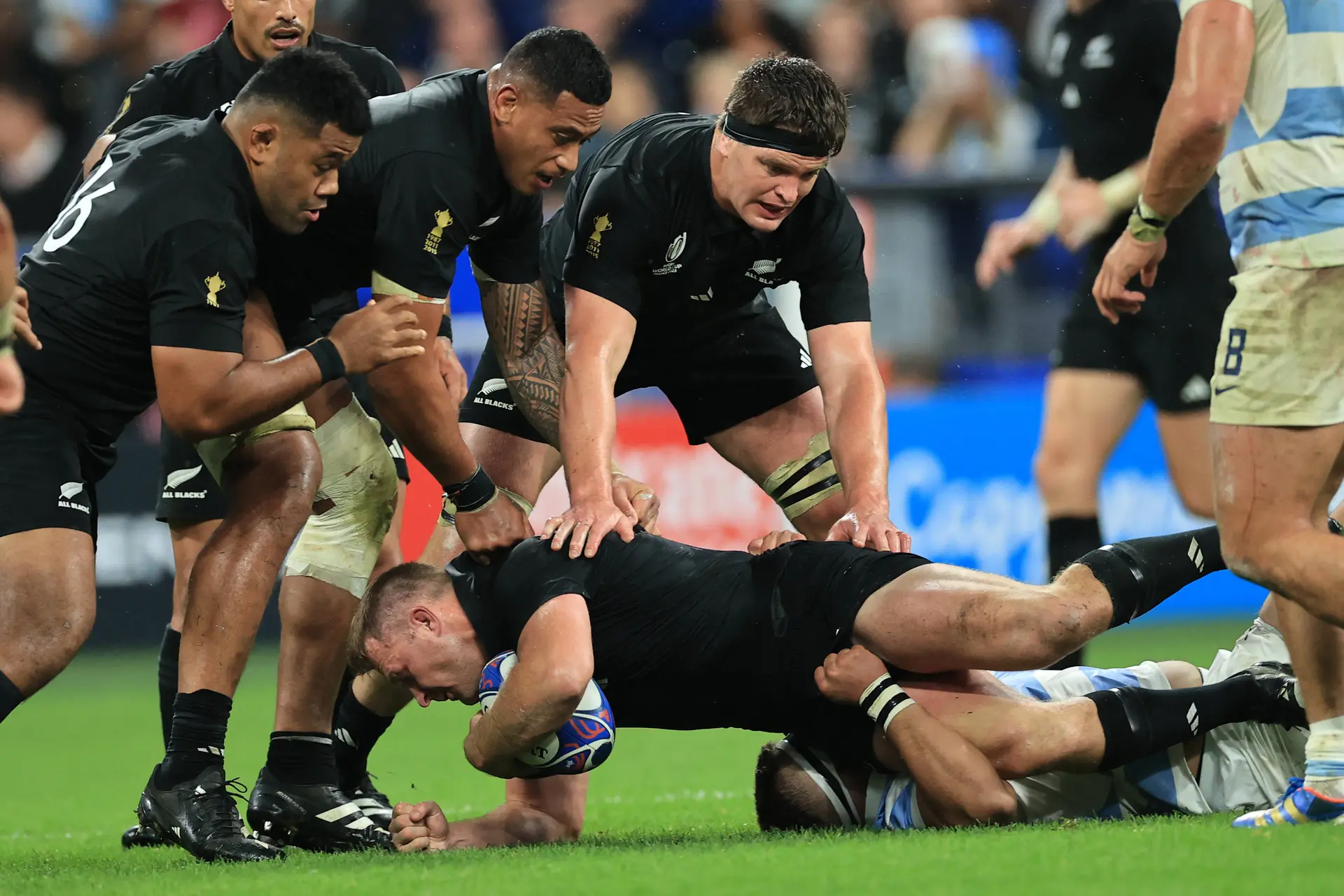
Have you ever wondered why New Zealand wear black, despite it not being a colour in their country's flag? Fans are only just finding out why.
There are few more iconic national teams in sport than New Zealand, especially when it comes to the Rugby World Cup, a tournament they rarely fail to get into the latter stages of and have won three times.
Unlike the likes of England, France, Ireland and many others, New Zealand's kit has nothing to do with their country's flag.
That's when, by chance, two of the forefathers of New Zealand sport bumped into each other while waiting as their delayed ship was loaded with excess cargo.
According to Stuff, on board the SS Te Anau in 1888, alongside 78 bags of oysters, 22 cases of quinces, one horse and 115 other passengers, the future of New Zealand sporting uniforms may have been decided.
Story from Stuff:
"Two of the forefathers of New Zealand sport bumped into each other while waiting as their delayed ship was loaded with excess cargo.
"It was Auckland on a warm April afternoon. Passengers patiently waited for their steam ship to depart for New Zealand's southern ports and Melbourne. The crew were working frantically because they hadn't planned for such a large load, taking extra time to get 884 pieces of timber and 2240 bags of sugar into the cargo hold beneath the ship's main deck.
"Sitting on board were Leonard Cuff, the founding secretary of the New Zealand Amateur Athletic Association and pioneer of the Olympic movement, and Joe Warbrick, the 17th ever New Zealand rugby representative.
"Cuff was a man with vision. He saw the potential of national and international sport, and was heavily involved in getting what is now Athletics New Zealand off the ground.
"Only a year earlier, on July 29, 1887, the NZ Amateur Athletic Association was founded. Athletes were for the first time able to compete for New Zealand titles and call themselves national champions.
"The Athletic Association decided to host national events at different meetings across the country, the first of which would be the 250 yards amateur championship of New Zealand at the Hawke's Bay athletic club's final meet of 1887.
"If the victor had dipped under the 27 second mark, he would have been awarded with a large, silver championship trophy and something that would come to be more precious in New Zealand sport - a black cap.
"Years earlier, in 1884, Warbrick was a member of the first New Zealand national team which toured New South Wales.
"The team won every game they played in Australia while wearing a blue shirt with a gold fern on the chest.
"But when Warbrick led his New Zealand Natives in 1888, he discarded the blue and gold and went for black.
"Their uniform was described in a familiar way in the
Auckland Star of July 6, 1888. "Colours: All Black with a silver fern."
"We don't know if Cuff and Warbrick spoke during that delayed voyage south from Auckland, but they were both on the shipping log published in several papers of the time."
Sir Ian McGeechan picks all-time XV – includes three England legends
Sir Ian McGeechan has picked his all-time greatest XV, but there is no room in his selection for Paul O'Connell, David Campese or Jonny Wilkinson.
Writing for The Telegraph, the 74-year-old has picked six New Zealanders in his selection along with three Englishmen, two Welshman and one player each from France, Scotland and Ireland.
BACK-THREE
Fullback: JPR Williams (Wales) - "Not a staggeringly original choice, I’ll admit. But to my mind the only one. If I’m going to be picking a dream XV over the next few days then I want JPR at the back. No question."
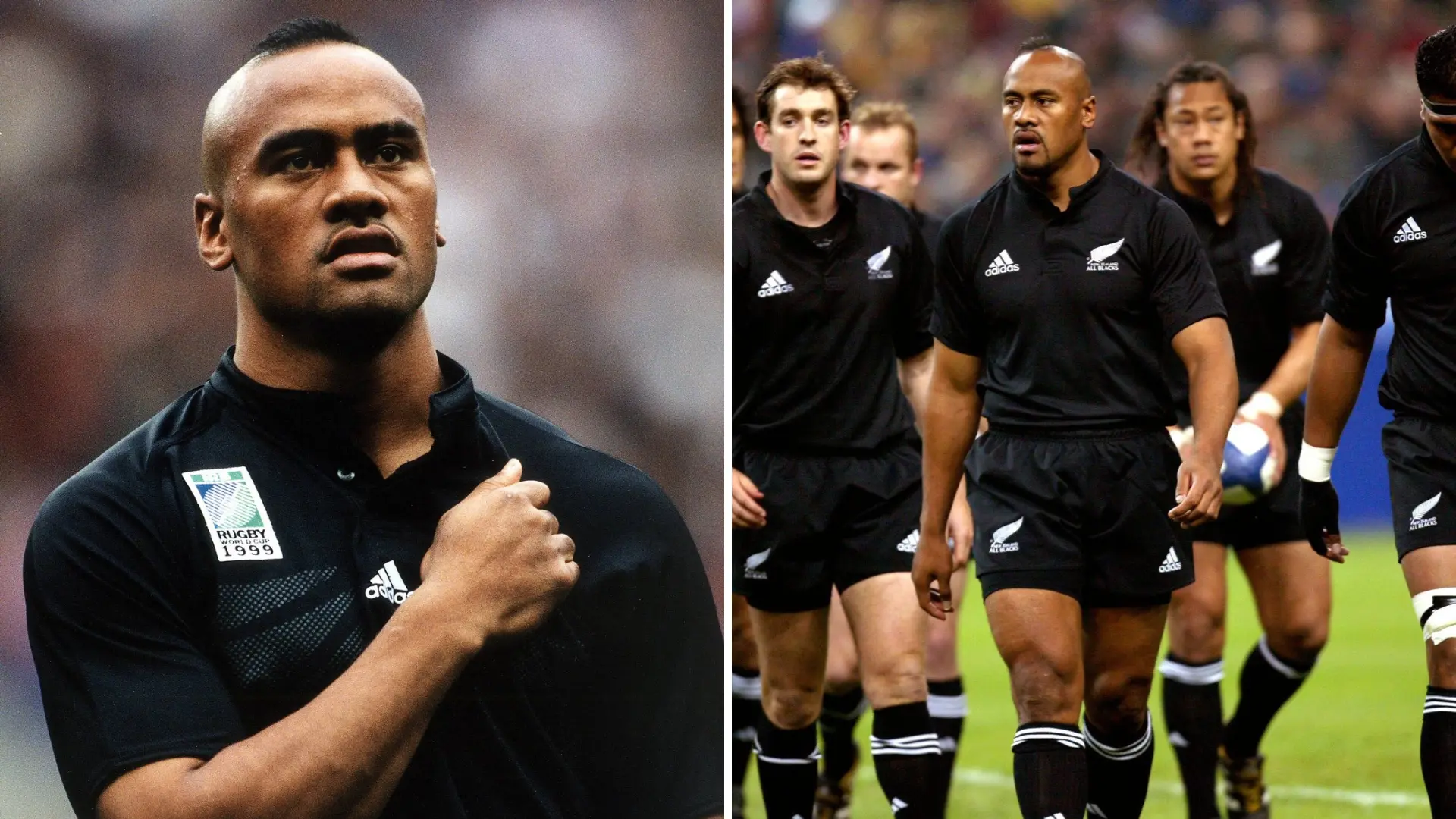
Left-wing: Jonah Lomu (New Zealand) - "Illness and injury ultimately slowed him down. But his performances at the 1995 World Cup, just as the game was turning professional, will never be forgotten. The game needed a superstar, and it got one in Lomu. He was brilliant for rugby."
Right-wing: John Kirwan (New Zealand) - "He had an all round game; he could carry the ball through heavy traffic, he could offload, he was like an extra back-rower at times. Plus, he had natural effortless pace. He ended up scoring 35 tries for the All Blacks and was instrumental as they went through their unbeaten spell of games between 1987 and 1990."
CENTRES
Outside-centre: Brian O'Driscoll (Ireland) - "His ability to get back on his feet after tackling to compete for the ball was extraordinary, and ensured he always had an impact on the game, whatever type of game it was. He was such a natural talent."
Inside-centre: Philippe Sella (France) - "Sella and O’Driscoll were powerful men. They could stop a forward in his tracks. I think as a pair they would dominate any midfield and I like the thought of them together."
HALFBACKS
Fly-half: Dan Carter (New Zealand) - McGeechan wrote that Carter “really was the complete 10. His defence was immaculate, he could break himself, he could bring others in to play, his kicking from hand and from tee was incredibly accurate. He also changed the way the game was played with his kicking from his own 22m and his kicking to compete. The greatest of the modern era in my opinion.’’
Scrum-half: Gareth Edwards (Wales) - My favourite scrum-half of all time happens to be my favourite player of all time. Gareth Edwards was and always will be the master. The Greatest.’’
FRONT-ROW
Loosehead-prop: Tom Smith (Scotland) - "I just don’t think he gets anywhere near the credit he deserves. Six consecutive Lions Tests in 1997 and 2001, a talismanic figure in Scotland’s 1999 Five Nations win, a major reason Scotland were competitive at the 2003 World Cup."
Hooker: Sean Fitzpatrick (New Zealand) - "He was outstanding, not just as a player but as a captain, and as a man. His consistency was unbelievable in an international career that spanned 12 years: 92 Test appearances, including a world record 63 consecutive Test matches and 51 as captain. "
Tighthead-prop: Jason Leonard (England) - " He played both sides of the scrum but he was more of a tighthead. Completely unflappable, Jason was never in any trouble. Technically, he was superb and temperamentally he was sound, a huge character on and off the pitch."
SECOND-ROW
Lock: Martin Johnson (England) - "I think he defined an era, both for forward play and for the performances of the teams he represented."
Lock: John Eales (Australia) - "A two-time Rugby World Cup-winner with the Wallabies in 1991 and 1999, captaining his side to victory over France in the second of those finals. A lot of the ‘number fives’ that have followed him play the way they do because of the type of game Eales set."
BACK-ROW
Blindside-flanker: Richard Hill (England) - "One of the easier selections, if I’m honest. Hill seemed to know almost instinctively where to be and when."
Openside-flanker: Richie McCaw (New Zealand) - Having picked Richard Hill at blindside, the thought of pairing him with Richie McCaw at openside genuinely excites me. Can you imagine those two together? The opposition would not stand a chance.
Number 8: Zinzan Brooke (New Zealand) - "One of the toughest choices of the lot. Maybe the toughest. His ability to bring others into the game, his ability to stay connected in the game himself, popping up repeatedly through different phases; all exemplary. And he dropped goals of course. A true original."
TRENDING

LATEST NEWS

LATEST COMMENTS
- Jordie Barrett over Damian de Allende is far from being correct. The hype around Dupont is also overreaching, he's probably 4th in the world and has been since the 2023 WC. He also avoids certain matchups which is strange. The rest of the list is pretty good apart from minor subjective biases.JasonMarlow16-09-2026
Loading
