"Gifted" - The 1990s Rugby Team of the Decade Is Absolutely Stacked
Rugby NewsThursday, 23 October 2025 at 19:55

The 1990s were a defining decade for rugby union — a bridge between the amateur past and the professional era that reshaped the game. It was a time when skill met structure, when flair shared space with discipline, and when players began to live the sport full-time.
and get the latest rugby news straight to your phone.
Here's a look at the best XV from the decade.
15 Christian Cullen
Few players read the game like Christian Cullen. With pace, balance and timing, he turned half-chances into tries. In 58 Tests for New Zealand, he scored 46 of them—often by making defenders look like they weren’t moving at all.
Off the field, he was quiet and grounded, happy to let his rugby speak for him. Cullen’s natural instincts and easy style made him one of the sport’s most gifted fullbacks.
14 David Campese
Unpredictability defined Australian rugby in the Campese era. Known for his goose-step and confidence to try anything, he scored 64 tries in 101 Tests. Teammates sometimes held their breath when he had the ball—but more often than not, it worked. Campese’s approach frustrated coaches and thrilled crowds.
Beneath the flair was a sharp rugby brain that changed how wings attacked. His creativity and fearlessness left a mark that still influences players today.
13 Jeremy Guscott
England’s midfield looked sharper whenever Jeremy Guscott was on the field. Smooth in motion and calm in thought, he relied on timing and technique rather than brute strength.
His 65 caps for England and the Lions included famous moments, like the 1997 series-winning drop goal. Guscott showed that rugby intellect could be as powerful as muscle, and that composure under pressure often separates good players from great ones.
12 Tim Horan
Dependability was Tim Horan’s trademark. The Australian centre rarely made the wrong choice, balancing strong defence with clean attacking lines. Across 80 Tests and two World Cups, he gave teammates confidence through consistency. Horan wasn’t loud or flashy; he just did the basics to a world-class standard.
His decision-making made others look better, and his calm presence became a backbone for Australia during one of its strongest rugby eras.
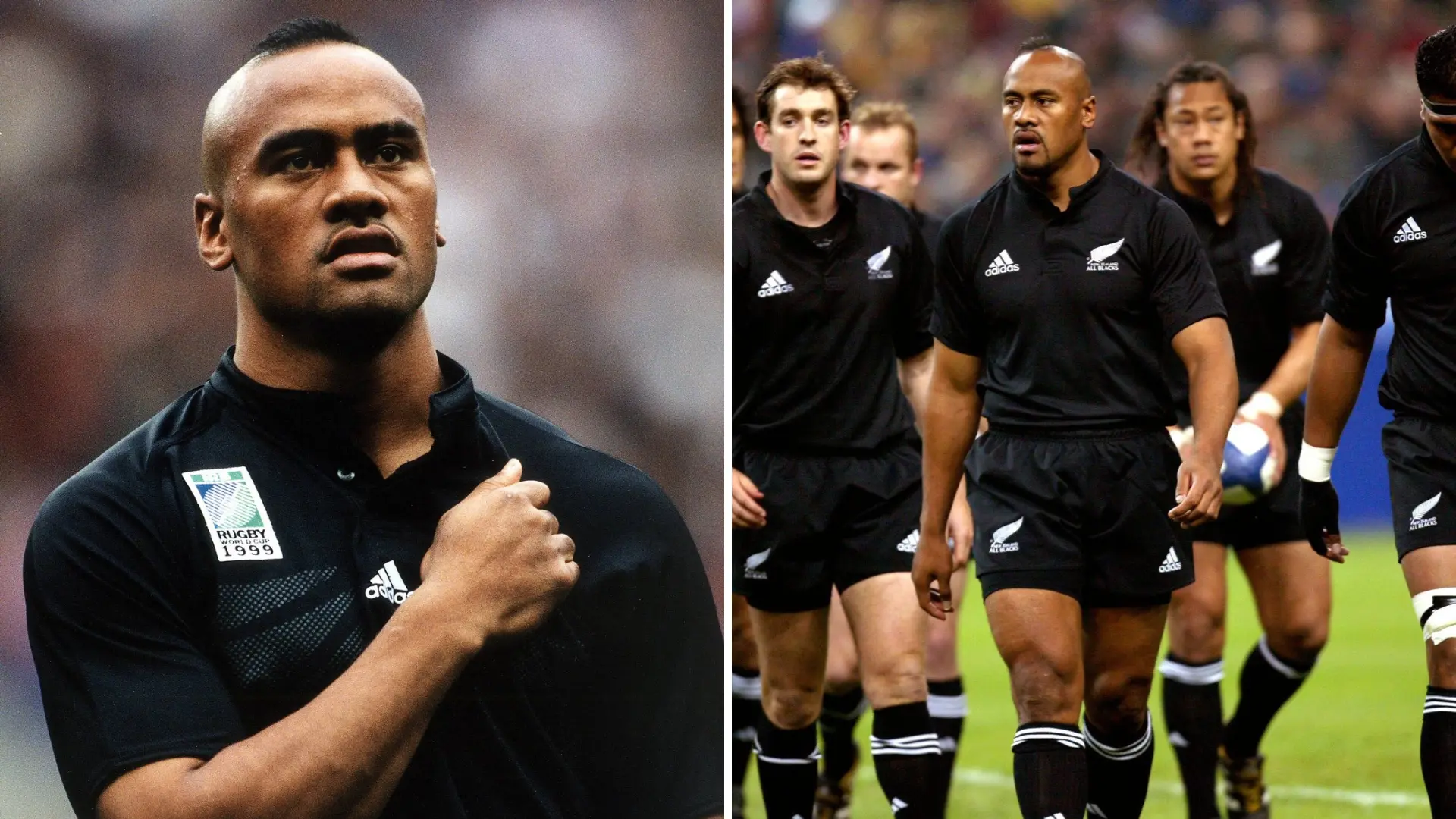
11 Jonah Lomu
Rugby changed the moment Jonah Lomu ran onto the world stage. At 6'5” and 125 kilos, his mix of power and speed was unlike anything seen before. Defenders bounced off him, yet he carried himself with quiet humility.
In 63 Tests, he scored 37 tries and turned the sport into a global spectacle. Lomu’s strength wasn’t just physical—it was in how he inspired people far beyond the game itself.
10 Michael Lynagh
Australia’s attack often flowed through Michael Lynagh’s calm decision-making. As fly-half, he guided his team to the 1991 World Cup title and 911 international points. Lynagh valued structure over spectacle, patience over panic. He played 72 Tests and was trusted to steady the game when it mattered most.
While others sought the spotlight, he focused on direction and detail, proving leadership can be quiet and still command total respect.
9 Joost van der Westhuizen
South Africa’s scrum-half revolutionised the position through power and pace. Joost van der Westhuizen could defend like a forward and finish like a winger, scoring 38 tries in 89 Tests.
A World Cup winner in 1995, he brought a fearlessness that lifted his team. When motor neurone disease struck years later, he faced it with the same determination he showed on the field—earning respect far beyond sport.
1 Os du Randt
Longevity and hard work summed up Os du Randt’s career. The South African prop played 80 Tests and won World Cups twelve years apart, a rare feat.
His nickname, The Ox, fitted perfectly—strong, reliable and relentless. Du Randt didn’t talk much about his achievements; he simply showed up and did his job. Teammates valued his consistency, and opponents knew how hard it was to move him in a scrum.
2 Sean Fitzpatrick
Consistency made Sean Fitzpatrick one of the All Blacks’ great leaders. A hooker who played 92 Tests and 63 consecutively, he led with effort, not ego. Fitzpatrick demanded high standards but met them himself first.
His influence went beyond matches—he set a culture of pride and professionalism that shaped New Zealand rugby for years. For him, wearing the black jersey meant constant accountability and total commitment.
3 Jason Leonard
Reliability defined England’s front row for more than a decade, and Jason Leonard was at its centre. With 114 caps, four Grand Slams and a World Cup, he became one of rugby’s most durable players.
Known as The Fun Bus off the field, he was all business in the scrum. Leonard never chased headlines; he simply worked harder for longer. His mix of toughness and humility made him universally respected.
4 Martin Johnson
Before England’s 2003 World Cup win, Martin Johnson had already built a reputation as a leader others followed instinctively. A towering lock with unshakable discipline, he set standards through actions, not words.
Johnson captained Leicester and England with authority but without arrogance. His approach was simple—do your job properly, every time. That consistency turned strong teams into champions and made him one of rugby’s most respected captains.
5 John Eales
Calm authority came naturally to John Eales. Australia’s lineout leader could also kick goals under pressure, showing unusual versatility for a lock. Over 86 Tests, including a World Cup win as captain, he earned respect through intelligence and composure. Eales believed in teamwork and preparation, not shortcuts.
His steady influence made those around him better, and his leadership remains a model for balance between competitiveness and humility.
6 Michael Jones
Integrity and talent defined Michael Jones. A flanker for New Zealand’s 1987 World Cup-winning side, he was admired as much for his principles as his play.
Nicknamed The Iceman for his timing and calmness, he dominated breakdowns without ever losing control. His decision not to play on Sundays reflected his faith, and his teammates respected him deeply for it. Jones proved that conviction and class can coexist.
7 Josh Kronfeld
Every loose ball seemed to find Josh Kronfeld. The New Zealand flanker built his game on speed, energy and effort. In 54 Tests, he was the link between forwards and backs—quick to tackle, quick to steal, and always first to the breakdown. Kronfeld wasn’t a headline chaser; he was a worker who made others shine.
Fans admired his consistency and his knack for turning small moments into big plays.
8 Zinzan Brooke
Finishing off this All Blacks back row is No.8 Zinzan Brooke. Few forwards played with as much creativity as he did. For New Zealand, he brought skill and imagination to the number eight role—scoring from long range, offloading smartly, even drop-kicking goals.
Over 58 Tests, he mixed power with flair and tactical understanding. Brooke’s confidence didn’t come from showmanship but from belief in his craft. He showed that forward play could be intelligent, adaptable and entertaining.
EDITORS PICKS:
- BREAKING: Red Roses legend Emily Scarratt confirms retirement from rugby
- Five Most Controversial Omissions from the Springboks Autumn Squad
- Steve Borthwick explains Owen Farrell England recall situation
- What if? Seven Former Rugby Wonderkids Who Flopped
- Ireland confirm late call-ups to Autumn squad – Farrell included after Bundee Aki injury concerns
- Tom Willis prepares to end England career as back row agrees move to Bordeaux-Be
TRENDING

LATEST NEWS

LATEST COMMENTS
- Jordie Barrett over Damian de Allende is far from being correct. The hype around Dupont is also overreaching, he's probably 4th in the world and has been since the 2023 WC. He also avoids certain matchups which is strange. The rest of the list is pretty good apart from minor subjective biases.JasonMarlow16-09-2026
Loading