“Goodbye Caterpillar ruck” – Three more rugby law changes for 2025
Rugby NewsThursday, 24 July 2025 at 13:44

Rugby has always balanced tradition with evolution, but some of its laws may no longer serve the game as well as they once did.
As the sport becomes faster and more physical, a few rules stand out as needing change—not to disrupt the game’s spirit, but to enhance fairness and flow.
RUCK’s Lions content is powered by ISUZU.
We highlight three specific laws that we believe could benefit from an update. These suggestions come from a place of respect for the game and a desire to see it continue to thrive.
World Rugby has made plenty of changes in recent years, and these ideas could be next.
1. Fewer Substitutions
Rugby has changed significantly over the years, and one of the biggest shifts is how the bench is used. These days, teams often bring on almost an entirely new forward pack late in the game. Big, fresh players crash into tired defenders, making the final 20 minutes less about skill and endurance, and more about brute force. Many fans and former players feel this has turned rugby into a collision sport rather than a contest of stamina and intelligence.
Reducing the number of substitutions would encourage players to pace themselves. Space would open up in the second half, creating more opportunities for creative play rather than endless phases of pick-and-go. It would reward fitness, smart decision-making, and those capable of performing for the full 80 minutes.
Fewer substitutions wouldn’t just make the game more exciting—it would make it fairer, safer, and more in line with the spirit of what rugby has always been about.
With the rise of 6–2 and even 7–1 bench splits, pioneered by Rassie Erasmus, the trend seems to be heading in the opposite direction. That’s all the more reason to act now.
2. Scrap the Caterpillar Ruck
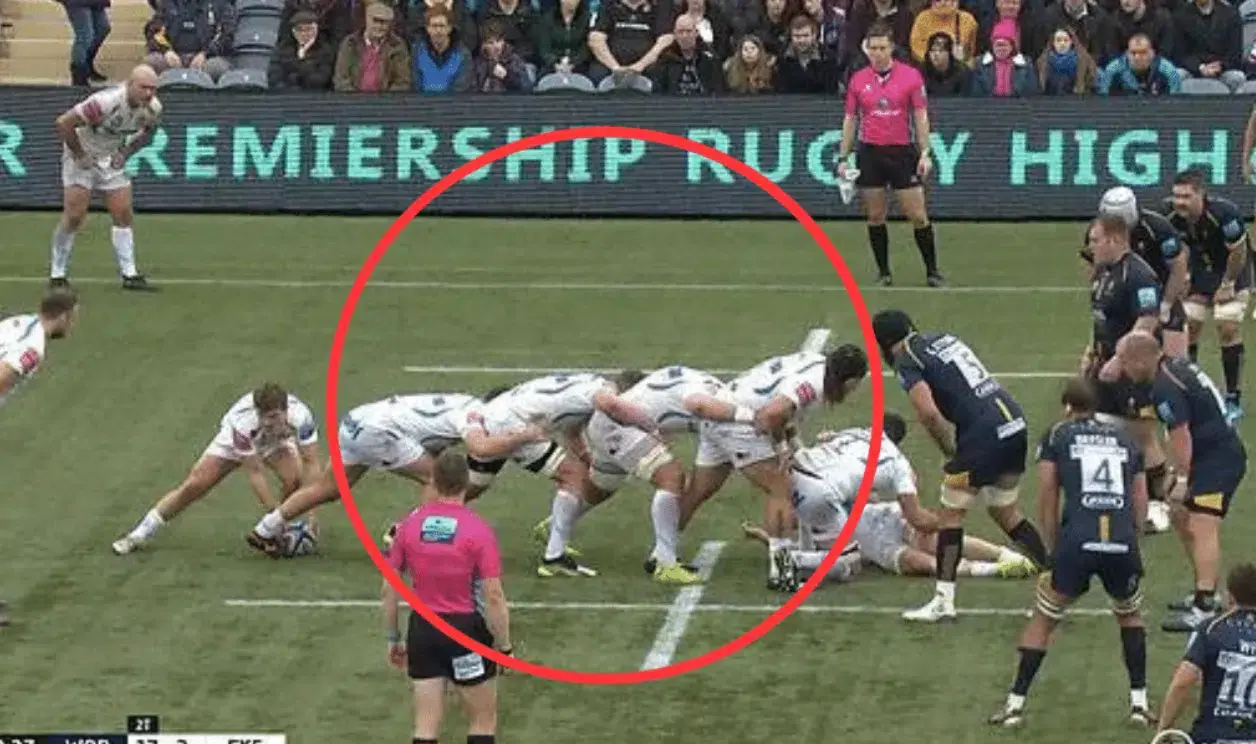
The caterpillar ruck is one of those tactics that, while legal, just doesn’t sit right with many who love the game. It involves players lining up behind a ruck in a queue, giving the scrum-half extra time and space to kick.
It slows the game to a crawl, gives the defence no real chance to compete, and often feels more like a way to kill momentum than build it.
It may be clever, but it’s not entertaining. Fans want to see fast, hard-fought rugby—not box-kick after box-kick with a queue of bodies shielding the kicker. Eliminating or limiting the caterpillar ruck would speed up the game and reintroduce unpredictability at the breakdown.
This isn’t about removing strategy. It’s about keeping the game flowing and true to what makes rugby exciting: dynamic, contested play.
Referees have improved at calling “use it” earlier, which helps speed things up, but more needs to be done. Getting rid of the caterpillar ruck would go a long way toward fixing the issue.
3. Remove the 20-Minute Red Card
The 20-minute red card was introduced as a middle ground—punishing dangerous play without completely ruining a match. But let’s be honest: it sends the wrong message. If a player commits a reckless or dangerous act, 20 minutes off the field doesn’t always feel like enough—especially for serious offenses, like a high tackle that could end an opponent’s game or season.
Rugby has made major strides in protecting players, especially around the head and neck. Keeping the full red card—where the offending team plays a man down for the rest of the match—reaffirms that commitment. It makes the consequences clear: cross the line, and your team suffers. That’s how you change behaviour.
Yes, it’s tough. Sometimes it may seem harsh. But safety must come first. It’s about respecting the game and the long-term health of every player on the field.
In many ways, the 20-minute red gives officials a cop-out. It’s often seen as the easy option to avoid controversy—even when a full red card is justified.
EDITORS PICKS:
- Lions star releases emotional statement after devastating injury news confirmed
- Re-Wind: Owen Farrell’s Lions career ahead of Test match return this Saturday
- Red Roses Announce Squad for 2025 Women’s Rugby World Cup
- British and Irish Legends Player Ratings v Classic Wallabies: Mike Tindall impresses
- Broadcaster LOCKED IN for next THREE Six Nations – Fans Thrilled
TRENDING






LATEST NEWS






LATEST COMMENTS
- Jordie Barrett over Damian de Allende is far from being correct. The hype around Dupont is also overreaching, he's probably 4th in the world and has been since the 2023 WC. He also avoids certain matchups which is strange. The rest of the list is pretty good apart from minor subjective biases.JasonMarlow16-09-2026
Loading