"Hit different" - Dan Carter has ranked his SIX toughest ever opponents
Rugby NewsMonday, 13 October 2025 at 08:04
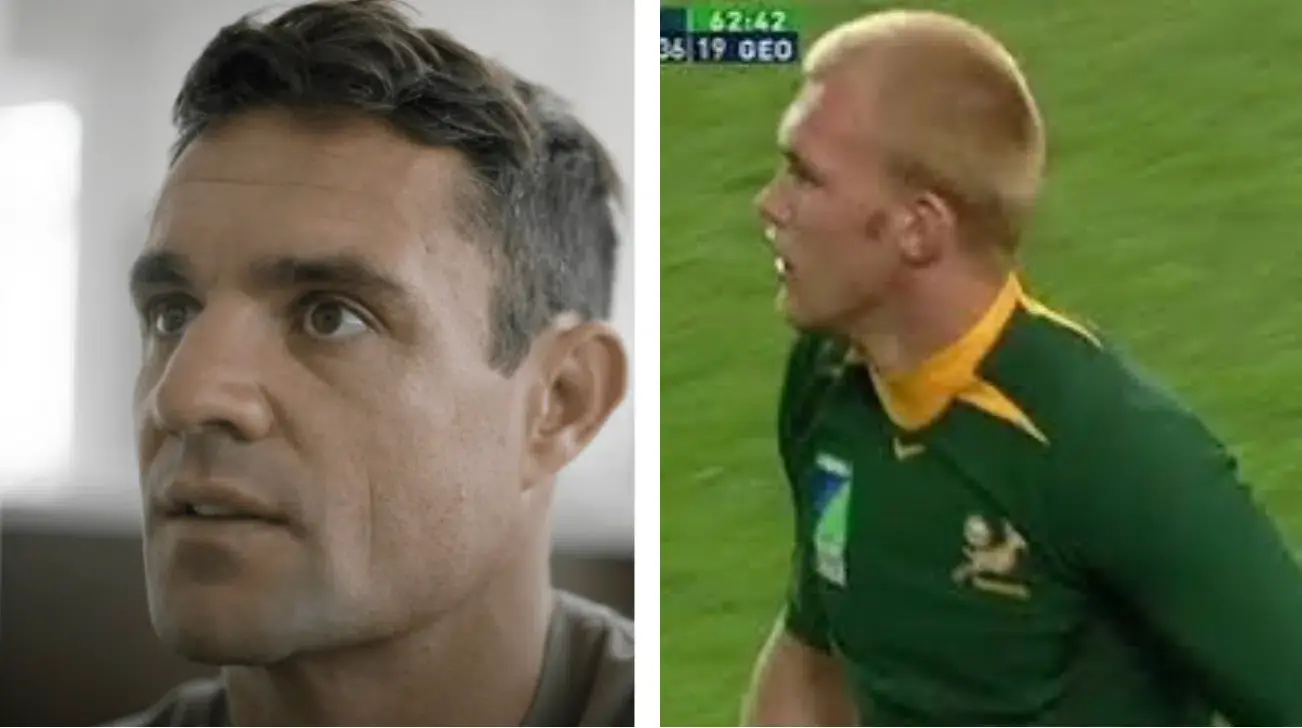

All-time great Dan Carter, widely hailed as the finest back of the professional era, has lifted the lid on the
six hardest players he ever faced during his glittering career.
Join the RUCK’s WhatsApp community here and get the latest news sent straight to your messages.
With an unmatched 1,598 international points, 112 caps for the All Blacks, and two Rugby World Cup titles, Carter’s opinion is one that carries serious weight in the rugby world.
Drawing on answers he’s given in various fan Q&As — including one with The Independent — the legendary No.10 revealed the elite group of players who pushed him to his absolute limits on the field.
DID YOU KNOW? In the 2015 Rugby World Cup Final against Australia, Dan Carter kicked four penalties, two conversions and a drop goal, and was named the man of the match.
DAN CARTER: TOUGHEST OPPONENTS
#6. Thierry Dusautoir (France)
Thierry Dusautoir (born November 18, 1981, in Abidjan, Côte d’Ivoire) is a former French rugby union player celebrated for his exceptional leadership, tireless work ethic, and defensive mastery. A flanker renowned for his relentless tackling and quiet determination, Dusautoir became the heartbeat of the French national team during one of its most competitive eras.
He earned 80 caps for France between 2006 and 2015, captaining the side from 2009 onward. Dusautoir’s defining performance came in the 2011 Rugby World Cup final, where his extraordinary 22 tackles and inspirational leadership against New Zealand earned him Man of the Match honors, even in defeat. That same year, he was named World Rugby Player of the Year — only the second Frenchman ever to receive the award.
At club level, he was a cornerstone of Stade Toulousain (Toulouse), helping the team capture multiple Top 14 titles and the 2010 Heineken Cup. Known as “Le Tackle Machine,” Dusautoir’s consistency, humility, and professionalism made him one of the most admired figures in world rugby.
Since retiring in 2017, he has remained a respected ambassador for the sport, embodying the discipline, intelligence, and quiet strength that defined his career.
CARTER SAID: "He had some blinding games in big moments — none more so than in the 2007 and 2011 World Cup games against the All Blacks."
DID YOU KNOW? He broke the record for most tackles in a match, making 38 tackles against the All Blacks in the 2007 World Cup final
4&5. Brian O'Driscoll & Paul O'Connell (Ireland)
Brian O'Driscoll and Paul O'Connell stand among Ireland’s greatest rugby icons, embodying leadership, excellence, and consistency across a golden era of Irish rugby.
O'Driscoll, born January 21, 1979, in Dublin, captained Ireland and the British & Irish Lions, earning 133 caps and becoming one of the most prolific and respected centres in world rugby. Renowned for his vision, creativity, and defensive grit, he led Ireland to the 2009 Grand Slam and numerous Six Nations titles.
O'Connell, born October 20, 1979, in Limerick, was the heart of Ireland’s forward pack — a towering lock celebrated for his intelligence, lineout mastery, and inspirational presence. He captained both Ireland and the Lions, guiding Ireland to multiple championships and playing a vital role in Munster’s Heineken Cup successes.
Together, O'Driscoll and O'Connell symbolized Ireland’s transformation into a consistent global contender, leading with passion, humility, and an unrelenting drive for excellence. Their partnership — one from the backs, one from the forwards — defined an era of Irish rugby greatness.
Carter said: "Two giants of the game that have worn the green jersey were Paul O'Connell and Brian O'Driscoll. Their work rate and how they conducted themselves on and off the pitch was exemplary."

Brian O’Driscoll facts:
- He is devoted to Manchester United and his boyhood hero was Mark Hughes
- O’Driscoll’s father, Frank, played two games for Ireland and an uncle, Barry, won four caps
- His final appearance for Leinster, and for any team, was in the 2014 Pro12 Grand Final on 31 May in Leinster’s home ground, the RDS in Dublin, in which Leinster defeated the Glasgow Warriors 34-12
- His most oft-quoted line was delivered at a press conference at Croke Park before an England match in 2009: “Knowledge is knowing that a tomato is a fruit; wisdom is knowing not to put it in a fruit salad.”
- O’Driscoll was chosen as Player of the Tournament in the 2006, 2007 and 2009 RBS Six Nations Championships.
3. Jonah Lomu (New Zealand)
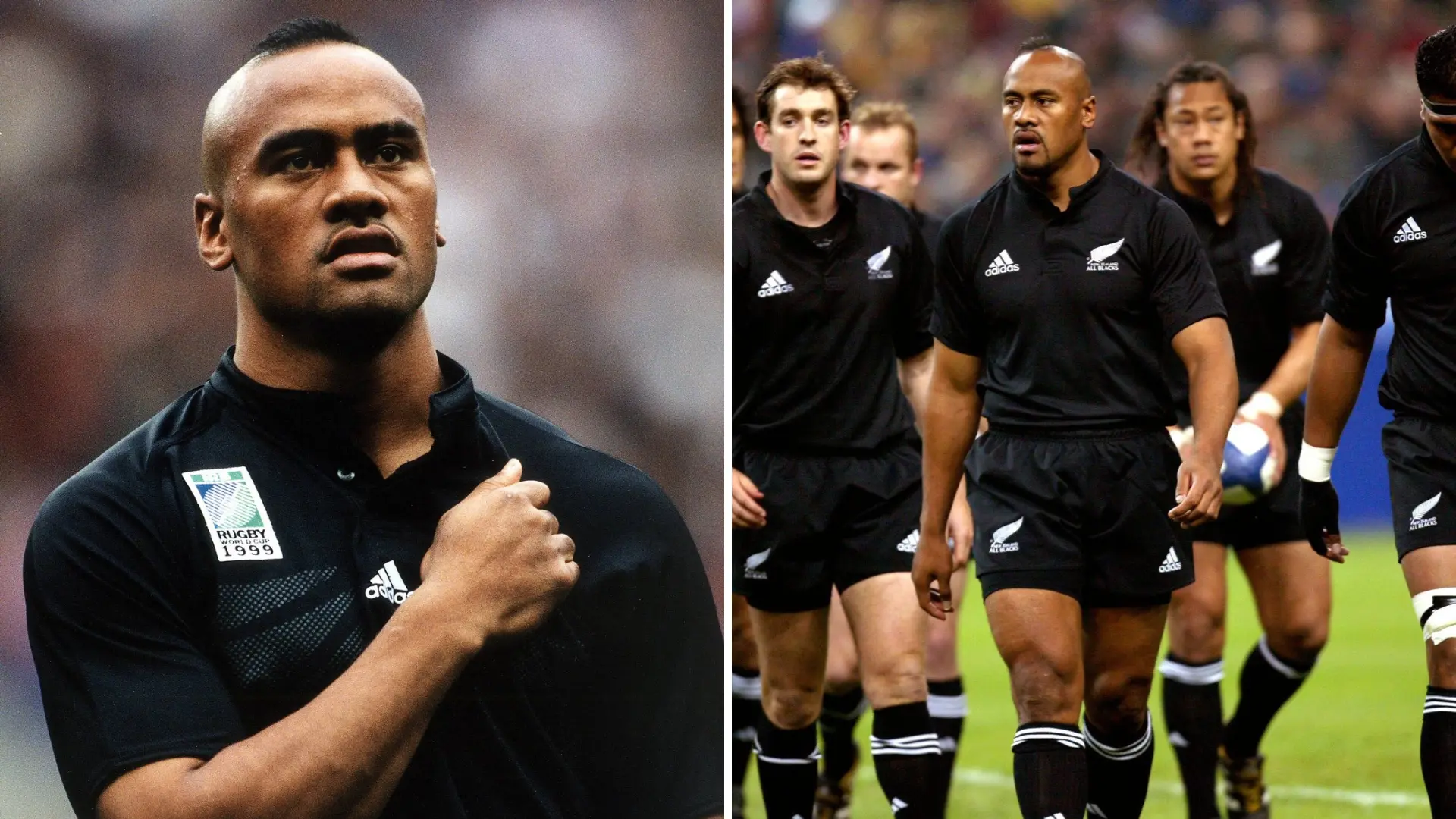
Jonah Lomu (May 12, 1975 – November 18, 2015) was a New Zealand rugby union legend whose power, pace, and charisma transformed the sport and captivated the world. Standing 1.96m tall and weighing over 110kg, Lomu redefined what was possible for a winger — combining the strength of a forward with the speed of a sprinter.
He made his All Blacks debut in 1994 at just 19 years old, becoming the youngest player ever to wear the famous black jersey at the time. Lomu’s global breakthrough came at the 1995 Rugby World Cup, where his extraordinary performances — particularly his four tries against England in the semifinal — made him an international superstar and the sport’s first true global icon.
Over his career, he earned 63 caps for New Zealand, scoring 37 tries, and represented teams such as Auckland, Wellington, Counties Manukau, and the Blues. Despite his career being interrupted by a rare kidney disorder, Lomu’s courage and determination remained inspirational both on and off the field.
Carter said: "He was the toughest player. I played against him once, I was 19-year-old and tried to tackle him, kinda woke up five metres back. He changed the game of rugby."
Jonah Lomu Facts:
- He weighed 120 kg and was 1.96 metres tall, but could run 100 metres in 10.8 seconds
- In 1996, McDonald’s New Zealand named a burger after Lomu
- He’s the only rugby player ever to feature on the front cover of TIME magazine
- According to the Telegraph, Leeds were ready to make a third bid to attract All Blacks giant Jonah Lomu to England in 2001
- He played 63 tests as an All Black, scoring 37 tries
- In 2001 he helped New Zealand win the Rugby World Cup Sevens.
2. Schalk Burger (South Africa)
Schalk Burger is a former South African rugby union player renowned for his ferocious tackling, relentless work rate, and leadership on and off the field. Born on April 13, 1983, in Port Elizabeth, Burger was a key figure in the Springboks’ back row for over a decade.
He earned 86 caps for South Africa between 2003 and 2015, playing a pivotal role in their 2007 Rugby World Cup triumph and being named World Rugby Player of the Year in 2004. Known for his fearless physicality and tireless competitiveness, Burger also represented the Stormers and Western Province with distinction, later playing for Suntory Sungoliath in Japan and Saracens in England.
Beyond rugby, he’s admired for his resilience, particularly his remarkable comeback from a life-threatening illness in 2013.
Carter said: “A real competitor and absolute top bloke off the field as well. His mindset was a little bit different when he was out there competing. That just made him such a tough opponent to come up against.”

1. Jonny Wilkinson (England)
Jonny Wilkinson (born May 25, 1979, in Frimley, England) is one of the most celebrated figures in rugby union history — revered for his precision, discipline, and unrelenting pursuit of excellence. A fly-half of rare composure and technical mastery, Wilkinson became synonymous with England’s golden era in the early 2000s.
He made his international debut in 1998 and went on to earn 91 caps for England, scoring 1,179 points, one of the highest tallies in Test rugby history. Wilkinson’s defining moment came at the 2003 Rugby World Cup, when his dramatic extra-time drop goal against Australia in the final secured England’s first — and only — World Cup triumph.
Beyond his kicking accuracy and tactical control, Wilkinson was renowned for his defensive commitment, work ethic, and meticulous preparation. His club career saw immense success with Newcastle Falcons and later Toulon, where he helped the French side win back-to-back Heineken Cup titles (2013, 2014) before retiring.
Off the field, Wilkinson has become a respected thinker and mentor, known for his humility and openness about the mental and emotional challenges of elite sport. His influence continues to shape rugby culture — embodying professionalism, integrity, and the relentless pursuit of self-improvement.
CARTER SAID: “Probably because I held him in such high regard and had a huge amount of respect for him, it was Jonny Wilkinson. He was an absolute student of the game,
“It was a wild, windy test match down in Wellington, I was on the bench and I hadn’t played a test match for the All Blacks, and he just took that game and, as a 10 that wants to control a game, I’ve never seen anything like it.
“I got the best seats in the house on the bench. Part of me was going, ‘Man, do I really want to get on here because he’s just completely dominating this game’.
“Thankfully I didn’t. I made my test debut the following week, which was a much better game to remember, but I just remember sitting there going, ‘If I ever do play 10’ – I was playing 12 a lot then – ‘this is how you need to control a game’.
“I had a huge amount of respect for him and playing against him.”
Jonny Wilkinson facts:
- Wilkinson’s brother, Mark, was also a Newcastle player who made 16 appearances in the Premiership for the side between 2002 and 2005, predominantly as a centre. His father, Phil, was a rugby player and cricketer, and his mother, Philippa, played squash at county level. His grandfather, Phil, also played football for Norwich.
- When former England centre Jeremy Guscott walked into the dressing room on the day of Wilkinson’s international debut, he thought the 18-year-old had won a competition to spend the day with the national team.
- Wilkinson followed Buddhist principles and teachings to help control his perfectionist tendencies, according to an interview he gave with The Times newspaper in 2009.
- Jonny and Shelley became parents for the first time in late 2018. They keep their private life pretty much on lockdown, but according to reports, they had a little boy called James while they were still living in France.
- Wilkinson is currently a studio pundit for ITV Sport, working on their coverage of the Six Nations Championship, Rugby World Cup and other rugby events.
TRENDING


LATEST NEWS

LATEST COMMENTS
- Jordie Barrett over Damian de Allende is far from being correct. The hype around Dupont is also overreaching, he's probably 4th in the world and has been since the 2023 WC. He also avoids certain matchups which is strange. The rest of the list is pretty good apart from minor subjective biases.JasonMarlow16-09-2026
Loading