How Órla Proctor is rising to the challenges of balancing a military and rugby careers.
Rugby NewsFriday, 26 September 2025 at 15:29
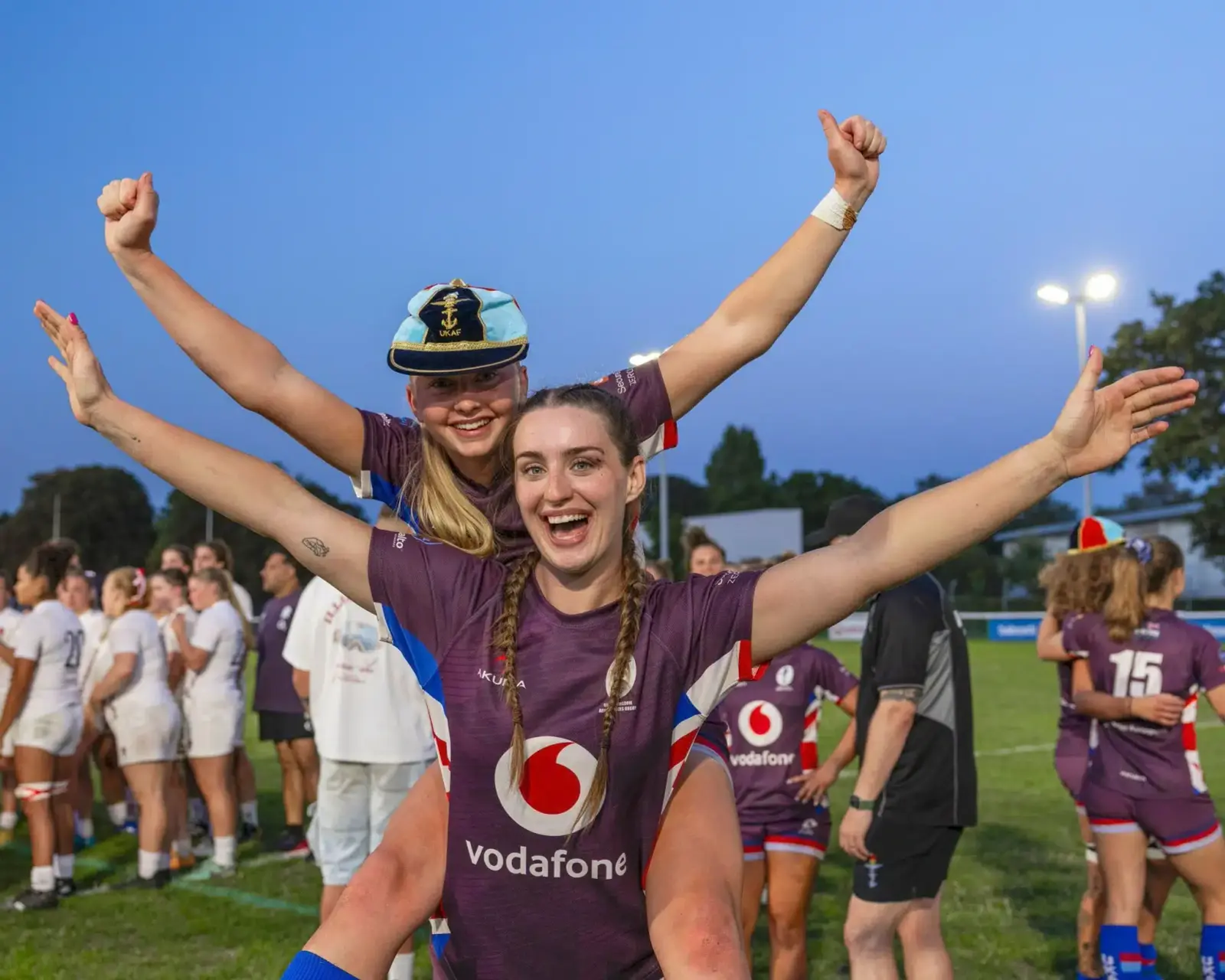

Órla Proctor, who has 15-hour days as an RAF Corporal, navigates the challenges of playing a sport she took up at the age of eight. From playing for the Scottish Premiership side, Stirling County, for most of her career to moving into the military, where she’s played for the RAF and UKAF, to now playing for the Harlequins. It’s been some journey.
Having played in the Scottish age groups and for Leicester Tigers, she now finds herself with the Harlequins in the English Premiership (PWR), but her military duty has provided her burgeoning rugby career with unique challenges.
At one point, her unit spent seven weeks out of action due to a playing ban. This was to prevent anyone from getting injured, in case they were deployed at short notice.
Join RUCK’s Instagram broadcast channel and get the latest rugby news straight to your phone.
“I think I’m always going to find it hard,” began Proctor, who joined the military at 18.

Dubai Sevens - International Open Women. UKAF (W) v Hong Kong China Dragons
“This season, I’m just really hoping that I can try and make a break, and yeah, it’s really hard to balance it, but I’m lucky I can rely on the support from my club and the RAF. To be able to do both has been an amazing experience.
“This is now my third season. My first season with Leicester, during the start of the season, I was deployed. Then I came back, and it was really hard to get back into the squad.
“Last season, we had a lot of issues in the world, so quite a lot of people were getting deployed or put on readiness. So there was a huge sports ban, so I couldn’t play rugby for another month or two.
“Even last week, I was on call. So it’s going to affect in the future selection, if you can’t be in training. I just hope that in the next couple of years, maybe even ten years, in women’s rugby, all players can be paid like it’s a full-time job.”
On making the move to the Harlequins in September 2024 and the rigorous demands that came with it, Proctor added: “When I left Stirling, I joined straight up into the military.
“Took a couple of years out of rugby, and then I got back into it through the RAF rugby, and even just going from Stirling County into like a military set-up, it was just like a huge jump.
“Then, going into the UK Armed Forces was another step. I finally got offered a contract at Leicester Tigers, and just like the training and the standards, there’s so much more expected of you, like discipline.
“And also just the hours, you might not be paid as if it is a full-time job, but your hours that you’re in there are like at Quins, I’m in from 2:30 until 9.
“That’s quite a lot of hours, but you're not necessarily getting paid like some players. But if you are getting paid, you’re not even getting minimum wage.”

She takes inspiration from the likes of New Zealand international Portia Woodman, who had an 11-year sevens career, where she scored over 250 tries with over 200 appearances. Proctor has experience in sevens rugby, where she has transitioned perfectly over to the 15s game.
A bit closer to home for Proctor, a fellow Stirling County player, Siobhan Cattigan was also hugely influential. “There was a couple of girls at my club who then went into the Scotland pathway and got capped.
“Siobhan was one of them, and I just found she was so influential. She used to turn up to her training sessions in her Scotland kit, and she’ll help the forwards with some stuff, and she’ll come over to help us with our defence and things like that. Having that awareness, like girls can do that.
“A lot of the figures were male figures for me, but it’s totally different to today’s day in age. You have a lot more women (playing) on TV, you have these women you can inspire to be. Growing up, when I got into my teenage years, I started to realise that women can make a career out of rugby.
“I saw clips of Portia Woodman, I was like, oh my gosh, look at her, all the way in New Zealand doing this.”
The 2025 Rugby World Cup, hosted in England across eight venues with a record 16 teams competing, has been described as a generational event. It’s a generational phenomenon, as the event itself is attracting significantly more attention than it previously did. England face off against Canada in the final on Saturday afternoon at a sold-out Twickenham.
“I just love watching rugby; as a rugby fan, it has been so good. Then, as a rugby player, it’s bringing so much more media and attention to women’s rugby.
“Many women’s players play not for fame or big paychecks, but for sheer love of the game. Women’s rugby is known for its inclusive culture.
“One of the biggest misconceptions women’s rugby faces is that it is somehow less intense, skilled, or entertaining than men’s rugby.
“When fans can see the skill, intensity, and passion of women’s rugby on screen, the misconceptions begin to break down.
“Like the French their leagues, the English Premiership, even like the Scottish Premiership, are getting some shoutouts. Altogether, it’s really good.”
Proctor is proudly supporting Vodafone’s ‘See it. Believe it.’ campaign, which aims to challenge misconceptions about women’s rugby and connect the sport with new audiences.
Órla is one of the storytellers working with Goal Click to provide exclusive behind-the-scenes content from all levels of the game.
“So they (Vodafone) decided to focus on my story,” explained Proctor.
“It was just something which was really amazing to be a part of and to be recognised to do. I already followed Goal Click, and I was using Vodafone platforms like their Vodafone PLAYER.Connect app. So it kinda felt right to do it with them.”
More info can be found here: https://www.goal-click.com/vodafone-womens-rugby
TRENDING





LATEST NEWS






LATEST COMMENTS
- Jordie Barrett over Damian de Allende is far from being correct. The hype around Dupont is also overreaching, he's probably 4th in the world and has been since the 2023 WC. He also avoids certain matchups which is strange. The rest of the list is pretty good apart from minor subjective biases.JasonMarlow16-09-2026
Loading