Jamie George now co-owns a pub with other England sporting legends
Rugby NewsFriday, 30 January 2026 at 09:33
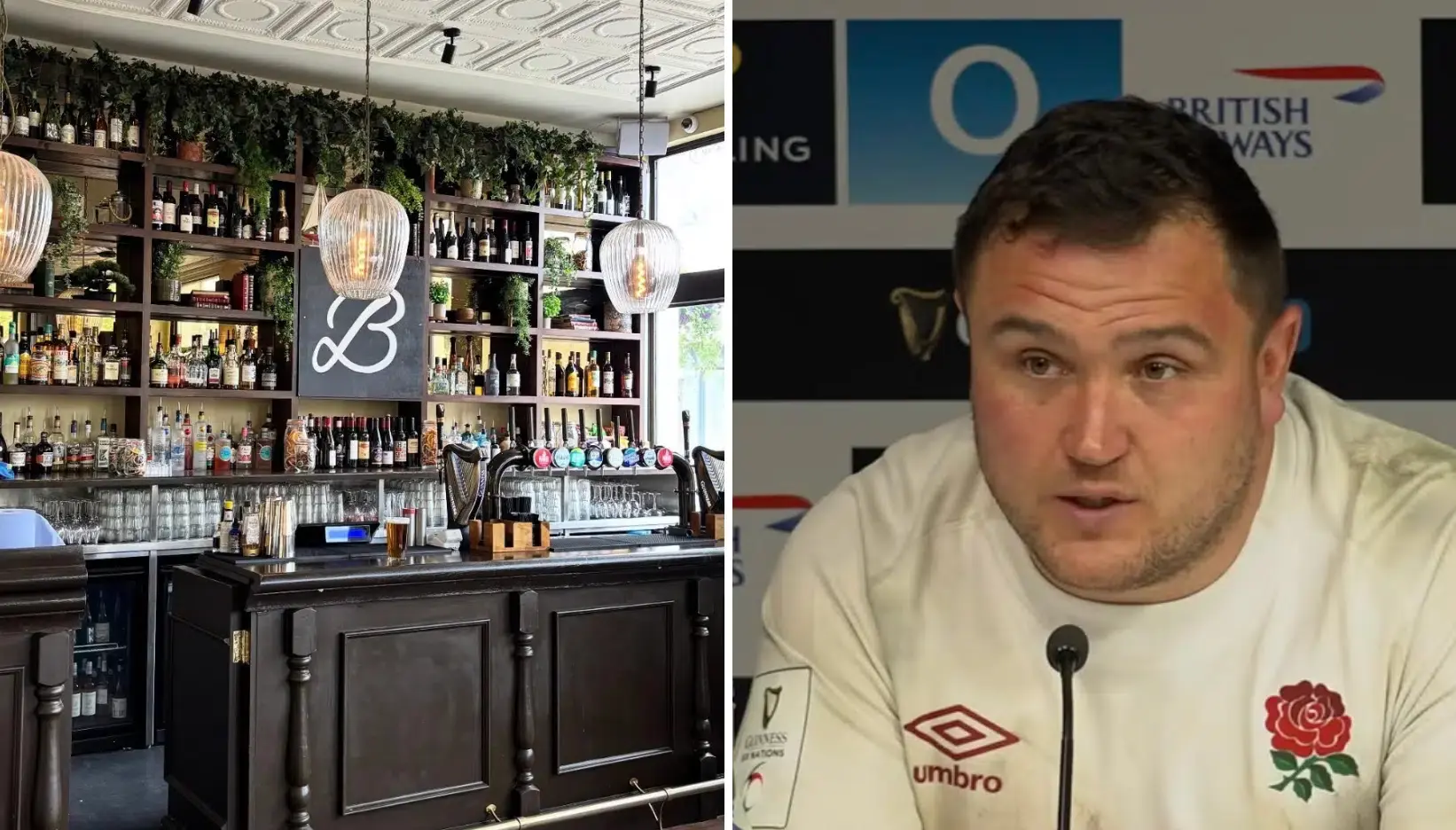

England vice-captain Jamie George has taken on a new role off the field, becoming a co-owner of The Boundary pub alongside several of the country’s most recognisable sporting greats, including renowned cricket legends.
and get the latest rugby news straight to your phone.
Located at 541 Kings Road in Fulham, London, The Boundary sits on the border between Fulham and Chelsea — a fitting name for a venue that now bridges multiple sports under one roof.
The historic building dates back to the mid-19th century and has gone through several name changes over the decades before reopening under its current name in March 2025 following an extensive refurbishment.
The Saracens and England hooker, known for his leadership in the national side, has joined forces with an impressive list of cricket stars, including Eoin Morgan, Brendon McCullum, Jos Buttler, Paul Stirling, Sam Billings and Graeme Smith.
Together, the group has created a sports-focused pub designed to appeal to fans across rugby, cricket and beyond.
The revamped Boundary features two floors, with a lively main bar on the ground level, a function and dining space upstairs, and a large beer garden at the back.
Decor throughout the venue includes sporting memorabilia and photos of its famous owners, while live sport is regularly shown on screens, making it a natural destination for supporters.
Food at The Boundary focuses on casual dining, with pizzas and pub classics forming the core of the menu, reinforcing its welcoming atmosphere as a community spot rather than a formal restaurant.
Speaking about the venture, George expressed his excitement at being part of a project that combines sport, hospitality and community spirit, while sharing ownership with athletes he has long admired.
With the combined star power of rugby and cricket champions behind it, The Boundary is set to become a landmark London venue for sports fans eager to enjoy good food, good company and the spirit of English sport.
Editors Picks:
- Ardie Savea could still swap nations despite Scott Robertson sacking
- 2026 Six Nations goes behind paywall for the first time next month
- The longest bans in rugby history (Ranked 10-1)
- England’s Six Nations WAGs includes doctor and underwear model
- England prop Kyle Sinckler to return for 2027 Rugby World Cup
Who has the most foreign-born players? 2026 Six Nations
The Six Nations has always been rooted in tradition — but in the modern era, international squads are increasingly shaped by migration, ancestry, and residency eligibility.
In 2026, foreign-born players remain a major part of the championship picture, although the overall numbers have fallen sharply compared to recent years.
Scotland — 14 foreign-born players (35%)
- Homegrown: 26/40 (65%)
- Foreign-born: 14/40 (35%)
Scotland once again lead the Six Nations for overseas-born representation.
Full list (Scotland)
Nathan McBeth — South Africa (Grandparent)
Pierre Schoeman — South Africa (Residency, 2021)
Ewan Ashman — Canada (Parent)
Elliot Millar Mills — England (Parent)
Josh Bayliss — England (Grandparent)
Jack Dempsey — Australia (Grandparent)
Ben White — England (Grandparent)
Fergus Burke — New Zealand (Grandparent)
Tom Jordan — New Zealand (Residency, 2024)
Rory Hutchinson — England (Grandparent)
Sione Tuipulotu — Australia (Grandparent)
Kyle Rowe — England (Cumulative Residency)
Kyle Steyn — South Africa (Parent)
Duhan van der Merwe — South Africa (Residency, 2020)
Wales — 9 foreign-born players (23.6%)
- Homegrown: 29/38 (76.3%)
- Foreign-born: 9/38 (23.6%)
Wales sit mid-table, with most foreign-born players coming through English development pathways or overseas heritage.
Full list (Wales)
Tomas Francis — England (Grandparent)
Archie Griffin — Australia (Parent)
Ben Carter — England (Residency, 2004)
Freddie Thomas — England (Grandparent)
Olly Cracknell — England (Grandparent)
Josh MacLeod — Monaco (Residency, 2004)
Gabriel Hamer-Webb — England (Parent)
Ellis Mee — England (Parent)
Blair Murray — New Zealand (Parent)
Italy — 8 foreign-born players (24.2%)
- Homegrown: 24/33 (72.7%)
- Foreign-born: 8/33 (24.2%)
Italy continue to benefit from a diverse talent pool, drawing on Argentine heritage and residency-qualified backs.
Full list (Italy)
Pablo Dimcheff — Argentina (Grandparent)
Muhamad Hasa — Albania (Residency, 2014)
Martin Page-Relo — France (Grandparent)
Stephen Varney — Wales (Parent)
Juan Ignacio Brex — Argentina (Grandparent)
Paolo Odogwu — England (Parent)
Montana Ioane — Australia (Residency, 2020)
Matt Gallagher — England (Grandparent)
Ireland — 8 foreign-born players (20%)
- Homegrown: 34/40 (85%)
- Foreign-born: 8/40 (20%)
Ireland remain one of the most homegrown squads in the championship, but several key players — especially in the backline — were born abroad.
Full list (Ireland)
Jeremy Loughman — USA (Parent)
Finlay Bealham — Australia (Grandparent)
Cormac Izuchukwu — England (Parent)
Joe McCarthy — USA (Parent)
Jamison Gibson-Park — New Zealand (Residency, 2019)
Ciarán Frawley — Australia (Parent)
Bundee Aki — New Zealand (Residency, 2017)
James Lowe — New Zealand (Residency, 2020)
France — 7 foreign-born players (15.5%)
- Homegrown: 39/45 (86.6%)
- Foreign-born: 7/45 (15.5%)
France have one of the strongest domestic player bases, but still include a handful of residency-qualified forwards.
Full list (France)
Dany Priso — Cameroon (Residency, 2008)
Uini Atonio — New Zealand (Residency, 2014)
Tevita Tatafu — Tonga (Residency, 2024)
Joshua Brennan — Ireland (Residency, 2005)
Thibaud Flament — Belgium (Born in France)
Emmanuel Meafou — New Zealand (Residency, 2023)
Tom Staniforth — Australia (Residency, 2025)
England — 6 foreign-born players (16.6%)
- Homegrown: 34/36 (94.4%)
- Foreign-born: 6/36 (16.6%)
England have the most domestically produced squad in the tournament, with only a small group born outside the country.
Full list (England)
Bevan Rodd — Scotland (Parent)
Emmanuel Iyogun — Spain (Residency)
Sam Underhill — USA (Parent)
Marcus Smith — Philippines (Parent)
Henry Arundell — Dhekelia (Parent)
Immanuel Feyi-Waboso — Wales (Grandparent)
Ranking: Most foreign-born players (2026)
- Scotland — 14
- Wales — 9
- Italy — 8
- Ireland — 8
- France — 7
- England — 6
TRENDING



LATEST NEWS

LATEST COMMENTS
- Jordie Barrett over Damian de Allende is far from being correct. The hype around Dupont is also overreaching, he's probably 4th in the world and has been since the 2023 WC. He also avoids certain matchups which is strange. The rest of the list is pretty good apart from minor subjective biases.JasonMarlow16-09-2026
Loading