Over the years, rugby union has prided itself on physicality, honesty, and respect — values often cited as what separates it from other sports.
However, the game hasn’t been completely immune to accusations of simulation. A small number of high-profile incidents have seen players criticised for exaggerating contact, appealing theatrically, or attempting to influence referees.
Join the RUCK’s WhatsApp community here and get the latest news sent straight to your messages.
Whether fair or not, these moments tend to stick. They spark debate among fans, pundits, and former players about where the line sits between “selling” a foul and outright diving — and whether rugby is drifting toward behaviour more commonly associated with football.
Despite governing bodies encouraging tougher officiating and the introduction of TMO reviews to clamp down on foul play, the perception of simulation still lingers in certain cases.
As per Scrum Recap, here are some of the game’s most debated “sly” operators — along with a closer look at the incidents behind the claims.
#5. Stuart Hogg
What they said:
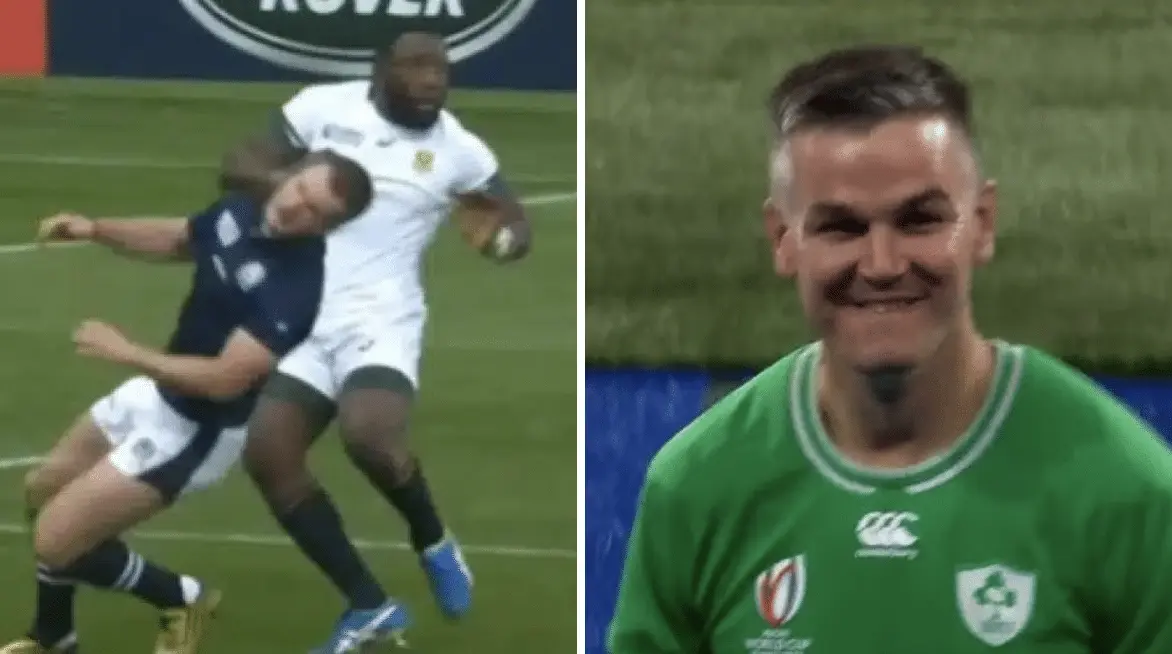
"He often overdoes the theatricality to the extent that not even the officials will give him a second look. Look back to the South Africa vs Scotland game a couple years back when he flung himself into the 'Beast' just to be laughed off by players and fans around him."
"He often overdoes the theatricality to the extent that not even the officials will give him a second look. Look back to the South Africa vs Scotland game a couple years back when he flung himself into the 'Beast' just to be laughed off by players and fans around him."
The incident:
The moment most often referenced came during the 2015 Rugby World Cup clash between Scotland and South Africa. Chasing a kick, Hogg collided with Tendai Mtawarira (“The Beast”) and dramatically appealed for a penalty, suggesting obstruction. Referee Nigel Owens was having none of it, famously telling Hogg to “stay on your feet” and effectively dismissing the appeal in real time — a rare and memorable public reprimand.
The moment most often referenced came during the 2015 Rugby World Cup clash between Scotland and South Africa. Chasing a kick, Hogg collided with Tendai Mtawarira (“The Beast”) and dramatically appealed for a penalty, suggesting obstruction. Referee Nigel Owens was having none of it, famously telling Hogg to “stay on your feet” and effectively dismissing the appeal in real time — a rare and memorable public reprimand.
That clip quickly went viral and has followed Hogg ever since, often resurfacing in conversations about simulation.
Our verdict:
Hogg played on the edge and was never shy about appealing to officials, but branding him a diver feels harsh. In a career full of fearless counter-attacking and physical bravery, this looks more like an isolated moment that stuck rather than a defining trait.
Hogg played on the edge and was never shy about appealing to officials, but branding him a diver feels harsh. In a career full of fearless counter-attacking and physical bravery, this looks more like an isolated moment that stuck rather than a defining trait.
Fan reaction:
“Tom Daley's spot in the British Diving team is under threat by Hogg. Excellent call from Owens.”
“Tom Daley's spot in the British Diving team is under threat by Hogg. Excellent call from Owens.”
#4. Bryan Habana
What they said:
"A great example of this was for Toulon against Saracens in the Champions Cup where he ran into Owen Farrell and threw his legs up in the air to win a penalty with one of the worst dives in European history."
"A great example of this was for Toulon against Saracens in the Champions Cup where he ran into Owen Farrell and threw his legs up in the air to win a penalty with one of the worst dives in European history."
The incident:
While playing for Toulon against Saracens, Habana chased a kick and collided with Owen Farrell, who was tracking across in defence. On contact, Habana launched himself forward and dramatically lifted his legs, appealing for a no-arms tackle. The referee awarded the penalty, but replays suggested the contact was minimal and the reaction exaggerated.
While playing for Toulon against Saracens, Habana chased a kick and collided with Owen Farrell, who was tracking across in defence. On contact, Habana launched himself forward and dramatically lifted his legs, appealing for a no-arms tackle. The referee awarded the penalty, but replays suggested the contact was minimal and the reaction exaggerated.
Given Habana’s global reputation at the time, the moment drew significant criticism and became one of the most cited examples of theatrical play in rugby.
Our verdict:
Habana is widely regarded as one of the greatest finishers the game has seen, with a glittering international career. However, like many elite wingers, he occasionally pushed the boundaries when contesting kicks — and this was one of those moments where the exaggeration was hard to ignore.
Habana is widely regarded as one of the greatest finishers the game has seen, with a glittering international career. However, like many elite wingers, he occasionally pushed the boundaries when contesting kicks — and this was one of those moments where the exaggeration was hard to ignore.
#3. Johnny Sexton
What they said:
"Jonathan Sex'Robot, as Squidge Rugby lovingly refers to him, is a serial diving offender with notable instances against Scotland, England and Wales throughout the last few years."
"Jonathan Sex'Robot, as Squidge Rugby lovingly refers to him, is a serial diving offender with notable instances against Scotland, England and Wales throughout the last few years."
The incidents:
Sexton has, at times, been accused by opposition fans of exaggerating contact after late hits or high tackles — particularly given how frequently he operates on the defensive line and absorbs heavy collisions. There have been moments in Six Nations fixtures where he’s appealed strongly to referees after contact, leading to accusations of theatrics.
Sexton has, at times, been accused by opposition fans of exaggerating contact after late hits or high tackles — particularly given how frequently he operates on the defensive line and absorbs heavy collisions. There have been moments in Six Nations fixtures where he’s appealed strongly to referees after contact, leading to accusations of theatrics.
However, unlike others on this list, there are very few clear-cut examples where replay evidence shows outright simulation.
Our verdict:
This feels more like perception than reality. Sexton has spent his career playing flat to the line and taking enormous punishment from defenders. His reactions may be animated, but they’re usually grounded in genuine contact rather than fabrication.
This feels more like perception than reality. Sexton has spent his career playing flat to the line and taking enormous punishment from defenders. His reactions may be animated, but they’re usually grounded in genuine contact rather than fabrication.
#2. Morgan Parra
What they said:
"He's also a grade A diver. He's from the Habana and Hoggy school of 'throwing yourself at a big forward and hoping for the best' after he hoofs the ball."
"He's also a grade A diver. He's from the Habana and Hoggy school of 'throwing yourself at a big forward and hoping for the best' after he hoofs the ball."
The incidents:
Parra built a reputation during his international career for clever — and sometimes controversial — game management. One recurring pattern critics point to is his tendency, after box-kicking, to initiate contact with onrushing forwards and then appeal immediately to the referee
Parra built a reputation during his international career for clever — and sometimes controversial — game management. One recurring pattern critics point to is his tendency, after box-kicking, to initiate contact with onrushing forwards and then appeal immediately to the referee
In several Top 14 and international matches, Parra appeared to step into defenders’ paths before going to ground, prompting accusations that he was manufacturing penalties rather than avoiding contact.
Our verdict:
Unlike others on this list, Parra’s reputation is harder to defend. His style often blurred the line between smart play and gamesmanship, and he seemed more willing than most to exploit grey areas in officiating.
Unlike others on this list, Parra’s reputation is harder to defend. His style often blurred the line between smart play and gamesmanship, and he seemed more willing than most to exploit grey areas in officiating.
#1. Yoann Huget
What they said:
"Whether it was from kick chases, tackles that were a fraction out of time, or flailing around in rucks he shouldn't be involved in, Huget was the crème de la crème of fakers."
"Whether it was from kick chases, tackles that were a fraction out of time, or flailing around in rucks he shouldn't be involved in, Huget was the crème de la crème of fakers."
The incidents:
Huget’s name became almost synonymous with simulation among fans, particularly after multiple high-profile moments where he appeared to exaggerate minimal contact. These ranged from dramatic falls after aerial contests to reactions in rucks where contact looked incidental.
Huget’s name became almost synonymous with simulation among fans, particularly after multiple high-profile moments where he appeared to exaggerate minimal contact. These ranged from dramatic falls after aerial contests to reactions in rucks where contact looked incidental.
One especially talked-about example saw him clutch his face after slight contact, only for replays to show little to no impact — fuelling criticism across social media and pundit circles.
Our verdict:
Huget’s reputation in this area is difficult to shake. While he was undoubtedly a talented and committed international winger, the frequency of these moments made him a lightning rod for criticism.
Huget’s reputation in this area is difficult to shake. While he was undoubtedly a talented and committed international winger, the frequency of these moments made him a lightning rod for criticism.
At the same time, it’s worth noting the physical toll of his career. His retirement following injury serves as a reminder of just how brutal the sport is, regardless of occasional theatrics.
TRENDING


LATEST NEWS

LATEST COMMENTS
- Jordie Barrett over Damian de Allende is far from being correct. The hype around Dupont is also overreaching, he's probably 4th in the world and has been since the 2023 WC. He also avoids certain matchups which is strange. The rest of the list is pretty good apart from minor subjective biases.JasonMarlow16-09-2026
Loading