Marcus Smith’s Filipino Roots Inspire the Volcanoes’ Triumphant Return to Rugby Glory
Rugby NewsSunday, 19 October 2025 at 18:37
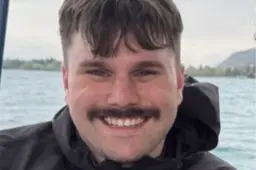
When the final whistle blew in Kaohsiung, Taiwan this July, it confirmed that rugby union had officially returned to one Pacific nation. The Philippines Men’s 15s rugby team, the Volcanoes, had just beaten Thailand to win the 2025 Unions Cup.
Join the RUCK’s WhatsApp community here and get the latest news sent straight to your messages.
Josh Sutcliffe was speaking to the What's All The Ruckus? podcast.
Five years after disappearing from the international stage, the Volcanoes were champions again. Their return wasn’t built on big budgets or professional contracts — it was built on belief.
“It all started with buy-in from the players,” says head coach Josh Sutcliffe, who helped revive the program after years of inactivity.
“The symbolism of the Philippine flag — the sun with eight rays for the original tribes, and the three stars for Luzon, Visayas, and Mindanao — means a lot to them. It’s about unity, pride, and representing their families.”
That pride had been missing for a while. The men’s 15s program last played in 2019 before the pandemic brought everything to a halt. Fields were closed, clubs folded, and the energy that once powered Philippine rugby went quiet. For a small sport in a country obsessed with basketball, it could easily have faded away completely.
But in late 2024, the Volcanoes began stirring again. Sutcliffe — a Filipino-Australian based in Nashville, Tennessee — helped bring the team back together. Former teammates, young players from Manila, and Filipino heritage athletes from around the world began reuniting online, then in person.
“We had five weeks of virtual prep and only three in-person sessions — one of which got wiped out by a typhoon,” Sutcliffe says. “We ended up training in a car park basement and even in calf-deep water in a park in Kaohsiung. The boys just got on with it — they’re incredibly resilient.”
A Patchwork Team, A Shared Heart
The 2025 Volcanoes weren’t a single team so much as a family scattered across the world. Some came from Sydney and Auckland, others from the U.S. and the U.K., and several had learned rugby on patchy fields in Manila and Cebu. They had day jobs — teachers, engineers, students — and paid their own way to represent their mother’s or father’s homeland.
“They’re not here for money,” Sutcliffe says. “They’re here for heritage, for pride. That energy makes a huge difference.”
During their run to the Unions Cup, that energy showed. The Volcanoes didn’t outmuscle opponents — they outworked them. They sang Tagalog songs before matches, called each other kuya and ate — big brother and sister — and played with a fire that felt uniquely Filipino.
“When you have that kind of unity, results follow,” Sutcliffe says simply.
A Spark from the Stars
If there’s one figure who embodies Filipino rugby’s global story, it’s Marcus Smith. Born in Manila and raised in England, Smith has become one of rugby’s most exciting playmakers — dazzling defenders in the Six Nations while proudly acknowledging his Filipino roots.
“Marcus is amazing,” Sutcliffe says. “I coached his brother Luc with the Philippine sevens team — lovely family, great people. Marcus loves the Philippines and visits when he can.
"I don’t want to put pressure on him to ‘save’ rugby here, but his profile definitely helps. He’s charismatic, talented, and proud of his heritage — that combination can really inspire young Filipinos.”
For many aspiring players in the Philippines, Smith’s rise has been a light — proof that someone with their heritage can play at the highest level. Kids who once only saw basketball heroes now watch highlight clips of Smith sidestepping through defenders, wearing a smile that feels familiar.
It’s the same connection that inspired Volcanoes winger Patrice Olivier, who discovered Philippine rugby after stumbling upon a YouTube video back in 2010. “He saw players who looked like him,” Sutcliffe says. “That connection matters. That’s how we’ll keep growing — visibility and representation.”
The Roots Beneath the Jersey
The Volcanoes’ return isn’t just about overseas talent. The domestic game, though battered by the pandemic, is finding its feet again. A few clubs in Manila and Cebu have restarted 15s and sevens programs, producing players who are learning the game from scratch and holding their own internationally.
“On our recent tour, we had front-rowers who learned the game locally, and they performed brilliantly,” Sutcliffe says. “The passion is there — we’ve done it once before, and we can rebuild it again.”
For him, rugby captures something deeply Filipino: courage wrapped in humility. “It’s one of the few contact team sports that channels that Filipino fighting spirit in a positive way,” he says. “Filipinos love basketball, boxing, MMA — all sports with passion and energy. Rugby fits that mould perfectly but adds teamwork, brotherhood, and community.”
That sense of brotherhood goes beyond the field. During one of his early trips to the Philippines, Sutcliffe visited the Tuloy Foundation, an orphanage where kids were playing touch rugby barefoot.
“They were doing one-handed passes, goose steps, amazing footwork,” he remembers, smiling. “The joy on their faces really stuck with me.”
From Billboards to Belief
Rugby has always had a quirky place in Philippine sports. In 2011, the Volcanoes became unexpectedly famous when local clothing brand Bench featured them in an underwear ad campaign. “We ended up on giant billboards across Manila,” Sutcliffe laughs. “They caused traffic jams and even drew complaints from the church — true story!”
Those billboards might have faded, but the image of strong, proud Filipino athletes remains — and it’s that image the new generation is reclaiming.
Looking Forward
For all the joy of victory, Sutcliffe’s focus is on what comes next. “First, solidify our footprint in Southeast Asia,” he says. “Then build strong, sustainable local clubs — ideally four top-tier clubs in Metro Manila with youth systems underneath. Step by step, we’ll grow participation, develop local talent, and strengthen the national sides.”
It’s a long road. But after five years in the wilderness, the Volcanoes have proven something important — that rugby has a heartbeat in the Philippines, one strong enough to echo across islands and oceans.
Maybe that’s what Marcus Smith represents too — not just a world-class fly-half, but a symbol of what’s possible when heritage meets hope.
As Sutcliffe puts it: “Like Manny Pacquiao, we may not be the biggest, but we’ll jump up and hit you before you even know it. That’s Filipino rugby.”
EDITOR’S PICKS:
TRENDING


LATEST NEWS

LATEST COMMENTS
- Jordie Barrett over Damian de Allende is far from being correct. The hype around Dupont is also overreaching, he's probably 4th in the world and has been since the 2023 WC. He also avoids certain matchups which is strange. The rest of the list is pretty good apart from minor subjective biases.JasonMarlow16-09-2026
Loading


