McGeechan Breaks Silence on Springboks Joining the Six Nations
Rugby NewsFriday, 06 March 2026 at 10:29
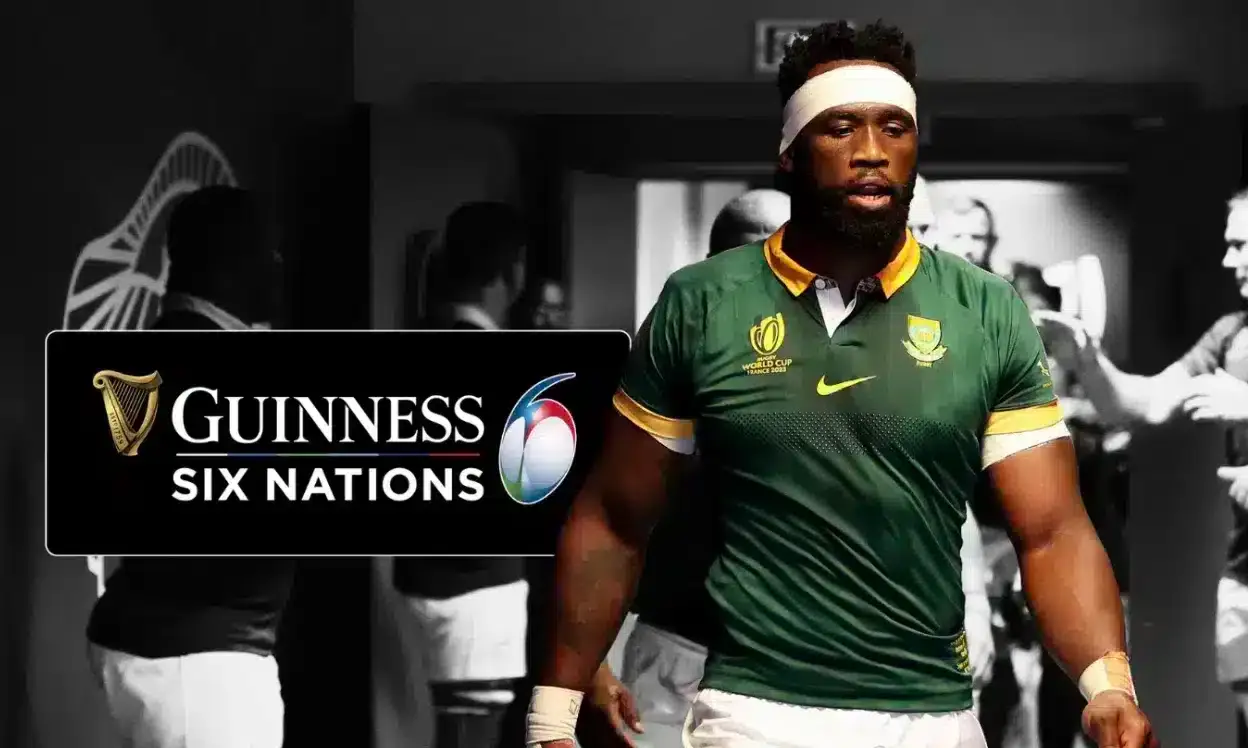

Sir Ian McGeechan has backed the idea of expanding the Six Nations, naming the Springboks as a key part of his proposed seventh-team format.
Join our Breaking News and Top Stories WhatsApp community for all the latest news direct to your phone.
The Springboks in the Six Nations: Could It Happen?
It was reported back in 2022 that the Springboks were in talks to join the northern hemisphere’s Six Nations in 2025. Despite fan calls for relegation to be introduced to the competition, McGeechan argues that it would be better to add the world champions and keep the current closed-shop format.
South Africa’s Shift to the Northern Hemisphere
South Africa’s top rugby teams—Bulls, Lions, Sharks, and Stormers—are no longer competing in the Southern Hemisphere’s winter competition. Since 2021, they’ve joined the United Rugby Championship (URC), following in the footsteps of the Southern Kings and Cheetahs who made the move in 2017.
McGeechan's Bold Vision for the Future
"The obvious next step is for some sort of integrated season which sees the Springboks join the Six Nations to make it the Seven Nations," wrote McGeechan. "Financially it is in the interests of everyone, and it will also be beneficial in terms of raising standards for England, Wales, Scotland, Ireland, and Italy."
McGeechan also pointed out that this idea could generate excitement among fans, referencing the success of the British and Irish Lions tours. "The example of the British and Irish Lions shows it also has the potential to be embraced by supporters as well, with fans travelling down to South Africa for a long weekend."
“I have to admit that I'm biased and that it's a prospect which excites me. I love South African rugby, and think it brings so much to the game. I'd love to see those links grow stronger still, although I can imagine it's not a prospect that will be greeted enthusiastically in Auckland and Sydney.”
Six Nations Blocks the Boks' Entry
Despite McGeechan’s enthusiasm, Six Nations organisers have since denied the possibility of expanding to a Seven Nations. However, speculation continued about the Springboks joining the competition.
The Boks Staying in the Rugby Championship
Reports from
Rapport reveal that the Springboks moving from the Rugby Championship to the Six Nations is "no longer on the table," mainly due to stalled negotiations between CVC Capital Partners and SA Rugby.
CVC's Rugby Investments
CVC Capital Partners, which has invested heavily in rugby over the years, struck a £365m deal with the Six Nations in 2021.
Six Nations Flop XV: England dominates
Here is our Six Nations Flop XV, featuring players who have fallen below expectations across the opening rounds.
Six Nations Flop XV
1. Jean-Baptiste Gros (France)
Jean-Baptiste Gros had actually started the championship in solid form, delivering strong performances against Ireland and Wales. The French loosehead looked busy around the park and held up well physically during the opening rounds.
But round three proved a very different story.
Against Italy, Gros was defensively resolute early on, turning away Italian carriers like a nightclub bouncer with a strict guest list. However, the scrum quickly became a major issue. Italy began to apply real pressure at the set-piece and the French front row started to creak.
With the momentum swinging, France replaced Gros after just 37 minutes as they attempted to steady the scrum. After two encouraging performances earlier in the tournament, it was a shockingly difficult outing.
2. Luke Cowan-Dickie (England)
Cowan-Dickie’s return to international rugby brought optimism that England’s pack would regain some of its traditional bite, but things haven’t quite clicked so far.
His throwing has been inconsistent at times and England’s lineout has looked vulnerable under pressure. Around the field his work-rate remains high, but the accuracy expected at Test level hasn’t always followed.
With serious competition emerging for England’s No.2 jersey, the experienced hooker will know improvements are needed as the championship continues.
3. Tadhg Furlong (Ireland)
Given Ireland’s wider issues at prop this championship, many expected Tadhg Furlong to step up and dominate the set-piece battles. Instead, the usually reliable tighthead has had a surprisingly tough campaign so far.
Against England he conceded an early scrum penalty with referee Andrea Piardi quick to intervene at the set-piece. Ellis Genge had the upper hand during key early exchanges and Furlong received repeated warnings during a sluggish opening period.
He was fortunate not to be penalised for a clear-out on Tom Curry and was eventually withdrawn early in the second half. For one of the world’s premier tightheads, it has been an unusually difficult run of games.
4. Grant Gilchrist (Scotland)
Gilchrist arrived in the tournament as one of Scotland’s most experienced forwards, but his recent impact has been limited. Against Italy he was a willing carrier but looked a little pedestrian and conceded two of Scotland’s six first-half penalties.
He was then left out for the clash with England and played only 14 uninspiring minutes in the narrow win over Wales, suggesting Gregor Townsend may be considering more dynamic options in the second row.
5. Adam Beard (Wales)
It has been a brutal campaign for Wales and Adam Beard has been caught up in the struggles of their forward pack.
Normally relied upon for his lineout control and defensive work-rate, Beard has found it difficult to impose himself physically. Opposing packs have repeatedly targeted Wales at the set-piece and in tight exchanges.
Without authority in the engine room, Wales have frequently found themselves playing on the back foot.
6. Michele Lamaro (Italy)
Leadership was not the issue against France, as Michele Lamaro spent much of the match trying to rally his team towards something special. The Italy captain never stopped working and continued to demand more from those around him.
From an individual standpoint, however, it proved a frustrating afternoon. France were ruthless at the breakdown, clearing out quickly and denying Lamaro the jackal opportunities that normally allow him to influence games.
Without those turnovers his impact was limited, and across the championship the numbers have reflected a difficult campaign. Lamaro has missed 13 tackles — more than any other forward in the tournament so far — an unusually high figure for one of Italy’s most reliable defenders.
7. Henry Pollock (England)
Henry Pollock arrived in the squad surrounded by excitement, but Six Nations rugby has proven a steep learning curve.
The young flanker has shown flashes of energy and athleticism, yet his breakdown accuracy and defensive positioning have looked raw at times. Against top-level opposition those small errors quickly become costly.
His first England start came against Ireland at Twickenham, where Steve Borthwick handed the 21-year-old a starting role after several appearances from the bench earlier in his international career. The occasion proved a difficult one for both Pollock and England, with Ireland racing into an early lead and eventually claiming a 42–21 victory, one of Ireland’s biggest wins in England. Pollock was also sin-binned for a cynical infringement near England’s try-line, and Ireland scored twice while England were down to 14 players, highlighting how costly lapses in discipline and experience can be at Test level.
The potential is clearly there, but this tournament has highlighted how big the jump to Test rugby can be.
8. Olly Cracknell (Wales)
Drafted into the side against France, Olly Cracknell endured a difficult afternoon.
With Wales struggling badly up front, the No.8 was unable to generate any momentum with ball in hand. France dominated territory and possession, leaving Cracknell largely isolated and chasing the game.
It was a tough outing in what has already been a brutal championship for Wales.
9. Craig Casey (Ireland)
Craig Casey’s high-tempo style is usually an asset, but this championship has felt rushed and slightly erratic.
With Jamison Gibson-Park setting such high standards for Ireland, the contrast has been noticeable. Casey’s kicking and game management have both come under scrutiny at times.
The intent and energy are always there, but the control expected from an international scrum-half has been missing.
10. George Ford (England)
After a steady showing against Wales, George Ford endured difficult afternoons against Scotland and Ireland.
He was largely anonymous at Murrayfield before struggling badly in the following game, where he twice missed touch and was audibly jeered by the crowd whenever he kicked — a clear sign of how far below his usual standards he had fallen.
England’s attack also struggled to build pressure, with several decisions failing to generate momentum.
11. Henry Arundell (England)
The raw pace and athleticism are obvious, but Henry Arundell has struggled to deliver consistently during this championship.
He had difficult outings against both Scotland and Ireland, particularly under the high ball — a major concern given England’s tactical approach. Several promising attacking opportunities also came to nothing.
His two yellow cards at Murrayfield proved hugely costly as England lost control of the contest.
12. Joe Hawkins (Wales)
Joe Hawkins has endured a difficult tournament in a Welsh side that has struggled to generate attacking momentum.
Without consistent front-foot ball, the centre has often been forced into defensive situations rather than creating opportunities. Opposition teams have also targeted Wales’ midfield defence.
The result has been a challenging campaign for the young playmaker.
Join the RUCK’s WhatsApp community here and get the latest news sent straight to your messages.
13. Ollie Lawrence (England)
Ollie Lawrence’s powerful carrying is usually a key weapon for England, but his influence has been surprisingly limited so far.
Opposition defences have managed to shut down his direct running, preventing him from generating the momentum England often rely on from midfield.
Without those explosive carries, England’s attack has frequently looked blunt.
14. Duhan van der Merwe (Scotland)
Back in the side and involved early, but Duhan van der Merwe has spent long stretches on the fringes of matches.
There was one trademark surge around the 50-minute mark when space opened up, but otherwise the Scottish winger was largely starved of quality ball.
For a player known for explosive moments, the overall impact has been surprisingly limited.
15. Louis Rees-Zammit (Wales)
Louis Rees-Zammit remains one of the most dangerous finishers in European rugby, but defensively this tournament has again been problematic.
Last year he missed more tackles than any other player in the championship (12), and that defensive vulnerability has continued to surface during this campaign. Opposition teams have targeted the edges of Wales’ defence and exposed weaknesses.
While his attacking threat remains obvious whe
TRENDING


LATEST NEWS

LATEST COMMENTS
- Jordie Barrett over Damian de Allende is far from being correct. The hype around Dupont is also overreaching, he's probably 4th in the world and has been since the 2023 WC. He also avoids certain matchups which is strange. The rest of the list is pretty good apart from minor subjective biases.JasonMarlow16-09-2026
Loading