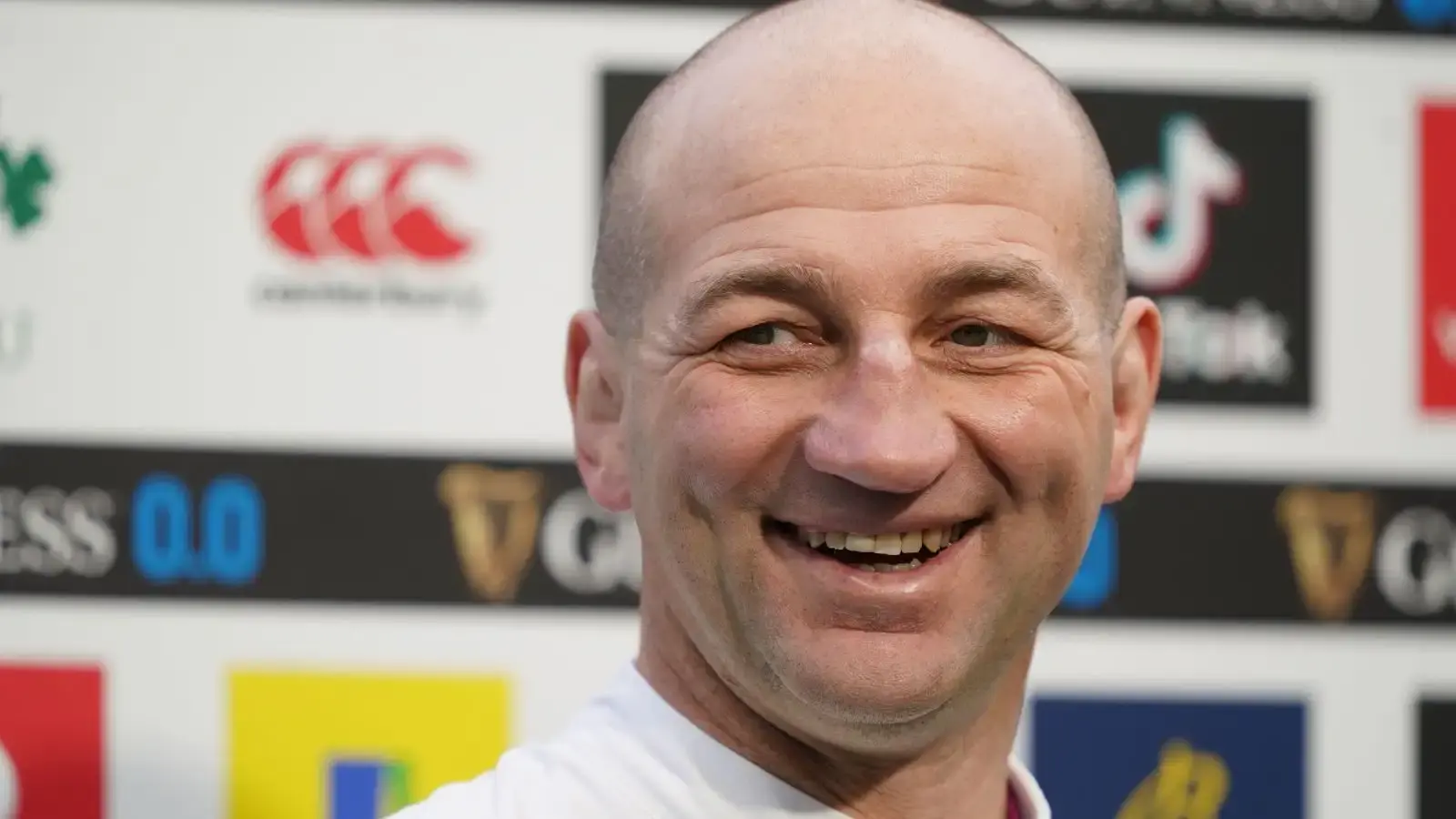
"Needs to change" - Steve Borthwick reacts after breaking England record for number of changes
Rugby NewsTuesday, 03 March 2026 at 18:00

England head coach Steve Borthwick has responded to defeats against Scotland and Ireland with the boldest selection shake up of his tenure, making nine personnel changes and 12 in total for this weekend’s Guinness Six Nations clash with Italy.
Watch the Guinness Six Nations at your local Greene King sports pub.
In doing so, he eclipses a 19 year old record for the most changes made by an England side during a championship campaign.
The 42-21 loss to Ireland at Allianz Stadium left England searching for answers, following similar frustrations at Murrayfield. Questions around intensity, discipline and attacking sharpness have lingered for a fortnight. Borthwick’s answer has been decisive action.
“It is an exciting team, a team full of a lot of talent,” he said after naming his side. “Some of the changes are enforced, Alex Mitchell is unavailable for the rest of the tournament, Ollie Lawrence is unavailable for this week.”
Injuries have forced his hand in certain areas. He also pointed to the accelerated development of Tom Roebuck after the early tournament loss of Immanuel Feyi-Waboso.
“I said from the start of the tournament, Tom Roebuck, in an ideal world could do with another week or two of training. With the loss of Manny Feyi-Waboso at the start it accelerated Tom Roebuck in there and it looks like he has really benefited from a week or two of training. I am delighted he is back and feeling really, really good. It has meant that change of selection, particularly in the back line.”
There is rotation in the pack too, with starters and bench players swapping roles, including Ollie Chessum making way for Alex Coles at lock. “In the forwards we have made a bit of change, a bit of rotation between starters and people who came off the bench. It makes for an exciting blend of players.”
The changes inevitably raise the question of whether this is a reaction to two underwhelming performances. Borthwick insists selection is always multi layered.
“There is always an assessment of what you see in the games and it is also an assessment of what you see against specific opposition and the plan they have and the plan you wish to play. The other aspect is from a training perspective. I tell the players how much I value training. I want players to bring all their talent and point of difference onto the training field as well as the game at the weekend and I have been delighted to see the way a lot of the players have trained and I think rightly, several players have been rewarded for that.”
A fallow week has allowed more time together in camp, reducing reliance on club combinations. Six different clubs are represented across the seven players in the back line, yet Borthwick is comfortable with the cohesion built in camp.
“I talk a lot about cohesion and players playing together and that is one of the factors we are always considering in the selection process. The vast majority of the backline has trained together for four or five weeks now and it has trained really well together.”
For a coach known for consistency, this feels like a shift. Borthwick accepts standards have slipped.
“All of us have been really disappointed with the performances in the last two games. They haven’t been to the required standards that we have set over a long period time. One of those has been the willingness to throw that pass and take our chances, to play at the speed we want to push.”
He is clear that discipline and intensity must improve.
“We’ve got to make sure that we have 15 men on the pitch. We’ve played three games where we have long periods where have had 14 men. This has been a team that has built a very good disciplinary record. That is something that needs to change.”
Strong words have been delivered in camp, but the focus has already shifted.
“We’ve drawn a line and look forward to Italy. We are very much focused on playing against Italy and I think this team will play very well on Saturday and get the result we want.”
EDITORS PICKS:
TRENDING




LATEST NEWS



LATEST COMMENTS
- Jordie Barrett over Damian de Allende is far from being correct. The hype around Dupont is also overreaching, he's probably 4th in the world and has been since the 2023 WC. He also avoids certain matchups which is strange. The rest of the list is pretty good apart from minor subjective biases.JasonMarlow16-09-2026
Loading