Richie McCaw didn’t hesitate when naming the best rugby stadium for atmosphere
Rugby NewsSaturday, 12 October 2024 at 02:18
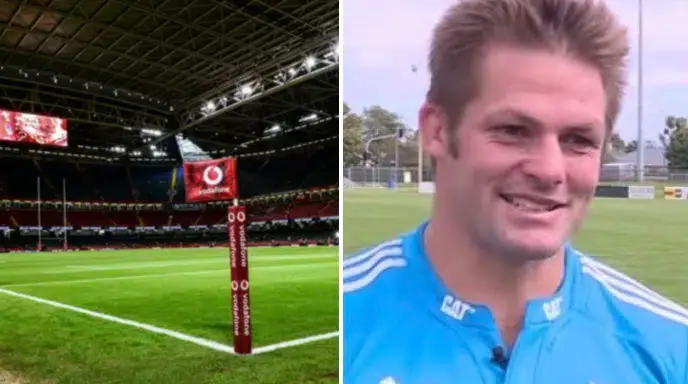

When Richie McCaw, arguably the greatest rugby player of all time, talks about stadiums that made a lasting impact on him, the rugby world listens.
The former All Blacks captain, who led his team to two World Cup victories, has played in nearly every major rugby arena, but a few hold a special place in his heart.
Let’s take a closer look at McCaw’s favourite rugby grounds, the atmosphere they offer, and some quirky details that make them legendary.
Join the RUCK’s WhatsApp community here and get the latest news sent straight to your messages.
Principality Stadium: Rugby Heaven Under a Roof
McCaw’s top choice for atmosphere? The iconic Principality Stadium in Cardiff, Wales. Known for its electric vibe when the roof is closed, McCaw fondly recalls the incredible energy of the crowd that echoes through the 74,000-seat arena.
"It is great to be playing with the roof closed as that creates both a great atmosphere and a dry ball," said Richie McCaw. The indoor setting makes the venue unique, creating a cauldron-like effect where sound bounces around, making it incredibly loud. Whether you're Welsh or not, the cheers (and jeers) surround you from all angles.
Despite the deafening noise, McCaw loved the challenge:
"It can be extremely noisy but then it is the same for both sides and you just have to do your best to get your messages over to your mates."
"It can be extremely noisy but then it is the same for both sides and you just have to do your best to get your messages over to your mates."
This stadium, originally known as the Millennium Stadium, is nestled in the heart of Cardiff and is as iconic for its retractable roof as for the history it holds. From World Cup finals to Six Nations clashes, it's a venue that every player wants to experience.
For McCaw, this stadium is in a league of its own:
"It is certainly one of my favourite places," he said. And who can blame him? Few rugby venues boast the atmosphere of Principality on a match day.
"It is certainly one of my favourite places," he said. And who can blame him? Few rugby venues boast the atmosphere of Principality on a match day.
Ellis Park: A Fortress of History and Intimidation
McCaw also holds South Africa's Ellis Park in high regard. Located in Johannesburg, this is a venue drenched in history, perhaps most famously known as the site where South Africa won the 1995 Rugby World Cup. For McCaw, playing at Ellis Park was as intimidating as it was exhilarating.
"Ellis Park is one of the great stadiums to play test rugby at, even though it is tough and intimidating," McCaw wrote on his Facebook page.
What makes Ellis Park so daunting? The high altitude of Johannesburg, combined with the passion of the home fans, gives the Springboks an edge. At 1,753 meters (5,750 feet) above sea level, it’s known to sap the energy of even the fittest athletes. The chants of "Bokke! Bokke!" resonate through the concrete structure, making it a cauldron for visiting teams.
The stadium's open design ensures that no roof can muffle the roar of 60,000 fans. Built in 1928, Ellis Park remains one of the most storied and intense rugby environments in the world. It’s not just the physical challenge of playing at altitude—it’s the sense of history and national pride that you can feel in the air.
Lansdowne Road: Old-School Grit Meets Modern Marvel
Ireland’s Lansdowne Road, now replaced by the state-of-the-art Aviva Stadium, was another standout for McCaw. The flanker cherishes the memories of playing at both the old Lansdowne Road and its ultra-modern successor.
"There's no doubt the current Aviva is an amazing place to play, but to have played at the old Lansdowne Road a couple of times... I was pretty lucky to get to play at both," McCaw said, reflecting on the ground’s evolution.

The old Lansdowne Road was a stadium with character, grit, and history, where the noise from the crowd felt like it was pressing down on you from the rickety stands. Built in 1872, it was the oldest rugby stadium in the world before being replaced by the Aviva.
While the Aviva boasts a sleek, modern design with its eye-catching curved roof, McCaw still holds a soft spot for the original, especially with its unique location—straddling a train line. When Lansdowne was redeveloped, trains had to be factored into the design, making it a quirky feature of a world-class stadium.
Croke Park: A Once-in-a-Lifetime Experience
One of the most special memories for McCaw didn’t happen in a traditional rugby stadium. During the redevelopment of Lansdowne Road, Ireland’s rugby team moved temporarily to Croke Park, traditionally a GAA stadium, home to hurling and Gaelic football.

The view from Roinn B2, on the Hill Terrace, for the 2004 All-Ireland Football Final.
"I'll tell you what – the one great experience we had when it was being rebuilt was to play at Croke Park. I understand the history of Croke Park and that was pretty cool," McCaw shared.
Croke Park, with its 82,000 capacity, is not just a sporting arena but a national symbol in Ireland. The site of the 1920 Bloody Sunday massacre, the stadium is deeply entwined with the country’s turbulent history. For many, playing rugby in a GAA fortress was a symbolic moment of unity between different Irish sports and communities.
Richie McCaw ranks his five toughest opponents
Sourcing several Q&A’s from down the years, including one with Rugby World, here is his top five:
5. Thierry Dusautoir (France)
Position Back-row
Height 6 ft 2 in
Weight 218 lb
Caps 80
Dusautoir made his international debut against Romania in 2006 before making a name for himself the following year when France stunned New Zealand 20-18 in the World Cup quarter-finals.
The former France skipper also scored a try and was named man of the match in the 2011 World Cup final when New Zealand avenged their defeat of four years earlier with an 8-7 win in the final.
Richie McCaw said: "Over the years I've played him a few times and you always know he's there," said McCaw of Dusautoir. "He was always pretty big defensively and in the breakdown area. A menace"

DID YOU KNOW? He broke the record for most tackles in a match, making 38 tackles against the All Blacks in the 2007 World Cup
4. David Pocock (Australia)
Position Flanker
Height 6 ft 0 in
Weight 227 lb
Caps 80
The Zimbabwe-born openside flanker, who made his debut for the Wallabies in 2008 and played at his first Rugby World Cup in 2011, was widely considered one of the best players in his position.
Richie McCaw said: "Ever since I started playing rugby I've looked forward to games against other No7s who are highly rated," he said. "Pocock was one of the best."

DID YOU KNOW? Pocock and his friend Luke O’Keefe run a not-for-profit organisation, Eightytwenty Vision, which has the aim of helping the less fortunate people of Zimbabwe.
3. Richard Hill (England/Lions)
Position Back-row
Height 6 ft 2 in
Weight 224 lb
Caps 76
Hill played 288 times for Saracens and 71 times for England making him one of the modern greats of the English game. He also played five Tests for the British and Irish Lions between 1997 and 2005.
McCaw said: “Extremely gifted player who had all the ability in the world to play and run the ball. When England needed someone to dig in he was your man. He had the full tool bag and quietly got on with it.”

DID YOU KNOW? On his mother's side, Hill is a second cousin removed of film director Peter Jackson
2. Schalk Burger (South Africa)
Position Back-row
Height 6 ft 4 in
Weight 242 lb
Caps 86
McCaw said: "You can come up against another tough team but never feel like you have had a tough match against your opposite. But with Burger you knew where they are going to be and how hard they play near the ball."

DID YOU KNOW? When not playing rugby, Burger lives and works with his family on the Welbedacht Wine Estate near Wellington, Western Cape.
1. George Smith (Australia)
Position Back-row
Height 5 ft 11 in
Weight 233 lb
Caps 111
Smith was a great contributor to Australian rugby in the modern era, playing in 111 tests across 13 years donning the green and gold jersey. 24 of those tests were against the All Blacks, of which Smith triumphed in seven – but only three in which McCaw also played.
Richie McCaw said: Speaking in a Q+A with World Rugby, McCaw's revealed former Wallabies flanker George Smith as the one he feared most on the field, saying Smith "was always pretty tough".
“I remember playing him when I was in the under 19s against Australia and remember then thinking just what a good player he is.”

DID YOU KNOW? He was easily recognised on the field by his dreadlocked hair style until late 2006 – when he decided to sell his dreadlocks for charity. They were given to a charity for younger people with cancer.
TRENDING



LATEST NEWS

LATEST COMMENTS
- Jordie Barrett over Damian de Allende is far from being correct. The hype around Dupont is also overreaching, he's probably 4th in the world and has been since the 2023 WC. He also avoids certain matchups which is strange. The rest of the list is pretty good apart from minor subjective biases.JasonMarlow16-09-2026
Loading