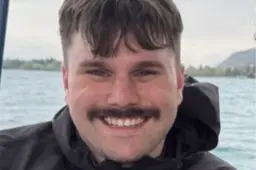
ormer Georgia captain Merab Sharikadze's extraordinary 11-year suspension for his role in a urine-swapping anti-doping scandal is one of the longest bans ever handed out in rugby.
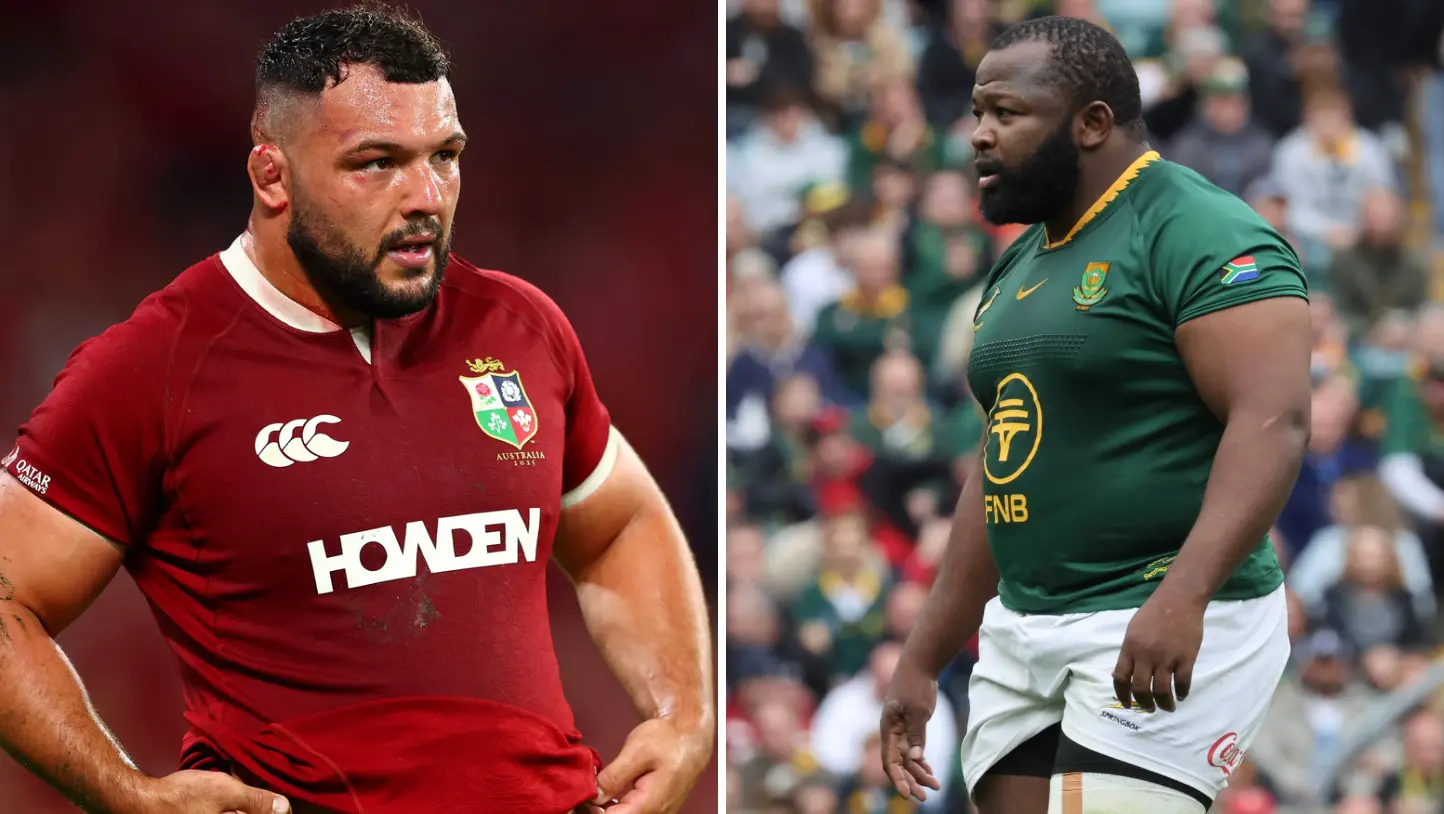
It eclipses the 12-week suspension handed to Eben Etzebeth for making intentional contact with the eye of Wales flanker Alex Mann during last autumn's Autumn Nations Series and serves as a reminder that the sport has delivered some truly extraordinary punishments over the years.
Yet even Sharikadze's sanction doesn't top the list. From multi-year suspensions to lifetime bans, these are the longest punishments ever imposed on players in rugby history.
10 Johan Le Roux (18 months)
A moment of recklessness in 1994 effectively brought Johan Le Roux’s international career to an end. During a Test in Wellington, the Springbok prop stunned spectators by biting the ear of All Blacks captain Sean Fitzpatrick.
Rugby authorities reacted quickly, issuing Le Roux with an 18-month suspension. The incident was widely condemned, with South African rugby officials describing it as an embarrassment to the nation.
1994 New Zealand vs South Africa
Sean Fitzpatrick lost a chunk of his cauliflower ear to Springbok Johan Le Roux at Athletic Park on July 23 pic.twitter.com/zjv4p7e1i8— APSM Rugby Channel ? (@ApsmRugby) May 24, 2024
9 Richard Nones (2 years)
One of the most controversial suspensions in professional rugby came in 1999. Colomiers prop Richard Nones received a two-year ban for eye gouging during a fiery Heineken Cup clash with Pontypridd, making him the only professional player to receive the maximum sanction for the offence.
An appeal failed after a lengthy hearing in Edinburgh. Officials used the case as a warning to players across the sport, and despite criticism from many in France, the punishment remained in place as one of rugby’s toughest penalties for on-field violence.
8 Julien Caminati (33 months)
Julien Caminati’s disciplinary record began to take shape at a young age. At 18, the French winger was suspended for three years after spitting at a referee during a fourth-division fixture. The ban was later reduced to 26 months following his transfer to Nice.
Further issues followed throughout his career. While playing for Brive, he received an additional six-month suspension for a doping violation. He also served shorter bans for punching an opponent and for an offence that resulted in a red card.
⏪ Il sera du retour au Stade des Alpes vendredi avec Montauban. Il y a 7 ans, Julien Caminati avait marqué cet essai, en puissance, face au Stade Toulousain#AllezFCG #TBT #JeudiJadis #FCGUSM pic.twitter.com/piMB4H2EcW— FC Grenoble Rugby #AllezFCG (@FCGrugby) September 17, 2020
7 Merab Sharikadze (11 years)
Former Georgia captain Merab Sharikadze received one of the longest bans in rugby history in 2026 after being suspended for 11 years following World Rugby's biggest-ever anti-doping investigation.
The investigation, known as Operation Obsidian, found that Sharikadze had provided his own "clean" urine samples for teammates to use during anti-doping tests between 2022 and 2023. DNA analysis confirmed the samples had been substituted.
World Rugby found no evidence that the scheme was designed to conceal performance-enhancing drugs, but ruled it was intended to hide the use of banned recreational substances, including cannabis and tramadol. As captain and a central figure in the sample-swapping operation, Sharikadze received the harshest punishment of anyone involved.
The former centre, who won more than 100 caps and famously captained Georgia to victory over Wales in Cardiff in 2022, had already retired from rugby and moved into MMA when the sanction was announced. The 11-year ban applies to all rugby activities.
6= Bruno Andres Doglioli (3 years)
In 2016, Argentinian-born Bruno Andres Doglioli became the subject of one of Italian rugby’s most shocking disciplinary cases. During a club match, he struck referee Maria Beatrice Benvenuti with a late and forceful hit from behind, causing whiplash injuries.
Although the incident initially resulted in only a yellow card, the fallout was far more severe. Doglioli was suspended by his club before receiving a three-year ban from all competitive sport. It was the harshest rugby-related sanction handed down in Italy for more than two decades.
6= Dean Richards (3 years)
Dean Richards was one of the central figures in rugby’s infamous Bloodgate scandal. During Harlequins’ 2009 Heineken Cup quarter-final against Leinster, winger Tom Williams used a fake blood capsule to create the appearance of an injury, allowing a tactical substitution.
Once the deception was exposed, severe punishments followed. Richards, Williams and the club physiotherapist all received bans, with the former Harlequins coach suspended for three years. The scandal remains one of the most damaging episodes in professional rugby history.
5 Trevor Brennan (5 years)
Trevor Brennan found himself at the centre of controversy during a 2007 match between Toulouse and Ulster when he entered the crowd and assaulted a spectator. Brennan argued that he had reacted to insults directed at his mother, but disciplinary authorities rejected that defence.
He initially announced his retirement before receiving a lifetime ban, which was later reduced to five years on appeal. Brennan was also fined £17,000 and ordered to pay compensation to the supporter involved.
4 Cipriano Martinez (29 years)
Cipriano Martinez became notorious after an act of extreme violence during a club match in Argentina. In 2016, footage emerged showing the prop repeatedly kicking an opponent in the head while he was lying on the ground.
The response was immediate. His club, Pucara, imposed a 99-year suspension, while the Buenos Aires Rugby Union later issued an official ban of 1,508 weeks, equivalent to 29 years.
The punishment reflected the seriousness of the incident and drew widespread attention across the rugby world.
2= Pablo De La Plata (Life Ban)
A mass brawl during an Argentine club fixture between Huazihul San Juan and Personal Bank Mendoza led to some of the sport’s toughest disciplinary measures. Pablo De La Plata received a lifetime ban for his involvement, with the sanction due to run until 2041.
Several other players were also punished, some receiving suspensions of up to 10 years. The case demonstrated Argentine rugby’s determination to crack down on violence at every level of the game.
2= Michel Palmie (Life Ban)
Michel Palmie built a fearsome reputation throughout his career and was widely regarded as one of rugby’s toughest enforcers. Stories of gouging, punching and violent conduct followed him wherever he played.
In 1978, he crossed a line from which there was no return when he punched Racing Club’s Armand Clerc, leaving him partially blind in one eye. The incident resulted in a lifetime ban and remains one of the most severe disciplinary cases in French rugby history.
1 Chris Jones (Life Ban, Twice)
Chris Jones occupies a unique place in rugby’s disciplinary history. The former Treorchy prop received not one but two lifetime bans during his career. He openly admitted to stamping and kicking opponents, claiming violence came naturally to him on the field.
Known for his intimidating reputation and notorious behaviour, Jones was eventually banned for life. When he later attempted to return to the sport, rugby authorities imposed a second lifetime suspension, ensuring his place among the game’s most infamous figures.
Bonus: Unnamed Namibian Player (Life Ban)
One of the most disturbing incidents in recent rugby memory occurred in Namibia in 2024. During a match between Grootfontein Rugby Club and Reho Falcons, an unnamed player charged at the referee and delivered a full-speed tackle.
Despite being injured, the referee still managed to produce a red card before abandoning the match. The player was subsequently banned for life and suspended from all rugby activity for 156 weeks, underlining rugby’s strict stance on violence towards match officials.
TRENDING


LATEST NEWS
LATEST COMMENTS
- Jordie Barrett over Damian de Allende is far from being correct. The hype around Dupont is also overreaching, he's probably 4th in the world and has been since the 2023 WC. He also avoids certain matchups which is strange. The rest of the list is pretty good apart from minor subjective biases.JasonMarlow16-09-2026
Loading

