Sir Ian McGeechan ranks the five best rugby players of all time
Rugby NewsSaturday, 15 February 2025 at 20:58


Sir Ian McGeechan, a rugby visionary and coaching maestro, has seen it all. With four British & Irish Lions tours under his belt as head coach and two more as a player, few in rugby history boast a résumé as decorated as his.
His deep tactical understanding and mentorship have shaped the sport, earning him legendary status worldwide.
Writing for The Telegraph, the 77-year-old named his all-time greatest rugby players, selecting six New Zealanders, three Englishmen, two Welshmen, and one player each from France, Scotland, and Ireland.
Among them, his top five standouts include an English and Welsh rugby icon. Here’s who made the cut.
#5. Jonah Lomu (New Zealand)
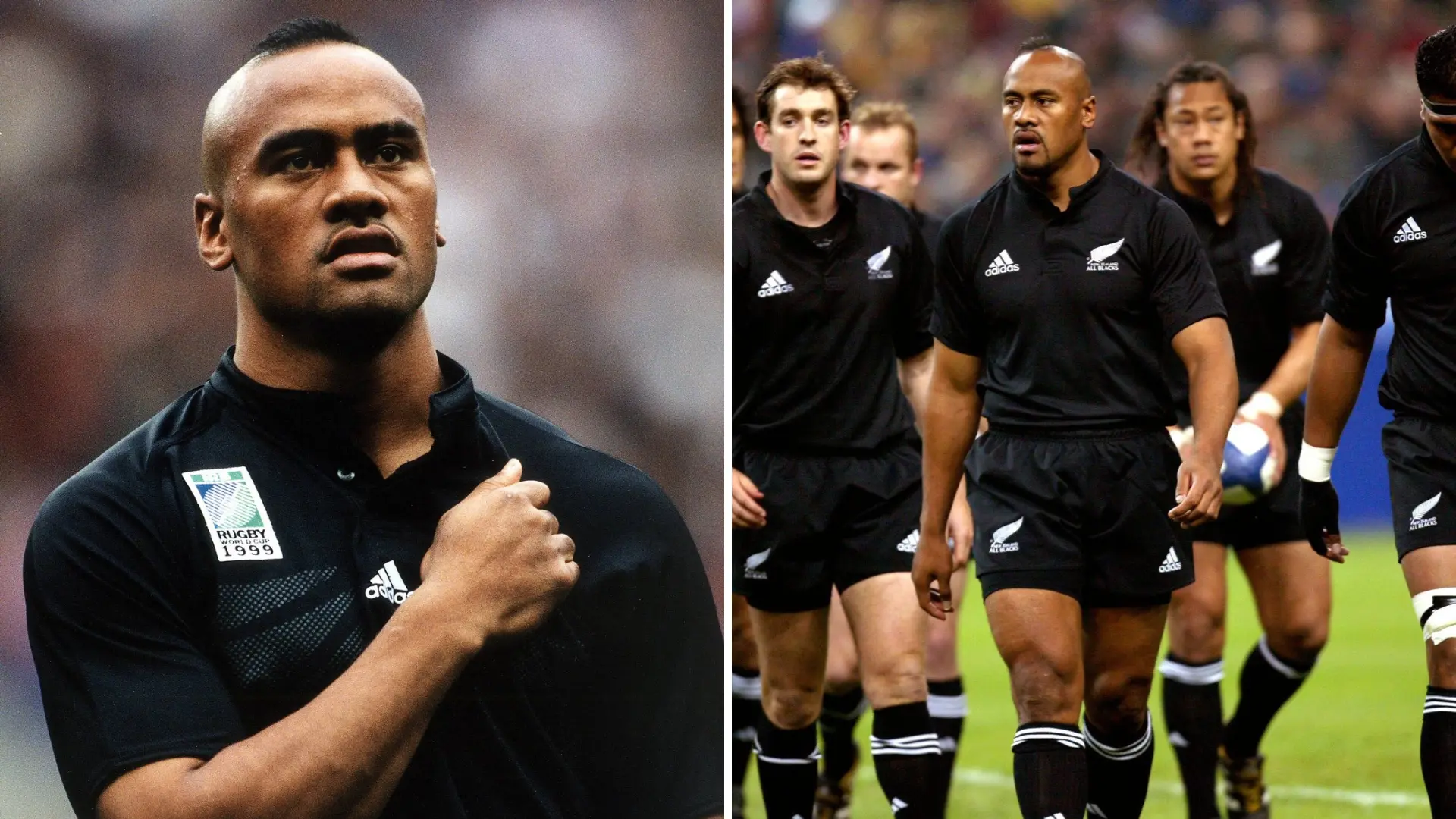
A behemoth who changed the game forever, Jonah Lomu was rugby’s first global superstar. The 6ft 5in, 120kg winger was a terrifying blend of speed and power, redefining what was possible for a man of his size.
Lomu’s explosive performances at the 1995 Rugby World Cup remain the stuff of legend, as he bulldozed defences with ease, scoring four tries in an iconic semi-final against England.
McGeechan wrote:
“Illness and injury ultimately slowed him down. But his performances at the 1995 World Cup, just as the game was turning professional, will never be forgotten. The game needed a superstar, and it got one in Lomu. He was brilliant for rugby.”
#4. Martin Johnson (England)
One of the most fearsome captains in rugby history, Martin Johnson led England to World Cup glory in 2003, cementing his place among the sport’s greats.
Renowned for his towering physicality, leadership, and sheer will to win, the Leicester lock was the heart of England’s forward dominance during his era. He remains the only man to have captained the Lions on two tours.
McGeechan wrote: “I think he defined an era, both for forward play and for the performances of the teams he represented.”
#3. Dan Carter (New Zealand)
Regarded by many as the finest fly-half to ever play the game, Dan Carter’s all-around excellence made him a once-in-a-generation talent.
The All Black maestro’s tactical awareness, immaculate goal-kicking, and game-breaking ability saw him guide New Zealand to two Rugby World Cup triumphs in 2011 and 2015.
McGeechan wrote: “He really was the complete 10. His defence was immaculate, he could break himself, he could bring others into play, his kicking from hand and from tee was incredibly accurate. He also changed the way the game was played with his kicking from his own 22m and his kicking to compete. The greatest of the modern era in my opinion.”
#2. Zinzan Brooke (New Zealand)
A maverick in the number eight jersey, Zinzan Brooke revolutionised forward play with his skillset more akin to a fly-half. His kicking ability, link-up play, and dynamism in open play set him apart from his peers.
Brooke won 58 caps for New Zealand between 1987 and 1997, playing a crucial role in the All Blacks’ 1987 World Cup triumph. His ability to slot drop goals from anywhere on the pitch made him a true original.
McGeechan wrote: “His ability to bring others into the game, his ability to stay connected in the game himself, popping up repeatedly through different phases; all exemplary. And he dropped goals of course. A true original.”
#1. Gareth Edwards (Wales)
For many, Gareth Edwards remains the greatest rugby player of all time. The heartbeat of Wales’ golden generation in the 1970s, Edwards was a scrum-half who could do it all—lightning-quick, visionary, and a match-winner in every sense.
He won three Grand Slams and five Triple Crowns with Wales while also starring for the British & Irish Lions in their legendary 1971 and 1974 tours. His famous try for the Barbarians against New Zealand in 1973 is still regarded as one of the greatest ever scored.
McGeechan wrote: “My favourite scrum-half of all time happens to be my favourite player of all time. Gareth Edwards was and always will be the master. The Greatest.”
Editors Picks:
TRENDING


LATEST NEWS


LATEST COMMENTS
- Jordie Barrett over Damian de Allende is far from being correct. The hype around Dupont is also overreaching, he's probably 4th in the world and has been since the 2023 WC. He also avoids certain matchups which is strange. The rest of the list is pretty good apart from minor subjective biases.JasonMarlow16-09-2026
Loading