Springbok gives brutal verdict on South African-born Scotland players
Rugby NewsThursday, 09 July 2026 at 13:32

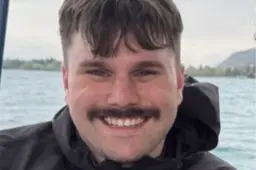
Andre Esterhuizen delivered an honest message to South African players who choose to represent other countries, with Scotland, this weekend's opponents, having benefited from that trend more than most.
⭐ Save us to your Google Favourites for nonstop RUCK content!
Scotland have the highest number of foreign-born players in any Nations Championship squad, with 15 of their 36-man group born outside the country.
South African-born trio Pierre Schoeman, Duhan van der Merwe and Nathan McBeth all represented South Africa at age grade level, while Kyle Steyn was also born in South Africa.
Speaking before the Springboks' 32-15 victory over Scotland in 2024, Esterhuizen admitted he struggles to understand why a player would choose not to fight to represent the country of their birth.
“I’d much rather have my 18 caps for the Springboks than 70 caps for a different country that I’m not actually born in,” Esterhuizen told reporters.
“Obviously, a lot of people have different views about that but, for me, I’m South African. I love this country and this team. I’m very content with where I’m at.
“I’m always striving to be better, to play more, to get into the squad more. Damian is there, Lukhanyo [Am] is there – there’s so many players that can play 12, that can play not just stand-in at 12 but can play a great game at 12. So it’s also very healthy for the squad. The competition between each other will drive each other to get better.
“So yeah, I would have loved to have played more. But I’ve worked hard – worked a lot harder on my discipline and stuff through the years, getting better at that.”
While firm in his own views, Esterhuizen stressed that he respects the choices other players make and acknowledged his perspective is shaped by having had the chance to pursue a Springboks career from a young age.
“It’s obviously a personal opinion. I can’t speak for them as they obviously made the decision on their own. I think some players just decide young to leave the country and when the opportunity comes they’re probably not going to say no,” he added.
“It’s also easy for me to say it in hindsight. If I left earlier and that opportunity came I don’t know what I would have done, but at the moment where I am now I’m very happy with my 18 or 19 or 20 caps.
“For them it’s a career decision. You also need to make money out of rugby. So, there’s two different sides to it.”
LATEST RUGBY NEWS
Every Nations Championship squad ranked by foreign-born players – from least to most
Using information and research from Americas Rugby News, we have ranked all 12 Nations Championship squads from the lowest percentage of foreign-born players to the highest.
It is important to note that foreign-born does not necessarily mean a player was developed overseas. Several players on this list moved countries as children and came through the rugby system of the nation they now represent.
12. Argentina – 0%
Foreign-born players: 0/35
Argentina are the only team in the inaugural Nations Championship with a squad made up entirely of players born and raised in the country.
Felipe Contepomi’s squad also highlights the continued growth of rugby outside its traditional Buenos Aires stronghold.
At the 2007 Rugby World Cup, 27 of Argentina’s 31 players came from Buenos Aires province. In the current squad, that figure has fallen dramatically, with Córdoba and Tucumán now producing a growing number of internationals.
Foreign-born players: None
11. South Africa – 2.17%
Foreign-born players: 1/46
Rassie Erasmus has selected just one player born outside South Africa.
Vincent Tshituka was born in Lubumbashi in the Democratic Republic of the Congo before his family moved to South Africa when he was a child.
The flanker was entirely developed by the South African rugby system, meaning all 46 players in the Springboks squad are considered homegrown.
Foreign-born player:
- Vincent Tshituka – Democratic Republic of the Congo
10. England – 8.33%
Foreign-born players: 3/36
Steve Borthwick has selected three players born outside England, with all three featuring in the backline.
Marcus Smith was born in the Philippines and first played rugby in Singapore before moving to England aged 13.
Immanuel Feyi-Waboso was born and raised in Wales, while Benhard Janse van Rensburg was born and developed in South Africa before qualifying for England.
England’s entire group of forwards were born and developed in the country.
Foreign-born players:
- Marcus Smith – Philippines
- Benhard Janse van Rensburg – South Africa
- Immanuel Feyi-Waboso – Wales
9. Wales – 12.12%
Foreign-born players: 4/33
Steve Tandy’s squad contains four players born outside Wales.
Ben Carter was born in England but moved to Wales just weeks after his birth, while Max Llewellyn was also born in England but came through the Welsh system.
Ellis Mee was developed in England before being identified through his Welsh family connection, while Blair Murray was recruited from New Zealand.
Wales also have several players who were born in the country but developed elsewhere, including James Botham and Taine Plumtree.
Foreign-born players:
- Ben Carter – England
- Max Llewellyn – England
- Ellis Mee – England
- Blair Murray – New Zealand
8. France – 13.95%
Foreign-born players: 6/43
France have six players in their extended Nations Championship squad who were born outside the country.
Émilien Gailleton was born in England but moved to France aged three and is considered a product of the French system.
The remaining five were primarily developed elsewhere, including Australian products Emmanuel Meafou and Tom Staniforth.
Foreign-born players:
- Moses Alo-Emile – Australia
- Tevita Tatafu – Tonga
- Emmanuel Meafou – New Zealand
- Tom Staniforth – Australia
- Émilien Gailleton – England
- Aaron Grandidier-Nkanang – England
7. New Zealand – 14.71%
Foreign-born players: 5/34
Five members of the All Blacks squad were born outside New Zealand.
Ethan de Groot and Tyrel Lomax were born in Australia, while Wallace Sititi was born in Samoa.
Samisoni Taukei’aho moved from Tonga to New Zealand aged 16, while Germany-born Anton Segner first arrived on a rugby scholarship aged 15.
All 15 backs selected in the squad were born and raised in New Zealand.
Foreign-born players:
- Ethan de Groot – Australia
- Samisoni Taukei’aho – Tonga
- Tyrel Lomax – Australia
- Anton Segner – Germany
- Wallace Sititi – Samoa
6. Ireland – 16.67%
Foreign-born players: 6/36
Andy Farrell’s squad contains six players born outside the island of Ireland.
Four of them moved to Ireland as children and were developed by the Irish system: Jeremy Loughman, Cormac Izuchukwu, Joe McCarthy and Ciarán Frawley.
Bundee Aki and Jamison Gibson-Park are the two most high-profile examples of players recruited from New Zealand as established professional rugby players before qualifying on residency.
Foreign-born players:
- Jeremy Loughman – USA
- Cormac Izuchukwu – England
- Joe McCarthy – USA
- Jamison Gibson-Park – New Zealand
- Ciarán Frawley – Australia
- Bundee Aki – New Zealand
5. Australia – 18.92%
Foreign-born players: 7/37
Seven members of the Wallabies squad were born outside Australia.
However, several are considered homegrown Australian players after moving to the country at a young age.
Brandon Paenga-Amosa arrived aged four, Harry Potter moved aged 10 and Josh Canham played all of his rugby in Australia after moving as a child.
Others, including Taniela Tupou and Filipo Daugunu, arrived later in their rugby development.
Foreign-born players:
- Brandon Paenga-Amosa – New Zealand
- Taniela Tupou – Tonga
- Josh Canham – USA
- Hunter Paisami – Samoa
- Filipo Daugunu – Fiji
- Harry Potter – England
- Max Jorgensen – England
4=. Italy – 25%
Foreign-born players: 9/36
Italy have nine foreign-born players in their wider 36-man group.
Muhamad Hasa and Ion Neculai both moved to Italy as children and were developed by the Italian rugby system.
The squad also contains three Argentina-born players in Ivan Nemer, Pablo Dimcheff and Juan Ignacio Brex.
Interestingly, Italy also have two players born in the country who were primarily developed elsewhere: Louis Lynagh and Tommaso Allan.
Foreign-born players:
- Ivan Nemer – Argentina
- Pablo Dimcheff – Argentina
- Muhamad Hasa – Albania
- Ion Neculai – Moldova
- Ross Vintcent – South Africa
- Stephen Varney – Wales
- Juan Ignacio Brex – Argentina
- Paolo Odogwu – England
- Montana Ioane – Australia
4=. Fiji – 25%
Foreign-born players: 8/32
Fiji are level with Italy, with eight of their 32 players born outside the country.
Five were born and raised in New Zealand, while the remaining three came through the rugby systems of Australia and England.
The squad also contains former All Black Pita-Gus Sowakula, who was born in Fiji before representing New Zealand and has now switched international allegiance back to his country of birth.
Foreign-born players:
- Sam Matavesi – England
- Zuriel Togiatama – New Zealand
- Tim Hoyt – England
- Isoa Nasilasila – Australia
- Sam Wye – New Zealand
- Caleb Muntz – New Zealand
- Isaiah Armstrong-Ravula – New Zealand
- Salesi Rayasi – New Zealand
2. Japan – 37.14%
Foreign-born players: 13/35
Japan have 13 foreign-born players in their Nations Championship squad.
However, the make-up of the group is more complicated than the headline number suggests.
Captain Warner Dearns moved to Japan aged 14, while Michael Leitch arrived aged 15. Both are considered products of the Japanese rugby system.
Others, including Harry Hockings, Jack Cornelsen and Dylan Riley, moved to Japan later in their careers before qualifying through residency.
Foreign-born players:
- Izi Sword – Australia
- Jack Cornelsen – Australia
- Warner Dearns – New Zealand
- Harry Hockings – Australia
- Michael Stolberg – Australia
- Esei Haangana – Australia
- Tiennan Costley – Australia
- Ben Gunter – Thailand
- Michael Leitch – New Zealand
- Waisake Raratubua – Fiji
- Dylan Riley – South Africa
- Samisoni Tua – Tonga
- Inoke Burua – Fiji
1. Scotland – 41.67%
Foreign-born players: 15/36
Scotland top the ranking, with 15 of their 36 players born outside the country.
Seven of the 22 forwards and eight of the 14 backs were born abroad.
The group includes players born in South Africa, England, Australia, New Zealand and Canada.
Captain Sione Tuipulotu was born and developed in Australia, while Jack Dempsey previously represented the Wallabies and Ben White played for England.
South Africa-born trio Pierre Schoeman, Duhan van der Merwe and Nathan McBeth all represented the country at age-grade level.
Foreign-born players:
- Nathan McBeth – South Africa
- Pierre Schoeman – South Africa
- Ewan Ashman – Canada
- Will Hurd – England
- Elliot Millar Mills – England
- Josh Bayliss – England
- Jack Dempsey – Australia
- Ben White – England
- Fergus Burke – New Zealand
- Tom Jordan – New Zealand
- Rory Hutchinson – England
- Sione Tuipulotu – Australia
- Kyle Rowe – England
- Kyle Steyn – South Africa
- Duhan van der Merwe – South Africa
Full ranking
- Argentina – 0%
- South Africa – 2.17%
- England – 8.33%
- Wales – 12.12%
- France – 13.95%
- New Zealand – 14.71%
- Ireland – 16.67%
- Australia – 18.92%
4=. Italy – 25%
4=. Fiji – 25% - Japan – 37.14%
- Scotland – 41.67%
Information and research from Americas Rugby News.
TRENDING



LATEST NEWS
LATEST COMMENTS
- Jordie Barrett over Damian de Allende is far from being correct. The hype around Dupont is also overreaching, he's probably 4th in the world and has been since the 2023 WC. He also avoids certain matchups which is strange. The rest of the list is pretty good apart from minor subjective biases.JasonMarlow16-09-2026
Loading