The Greatest Combined Springboks and All Blacks XV of All Time
Rugby NewsSaturday, 29 August 2026 at 09:58

With Rugby's Greatest Rivalry hitting a fever-pitch across South Africa, it is the perfect time to look back on the all time greatest players from the Springboks and All Blacks.
Join the RUCK’s WhatsApp community here and get the latest news sent straight to your messages.
New Zealand are enjoying a stellar unbeaten run across the land of green and gold, with five wins under the belt against the four resident URC club sides and an all-important 1st Test victory.
Dave Rennie's men drew first blood in their epic four-match Test series against the Boks this past weekend in Johannesburg, with a dominant second half effort for the 33-16 win. A win this Saturday in Cape Town will deny South Africa from winning the series, with the best possible result for Rassie Erasmus' men being a shared split of the spoils.
Throughout the long and decorated history of the All Blacks and Springboks, there has been countless phenomenal talents, who at their time staked a claim to being the very best in the world. With a breathtaking 70% of all Men's Rugby World Cup titles either won by South Africa (4: (1995, 2007, 2019, 2023) or New Zealand (3: 1987, 2011, 2015), these two nations are the undisputed gold standards of rugby union.
Picking a greatest ever combined XV from the two global rugby heavyweights is no easy feat, yet as the countdown to Cape Town continues, here's our picks for the best of all time.
GREATEST COMBINED SPRINGBOKS & ALL BLACKS XV
15. CHRISTIAN CULLEN (ALL BLACKS)
Will Jordan, Percy Montgomery, Ben Smith, Israel Dagg
Though some come close, there has never been a full-back quite like Christian Cullen. The “Paekākāriki Express” was rugby’s ultimate attacking weapon: a player capable of collecting the ball deep inside his own half and scoring before the opposition had time to reorganise. His acceleration was devastating, his footwork was effortless and his ability to identify the smallest gap made him one of the most dangerous players the game has ever produced.
Cullen finished tries with ease, and he created them from situations where there appeared to be no opportunity at all. Defenders knew what was coming, yet still struggled to stop him.
His record of 46 tries in 58 Tests remains one of the most remarkable scoring achievements in All Blacks history, before Will Jordan broke the record against France this Summer, placing him among New Zealand’s greatest international finishers. For pure attacking brilliance, no full-back has ever surpassed Cullen, yet come the end of Jordan's career, this short-list may look rather different indeed.
DID YOU KNOW? Cullen scored seven tries in his first two All Blacks matches - a hat trick on debut against Samoa and four tries against Scotland in 1996.
14. BRYAN HABANA (SPRINGBOKS)
Honourable Mentions: Cheslin Kolbe, JP Pietersen, James Small, Doug Howlett, Jeff Wilson
Bryan Habana was the complete modern winger. Blessed with Olympic-level pace that famously raced alongside a cheetah, Habana coupled this with outstanding defensive instincts and an uncanny eye for the try line. Habana became one of the most prolific finishers international rugby has ever seen, as his ability to turn half-chances into tries helped define South Africa's success during one of the country's greatest eras.
Habana scored an astonishing 67 tries in 124 Tests, finishing behind only Daisuke Ohata as the second-highest try scorer in international rugby when he retired. He was instrumental in South Africa's 2007 Rugby World Cup triumph, finishing as the tournament's leading try scorer with eight tries, equalling Jonah Lomu's long-standing record.
Named World Rugby Player of the Year in 2007, Habana also won the Tri Nations and Rugby Championship while starring for both the Bulls and Toulon at club level, in which he collected an assortment of Super Rugby and Heineken Cup silverware. His pace may have grabbed the headlines, but it was his work ethic, defensive excellence and consistency over more than a decade that elevated him into rugby's all-time elite.
DID YOU KNOW? Bryan Habana once raced a cheetah over 100 metres as part of a 2007 television campaign. The cheetah won, but Habana's attempt became one of the most memorable promotional moments of the 2007 Rugby World Cup era.
13. DANIE GERBER (SPRINGBOKS)
Honourable Mentions: Jesse Kriel, Conrad Smith, Tana Umaga, Lukhanyo Am, Jacques Fourie
Danie Gerber’s international statistics are extraordinary. The Springbok centre scored 19 tries in only 24 Tests, producing a strike rate that remains remarkable for a midfield player. Blessed with pace, power and an exceptional ability to beat defenders, Gerber was capable of turning a half-chance into a long-range score.
His career was heavily affected by South Africa’s sporting isolation during the apartheid era. Gerber played his first Test in 1980 and his final international in 1992, but the Springboks played relatively few matches during much of that period.
Gerber was inducted into the World Rugby Hall of Fame in 2015 and remains widely regarded as one of the greatest centres never to have played at a Rugby World Cup. Had he been given the same international reach as players from later generations, his record could have been even more extraordinary.
DID YOU KNOW? Gerber scored four tries against England at Ellis Park in 1984.
12. MA'A NONU (ALL BLACKS)
Honourable Mentions: Jean de Villiers, Damien de Allende, Frans Steyn, Aaron Mauger, Jordie Barrett
Ma’a Nonu changed expectations of what an inside centre could be. Powerful enough to dominate the gainline but skilful enough to operate as a second playmaker, the dreadlocked jugger-naught became one of the most destructive midfield players in rugby history.
He won 103 Test caps for New Zealand and was a key figure in the All Blacks’ Rugby World Cup victories in 2011 and 2015. His partnership with Conrad Smith brought unbeatable balance to the New Zealand midfield, as Nonu supplied the physical threat, while Smith provided the tactical intelligence, but the former was far more than a powerful runner. His passing, kicking and ability to put teammates into space improved significantly throughout his career.
Nonu also enjoyed a hugely successful club career, winning the 2014 Super Rugby title with the Blues before becoming a major figure at Toulon, towards the tail end of the Galacticos Era in South Eastern France. His longevity was equally remarkable, with Nonu continuing to play professional rugby well into his forties, and recently faced off against the All Blacks, with an epic solo Haka on his Sharks debut in Rugby's Greatest Rivalry series.
DID YOU KNOW? Nonu arrives at the Sharks at 44-years-old, and holds the record of being the oldest try-scorer in Top 14 history whilst in his latest Toulon stint.
11. JONAH LOMU (ALL BLACKS)
Honourable Mentions: Makazole Mapimpi, Carel du Plessis, Julien Savea, Joe Rokocoko
There has never been another player quite like Jonah Lomu. Before Lomu arrived, wingers simply weren't built like him. Standing 6ft 5in and weighing around 120 kilograms, he combined the size of a forward with the speed of a sprinter. Defenders knew what was coming and simply could not find a way to halt the freight train in a black jersey.
His performances at the 1995 Rugby World Cup transformed rugby forever. Lomu's four-try demolition of England in the semi-final remains one of the most iconic displays the sport has ever witnessed, turning him into a global superstar almost overnight. Although illness prevented him from enjoying the longevity many expected, Lomu still scored 37 tries in just 63 Test appearances and represented the All Blacks at two Rugby World Cups.
His impact reached far beyond New Zealand. He became rugby's first genuine worldwide icon, inspiring millions to pick up a ball and helping drive the sport's growth during the early professional era. Others may have won more trophies or scored more tries, but no winger has ever changed rugby as profoundly as Jonah Lomu. For influence, fear factor and sheer brilliance, he remains the greatest winger in history.
DID YOU KNOW? Jonah Lomu was only 19 years and 45 days old when he made his All Blacks debut against France in 1994, becoming the youngest player ever to represent New Zealand at Test level — a record that still stands.
10. DAN CARTER (ALL BLACKS)
Honourable Mentions: Handre Pollard, Joel Stransky, Morne Steyn, Beauden Barrett, Andrew Mehrtens
The man who many consider the greatest fly-half in rugby history, Dan Carter had it all. Exceptional game management, unflappable kicking ability and attacking skill set that made him the most complete player of his generation. The All Blacks legend won 112 Test caps between 2003 and 2015, scoring a then-world record 1,598 points for New Zealand.
Carter was central to two Rugby World Cup triumphs, starting the 2011 final and producing one of the finest performances of his career in the 2015 final against Australia. His ability to control territory, dictate tempo and punish defensive mistakes with either boot made him a constant tactical threat, while his passing and running game ensured opponents could never simply defend against the kick.
A three-time World Rugby Player of the Year, Carter possessed the rare ability to make the difficult look routine. Whether slotting a pressure penalty or crucial drop goal, launching a perfectly weighted cross-field kick or stepping through a defensive gap, he consistently delivered when New Zealand needed him most. His combination of composure, intelligence and ruthless execution makes him an automatic selection at fly-half.
DID YOU KNOW? Dan Carter began his Test career as an inside centre rather than a fly-half. It was not until his 22nd Test, against Italy in 2004, that he took possession of the No.10 jersey and established himself as New Zealand's long-term first-choice fly-half
9. AARON SMITH (ALL BLACKS)
Honourable Mentions: Joost van der Westhuizen, Fourie du Preez, Faf de Klerk, Justin Marshall, Piri Weepu
Aaron Smith has established himself as the finest scrum-half of the professional era, bringing remarkable consistency, speed and precision to the All Blacks' attack and his beloved Highlanders. Making his New Zealand debut in 2012, Smith went on to earn 125 Test caps and was a central figure in one of the most successful periods in their history.
Smith greatest strength was his extraordinary ability to accelerate the game. Smith's lightning-fast service from the base of the ruck gave New Zealand's attacking players more time and space, and kept the defenders in a back-peddling nightmare. His passing accuracy allowed the All Blacks to maintain their trademark high-tempo style, and he was equally comfortable controlling matches when a more measured approach was required.
Smith was a member of New Zealand's 2015 Rugby World Cup-winning squad and developed into one of the most experienced half-backs in international rugby. His anticipation around the breakdown, sharp tactical kicking and ability to exploit even the smallest defensive weakness made him incredibly difficult to contain. For more than a decade, Smith provided the platform from which some of the world's most dangerous backlines could flourish.
DID YOU KNOW? Aaron Smith scored a hat-trick against Italy at the 2023 Rugby World Cup — an extraordinary achievement for a scrum-half.
1. OS DU RANDT (SPRINGBOKS)
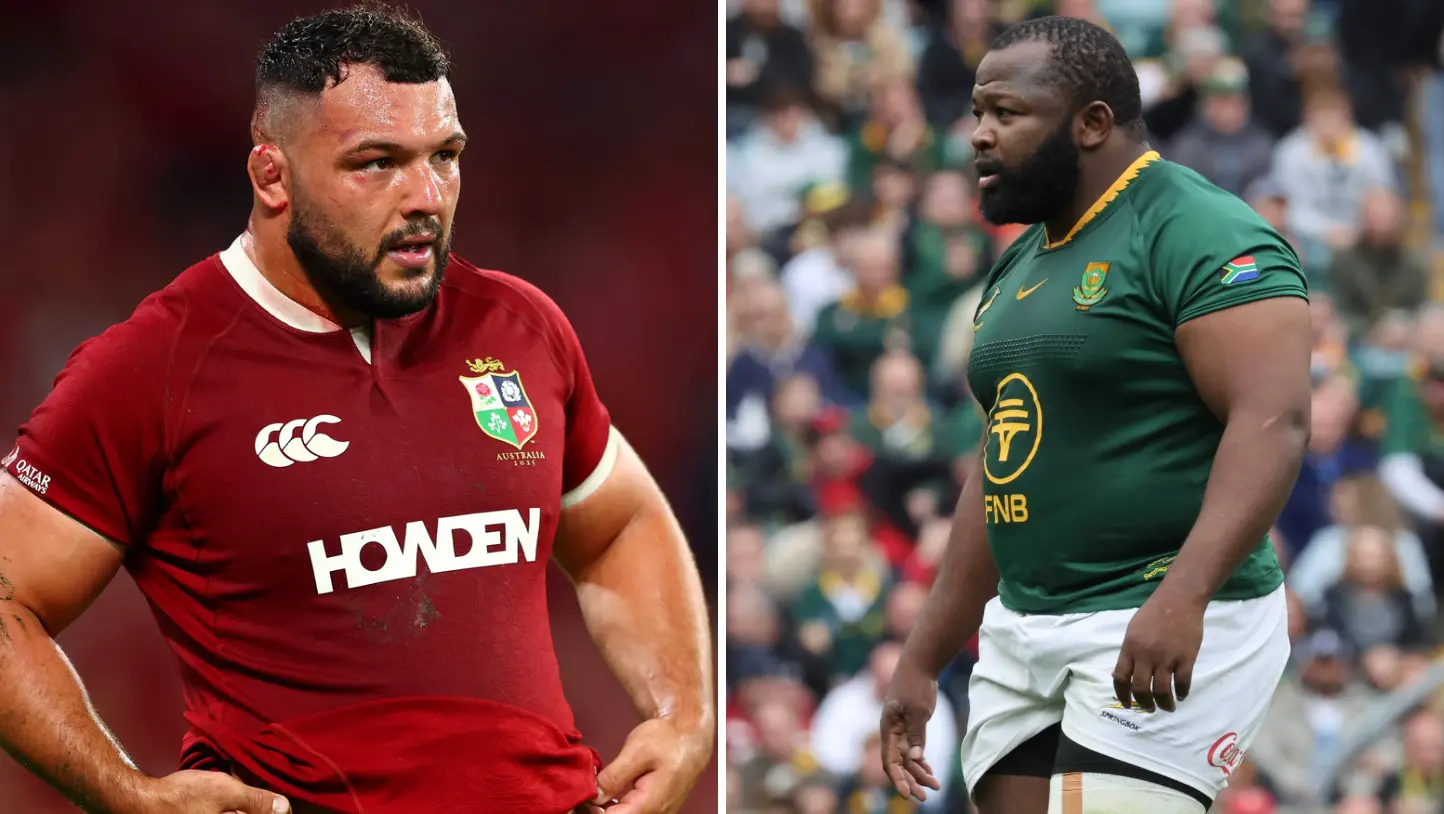
Honourable Mentions: Tendai Mtwarira, Tony Woodcock, Ox Nche
Only one prop has won the Rugby World Cup 12 years apart. Os du Randt's career is impossible to replicate. He was part of the Springboks' historic 1995 World Cup triumph, helping South Africa lift the trophy on home soil in one of the most significant moments in sporting history. Then, remarkably, he did it all over again. After walking away from international rugby, du Randt returned and was part of the South Africa side that won the 2007 Rugby World Cup.
Twelve years, two World Cups, across two completely different eras of South African rugby. But the trophies only tell part of the story. At his best, du Randt was a devastating loosehead, combining enormous strength with outstanding technique and the mobility required to contribute around the pitch.
His longevity was remarkable. His scrummaging was exceptional. And his ability to remain relevant across more than a decade of rapid change in the sport was extraordinary. Few props have left a greater mark on South African rugby and none have matched his World Cup achievement.
DID YOU KNOW? Os du Randt missed 46 international matches during his career because of injury, making his eventual total of 80 Springbok caps even more remarkable. He was also inducted into the World Rugby Hall of Fame in 2019.
2. SEAN FITZPATRICK (ALL BLACKS)
Honourable Mentions: Dane Coles, Kevin Mealamu, Malcolm Marx, Bismarck du Plessis, John Smit
Sean Fitzpatrick set the standard at hooker. The former All Blacks captain remains the benchmark against which generations of hookers have been measured, combining extraordinary durability with ruthless competitiveness and almost obsessive attention to detail.
Fitzpatrick was a master of the set piece, but his greatness went far beyond throwing and scrummaging. His tactical intelligence allowed him to read the game from the heart of the pack, while his psychological edge made him one of the most intimidating opponents of his generation. Most importantly, he was a leader. Fitzpatrick captained New Zealand 51 times, becoming one of the defining figures of an All Blacks side that dominated international rugby through the 1990s. His work ethic was relentless and his standards were uncompromising. Every aspect of his game reflected the winning culture that became synonymous with New Zealand rugby.
He combined technical excellence, leadership, longevity and an almost obsessive desire to win. Dane Coles may have reinvented the position and Malcolm Marx has pushed its modern boundaries, but Fitzpatrick remains the gold standard.
DID YOU KNOW? Sean Fitzpatrick holds the world record for consecutive Test appearances, playing 63 straight matches for the All Blacks between 1986 and 1996. He was also part of New Zealand's victorious 1987 Rugby World Cup campaign.
3. FRANS MALHERBE (SPRINGBOKS)
Honourable Mentions: Carl Hayman, Owen Franks, Olo Brown
Malherbe has been the cornerstone of South Africa’s scrum dominance in the modern era, and is widely regarded as one of, if not the very best, tighthead props in the world. He made his Springbok debut in 2013 and has since amassed over 70 caps, becoming a key figure in one of the most formidable forward packs in rugby history.
Known for his technical excellence and raw strength in the scrum, Malherbe played a vital role in back-to-back Rugby World Cup victories in 2019 and 2023, starting both finals as South Africa asserted their dominance up front over England in Tokyo and the All Blacks in Paris. Despite his quiet presence off the field, his impact on it is immense, often anchoring the scrum and providing a platform for the Springboks’ powerful style of play.
What makes Malherbe particularly intimidating is the relentlessness of his physicality. He rarely needs theatrics to make his presence felt, instead imposing himself through immense leg drive, body position and an ability to absorb pressure without giving an inch. For opposition looseheads, facing Malherbe has become one of the ultimate tests of scrummaging technique and strength, with even the smallest advantage potentially deciding a crucial set piece.
DID YOU KNOW? Frans Malherbe attended Paarl Boys’ High School, one of South Africa's most famous rugby schools. The school has also produced Springboks including Corne Krige, Carel du Plessis and legendary prop Boy Louw.
4. EBEN ETZEBETH (SPRINGBOKS)
Honourable Mentions: Ian Jones, Ali Williams, Mark Andrews, Victor Matfield
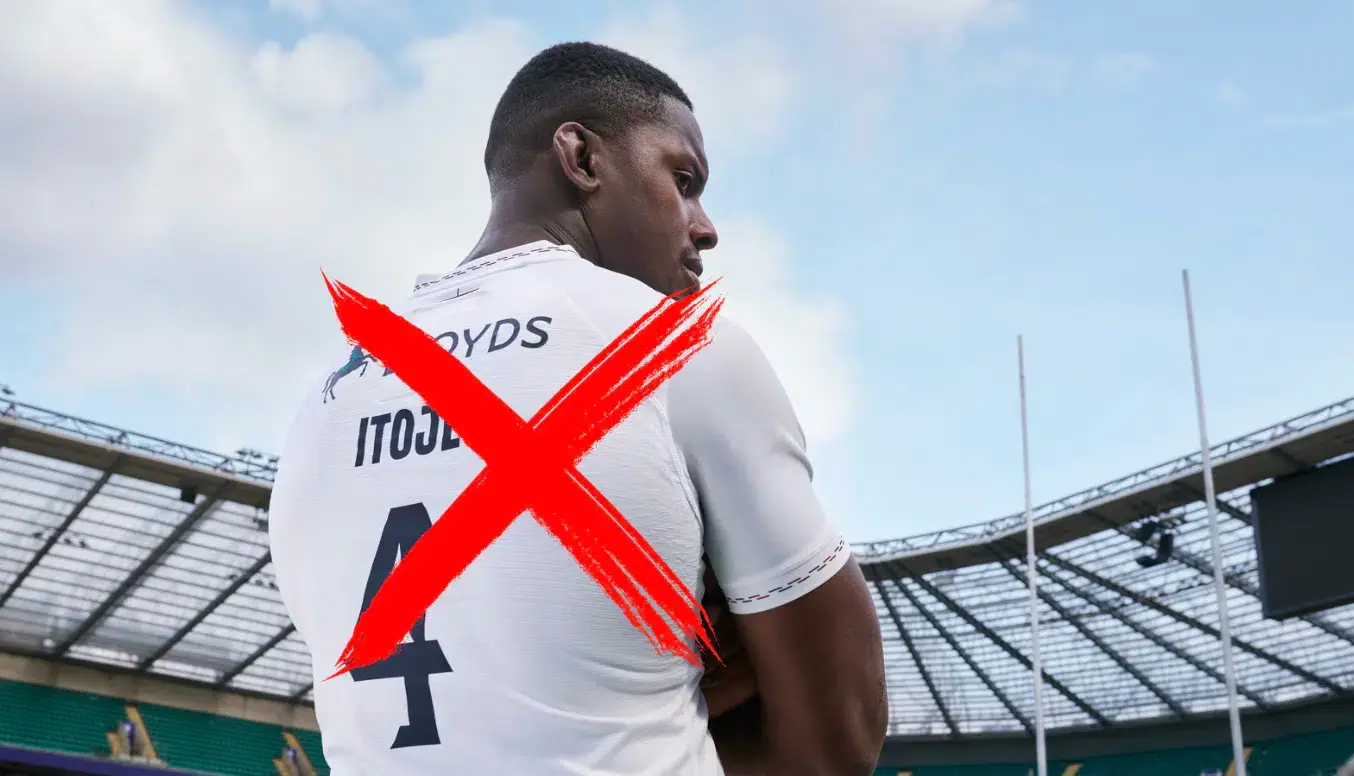
Eben Etzebeth is the modern definition of a world-class lock. Standing at 2.03 metres, the Springbok giant possesses the physical presence expected of a second rower, but combines it with an extraordinary work rate, athleticism and technical ability. Etzebeth has developed into one of the most intimidating forwards in world rugby, capable of dominating collisions while remaining disciplined and tactically intelligent.
His breakdown work is particularly impressive, allowing him to influence matches long after the scrum and lineout have finished. But his greatest achievement is his sustained excellence. Etzebeth became South Africa's most-capped player with 142 caps and counting, overtaking Victor Matfield in September 2024, while playing a central role in the Springboks' historic back-to-back Rugby World Cup triumphs.
More than a decade at the highest level has seen him remain one of the most physically imposing and consistently effective locks in the world. His longevity, trophy cabinet, leadership and sheer enforcing influence on matches combine to create an almost complete second-row package.
DID YOU KNOW? Eben Etzebeth was not always a forward. As a teenager, he played B-team rugby in the backs at U14 and U16 level, while also competing as a sprinter and high jumper for Northern Suburbs Schools.
5. SAM WHITELOCK (ALL BLACKS)
Honourable Mentions: Bakkies Botha, Lood de Jager, Colin Meads, Brodie Retallick
Sam Whitelock enjoyed an under the radar career, of making greatness look almost effortless. The most-capped All Black in history became a model of consistency across an extraordinary international career, producing elite performances year after year without ever seeking the spotlight.
Whitelock was part of New Zealand's 2011 and 2015 Rugby World Cup-winning sides, providing the technical excellence and reliability that allowed one of rugby's greatest teams to dominate world rugby. His greatest strengths were often the least glamorous. He secured defensive rucks, executed restarts, read opposition lineouts and performed the tight work required of a world-class second rower.
That reliability became his defining characteristic. Whitelock eventually earned 153 Test caps, remaining at the highest level for well over a decade while maintaining remarkably consistent standards. He was also an understated leader, capable of guiding the All Blacks through the most pressurised moments. For longevity, consistency and contribution to the most successful international team of the modern era, Whitelock's case is impossible to ignore.
DID YOU KNOW? Sam Whitelock comes from an extraordinary rugby family. His brothers George and Luke both played for the All Blacks, while Adam represented New Zealand Sevens. George, Sam and Luke became the first trio of brothers to all play for the All Blacks.
6. SIYA KOLISI (SPRINGBOKS)
Honourable Mentions: Francois Louw, Schalk Burger, Jerome Kaino, Ian Kirkpatrick
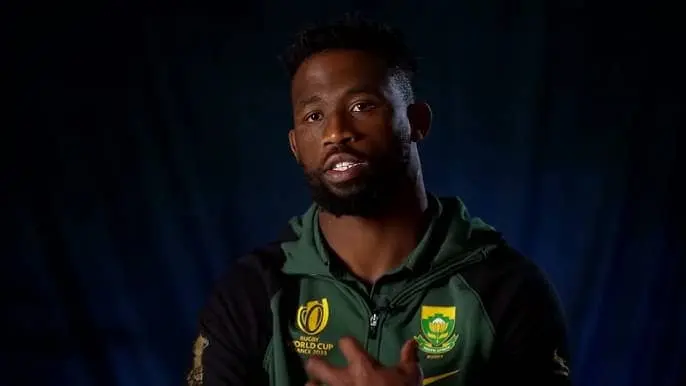
Siya Kolisi has become one of the most influential figures in South African rugby history, combining immense physicality with exceptional leadership and an ability to perform when the stakes are highest. The flanker made his Springbok debut in 2013 and went on to captain South Africa to back-to-back Rugby World Cup triumphs in 2019 and 2023, lifting the Webb Ellis Cup on both occasions.
A relentless presence around the breakdown, Kolisi's strength, work rate and ability to carry through contact made him a crucial component of the Springboks' dominant forward pack. His leadership, however, is what truly sets him apart.
He became South Africa's first Black captain in 2018 and subsequently led the nation through one of the most successful periods in its rugby history. Whether smashing into a tackle, competing for possession or rallying his teammates, Kolisi has repeatedly demonstrated an extraordinary ability to rise to the occasion on rugby's biggest stage.
DID YOU KNOW? When Siya Kolisi arrived at Grey High School on a rugby scholarship, he spoke no English and was fluent only in isiXhosa. Classmate Nicholas Holton helped him learn English, while Kolisi helped Holton with his isiXhosa.
7. RICHIE MCCAW (ALL BLACKS)
Honourable Mentions: Francois Pienaar, Pieter-Steph du Toit, Michael Jones
Richie McCaw is widely regarded as one of the greatest players, if not the absolute GOAT in rugby history. He is without a doubt the finest openside flanker the sport has produced, as the All Blacks legend earned a remarkable 148 Test caps between 2001 and 2015. Before Siya Kolisi emulated his accomplishments, McCaw was the first man to captain a nation to an unprecedented two consecutive Rugby World Cup victories, in 2011 and 2015.
His brilliance was built around an extraordinary understanding of the breakdown. McCaw seemed to possess an instinctive knowledge of exactly when to compete, when to retreat and how to manipulate the referee without crossing the line. His relentless work rate, physicality and ability to win crucial turnovers made him a nightmare for opposing teams, while his leadership elevated the players around him.
McCaw also possessed remarkable longevity at the highest level, winning three World Rugby Player of the Year awards and finishing his career with an extraordinary Test record. Few players have combined his tactical intelligence, durability, competitiveness and leadership, making him an obvious selection in any combined All Blacks and Springboks XV.
DID YOU KNOW? Richie McCaw holds the record for the most Test wins by an individual player, winning 131 of his 148 matches for the All Blacks. He also holds the world record for Test wins as an international captain, with 97 victories.
8. ZINZAN BROOKE (ALL BLACKS)
Honourable Mentions: Kieran Read, Wayne 'Buck' Shelford, Hennie Muller
At number eight is Zinzan Brooke, a player who expanded the imagination of what a loose forward could actually do. Brooke won 58 All Blacks caps between 1987 and 1997, operating during an era when New Zealand were establishing themselves as one of the dominant forces in international rugby.
Yet it was not simply his physical qualities that made him extraordinary. Brooke possessed the skill set of a back while wearing a forward's jersey. His handling was outstanding, his distribution imaginative and his rugby intelligence exceptional. Most remarkably, he possessed a genuinely dangerous kicking game from the base of the scrum — culminating in one of rugby's most iconic moments when he struck a 47-metre drop goal against England in the 1995 Rugby World Cup semi-final.
That moment perfectly encapsulated Brooke's approach. He did not merely play the position exceptionally well; he constantly challenged assumptions about what the position allowed. He could carry with power, compete aggressively and control the scrum while simultaneously functioning as an additional playmaker.
His versatility gave New Zealand attacking options that few opponents could account for. Brooke's greatest legacy is therefore not simply the number of matches he won or moments he produced. It is the blueprint he left behind. He showed the world that a No.8 could play rugby almost anywhere on the pitch.
DID YOU KNOW? Zinzan Brooke scored three drop goals during his All Blacks career – against England at the 1995 Rugby World Cup, South Africa in 1996 and Wales at Wembley in 1997. He finished his international career with 89 points, including 17 tries and three drop goals.
LATEST RUGBY NEWS
- Siya Kolisi reveals his plan for life after rugby as political role emerges
- Every Six Nations Stadium Ranked by a Journalist Who’s Visited All 6
- The five greatest captains in rugby history ranked from 5 to 1
- “World-class” – Five All Blacks who impressed against the Lions
- All Blacks player ratings vs Lions: Rugby’s Greatest Rivalry
TRENDING


LATEST NEWS

LATEST COMMENTS
- Jordie Barrett over Damian de Allende is far from being correct. The hype around Dupont is also overreaching, he's probably 4th in the world and has been since the 2023 WC. He also avoids certain matchups which is strange. The rest of the list is pretty good apart from minor subjective biases.JasonMarlow16-09-2026
Loading