World Rugby Has Banned FOUR Countries from the Rugby World Cup
Rugby NewsSunday, 31 August 2025 at 21:34
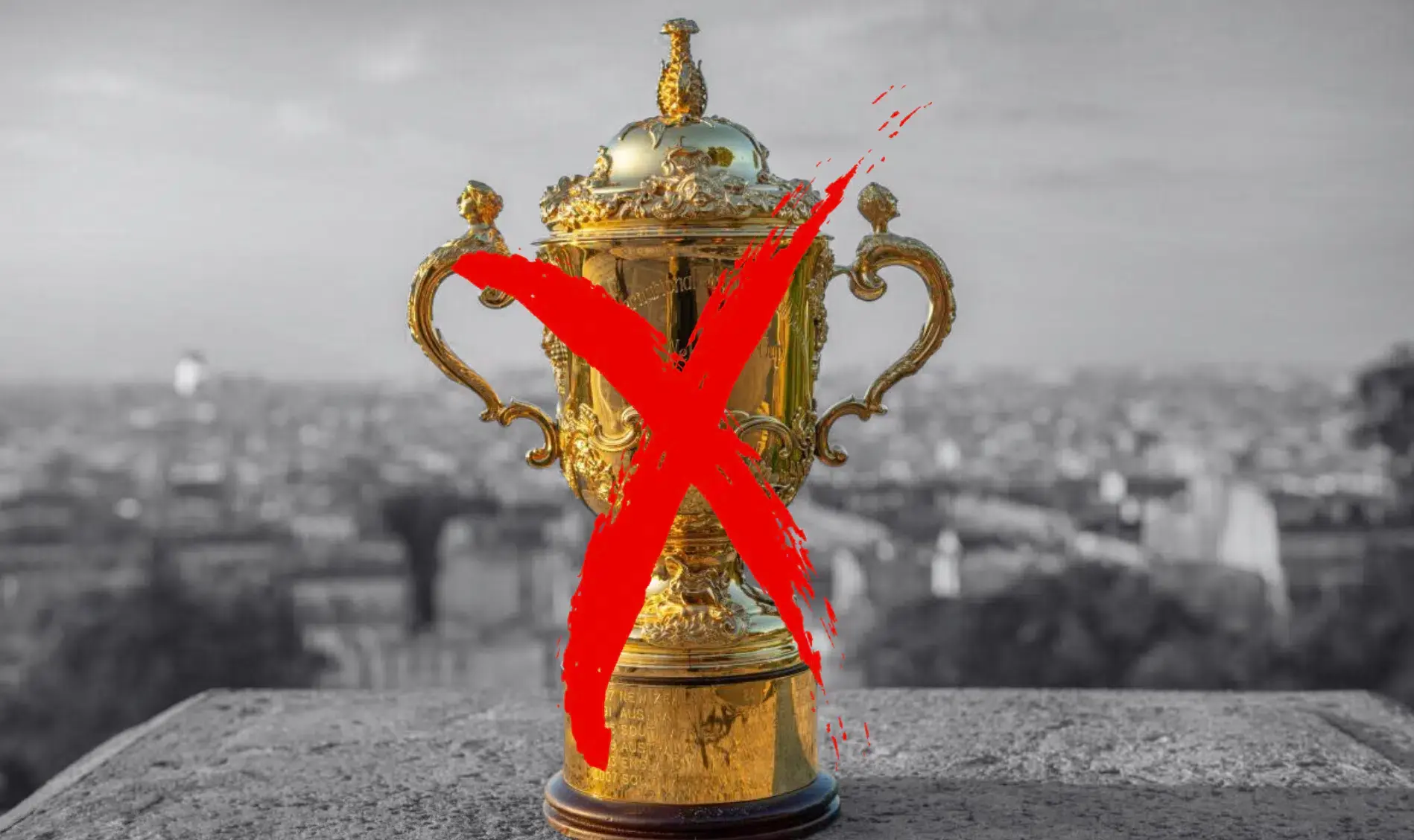

For most rugby-playing nations, the Rugby World Cup is the ultimate stage — the chance to battle the best, chase glory, and maybe even lift the legendary Webb Ellis Cup. But not every country gets to live that dream. For a select few, the doors to rugby’s grandest stage have been slammed shut.
World Rugby has not hesitated to lay down the law over the years, with bans that shocked fans and players alike. From political sanctions that rocked entire nations to jaw-dropping passport scandals that exposed the darker side of the game, some countries have found themselves booted out before they even had the chance to compete.
Here are the THREE countries that have been banned from the Rugby World Cup — and the explosive reasons behind their exclusion.
Join the RUCK’s WhatsApp community here and get the latest news sent straight to your messages.
?? #1. South Africa — Banned from 1987 & 1991 Rugby World Cups
At the height of apartheid, South Africa was a global pariah — and rugby was no exception.
Due to its institutionalised system of racial segregation, the Springboks were barred from all international competition by the International Rugby Board (now World Rugby). As a result, they missed both the inaugural 1987 Rugby World Cup and the 1991 edition.
However, following the dismantling of apartheid laws and democratic reforms in the early 1990s, South Africa was readmitted to international rugby in 1992. Just three years later, the nation famously hosted and won the 1995 Rugby World Cup, led by captain François Pienaar and inspired by a unifying handshake from then-president Nelson Mandela.
? That victory remains one of the most iconic moments in sports history — a symbol of reconciliation in post-apartheid South Africa.
?? #2. Spain — Disqualified from 2019 & 2023 Rugby World Cups
Spain’s road to the Rugby World Cup has been plagued by eligibility controversies.
First, in 2019, Spain, Belgium and Romania were all sanctioned for fielding ineligible players during the qualification campaign — a debacle that ended up handing Russia an unexpected ticket to Japan.
Then in 2022, Spain qualified for the 2023 Rugby World Cup in France for what would’ve been their first appearance in 24 years — only for the dream to be shattered again. This time, it was discovered that Spain had allegedly used a player with a forged passport during qualifying.
As a result, they were docked 10 points, booted out of the tournament, and replaced by Romania, who had finished just behind them.
❌ Despite appeals, World Rugby upheld the ban, marking the second time Spain had been removed from World Cup contention due to player eligibility issues.
?? #3. Russia — Banned from 2023 Rugby World Cup onwards
Russia’s exclusion from the 2023 Rugby World Cup came not from player conduct but from geopolitics.
In February 2022, Russia invaded Ukraine, triggering widespread international condemnation. As part of a wider sporting backlash, World Rugby suspended both Russia and Belarus from all international and cross-border rugby competitions.
Despite an appeal from the Russian Rugby Federation, the suspension remained in place, effectively ending any hope of qualification for the 2023 tournament in France.
? The ban also brought an end to speculation that Russia could one day host a Rugby World Cup — an idea that had been floated after their 2019 appearance in Japan.
#4. Belarus — Banned from 2023 Rugby World Cup onwards
Similarly suspended from international play and Rugby Europe membership for supporting Russia’s actions.
EDITORS PICKS:
- Women’s Rugby red card video goes viral after referee details ‘VILE’ comment
- Andy Farrell married an England rugby legends sister – she’s his biggest fan
- There’s been a huge twist after Springbok fails drugs test, punishment revealed
- England captain Maro Itoje ‘stood down’ from rugby left out of Saracens squad
- Racing 92 owner launches furious attack on Owen Farrell: “It’s called lying”
TRENDING






LATEST NEWS



LATEST COMMENTS
- Jordie Barrett over Damian de Allende is far from being correct. The hype around Dupont is also overreaching, he's probably 4th in the world and has been since the 2023 WC. He also avoids certain matchups which is strange. The rest of the list is pretty good apart from minor subjective biases.JasonMarlow16-09-2026
Loading