World Rugby respond as drug-test claims cloud Springboks’ World Cup triumphs
Rugby NewsFriday, 27 March 2026 at 11:21
report, based on data from the World Anti-Doping Agency, showing testing by the South African Institute for Drug-Free Sport has plummeted from 785 in 2015 to just 127 in 2024 — a sixfold decrease.
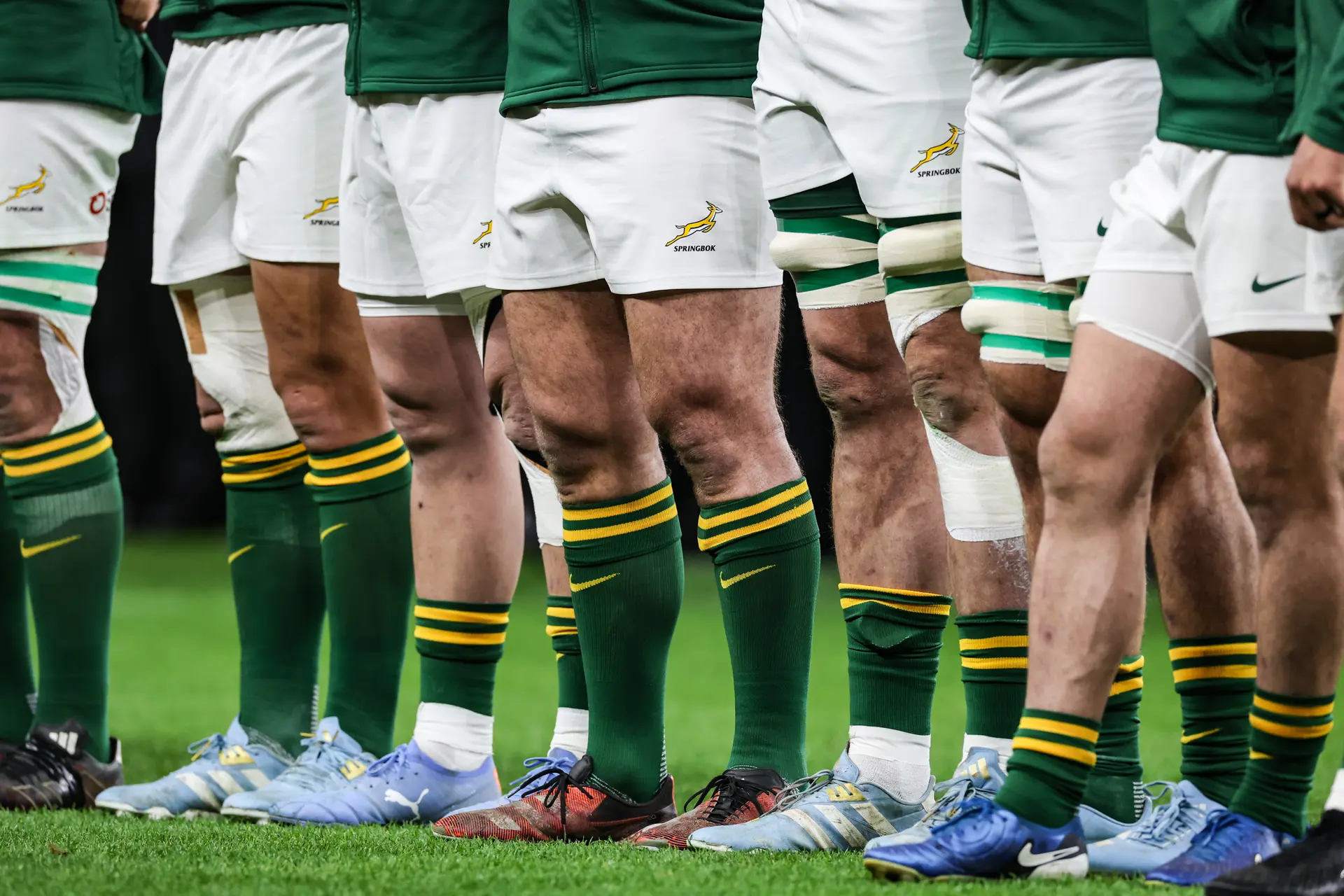
World Rugby has defended its anti-doping programme after alarming figures revealed a sharp decline in testing in South Africa, despite the nation producing the highest number of convicted dopers in the global game.
⭐ Save us to your Google Favourites for nonstop RUCK content!
A governing body spokesperson insisted Springbok players remain subject to rigorous, year-round screening through its international testing pool.
“South African players, alongside many other nations, will be in our testing pool so we test them all year round, including out of competition. Our out-of-competition testing includes home visits.
“Players will also be tested by us at Rugby World Cup, European Professional Club Rugby competitions if they play in them and as part of [what was] the Autumn Nations Series.
“Lab issues in South Africa have occurred before and where we face those issues in that country or any other, samples are shipped overseas, which is established and acceptable, provided shipment follows Wada guidelines.”
Join the RUCK’s WhatsApp community here and get the latest news sent straight to your messages.
Testing numbers plunge as Springboks dominate
Over the same period, UK Anti-Doping increased its rugby testing from 998 to 1,241.
The decline has coincided with a dominant era for the Springboks, who lifted back-to-back World Cups in 2019 and 2023. However, South Africa has recorded 89 doping violations in rugby during that time — around 20% of the global total.
High-profile bans fuel scrutiny
Several major cases have added to the concern. World Cup winners S’busiso Nkosi and Elton Jantjies were both banned in 2024, while former Bok wing Aphiwe Dyantyi received a four-year suspension in 2019.
Meanwhile, current Springbok prop Asenathi Ntlabakanye is facing two charges after a failed test. He denies wrongdoing and has not been provisionally suspended.
Experts and SAIDS admit concerns
Sports scientist Ross Tucker described the drop in testing as “not good”.
“It’s a shame because there was a time – 10, 15 years ago – when the South African Institute for Drug-Free Sport was really aggressive with its testing and it was on the front foot,” he said.
Saids CEO Khalid Galant pointed to funding pressures and the suspension of South Africa’s Wada-accredited laboratory, which has forced samples to be sent overseas at greater cost. He admitted rugby’s reduced share of testing was “not ideal”.
Debate set to continue
While World Rugby maintains its global system offsets any local shortfall, the figures are likely to intensify debate — and cast an uncomfortable shadow over one of the most successful periods in Springbok history.
EDITORS PICKS:
TRENDING




LATEST NEWS

LATEST COMMENTS
- Jordie Barrett over Damian de Allende is far from being correct. The hype around Dupont is also overreaching, he's probably 4th in the world and has been since the 2023 WC. He also avoids certain matchups which is strange. The rest of the list is pretty good apart from minor subjective biases.JasonMarlow16-09-2026
Loading