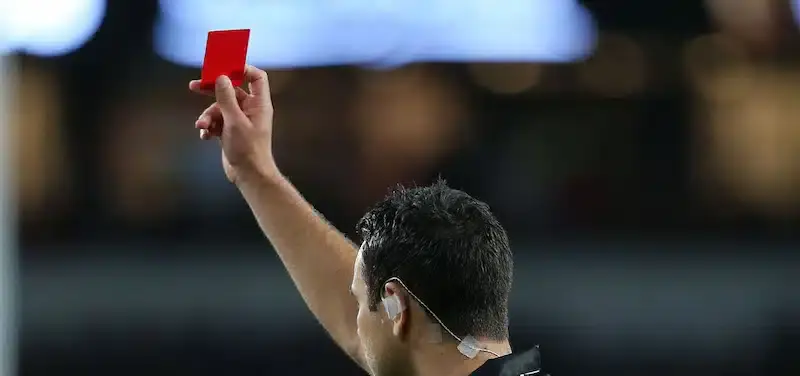

Refereeing and rugby laws have evolved a lot in recent years with a real focus on player safety and improving the experience for spectators.
The experts at ACME Whistles were able to grab an exclusive interview with international referee Ben O’Keeffe (NZ), to find out more about life behind the whistle, what’s new in the world of rugby and referee mindset.
“Previously the game felt quite separate and was quite different across the major competitions,” he said.
“But over the last few years the game has developed and gone in a direction which is getting closer to where we want it to be, which is particularly good before a Lions series and also leading into a World Cup in a few years as well.”
Back home in New Zealand, the season is coming to an end, but O’Keeffe reflects on how it’s been over that period, saying: “Rugby's been great down here.
“We've seen a lot of probably our best ever competitions in terms of competitiveness and close games with a lot of games having been decided in less than 10 points for the full 80 minutes, which has been really, really good.
“We have a new playoff competition format where the top six teams go through to a quarter final style play off. I think a lot of people like that because previously almost the whole competition was making the play offs.
“I can see how some people probably thought that was a little bit unfair for some of those teams that have been a bit more consistent.”
Ben added; “It's been exciting this year with the last few rounds of Super Rugby having a lot riding on them. Anyone could have made that top six. So it's been really compelling rugby to watch.
“We've seen New Zealand teams do really well. We've seen Australian teams be really good with a lot of strong individual performances from some older players as well as some new players on the scene as well.
“I think a lot of that's been with those Australian Super Rugby players having an eye on hopefully making that Wallaby team to make the Lions Tour.
“From a rules point of view for referees, I think there hasn't been too many changes brought in for Super Rugby this year.
“We did a big bulk of changes a few years ago that a lot of other competitions and a lot of other areas like World Rugby have been following, for example some of the offside laws and the big one - the 20 minute red card law, which I think we've used quite well this year.
“So we've seen the game moving faster; we've seen ball in play time increase; we've seen the dead time decrease and the length of game decrease as well, which I think has probably been more exciting for fans and players and certainly for us being involved in the middle as a referee.”
When asked if consistently having those 10 point games puts pressure on the referees and if there’s more scrutiny on their decision making, Ben replies: “Yeah, you definitely notice it more. I mean we feel pressure for every game that we're doing, but there's lots of pressure in terms of the decision making and the pressure that players put on you in these influential games.
“One of the elements of pressure is scoreboard pressure. So when the game's tight and close. Obviously it's always close to the start of the game, but previously there were a lot of games where there were some teams running away with it, which meant that in the last 20 minutes of those games, you didn't really have that scoreboard pressure.
“But now you've got closer scorelines, so it does heighten the pressure on you right up to the final whistle. You need to be sharp. You need to make decisions for the full 80 minutes. You can’t afford to switch off for a second.
"You don’t often get that scoreboard pressure every game, consistently during the whole season, but we feel like this year we did.
“I think being put in that situation, it really helps you and especially for someone like me, leading into some pretty big games in July I've been able to have some good experiences performing under pressure this year.”
With Super Rugby leading the way around new laws Ben and his team of referees have become some of the first adopters of the rules that then get rolled out to wider areas of the game.
“It definitely gave us an advantage as Southern Hemisphere referees as it was rolling out through the north and test matches,” he said.
“So, they definitely feel like old news now and probably for most of the other referees around the world too. We’ve all had them for a good season by now.
“But I think the great thing about Super Rugby is that it’s an independent competition and they do their own analysis around how they want the game to be for the players and the fans.
"I really liked how they put their foot down and went ‘look, this is what we want to try and do. We're going to take it on board to trial it in our competition because we think it will benefit the game.’
“They knew that they could collaborate with us around it and implement it quite quickly and then you know, they produce the results which says to other competitions and World Rugby ‘look, you should be following our lead’ and I think 9 times out of 10 you know they probably have in the most instances around a lot of the rules that have been brought on.”
When it comes to mindset and keeping a cool head as a referee, Ben says there are lots of things in place to support them.
“Each national rugby union probably has someone that's involved in the sports psychology and mental skills space,” he says.
“Certainly you're very aware of the mindset pillars that are used in rugby for high performance athletes. And it's interesting because we go through all these different types of elements of learning skills around what we feel like when we're under pressure and when we've made an error or feel a little bit cloudy or our decision making isn’t as sharp as individuals but there are team ways to be able to, I guess, get us back into the groove and in the moment referring by using more mental cues around trust and trusting your decisions are accurate so you can enjoy the game.
“I’ve got cues during a game where probably every 15, maybe 20 minutes, I'm getting my TMO and at a stoppage I’m looking at the penalty count and that helps me just zoom out a little bit on the game. So that's when I get to zoom out and go, OK, what has this first 15 minutes been like? How have I set the game up for the next 15 minutes? Cool. Am I in control now? And at half time I check with my ARs and I'll do the same thing in the second-half.
“So breaking it up into small pieces I think helps too.
“Then when you're in the last 10 minutes and it's quite tight, again, I have a bit of a mental stop, zoom out and repeat the process.
“We [the referees] talk about winning sometimes, and winning as a referee. That means that ultimately the game’s decided by the players whether you blow your whistle or not. That happens when everyone's talking about the game rather than a controversial decision.
“So there are a lot of mental skills aspects that we use.
"I think as you get older, these skills change. You develop and you build on the foundations that you had before through experience and being self-critical.
“The more you are on pitch, the more you keep adding experiences; being forced to referee moments that are quite different.
“We’re constantly reconnecting and reevaluating based on all our experiences and interactions.”
Off the pitch O’Keeffe is a doctor and believes that the skills he uses on the pitch are definitely transferable to both his role as a medical professional and other areas of life, saying:
“All the stress and anxiety are emotions that you feel on the pitch before a game are the same as those before a big meeting or a deadline at work.
“I do a bit of medicine still so have that high pressure work environment in those clinics and surgeries. In those moments you need a good plan going into that pressurised environment, and you need to be clear and accurate - just like refereeing.
“In medicine you then execute that plan and then review what you did as well. Just as we do in rugby; and I think you do that in life generally too.
“So there's a lot of transferable skills that we use and that's why I've always encouraged young referees to get into refereeing whilst playing the sport because you learn how to control your emotions and you put yourself in situations when you're under pressure from decision making or from captains, coaches, players.
“It's quite unique and all those skills can be used in anyone's professional life, anyone's family life at home as well, so there's definitely lots of skills that we use out there constantly throughout the day.”
To find out more about our partners at ACME whistles, visit www.acmewhistles.co.uk
TRENDING





LATEST NEWS




LATEST COMMENTS
- Jordie Barrett over Damian de Allende is far from being correct. The hype around Dupont is also overreaching, he's probably 4th in the world and has been since the 2023 WC. He also avoids certain matchups which is strange. The rest of the list is pretty good apart from minor subjective biases.JasonMarlow16-09-2026
Loading