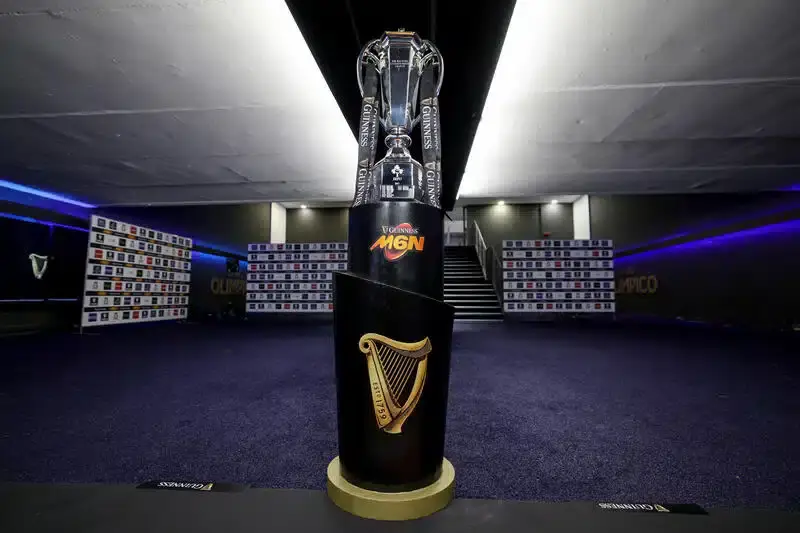

The Six Nations Championship is one of the world’s most respected rugby tournaments—one with a long history that has seen it become vastly popular among fans. As one of the biggest events on the rugby union calendar, it brings together the toughest competitors in Europe. Year after year, fans are excited for the rugby event that is second only to the World Cup.
Origins as The Home Nations
The competition has evolved over time, starting as the Home Nations Championship.
Picture the scene. It’s 1883 and Rugby's still finding its feet when these four nations—England, Scotland, Ireland, and Wales—decide to have a bit of a kickabout. Now, they called it the Home Nations, straightforward really, seeing as they were all practically neighbours, all huddled together in the UK.
Think of it as a good old-fashioned family feud, but with scrums and tries instead of squabbling over the telly remote. The name changed with the addition of France; it then became known as the Five Nations. Finally, once Italy joined in 2000, it was dubbed the Six Nations.
Back then, rugby wasn't the game we know and love today. Many clubs and teams had their own way of interpreting the rules—in fact, there weren't even that many rules! The concept of passing the ball was not as sophisticated as we know it to be currently. The focus of the game was the "scrummage" or as we know it, the scrum. Other popular playing methods involved kicking or simply running with the ball.
Back in the day, keeping up with the Home Nations meant waiting for the next day's paper or listening to the radio. Now, fans can get live scores, match updates, and predict or bet on this year's championship winners via mobile phones. This means that you’re never out of the loop, no matter where you are.
The Arrival of France
In 1910, France entered the Home Nations, officially making it the 5 Nations Championship. Besides being a new rival, France also offered a different way of playing rugby that would endure and find them a lot of success—much of which still lasts to this day. This meant that the home nations had to adapt to their playing styles.
France often showcased its flair and unpredictability and encouraged other teams to develop their playing styles. The addition of France to the competition also meant that power dynamics had shifted. France's inclusion intensified the competition, making the tournament more unpredictable and exciting - this increased entertainment levels for the fans.
In the early years, France faced significant challenges when competing with the established rugby nations. They often struggled with consistency and were accused of lacking discipline. Over time, France's rugby improved significantly, and they began to compete for the championship.
France has been excluded from the tournament on multiple occasions. This has been mainly due to political and disciplinary reasons. For example, in the 1930s, they were excluded due to concerns about professionalism and on-field violence. The Second World War also caused a break in the games. These exclusions had a significant impact on the tournament as well as on fans, as they created periods of uncertainty.
The Six Nations Era
In 2000, Italy joined the tournament to create the Six Nations we know today. Because they entered so many years after their rivals, they faced a steep learning curve. They had limited resources and experience. Thus, for a long time, their playing style and scoring remained inconsistent.
Gaining traction in the mid-1990s, professionalism allowed rugby players to become full-time athletes and focus on training. This means that from then on, the skill displayed was of a much better standard. Professionalism also increased awareness of the tournament. This attracted sponsors and television deals, and the boost in capital allowed for greater investment in player development, facilities, and marketing.
The Six Nations is more than just a sporting event; it's a cultural experience that affects countries, teams, and fans alike. It's a yearly ritual that ignites passions, fuels conversations and strengthens national identities. More than a rugby tournament, it's a celebration of heritage and a clash of cultures. It is truly a testament to the enduring power of sport to unite and divide simultaneously.