
Nigel Owens has called for major changes to rugby, with replacements and the TMO among his biggest concerns.
The former Test referee has long argued that the sport can be made simpler and more exciting.
Owens, who refereed 100 Tests, believes fewer replacements could create more space. He also wants officials to rely less on technology.
Here are five changes Nigel Owens has called for.
1. Cut the number of replacements
Owens has been calling for fewer replacements for years.
He believes eight players on the bench is too many. He would also like to see an end to tactical substitutions.
“The first thing I do, I would reduce the amount of substitutions,” Owens said.
“I think eight players on the bench is too much.”
Owens added: “I’d reduce that and change the way you can use them, so it can’t be a tactical substitution.
“It can only be, as it used to be years ago, for an injured player.”
He has previously suggested cutting the number from eight to four or five.
Speaking to Rugby World, Owens explained why.
“I’d reduce substitutions down from eight to four or five,” he said.
Nigel Owens believes the change could also reduce the size of players.
Forwards would need to prepare to play 80 minutes rather than 40 or 50.
That could create more space as players tire late in matches.
2. Strip back the TMO
Owens also believes rugby has become too reliant on the TMO.
He still sees a place for technology. However, he wants the officials on the pitch to make more decisions.
“The TMO can pretty much come in now for anything and everything and that should never be the case,” Owens told Sport Nation.
“You want the referee to make those decisions.
“And 99.9% of the time the referee will get them correct.”
Owens believes the answer is simple.
“They need to strip back the protocol,” he said.
“They need to get the officials and the assistant referees to make the big calls on the field themselves and only use the TMO just as a last resort.”
Owens also warned that officials are chasing a level of perfection that does not exist.
“If you try to be perfect, which is not achievable, then the perfect becomes the enemy of the good.”
3. Scrap the 20-minute red card
Nigel Owens has also been clear about the 20-minute red card.
He believes a player who commits an offence worthy of a straight red should stay off.
“For me, a straight red should also be a full red,” he said.
“Not a 20-minute red card.”
Owens went into more detail when speaking to RugbyPass.
He said: “I’m against the 20 minute red card because if you have been sent off, you have done something reckless that has put another player at great risk.”
Owens believes rugby should instead look more closely at what deserves a red card.
He added that the sport needs to better define serious foul play rather than create a middle ground.
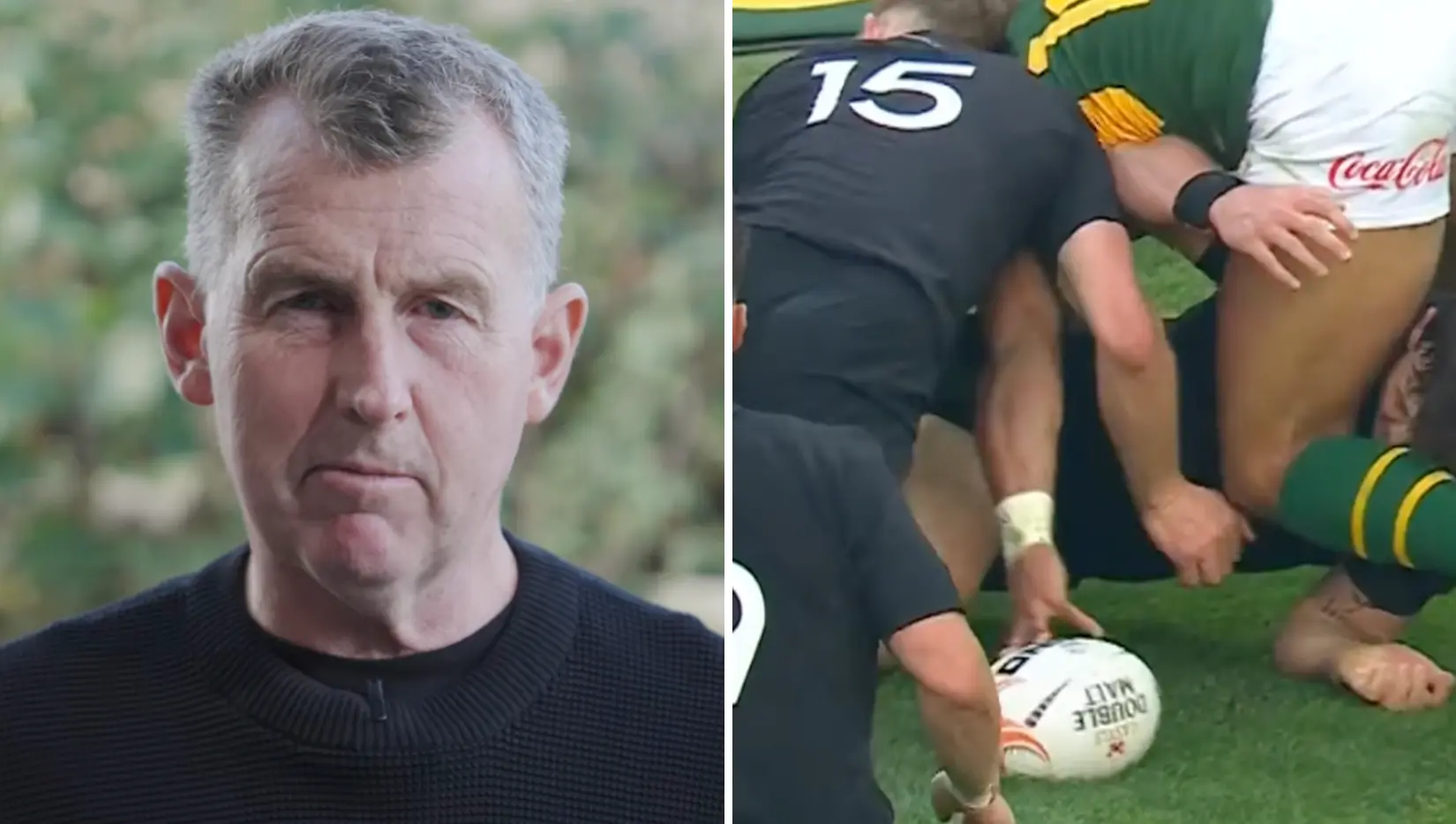
4. Punish players who trap tacklers
Owens also wants referees to clamp down at the breakdown.
In particular, he has highlighted players who stop tacklers from rolling away.
The tactic can make it look like the defender is killing the ball.
Owens said referees must watch for players “deliberately holding a tackler in”.
He believes some players use their body to stop an opponent from moving before asking the referee for a penalty.
Owens has described the tactic as “essentially cheating”.
He said officials need to spot when players are putting their knees on a tackler or holding them in place.
In those cases, Owens does not want the trapped player punished.
5. Be stronger on offside and foul play
Owens has praised officials for being tougher on offside.
He believes that has already helped create more attacking rugby.
“They’ve recently been quite strong on offside in front of the kick and on the back foot,” he said.
“By allowing that little bit more space, I think it has contributed to some really open games of rugby.”
However, Nigel Owens still wants more consistency around foul play.
He believes there has been too much uncertainty over when a tackle deserves a yellow or red card.
Owens said there had been “a little too much head-scratching over what was and what wasn’t a red or yellow card”.
For Owens, referees do not need to be perfect.
They need to make the big calls, keep the game moving and apply the laws in a clear way.