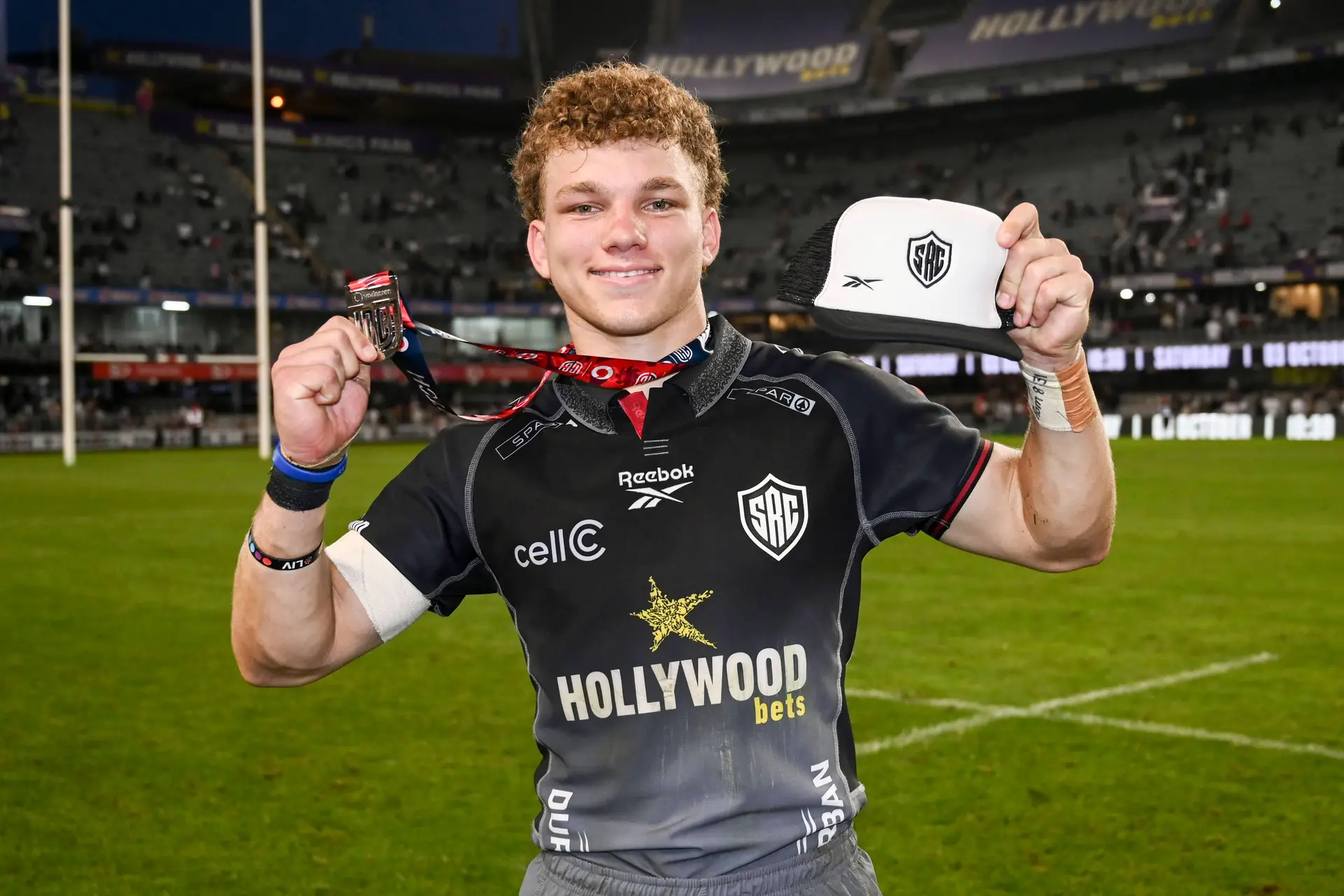

Ultimate Sevens could take its next major step across the Atlantic, with Director Barney Pascall confirming that the United States is firmly in the competition's expansion plans.
Do you love Sevens? Why not follow the brand new @RUCKSevens instagram account today!
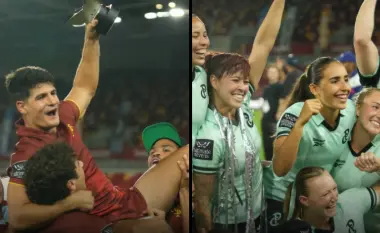
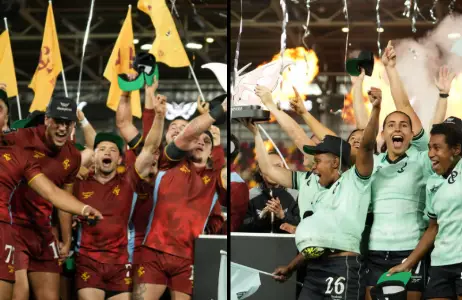
The inaugural Ultimate Sevens Championship came to a dramatic conclusion at Brentford's Gtech Community Stadium on Thursday night, with Sol Feroz and Pacific Current crowned the first men's and women's champions respectively.
But while the focus was on the action under the lights in London, the organisers are already looking beyond the opening season.
Pascall revealed that the United States is one of the key markets being considered for next year's competition, with the growth of rugby in America and the return of Olympic Sevens at the 2028 Los Angeles Games providing an obvious backdrop, with ties to their North American club Atlantic Novas. .
"We've been really clear that strategically, we know there are some markets we want to go and we want to be based in," Pascall told RUCK.
"The U.S. is one of them. Clearly, that's aligned with some of the ambitions World Rugby have in the US, the LA Olympics, of course.
"So we think there's a place for this in that market, but we've got to choose that carefully. We've got to work with that market to make sure we go to the right place. We'd love to go there."
The location of any potential American event remains undecided, with Pascall stressing that selecting the right market will be crucial rather than simply taking the tournament to the United States for the sake of trying to 'break America'.
The US would represent another significant step in the geographical development of a competition which began with events in Cardiff and Biarritz before reaching its inaugural Grand Final in London.
And while Europe remains central to the vision, Pascall confirmed that the organisers are also looking at further opportunities closer to home.
"Europe is the hub," he said. "We know that we want to make sure we kind of consolidate that footprint.
"But there are some markets even here that we would love to expand to."
Madrid remains one of those markets too, after the planned first round event in Spain was cancelled, and replaced with a training week for the six clubs and 120 players. Pascall admitted that the organisers were "really sad" to lose the Spanish event, which would have seen tremendous support for Sol Feroz.
"We want to go back there. We think that's a great market." He added.
The next stage of Ultimate Sevens' development could also involve something even more significant than adding tournament locations: expanding the number of teams.
The inaugural championship featured six founding clubs, deliberately constructed to combine established rugby markets with emerging regions. The sextet of clubs and their regions were: Albion Athletic (England), Clan Taran (Celtic Nations), Atlantic Novas (North America) Sol Feroz (Spain and Latin America), Pacific Current (Oceania) and Foudre Bleue (France)
That strategy meant some major rugby nations were left outside the initial line-up. Pascall singled out South Africa and Asia as two obvious opportunities for future expansion.
"That was probably the hardest thing about this," he explained.
"We've tried to balance established rugby markets like England, France, Oceania, which obviously has Australia's, New Zealand's, but we also wanted to go, actually, there's some emerging markets like North America, like Spain, the links to Latin America.
"That meant we had to make some tough choices because South Africa, massive market, right? Asia, another expanding market.
"So 100% there's opportunities to grow teams."
The door, according to Pascall, is already open.
"If there's someone listening out there looks at it and goes, 'I'd love a South African franchise', let's have a conversation next year. If we can bring them in quicker, we can bring them in quicker."
It would be a natural development given the players already involved in the competition.
South Africa's Selvyn Davids played a starring role for Clan Taran during the London finals, after taking home the MVP award from Clan Taran's home title triumph in Cardiff. The Men's and Women's championships featured a host of international stars from across the global sevens and XVs landscape.
Davids then helped Clan Taran reach the men's final, scoring twice in their semi-final victory over Atlantic Novas, before setting up Zain Davids for a seven-point try in the decider.
Although Sol Feroz eventually edged a thrilling final 14-13, the presence of players such as Davids illustrated one of the competition's central selling points: bringing elite players from different countries and rugby environments together in a new format.
"It is different from the World Series, different rules," Davids told RUCK after the semi-final. "But I think it's amazing to come up against the world's best players in a different setup."
That international mixture is something Pascall believes can become an important part of the identity of Ultimate Sevens teams. The competition's six founding clubs were designed with regional connections in mind, and those affiliations began to show themselves during the first season.
Clan Taran attracted strong local support in Cardiff, Albion Athletic benefited from the English connection in London, while Foudre Bleue developed a natural relationship with the French crowd in Biarritz. Pascall believes those relationships can become much stronger with time.
"That's what we hoped would happen," he said. "You try and create that richness that rugby's got culturally within these regions, and so that was part of what we hoped would happen."
But he accepts that building genuine loyalty to brand-new clubs cannot happen overnight.
"This is not a quick. People are not just going to care about a brand new badge overnight. Not in year one.
"We've got to build it, and we've got to keep cultivating it and contributing to the personalities in the team. Who's going to be the villain? Who's going to be the hero? All those sort of things that you need in a good movie or a good sort of soap opera."
The first season nevertheless provided encouraging evidence that the concept can produce the kind of jeopardy the organisers wanted.
The short-form matches, new scoring system and knockout structure created a string of dramatic finishes. Sol Feroz twice completed mission impossible in Brentford, as Juan Ramos landed the first Ultimate Sevens four-point conversion for a last-gasp semi-final victory over Albion Athletic, before the Latin side snatched a one-point victory over Clan Taran in the final.
Pascall believes those moments are precisely what Ultimate Sevens was designed to create.
"We said seven gives you moments, breathless moments throughout the game, and bang, you've got some more," he said. "It's great for the players. It's great for the fans, and we've got something really strong we can work on and keep moving forward."
The scoring system also began to demonstrate its potential as teams became increasingly confident with the competition's four-point conversion option.
"Everyone's been a little bit cautious first two weeks," Pascall said. "It was like, let's get the one-point kicks. And you think, is that going to be it?
"Someone's [Juan Ramos] gone on a four-pointer and won a match, and you're suddenly there going, 'that's why'. That's the opportunity, you've got to try things, to test them, and suddenly you've got moments."
For Pascall, the unpredictability of the opening championship was just as important as the spectacle.
Three different men's champions emerged across the three events [Clan Taran - Cardiff, Albion Athletic - Biarritz and Sol Feroz - London], while Pacific Current claimed two successive women's titles after the Novas won the Cardiff title.
"What we felt really strongly is that a good new sports property needed jeopardy," he said.
"If you think about the fan and the engagement, having dead rubbers are no-brainers [to avoid].
"I don't think that generates the kind of excitement that you want."
The women's champions Pacific Current also demonstrated another element that could become central to the competition's future: international players learning to operate together within new teams.
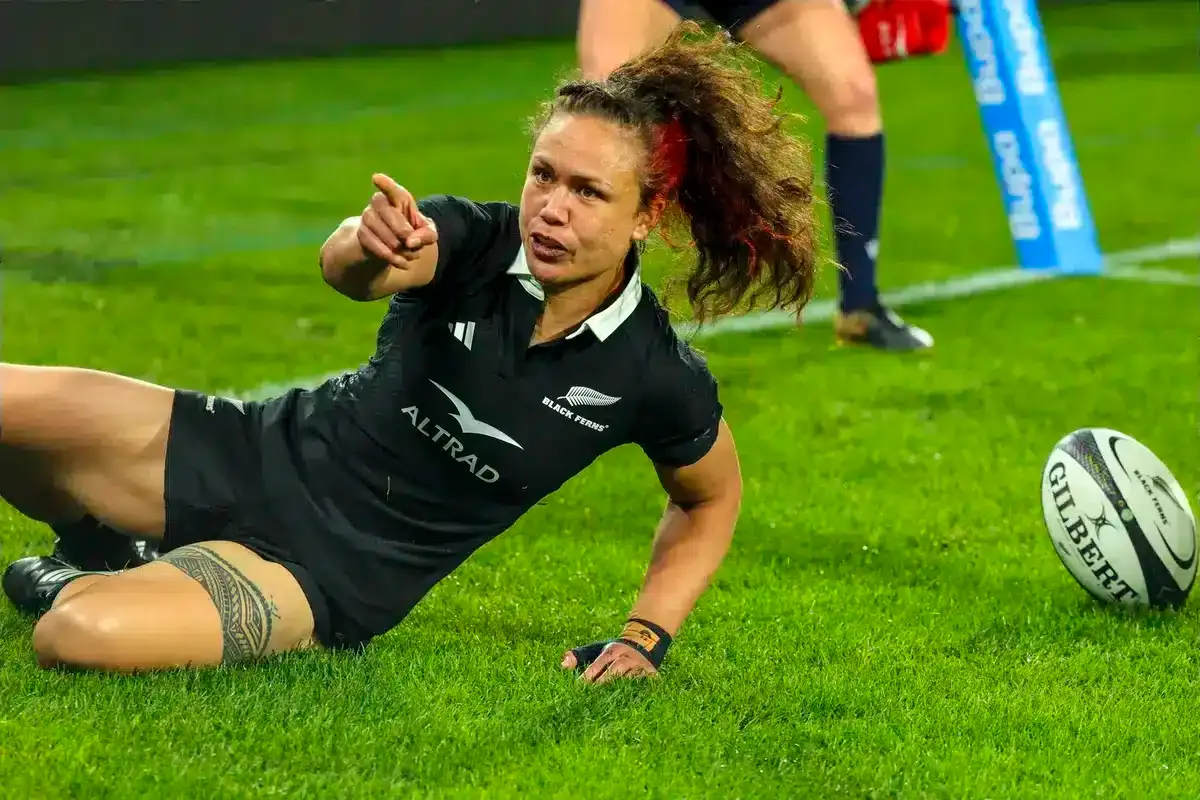
The side brought together players from different countries and rugby cultures, with Australian star Madi Levi eventually starring as they claimed the London title.
"We know that in the future, and as fans build connection to these teams, they're actually going to connect with personalities," Pascall said.
"Maddie's a great example. Of course, there are other personalities that can elevate, grow in the game, and start to connect people to these teams."
Now the first season has provided its proof of concept, the challenge is to turn that momentum into something bigger. Pascall described the process as the organisers create the foundations, before the players gave the competition its identity.
"We created the shoe. The players put their foot in it, and now they've given it energy, and they've started to actually give it kind of life.
"Now we've got to take that. It's back on us now to take it forward and bring it to life even more in future years."
A US event could be the next major milestone. A South African or Asian franchise could follow.
And with Madrid still on the wishlist alongside further European expansion, the six-team competition that began in Cardiff has already given its organisers considerably more possibilities than they had at the start of the summer.
For now, though, Pascall believes the priority is to build on what has been created. "We've got some great plans," he said.
And after an inaugural season that ended with two thrilling competitions across finals week, Ultimate Sevens has certainly given itself something to build on.