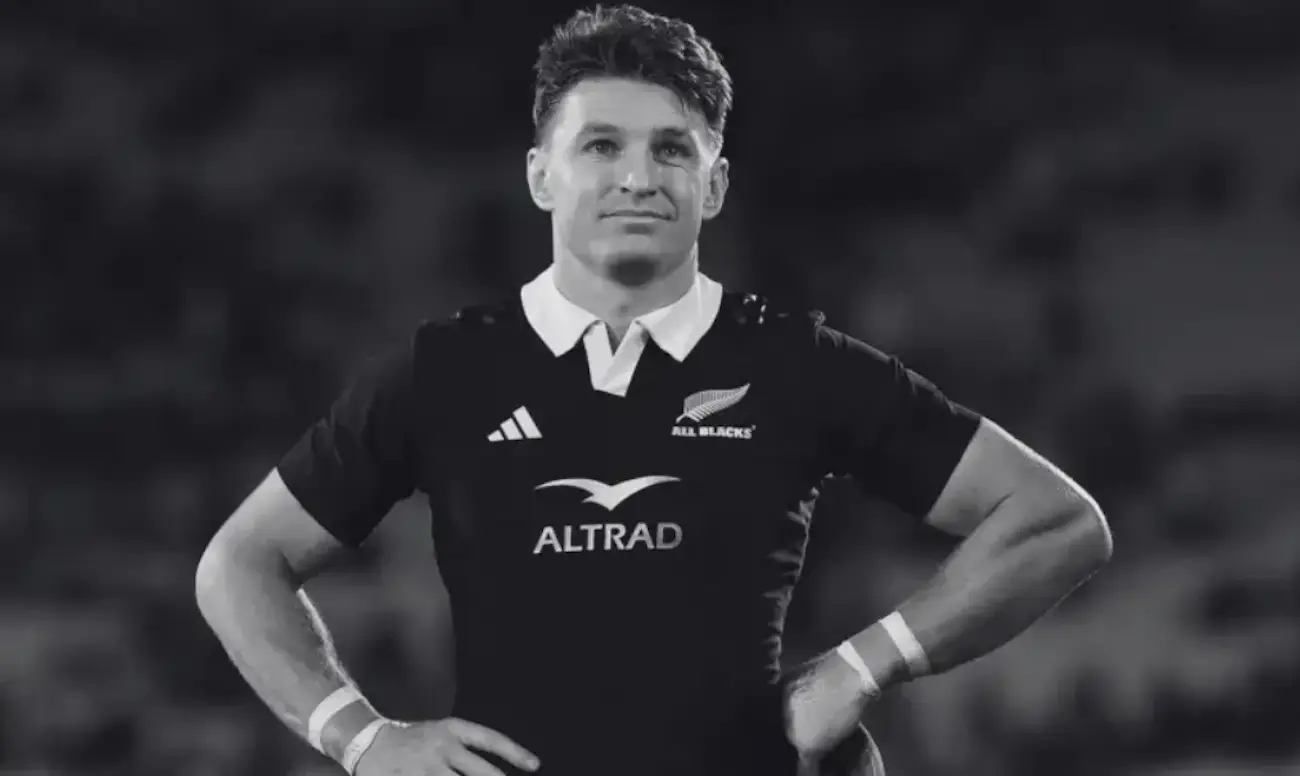
New Zealand Rugby has confirmed the appointment of Conrad Smith as its new Head of Men's High Performance, with the former All Blacks centre set to take up the role in September.
Join the RUCK’s WhatsApp community here and get the latest news sent straight to your messages.
Smith enjoyed one of the most decorated careers in All Blacks history, earning 94 Test caps between 2004 and 2015, scoring 26 tries and helping New Zealand lift back-to-back Rugby World Cups in 2011 and 2015. A qualified lawyer, he has continued to contribute to rugby in a variety of roles since hanging up his boots, with his latest appointment representing another significant chapter in his post-playing career.
The 94-Test legend will report to Director of High Performance Don Tricker, overseeing the men's high-performance programme across New Zealand rugby while working closely with Super Rugby clubs and Provincial Unions to strengthen the pathway from grassroots through to the All Blacks.
10 FACTS ABOUT ALL BLACKS LEGEND CONRAD SMITH
1. He is one of the greatest centres in All Blacks history
Conrad Smith is widely regarded as one of the finest centres ever to wear the famous black jersey. Capped 94 times by New Zealand between 2004 and 2015, he built a reputation not through spectacular highlights alone, but through exceptional consistency, rugby intelligence and flawless decision-making.
Nicknamed "The Snake" for his ability to slither through the smallest of gaps, Smith possessed an uncanny knack for creating space where none appeared to exist. He wasn't the biggest or fastest player on the field, but his timing, passing and defensive organisation made him one of the first names on the All Blacks team sheet for more than a decade. Alongside Ma'a Nonu, he formed one of the greatest centre partnerships in rugby history, the pair combining devastating attacking instincts with unrivalled defensive understanding.
His longevity at the highest level speaks volumes. Smith starred under both Graham Henry and Steve Hansen, remaining a central figure throughout one of the most dominant eras in international rugby. Even today, his performances are widely referenced as a benchmark for defensive positioning, communication and decision-making, cementing his legacy as one of New Zealand's greatest-ever midfield players.
2. He played 167 games for the Hurricanes
While Conrad Smith became a global superstar with the All Blacks, he was equally synonymous with the Hurricanes throughout his provincial career. Between 2004 and 2015, he made 167 Super Rugby appearances for the Wellington-based franchise, becoming one of the club's greatest-ever servants.
Week after week, Smith delivered the same calm leadership and reliability that defined his international career. Whether captaining the side or guiding younger teammates, he became the heartbeat of the Hurricanes backline during one of the franchise's most consistently competitive eras.
Although Super Rugby glory eluded the Hurricanes during Smith's playing days, they reached the 2006 final and regularly challenged for the latter stages of the competition. His professionalism and leadership helped establish the culture that would eventually see the franchise lift its maiden Super Rugby title in 2016, just one season after his departure.
Even today, Smith remains one of the most respected players ever to represent the Hurricanes, with his influence measured not only by appearances, but by the standards he helped set throughout more than a decade in Wellington.
3. He scored a memorable try in New Zealand's demolition of France at the 2015 Rugby World Cup
One of Conrad Smith's most memorable moments came during the 2015 Rugby World Cup quarter-final against France in Cardiff. In a fixture billed as the latest chapter in one of rugby's greatest rivalries, the All Blacks produced one of the finest knockout performances in tournament history, running out emphatic 62-13 winners.
Smith played a starring role, scoring a superb individual try that perfectly showcased the qualities that made him such an exceptional outside centre. Spotting space in the French defensive line, he accelerated through the gap before racing away to score, underlining New Zealand's complete control of the contest.
The victory booked the All Blacks' place in the semi-finals, where they overcame South Africa before defeating Australia in the final to become the first nation to retain the Rugby World Cup in the professional era. While names such as Jonah Lomu, Dan Carter and Richie McCaw often dominate discussions of All Blacks greatness, Smith's try against France remains one of the standout moments in New Zealand's unforgettable march to back-to-back world titles.
4. He formed one of rugby's greatest midfield partnerships
Conrad Smith's partnership with Ma'a Nonu is widely regarded as one of the finest centre combinations the game has ever seen. From 2008 to 2015, the pair became virtually inseparable in the All Blacks midfield, blending Nonu's devastating power with Smith's intelligence, distribution and defensive organisation.
Their success was built less on individual brilliance than on complete understanding. Smith had an uncanny ability to read situations before they unfolded, often creating opportunities through perfectly timed passes, subtle support lines or defensive decisions that prevented danger before it developed. Alongside him, Nonu was free to unleash his explosive running game.
Together they won two Rugby World Cups, multiple Rugby Championship titles and helped drive one of the most successful periods in All Blacks history. Their combination remains a benchmark for modern midfield play, demonstrating how contrasting styles can complement one another to devastating effect.
5. He won two Rugby World Cups
Only a select group of players have lifted the Webb Ellis Cup twice, and Conrad Smith belongs to that exclusive club. After enduring the disappointment of New Zealand's earlier World Cup campaigns, he became a cornerstone of the All Blacks sides that conquered the world in both 2011 and 2015.
Smith started the dramatic 2011 final victory over France at Eden Park before repeating the feat four years later against Australia at Twickenham, helping New Zealand become the first nation to successfully defend the Rugby World Cup in the professional era.
By 2015, Smith had evolved into one of Steve Hansen's senior leaders, providing calm authority alongside Richie McCaw, Dan Carter and Ma'a Nonu. His decision-making, defensive organisation and consistency proved invaluable throughout both tournaments, particularly in the pressure of knockout rugby. Winning one World Cup defines a career; winning two secured Smith's place among the most decorated players in rugby history.
6. He finished his playing career in France
After more than a decade representing the Hurricanes and All Blacks, Conrad Smith embraced a new challenge by joining Pau in France's Top 14. Like many New Zealand greats before him, he chose to extend his playing career overseas after stepping away from Test rugby.
Although the physical demands of the game eventually caught up with him, Smith quickly became one of Pau's most respected figures. His professionalism, tactical understanding and leadership made a lasting impression on teammates and coaches alike, while his experience proved invaluable in helping develop younger players within the squad.
The move also broadened Smith's perspective on the professional game, exposing him to different coaching philosophies, player pathways and administrative structures. Those experiences would later serve him well in his post-playing career, adding to the wealth of knowledge accumulated during one of rugby's most distinguished careers.
7. He's a qualified lawyer
Away from rugby, Conrad Smith possesses an achievement few elite players can match—he is a qualified lawyer. Smith completed a law degree at Victoria University of Wellington while simultaneously establishing himself as one of New Zealand's brightest rugby talents, a feat that reflected the discipline and dedication that would later define his playing career.
Balancing professional rugby with higher education is an enormous challenge, yet Smith successfully managed both before committing fully to life as an international athlete. His legal training developed the analytical thinking and attention to detail that became hallmarks of his game on the field.
That academic background has also proved invaluable since retirement. Whether discussing governance, player welfare or the future direction of the sport, Smith has consistently brought a thoughtful, measured perspective that extends well beyond his accomplishments as one of the All Blacks' greatest centres.
8. He became a leading voice for players after retirement
Rather than stepping away from rugby after retirement, Conrad Smith remained deeply involved in shaping the professional game through the International Rugby Players organisation. Working closely with player representatives from around the world, he helped address issues including player welfare, competition structures, scheduling, safety and governance.
The role gave Smith a unique perspective on rugby beyond the playing field, bringing him into regular discussions with unions, competitions and administrators across multiple continents. It also broadened his understanding of the challenges facing the modern game, from protecting player welfare to ensuring the sport's long-term sustainability.
Those experiences equipped Smith with valuable leadership and strategic skills that complement his playing achievements, making his transition into senior rugby administration a natural progression.
9. He's stayed involved in grassroots rugby as a referee
Many former internationals remain involved in rugby through coaching or television, but Conrad Smith took a different path by becoming a community rugby referee after retirement.
The decision reflected both his love of the game and his desire to experience rugby from a completely different perspective. Smith has spoken about the challenges of officiating and the respect it has given him for the split-second decisions referees must make every weekend.
Refereeing has also deepened his understanding of the laws and strengthened his appreciation for every level of the sport, from grassroots clubs to the international stage. Few former All Blacks of Smith's stature have chosen to officiate community matches, making it another example of his lifelong commitment to rugby and his willingness to keep learning long after his playing days ended.
10. His new New Zealand Rugby role could shape the next generation of All Blacks
Conrad Smith's appointment as New Zealand Rugby's Head of Men's High Performance places one of the game's sharpest rugby minds in one of the country's most influential roles. Rather than focusing solely on the All Blacks, Smith will help oversee the entire men's performance pathway, working with provincial unions, Super Rugby clubs, coaches and support staff to strengthen player development across New Zealand.
The position is about far more than identifying future internationals. It involves building systems that allow talented players to progress from community rugby through the professional ranks while ensuring coaching, performance and development programmes remain among the best in the world.
Given Smith's reputation for intelligence, humility and meticulous preparation throughout his playing career, many believe he is ideally suited to the role. If successful, his influence could extend far beyond his 94 Test caps, helping shape the next generation of All Blacks for years to come.
LATEST RUGBY NEWS
- Transfer News: All Blacks legend joins coaching team
- 5 Bold Predictions: Nations Championship Round 2 – England end losing streak
- Kennedy Tukuafu Injury: 5 Possible Captains as Black Ferns star ruled out for 6 Months
- All Blacks captain makes his feelings clear on England youngster Henry Pollock
- World Rugby confirm major Match Official change for this summer