"If in doubt, sit them out" - Award Winning Author Sam Peters talks changing attitudes towards Concussion at the 'Big Rugby Debate'
Jon PageThursday, 12 February 2026 at 10:07
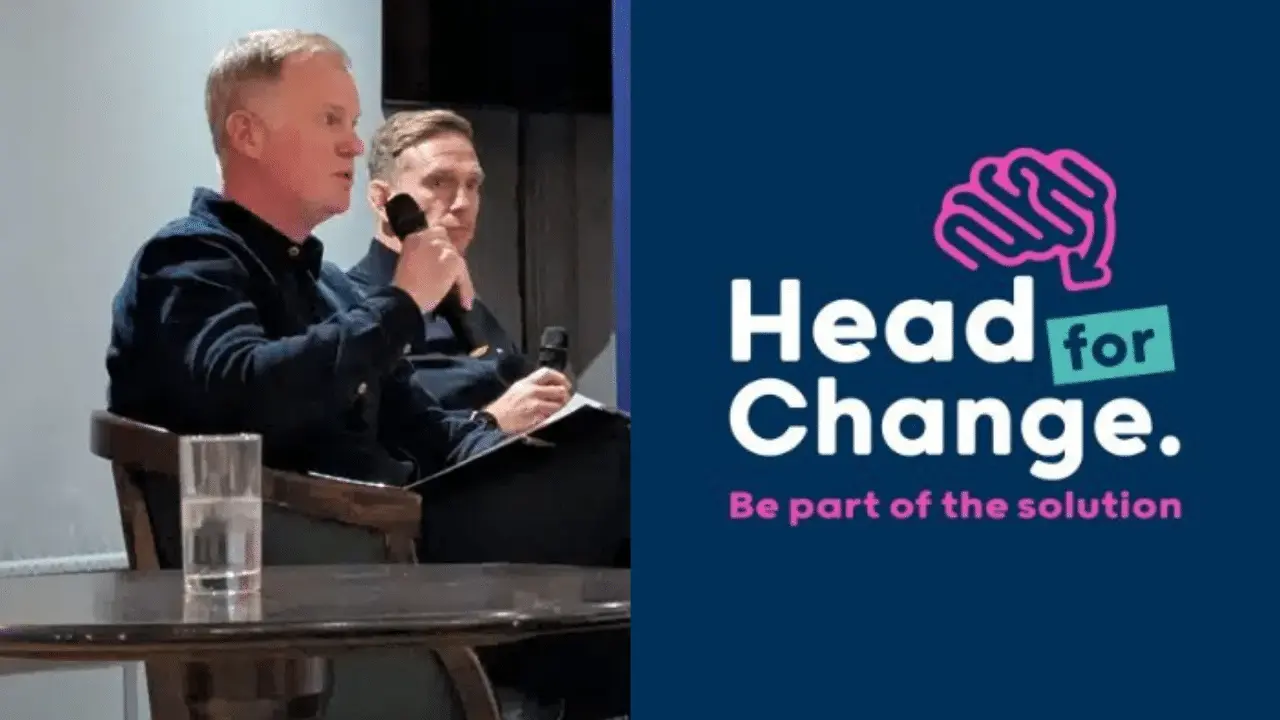

By Jon Page at Old Deer Park, Richmond
Last week London Welsh and the charity Head for Change hosted the Big Rugby Debate, bringing together an expert panel of former rugby players and medical experts to discuss some of rugby’s most contentious issues surrounding traumatic brain injuries in rugby.
Join the RUCK’s WhatsApp community here and get the latest news sent straight to your messages.
Award winning sports journalist, author of ‘Concussed’ and host of the Big Rugby Debate Sam Peters sat down for an interview, to discuss his research and views surrounding concussion in rugby. The panel featured founding member of Head for Change and Wales Six Nations Grand Slam winner Alix Popham, England Women’s Rugby World Cup winner Kat Merchant, Director of the Neurovascular Research Laboratory at the University of South Wales Professor Damian Bailey, Consultant Trauma and Orthopaedic Surgeon Bill Ribbans, and CEO of Luca Health and former Northampton Saints Player Nick Greenhalgh.
Sam Peters explained how he began to address traumatic brain injuries within rugby with more of a focus in 2013, following growing concerns around player welfare, particularly their brains. Coincidentally, this was the same year panelist Kat Merchant suffered a seizure on the pitch, a year before she retired from rugby, ending her career with at least 11 confirmed concussions in 2014, just a month after winning the Women’s Rugby World Cup with England.

“I was just about to become rugby correspondent for the Mail On Sunday, and I felt that there was a really serious problem in the game that needed addressing." Peters said to RUCK.
"The NFL legal case had come about, and there was clear evidence associating repetitive head trauma with neurodegenerative problems in later life, and it had been something that had been concerning me for a significant period of time.
"Around 2013 we went from, you know, it being a sort of passing comment in some of the reports, a general concern around player welfare, to come on, what we're going to do about this? How's the sport going to address this? It's got a problem. We've got to fix it. And yeah, sort of went at it pretty much ever since then.”
South African born and Australian raised Ian Tucker, playing centre for Oxford University, passed away as a result of head injuries suffered playing against Saracens in 1996. A re-investigation of the incident showed that Tucker had traces of Chronic Traumatic Encephalopathy (CTE).
Alix Popham began playing professional rugby two years later, and yet over the course of his own career suffered 100,000 sub-concussive events between 1998 and 2011. Rugby turned professional in 1995 with minimal planning of what it would look like, and the immediate years after were described by Popham as the “Wild West”, sometimes facing multiple contact sessions per week.
Peters’ sentiments echoed this, suggesting there was minimal understanding or consideration for the impact this would have on players’ bodies.
“There was always a concern from people older and wiser than I was, of which there are a lot of them, that we were basically going into an unknown world where the players were essentially guinea pigs, crash test dummies, in an experiment of professional rugby, and no one knew what the hell it was going to look like, and there wasn't a lot of planning.
"There wasn't a lot of consideration for how the change in the game, radical change in the game was going to impact the players’ health, even less so how it was going to affect their brain health. There was always this nagging concern, and I've subsequently spoken to people like Sir Clive Woodward and people who were in senior positions within the professional game, and they have said subsequently, it was this sort of thing in the back of our minds that we never really wanted to confront, and I think really that happened on a kind of sport wide scale.

"Unfortunately, that generation of players is dealing with the consequences now, and if we don't continue to push for change, I think we're gonna have another generation that's gonna have the same experience.”
Professor Damian Bailey, of the University of South Wales, stated that “We now have clear, converging evidence that repeated contact across a rugby career is associated with structural brain injury.”
With more compelling evidence of traumatic brain injuries in rugby being presented, Peters also points out that an increasing number of people have aligned themselves to his perspective, although resistance is still ongoing.
“When I first started writing that in 2013, I was seen as basically a lunatic, I think people thought I was completely mad." Peters added. "Perhaps, frustratingly, as I say, or scandalously, I think more people have come around to my position now, and it's just annoying to say the least that it's been such a heavy lift, and there has been so much resistance, and there continues to be resistance.”
Peters also highlighted that rugby’s traumatic brain injury crisis does not exist within a bubble, suggesting that rugby’s machismo attitude towards playing through injuries, heavy drinking, and initiations all contribute towards a culture where toughness is put on a pedestal above player welfare.
He does not prescribe to the view that the game is going soft, and instead aligns with the idea that if rugby’s relationship with toughness is driving players away from the game, or leaving players with life altering traumatic brain injuries, then rugby’s relationship with toughness needs to evolve.
“The things that the sport is forged upon in many ways, and are so important to the sport, in a way, or it thinks it's important, are also, it's Achilles Heel. Unfortunately, in a world now where, well, no it's not unfortunate, actually, it's a good thing, but I think a lot of that toxic masculinity is, I suppose, being exposed and being sort of driven out of the game.
"I think there's still a lot of nonsensical talk around you know, the game's gone soft, and we're trying to sanitise the game and all that sort of nonsense.”
As the Guinness Six Nations kicked off last week to an audience of millions, the handling of head injuries will be in the spotlight in the Northern Hemisphere's flagship international tournament. Although major changes will not occur overnight, Peters highlighted some short-term milestones he’d like to see during the Guinness Six Nations, as indicators that progress continues to be made in the battle against traumatic brain injury in rugby.
“I'd like to see, you know, every incident where there's clear and obvious evidence that a player suffered a brain injury go off the field, that would be great. I think when those scenarios occur, I think I'd like to see a continuation of the media, celebrating that as an indication that the sport is maturing and growing up and dealing with these subjects much more intelligently.
"So they would be good things. I think the fact that the rest windows have now been taken out of the Six Nations, or there's one less, is an indicator that the sport might not be learning its lessons, or the authorities aren't learning their lessons. But that's for them to answer the question.
"I think there are clear signs of reasons to be optimistic, but at the same time, that doesn't mean that events like tonight and organisations like Head For Change shouldn't continue to bang the drum for change and for improvements and constantly keep the authorities on their toes and know that they're being scrutinised.”

Peters suggests that realistic longer term goals in the battle against head injuries would be to cut down the instances in which a traumatic brain injury can happen, as well as ensuring that when a concussion does occur, the protocols in place take no gambles regarding player welfare.
“In the battle against brain injury, a realistic long term goal, is to take contact training out of the professional game altogether in season, to ban the jackal, to go back to much longer mandatory stand downs once a concussion has been diagnosed. Because the message that sends when players come back really quickly to the younger generation is appalling.
"Reduce the number of matches that the top players are allowed to play, drop it down to close to 25 games a season, and continue to have excellent examples of leadership from the younger generation who are leading the way.”
Last year Immanuel Feyi-Waboso, a medical student who balances his studies alongside professional rugby with Exeter Chiefs, ruled himself out of England’s Guinness Six Nations clash with France after self-reporting symptoms of a concussion, and the rugby world largely rallied behind him.
Similarly, Ireland and Leinster centre Gary Ringrose ruled himself out of contention for the second and third tests of the British and Irish Lions Series against the Wallabies last summer after noticing he was suffering from symptoms of concussion.
For Ringrose, who is now 31 years old, his chances of ever earning a test cap for the Lions is now incredibly slim. But his bravery in coming forward is one that makes him a fantastic role model for everyone involved in rugby, demonstrating that real toughness comes from making difficult yet correct decisions, instead of playing through injuries that can have catastrophic long-term consequences.
When asked whether he had a parting message for any stakeholders in rugby union, Sam Peters’ message was clear: “If in doubt, sit them out.”
To watch the Big Rugby Debate, or for more details on how Head for Change are trying to drive positive change for brain health, go to: headforchange.org.uk
LATEST RUGBY NEWS
- BBC sport presenter’s 6ft 9in nephew called up to England Six Nations squad
- “Never forget” – Richie McCaw makes his feelings clear about Wayne Barnes
- Schalk Burger Delivers Scathing Assessment of Henry Pollock
- New Eligibility Rule Reduces Foreign-Born Player Numbers in International Rugby
- The best fly-halves in the world (Ranked 5-1)
- Supercomputer predicts embarrassing Six Nations home loss for Wales against France
TRENDING




LATEST NEWS



LATEST COMMENTS
- Jordie Barrett over Damian de Allende is far from being correct. The hype around Dupont is also overreaching, he's probably 4th in the world and has been since the 2023 WC. He also avoids certain matchups which is strange. The rest of the list is pretty good apart from minor subjective biases.JasonMarlow16-09-2026
Loading