Antoine Dupont has taken rugby to another level, but is the France superstar really the greatest scrum-half of all time?
The Toulouse magician has won almost everything the sport has to offer, including Olympic gold, and continues to make the extraordinary look routine.
But rugby has produced some remarkable number nines.
From World Cup winners to Welsh legends, these players changed the way their position was played.
We've ranked the 10 greatest scrum-halves in rugby union history. And there are some huge names who miss out.
10. Conor Murray (Ireland)
At his peak, Murray was among the finest scrum-halves in world rugby.
The Irishman built his reputation on clever kicking, excellent game management and a superb partnership with Johnny Sexton.
He helped Ireland win the 2018 Grand Slam and played a major role in their historic victory over New Zealand in Chicago in 2016.
Murray also toured three times with the British & Irish Lions, earning Test selection against Australia, New Zealand and South Africa.
Career highlight: Ireland's 2018 Grand Slam.
9. Mike Phillips (Wales)
At 6ft 3in, Phillips looked more like a back-row forward than a traditional scrum-half.
And he played like one.
The Welshman was a nightmare for defenders, using his size and strength to punch holes around the fringes.
He won Grand Slams in 2008 and 2012 and helped the Lions secure their famous series victory over Australia in 2013.
Phillips was never the flashiest passer, but few scrum-halves could match his physical presence.
His influence during one of Welsh rugby's most successful modern periods should not be overlooked.
Career highlight: The Lions' 2013 series victory in Australia.
8. Faf de Klerk (South Africa)
Don't let the blond hair and small frame fool you.
De Klerk was one of the fiercest competitors in international rugby.
His relentless defence, tactical kicking and ability to wind up opponents made him a vital part of South Africa's success.
The former Sale Sharks star helped the Springboks win consecutive World Cups in 2019 and 2023.
Not every rugby fan loved his style. South African supporters certainly didn't complain.
Career highlight: Winning back-to-back Rugby World Cups.
7. Nick Farr-Jones (Australia)
Before George Gregan, Australia had another world-class scrum-half running the show.
Farr-Jones captained the Wallabies to their first Rugby World Cup triumph in 1991.
He was an intelligent leader who knew exactly when to speed things up and when to slow them down.
His partnership with Michael Lynagh helped establish Australia as one of the world's leading rugby nations.
Farr-Jones was later inducted into the World Rugby Hall of Fame.
Career highlight: Captaining Australia to the 1991 World Cup.
6. George Gregan (Australia)
Few players enjoyed a battle more than Gregan.
The Australian legend won 139 international caps and was a key member of the Wallabies side that lifted the 1999 World Cup.
He was a brilliant organiser, a fearless defender and one of rugby's great competitors.
Gregan also produced one of the sport's most famous tackles, stopping Jeff Wilson in the closing stages of Australia's 1994 victory over New Zealand.
Career highlight: Winning the 1999 Rugby World Cup.
5. Fourie du Preez (South Africa)
The ultimate rugby chess player.
Du Preez didn't need spectacular breaks to dominate a match. He could destroy opponents with his kicking and decision-making alone.
He was central to South Africa's 2007 World Cup triumph and helped the Bulls win three Super Rugby titles.
His understanding of space was extraordinary. He often seemed to know what would happen before anyone else on the pitch.
For pure rugby intelligence, few number nines have ever come close.
Career highlight: Winning the 2007 Rugby World Cup.
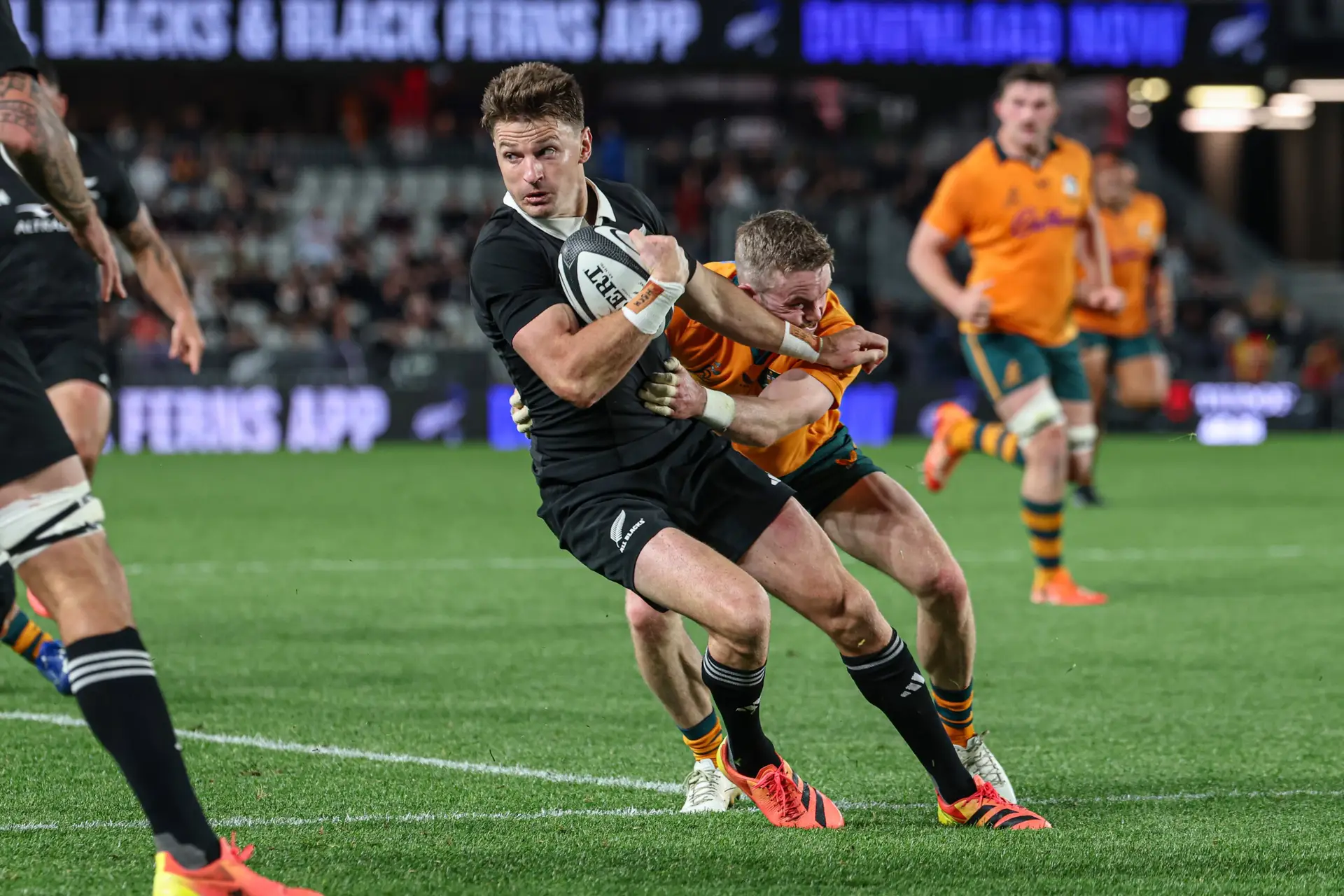
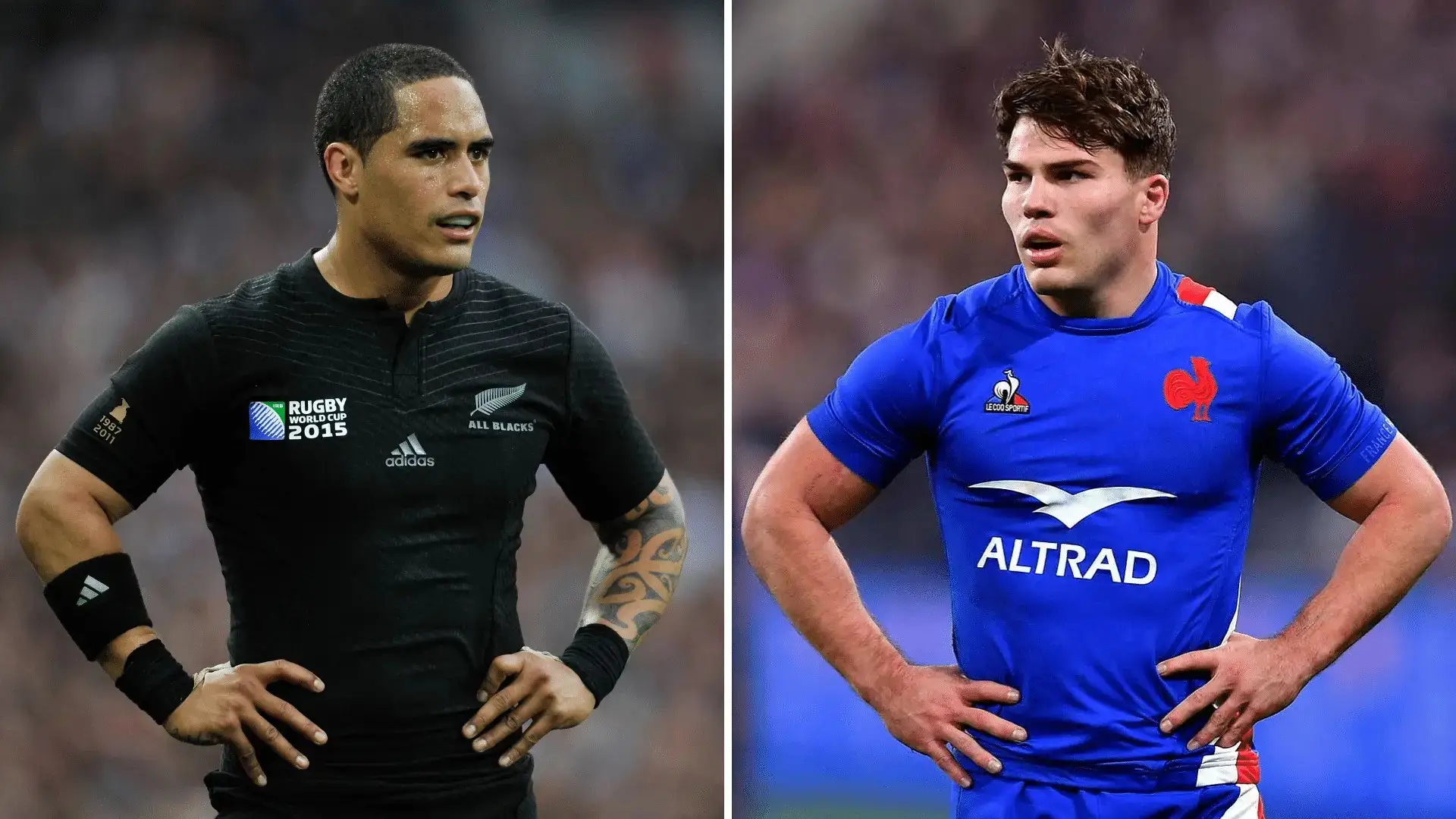
4. Aaron Smith (New Zealand)
Has anyone ever passed a rugby ball better than Aaron Smith?
The All Blacks legend made the difficult look ridiculously easy.
His lightning-fast delivery allowed New Zealand to attack before opponents had time to organise their defence.
Smith won the 2015 World Cup and finished his international career with 125 caps.
For more than a decade, he was the heartbeat of the All Blacks' attack.
Even after leaving New Zealand, Smith continued to attract attention, with the veteran linked with a surprise move to France.
Career highlight: Winning the 2015 Rugby World Cup.
3. Joost van der Westhuizen (South Africa)
There has never been another scrum-half quite like Joost.
Standing 6ft 2in, the Springbok legend had the physical presence of a centre and the attacking instincts of a world-class number nine.
He scored an incredible 38 tries in 89 Tests.
Van der Westhuizen was also one of the heroes of South Africa's historic 1995 World Cup victory.
His defensive work against Jonah Lomu in the final became part of rugby folklore.
He remains the standout scrum-half in RUCK's all-time Springboks XV, ahead of fellow legends Fourie du Preez and Faf de Klerk.
Career highlight: Winning the 1995 Rugby World Cup.
2. Antoine Dupont (France)
The most talented scrum-half of the modern era. Perhaps ever.
Dupont can do things that simply shouldn't be possible for a player wearing number nine.
He can beat defenders with his feet, smash opponents twice his size and produce outrageous passes under pressure.
The Toulouse superstar was named World Rugby Player of the Year in 2021 before helping France win Olympic sevens gold in Paris.

France's Antoine Dupont receives medical attention during the 2025 Six Nations Championship Round 4 between Ireland and France in Aviva Stadium, Dublin, Ireland, Saturday, March 8, 2025 (Photo by James Crombie / Inpho)
He has also collected major domestic and European honours with Toulouse.
There is one obvious gap in his collection: the Rugby World Cup.
That shouldn't define his career, but it remains part of the debate when comparing him with the greatest players in history.
And here's the frightening thing.
He still has time to claim the top spot.
Career highlight: Winning Olympic gold at Paris 2024.
1. Gareth Edwards (Wales)
More than 50 years after his prime, Gareth Edwards remains the standard.
The Welsh legend had everything.
Explosive pace, incredible strength, outstanding vision and an instinct for scoring tries that few players have matched.
Edwards won 53 consecutive caps for Wales between 1967 and 1978.
He helped his country dominate the Five Nations and played a starring role in the Lions' historic tours of New Zealand in 1971 and South Africa in 1974.
Then there was that try.
His finish for the Barbarians against New Zealand in 1973 remains one of rugby's most iconic moments.
Dupont might eventually overtake him. Aaron Smith might have been the better passer.
But for his influence, achievements and sheer brilliance, Edwards still gets our vote.
Career highlight: The Lions' historic 1971 series victory over New Zealand.
Five unlucky stars who missed out
There will be plenty of arguments about the final few places. These five all have a strong case.
- Matt Dawson (England): A 2003 World Cup winner and one of England's greatest number nines.
- Will Genia (Australia): Brilliant at his peak and a key figure in the Reds' 2011 Super Rugby triumph.
- Agustín Pichot (Argentina): The inspirational captain who helped Argentina finish third at the 2007 World Cup.
- Sid Going (New Zealand): An electric runner who tormented opposition defences during the 1970s.
- Jamison Gibson-Park (Ireland): A driving force behind Ireland's fast-paced attack in the modern era.