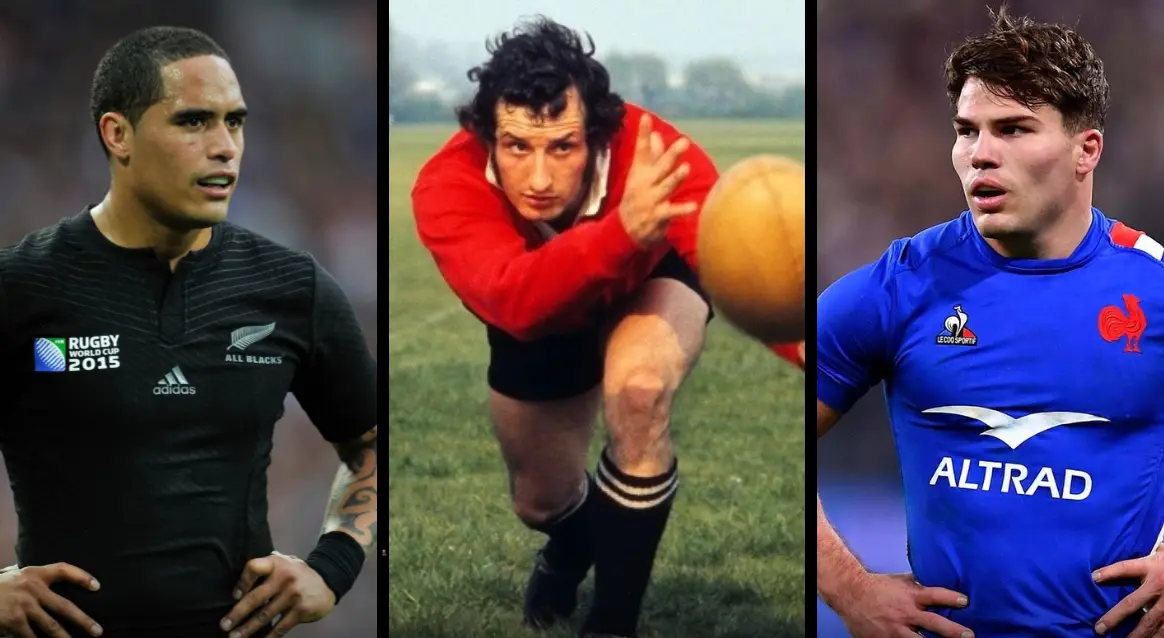
Rugby has produced some incredible scrum-halves, from Welsh great Gareth Edwards to modern superstar Antoine Dupont.
The best No.9s can completely control a match.
They dictate the tempo, organise their forwards and decide when to kick, run or move the ball wide.
Some changed how scrum-half was played. Others collected World Cups, Grand Slams and British & Irish Lions honours.
We've ranked 20 of the greatest scrum-halves in rugby history, taking into account their peak ability, Test career, major honours, longevity and impact on the game.
There will be disagreements.
That's half the fun.
20. Morgan Parra – France
One of France's finest game managers of the professional era.
Parra won 71 caps for Les Bleus and played a major role in their run to the 2011 Rugby World Cup final.
His kicking from hand and tee made him particularly valuable, while he enjoyed a hugely successful club career with Clermont.
19. Jacques Fouroux – France
Small in stature but enormous in personality.
Fouroux, nicknamed "Le Petit Caporal", captained France to the 1977 Five Nations Grand Slam.
He later coached his country and became one of the most influential figures in French rugby.
18. Danie Craven – South Africa
Comparing players across generations is never easy, but Craven's place in rugby history cannot be ignored.
He played scrum-half for the Springboks during the 1930s and became known for his intelligence and innovation.
His influence on South African rugby continued for decades after his playing career ended.
17. Justin Marshall – New Zealand
Marshall was an All Blacks regular for almost a decade.
Physical and fiercely competitive, he combined a strong running game with the distribution needed to operate in some excellent New Zealand sides.
He finished with 81 Test appearances for the All Blacks.
16. Ben Youngs – England
England's most-capped men's player earns his place.
Youngs won 127 caps during a Test career that stretched from 2010 to 2023.
He won four Six Nations titles, reached the 2019 Rugby World Cup final and toured Australia with the British & Irish Lions in 2013.
His longevity helped establish Youngs among the greatest England players of the professional era.
Few scrum-halves have maintained their place at the top of international rugby for so long.
15. Matt Dawson – England
A central figure during England's greatest era.
Dawson won the 2003 Rugby World Cup and toured three times with the British & Irish Lions.
His famous dummy against South Africa during the Lions' victorious 1997 tour remains one of his defining moments.
14. Conor Murray – Ireland
At his peak, Murray was among the best scrum-halves in world rugby.
His tactical kicking became a major weapon for Ireland and the British & Irish Lions.
Murray was selected for three successive Lions tours in 2013, 2017 and 2021 and played a major role during a hugely successful era for Ireland.
13. Sid Going – New Zealand
One of the great All Blacks scrum-halves of the amateur era.
Going represented New Zealand throughout the late 1960s and 1970s and became famous for his attacking instincts.
His battles with the British & Irish Lions helped make him one of the most recognisable New Zealand players of his generation.
12. David Kirk – New Zealand
Kirk's Test career was relatively short.
What he achieved during it was enormous.
He captained New Zealand when they won the inaugural Rugby World Cup in 1987, lifting the Webb Ellis Cup after victory over France at Eden Park.
That alone gives him a special place in All Blacks history.
11. Will Genia – Australia
At his best, Genia was electric.
His acceleration around the breakdown meant defenders could never simply wait for the pass.
Genia could spot a gap and disappear through it.
He finished his international career with 110 Test caps and formed a memorable half-back partnership with Quade Cooper.
10. Agustín Pichot – Argentina
Few players have had a greater influence on Argentine rugby.
Pichot was small, confrontational and relentlessly competitive.
He captained the Pumas during their historic run to third place at the 2007 Rugby World Cup, helping establish Argentina as a major force in the international game.
9. Fabien Galthié – France
Long before becoming France head coach, Galthié was an outstanding No.9.
He played at four Rugby World Cups and eventually captained Les Bleus.
His individual peak was recognised in 2002 when he was named World Rugby Player of the Year.
Quick-thinking and inventive, he was perfectly suited to French rugby.
8. Nick Farr-Jones – Australia
The captain who lifted Australia's first Rugby World Cup.
Farr-Jones led the Wallabies to the title in 1991, culminating in victory over England at Twickenham.
His partnership with Michael Lynagh became one of the great Australian half-back combinations.
He didn't need to dominate the highlights.
He simply controlled matches.
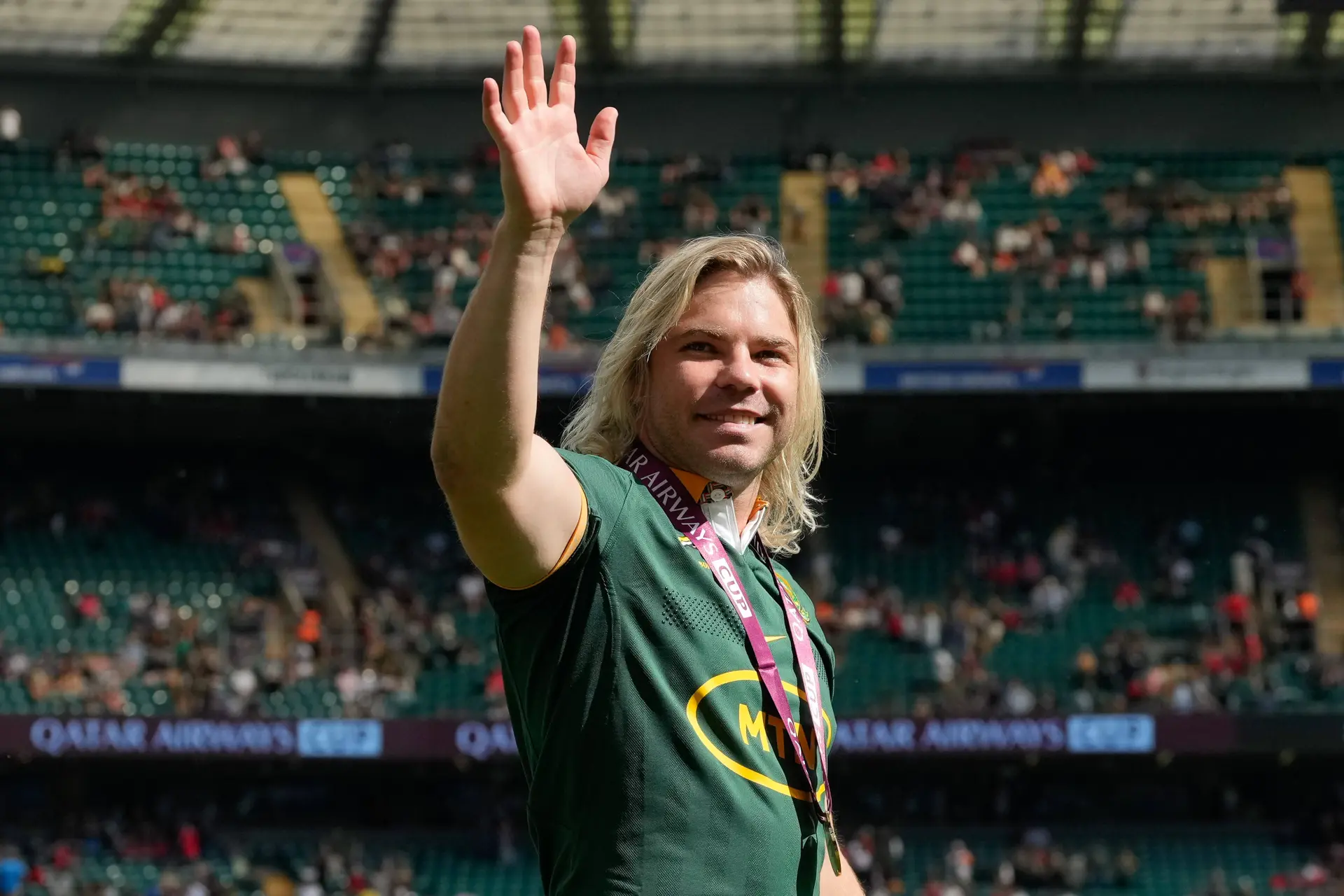
7. Faf de Klerk – South Africa
De Klerk has been one of the defining scrum-halves of South Africa's modern era.
His kicking, defensive aggression and relentless energy suited the Springboks perfectly.
But reducing his game to box-kicking would be unfair.
At his best, De Klerk could dramatically increase the tempo and attack space around the breakdown.
Most importantly, he delivered on the biggest stage.
He was part of the Springbok squads that won back-to-back Rugby World Cups in 2019 and 2023, establishing himself among the standout scrum-halves of the modern game.
6. George Gregan – Australia
One of rugby's ultimate competitors.
Gregan won the 1999 Rugby World Cup and eventually accumulated 139 Test appearances for Australia.
His distribution, leadership and game management helped make him a central figure during one of the greatest periods in Wallabies history.
And then there was that famous line to the All Blacks in 2003:
"Four more years, boys."
Few scrum-halves have enjoyed the battle more.
5. Fourie du Preez – South Africa
One of the smartest scrum-halves rugby has seen.
Du Preez could control an entire Test match with his kicking and decision-making.
He was a major figure in South Africa's 2007 Rugby World Cup triumph and remained hugely influential when the Springboks reached another World Cup semi-final eight years later.
At his best, Du Preez always seemed to be thinking one phase ahead.
4. Aaron Smith – New Zealand
Perhaps the finest passer ever to play the position.
Smith's speed and accuracy from the base allowed New Zealand to attack before opposition defences could get organised.
His service was fast, flat and remarkably consistent.
Smith helped the All Blacks win the 2015 Rugby World Cup and finished his Test career with 125 appearances.
His quality was also recognised by former Wales No.9 Rhys Webb, who named Smith among the toughest opponents of his career.
For more than a decade, he was the heartbeat of New Zealand's attack.
3. Joost van der Westhuizen – South Africa
There has rarely been another scrum-half quite like Joost van der Westhuizen.
Standing around 6ft 2in, the Springbok great had the physical presence of a centre but the instincts of a world-class No.9.
He could explode around the fringes, make huge tackles and score tries himself.
Joost played a major role as South Africa won their first Rugby World Cup in 1995.
He eventually scored 38 tries in 89 Tests for the Springboks.
For a player in a position traditionally dominated by smaller men, he completely changed perceptions of what a scrum-half could look like.
2. Antoine Dupont – France
Dupont is already among rugby's all-time greats.
The France superstar has almost everything you could ask for from a scrum-half.
His acceleration is frightening. His kicking is outstanding. He is remarkably powerful for his size and can produce turnovers and tackles that would look impressive from a back-row forward.
Dupont was crowned World Rugby Men's 15s Player of the Year in 2021.
Then he took on a completely different challenge.
He switched to sevens and helped France win Olympic gold at Paris 2024, producing a brilliant performance in the final against Fiji.
Interestingly, Dupont has also had his say on this debate. When some of rugby's greatest No.9s were put to him, he picked Aaron Smith as his greatest scrum-half.
The scary part?
His career isn't finished.
1. Gareth Edwards – Wales
The benchmark remains Gareth Edwards.
More than half a century after his international debut, the Wales and British & Irish Lions legend is still routinely discussed among rugby's greatest players.
Edwards won 53 consecutive caps for Wales between 1967 and 1978.
He was part of a golden generation that dominated northern hemisphere rugby, winning eight Five Nations titles during his international career, including three Grand Slams.
Then there was his Lions career.
Edwards toured three times and won 10 Lions Test caps, with his record documented by the British & Irish Lions.
He helped the 1971 Lions become the first – and still only – Lions side to win a Test series in New Zealand.
Three years later, he was part of the legendary unbeaten Lions tour of South Africa.
He possessed pace, strength, vision and an extraordinary instinct for where space would appear.
And, of course, there was that try for the Barbarians against New Zealand in Cardiff in 1973.
Modern rugby has produced bigger athletes, faster defensive lines and increasingly sophisticated tactics.
Yet Edwards' reputation has survived every generation.
For this list, he remains rugby's greatest scrum-half.
![10 Best Wonderkids in Rugby History [Ranked]](https://r.testifier.nl/Acbs8526SDKI/resizing_type:fill/width:1920/height:1280/plain/https://s3-newsifier.ams3.digitaloceanspaces.com/ruck-co-uk/images/2026-06/screenshot-2026-06-03-at-185334.png@webp)