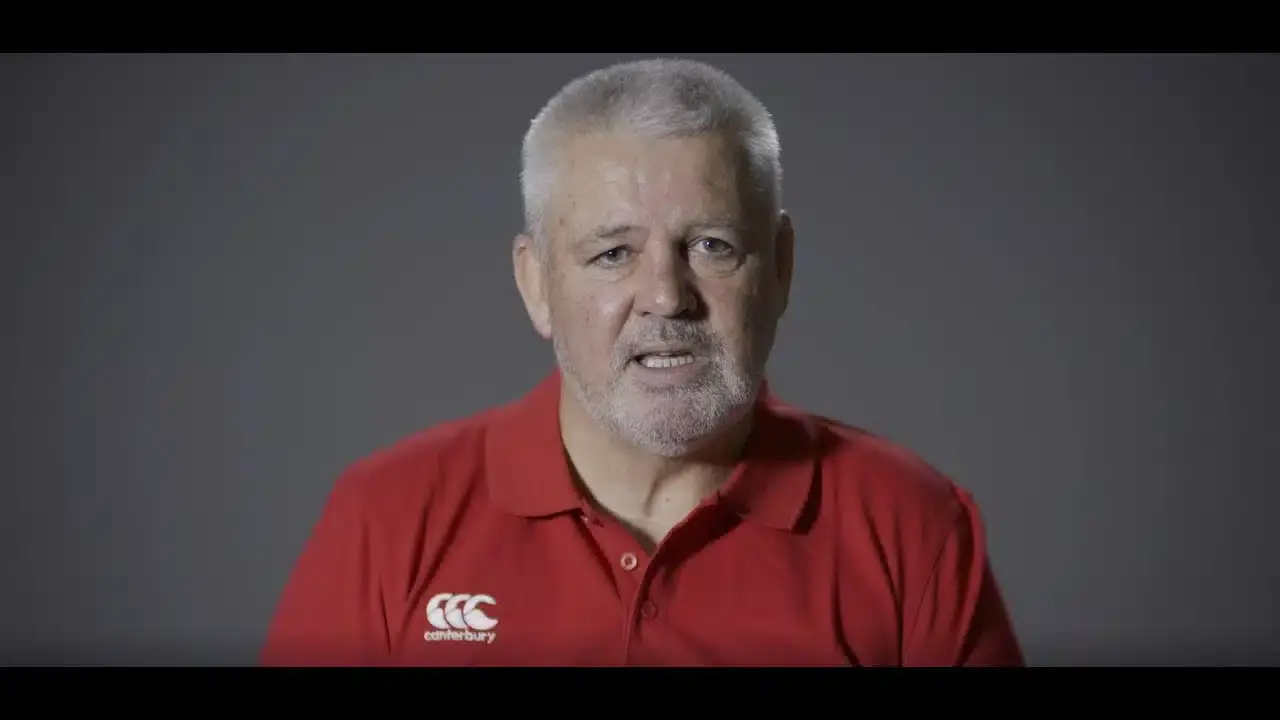
Warren Gatland has joked that he has moved to rugby’s “dark side” after accepting a surprise consultancy role with World Rugby’s match officials.
The former Wales head coach says working closely with referees during the British & Irish Lions tour has given him a completely new appreciation of the pressures officials face, particularly amid intense scrutiny over red cards, high tackles and consistency.
A new respect for referees
Gatland admits referees have been under fire this autumn, especially over decisions in the dangerous high-contact area, but insists they are working tirelessly to improve.
“They know they are not perfect. But what I see is a group of people working really hard to rectify the issues.”
While acknowledging mistakes – particularly around yellow and red cards – Gatland says frustration often comes from rugby’s grey areas.
“I know how frustrating it can be when calls go against your team, particularly those that fall within the grey area.”
He points to issues such as side entry at the ruck, not releasing, or not rolling away quickly enough – areas where subjectivity is unavoidable.
What referees are really focusing on
Gatland revealed that elite referees meet only a few times a year – typically before the Autumn Nations Series and Six Nations – giving them limited time compared to teams preparing for a full season.
Despite this, officials are working hard to align their approach ahead of Rugby World Cup 2027, with four key focus areas:
- Space: “Trying to create more space when it comes to teams being able to attack.”
- Speed of ball: “Focusing on the tackler, and ensuring that the jackaler is completely legal at the breakdown.”
- Safety: “This is important. There have been some mistakes made around this when it comes to consistency.”
- Scrum and maul: "Ensuring both scrum and maul allow a contest for the ball and are also legal.”
However, Gatland believes these priorities have not been communicated clearly enough.
“I do not think these focus areas… have been communicated well enough to the fans, broadcasters and teams.”
Referees should admit mistakes
Speaking from a coach’s perspective, Gatland feels officials would gain more respect by openly acknowledging errors.
“They will get more respect when they are reviewing a performance and admit that a decision was wrong.”
He also criticised some TV commentary for inflaming situations unnecessarily.
“The most negative effect on the game can come from a TV commentator who says things like ‘that was a terrible decision’, but sometimes they are wrong or do not know the law.”
High balls, box kicks and Liam Williams
Gatland says the jury is still out on the clampdown on kicking escorts, arguing it has tilted the balance towards kicking teams.
“That now weights it more heavily for the team kicking the ball… That is why we are now seeing more box kicks in the game.”
If he were still coaching, Gatland says he would focus heavily on aerial skills in the back three.
“Liam Williams was one player who was brilliant at this.”
Law changes Gatland would make
Although he has no power to change the laws, Gatland outlined two areas he believes need clarity.
First, the breakdown:
“If a player is tackled and brought to the ground… I think they should be forced to release the ball and have to get back on their feet before playing it again.”
Second, the 50:22 law, which he wants simplified.
“Let’s make it simpler for the players, referees and fans.”
He argues that any kick made from inside a team’s own half should activate the law, regardless of where the pass originated.
TMO delays and the bunker
Gatland accepts everyone wants the correct decision but believes the game is suffering from excessive stoppages.
“In the pursuit of perfection, there can be too many delays.”
His solution?
“If a referee is convinced an offence is at least a yellow card… just show a yellow card and put the decision to the bunker straight away.”
EDITORS PICKS:
Players must take responsibility
Gatland also issued a warning to players, saying rugby risks drifting towards football-style behaviour.
“We have increasingly seen players who experience some head contact being encouraged to stay down.”
He added: “I would like to think that there is a responsibility for the players not to go down if they are not injured.”
‘I am not Georgia coach’
Finally, Gatland addressed speculation about his future – and one rumour in particular.
“For the record, I am not the new head coach of Georgia.”
After stepping away from Wales, Gatland admits he needed a break from negativity.
“I just do not need this level of negativity from the Welsh media in my life.”
While enjoying time away since February, he has not ruled out a return.
“Some sort of role with a national team going into the next Rugby World Cup could be a good challenge.”
He also left the door open to club rugby – and even a potential return of fallen Premiership giants.
“It would be great for the Premiership if clubs with the history and tradition of Wasps, London Irish and Worcester could make a return.”
One thing is clear: Gatland may be on the “dark side” for now, but he’s far from done with the game.
Martin Johnson and Jonny Wilkinson Reveal the Toughest Opponent They Ever Faced
Jonny Wikinson and Martin Johnson have both opened up about the toughest players they respectively faced in their illustrious playing careers.
The 2003 World Cup-winners, along with three of their teammates from that triumph in Sydney, snubbed a number of top stars.
Jonny Wilkinson: Christophe Dominici (France)
Dominici played 67 times for his country and won the French championship five times with Stade Français before retiring in 2008. In recent years he had worked as a pundit for French radio and
TV before his death in 2020.WILKINSON SAID: “His opportunism, his flair, his game reading, his sheer explosivity to really change a game is something that sticks in my memory.”
DID YOU KNOW? Dominci appeared in three World Cups for his country in 1999, 2003 and 2007, scoring eight tries over that time.
Lawrence Dallaglio: George Smith (Australia)
The scourge of the Lions at the age of 20 and more than 100 caps to his name for the Wallabies before he was 30. An absolute pest and nuisance at the breakdown.
DALLAGLIO SAID: "The pioneering, definitive breakdown specialist in the professional era who combined dexterity and ferocity to slow down and steal opposition ball. There were more strings to his bow, though, because he had good hands and could kick. Incredible longevity too."
Jason Robinson: Jonah Lomu (New Zealand)
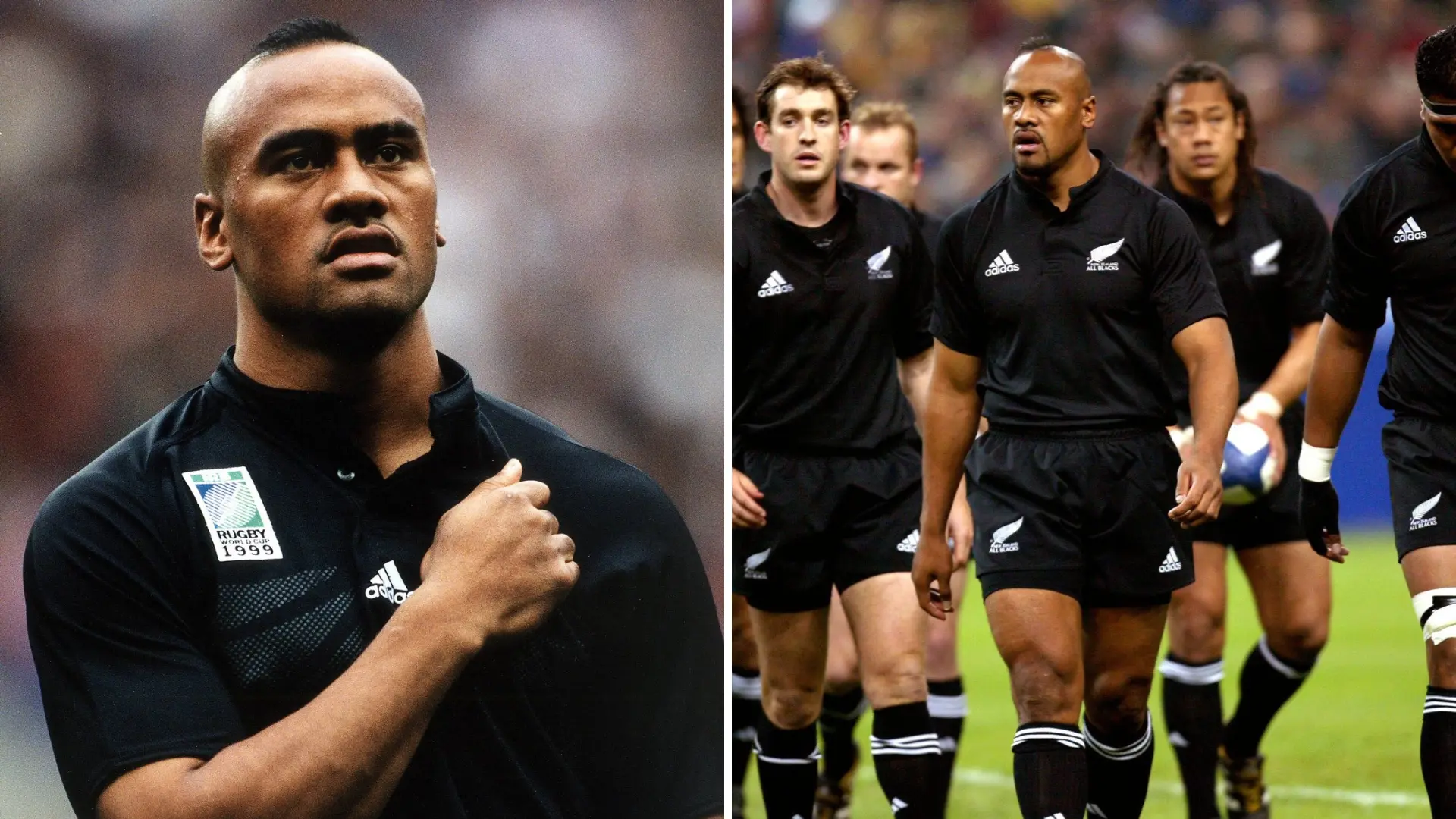
Has one man ever done more to popularise the game of rugby than Jonah? When he burst onto the scene at the 1995 World Cup, it was like a meteor landing from outer space.
ROBINSON SAID: “He was built like a forward. When you play nearly seven years in rugby league and 10 in rugby union, but he was completely different. He didn’t just traumatize players, he traumatized teams. He was about 18 stone, he could run as fast as any winger and he had a sidestep.”
Martin Johnson: Jonah Lomu (New Zealand)
JOHNSON SAID: “A guy like Jonah Lomu could do things that nobody could do and change games. Nobody else on the field would have scored that try and they went on to win the game. But even he needed his teammates… sometimes he didn’t.”
Phil Vickery: Richie McCaw (New Zealand)
Lifting the 2011 World Cup in his backyard was a fitting tribute to one of the greatest ever All Blacks, but he went on to secure true legendary status as he continued for four more years, breaking record after record and uniquely hoisting the Webb Ellis trophy for a second time.
VICKERY SAID: "Played against him a few times for England.We spent our whole week just preparing to play against him, let alone the other guys. I wish I had the chance to play with him."
DID YOU KNOW? McCaw was appointed a member of New Zealand's highest honour, the
Order of New Zealand, in the
2016 New Year Honours