Fans shocked by Piers Morgan's physique as he joins James Haskell in the gym
Rugby NewsFriday, 13 September 2024 at 12:36


Piers Morgan stunned Instagram followers this week after sharing a glimpse of his impressive physical transformation.
The 59-year-old broadcaster, better known for his sharp suits and outspoken opinions, posted a photo on Tuesday, May 21, 2024, revealing a notably toned physique.
In the image, Morgan swapped his usual formal attire for grey shorts and a black T-shirt, showing off his muscular arms while holding dumbbells.
The post offered a brief look at his gym routine, where he has been training under the guidance of Olympic speed skater-turned-personal trainer, Sarah Lindsay.

Morgan has been committed to his fitness regime, and recent updates show him training alongside former England rugby player, James Haskell, who has also been working with Lindsay.
The transformation marks a significant shift for the presenter, who has been publicly documenting his efforts to improve his health and fitness.
The post drew significant attention online, with many followers praising his dedication and results.
One fan wrote: "Flipping heck piers, proper pushing them hands under your biceps to increase sizeage,"
A second said: "The only thing massive on you is your ego !!"
Another commented: "To be fair @piersmorganarms looking pretty top notch here,"
Piers Morgan selects his ‘unarguable’ all-time rugby XV
Controversial television host Piers Morgan has picked his all-time greatest – and has said that it’s impossible to argue with his selection.
It's fair to say they have following the omission of legends such as Joost van der Westhuizen, Jonny Wilkinson, Willie John McBride and many more legends.
Read on to see who Morgan selected in his all-time rugby XV.
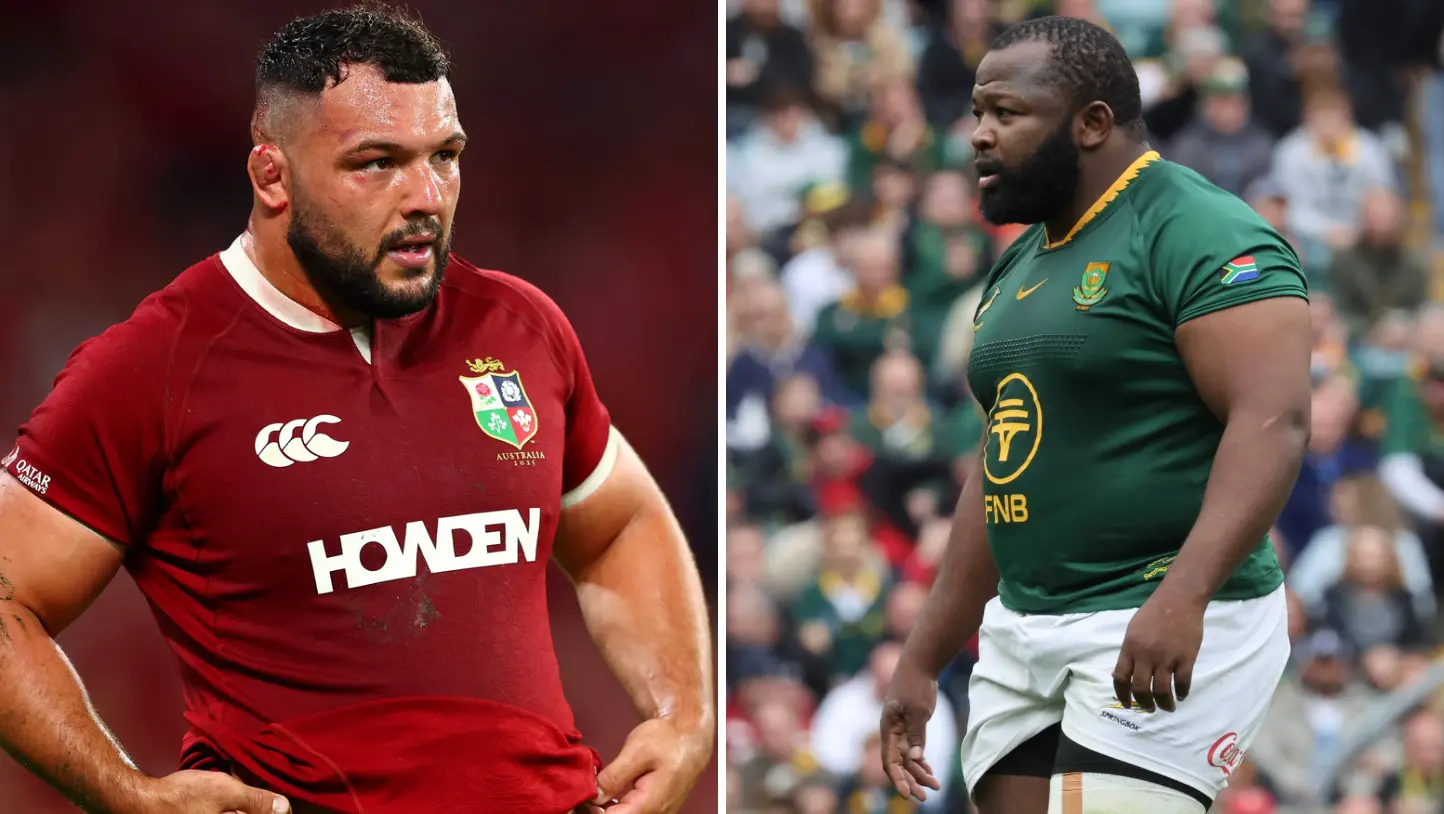
Loosehead-prop: Os du Randt (South Africa)
One of the great figures of Springbok rugby, the loosehead-prop is a true legend of not just the World Cup, but the game itself. A powerful scrummager who had a strong work rate around the field, du Randt was rarely outplayed by any opposition.
It was the 1995 World Cup where he first excelled and will be best remembered for, before tirumphing again with the Springboks in 2007. The final against England was the last game he would ever play, retiring straight afterwards.
DID YOU KNOW? In 2000, at the age of 27, Du Randt suffered injuries that kept him out of rugby for nearly three years
Hooker: Sean Fitzpatrick (New Zealand)
He is widely regarded as one of the greatest players to grace the game. A devastating combination of awesome physicality, impressive ball skills and tactical awareness saw him make 92 appearances for New Zealand, 51 of which were as captain.
DID YOU KNOW? He was part of two of the finest frontrow combinations in rugby history, firstly with Steve McDowell and Richard Loe, and secondly with Craig Dowd and Olo Brown
Tighthead-prop: Graham Price (Wales)
Remembered for scoring a stunning 70 yard try on his debut against France, Graham Price helped Wales to Grand Slams in 1976 and 1978 before retiring in 1983. Price was in the Lions squads that toured New Zealand in 1977, South Africa in 1980 and New Zealand in 1983.
In 2012 Price made a cameo appearance as himself in an episode of the UK comedy drama
Lock: Martin Johnson (England)
Iconic England legend Johnson is widely regarded as one of the greatest locks to have ever played the game.
He famously led England to glory at the 2003 Rugby World Cup and also captained the British & Irish Lions in 1997 and 2001 – the first player to have ever led the elite tourists twice. In a glittering career, Johnson was also part of two Grand Slam-winning England sides in 1995 and again as the Skipper in 2003.
DID YOU KNOW? Johnson was awarded an OBE by The Queen in 1997 but later honoured with a CBE in the aftermath of England’s Rugby World Cup triumph in 2003.
Lock: John Eales (Australia)
Perfect is a hard word to describe someone as but John Eales was not far off. He had pretty much every skill the modern-day rugby play requires and was a born match winner. A true Australian sporting legend, Eales won two World Cups and played 86 times for his country, 55 times as captain.
Rarely for a forward, he was also a goal-kicker, with his most memorable strike being a sideline penalty goal in the final minutes of a 2000 test to win the Bledisloe Cup against New Zealand.
DID YOU KNOW? He also played first-grade cricket for Queensland University in the Brisbane QCA cricket competition.
Flanker: Francois Pienaar (South Africa)
Springbok Captain Pienaar is famous for leading South Africa to triumph in the World Cup in 1995.
Not only did Pienaar’s side topple a heavily fancied All Blacks team in front of an expectant South Africa population, but they also managed in their small way to bring together South Africa’s post-apartheid society
DID YOU KNOW? After being dropped from the Springbok team Pienaar went on to have a career with English club Saracens.
Flanker: Richie McCaw (New Zealand)
McCaw led the All Blacks to Rugby World Cup glory in 2011 and 2015 and claimed the International Rugby Board’s Player of the Year award on a record three occasions (2006, 2009. 2010). He became the first All Black to reach 100 Tests in 2011. Then by the time he hung up his boots; he had played 148 Tests (coming off the bench just six times) and was Captain in 111 Tests.
DID YOU KNOW? In April 2011, McCaw received an invitation to the wedding of Prince William and Catherine Middleton. However, as McCaw had only recently returned from his injury, he decided to decline the offer, preferring to focus on Super Rugby and the Rugby World Cup.
Number 8: Zinzan Brooke (New Zealand)
He was an effective forward but also had top-class handling skills and a trustworthy boot making him quite the unique player.
During his international career that spanned a decade from 1987 to 1997, he played in two World Cups in 1991 and 1995 scoring an unforgettable drop goal from 47 metres out against England in the latter. Brooke in total played 58 tests for New Zealand, scoring 89 points.
DID YOU KNOW? As well as rugby union, Brooke played Gaelic football, both before and after his rugby career.
Scrum-half: Gareth Edwards (Wales)
The former Wales and British and Irish Lions scrum-half is simply the greatest player in his position in history. Edwards is also considered by many to be one of the greatest rugby players of all time.
He was notorious for his pace but also had an unexpected strength for a leaner player. He made 53 caps for Wales as well as making ten appearances for the British & Irish Lions, featuring on tours in 1968, 1971 and 1974.
The second tour, to New Zealand, is still the only victorious Lions tour to the Land of the Long White Cloud. During the third, to South Africa in 1974, was the greatest ever Lions jaunt, in which the tourists played 22 matches and remained unbeaten.
DID YOU KNOW? In 2004 a statue of Gareth Edwards was erected in the St David’s Shopping Centre in Cardiff, as a memorial to his magnificent play for the country.
Fly-half: Dan Carter (New Zealand)
A true rugby superstar - the All Black legend is arguably the world's best fly-half and his reputation and subsequent fame transcends both hemispheres.
He possesses a complete package, including great speed, defensive strength and a dangerous side-step. A reliable goal-kicker and astute tactician, the accomplished Carter is the All Blacks' leading all-time Test points-scorer having eclipsed the mark of Andrew Mehrtens.
Carter injured his groin while doing kicking practice during the 2011 Rugby World Cup but was a key member of the 2015 Rugby World Cup-winning teams, becoming one of 20 players to have won multiple Rugby World Cups.
DID YOU KNOW? In May 2018, Dan Carter revealed that he declined the offer to switch to National Football League (NFL) as a kicker for New England Patriots after The Rugby World Cup in 2015.
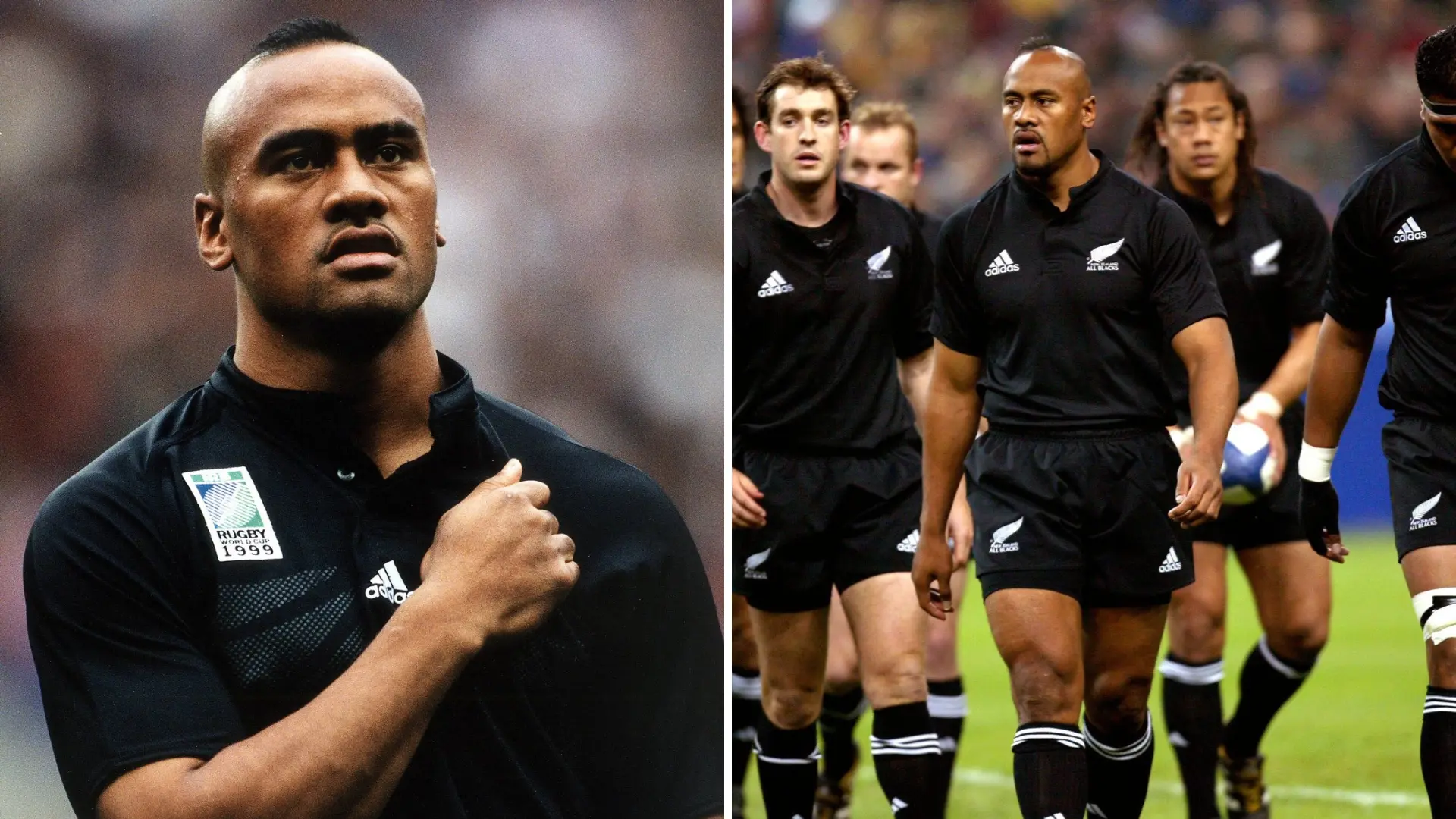
Winger: Jonah Lomu (New Zealand)
The New Zealander remains the joint all-time top try scorer at the Rugby World Cup along with Bryan Habana, crossing the whitewash on 15 different occasions across the 1995 and 1999 tournaments.
Originally of Tongan descent, it was Lomu who made it glamorous to be a big, bruising winger, even though his stature could have easily seen him fill in at centre or somewhere in the pack.
Much like the Juggernaut of the Marvel Universe, there wasn’t much that could stop Lomu once he’d gotten into a stride.
DID YOU KNOW? In September 2009, Lomu took part in an amateur bodybuilding contest, finishing second in two categories
Centre: Tim Horan (Australia)
Only a handful of players has won the Rugby World Cup Twice and power-packed runner Horan is one of them, triumphing in 1991 and 1999 with the Wallabies
He made his international debut in 1989 against the All Blacks and would go on to make 80 caps, scoring 30 tries, in an impressive 11-year career.
DID YOU KNOW? Horan’s father is Mike Horan, the former National Party and Liberal National Party Member of Parliament for the Queensland electorate of Toowoomba South.
Centre: Brian O'Driscoll (Ireland)
The former Ireland and British and Irish Lions Skipper Brian O’Driscoll was one of the most consistent performers in the world for over a decade for club and country.
He hung up his boots in 2014 after accumulating 133 caps for Ireland with a fantastic return of 245 points. In the emerald green, he triumphed in the Six Nations in 2009 (Grand Slam) and 2014 as well as being chosen as Player of the Tournament in 2006, 2007 and 2009.
The Dublin-born is also the highest all-time Irish record try scorer with an incredible 46 scores, and also led his country more times than any other player.
DID YOU KNOW? O’Driscoll was chosen as Player of the Tournament in the 2006, 2007 and 2009 RBS Six Nations Championships.
Winger: David Campese (Australia)
Capped by Australia on more than 100 occasions and scorer of 64 international tries, David Campese was once the world’s top scorer, but now has to settle for the honour of second place.
To summarise, if there was even the slightest bit of daylight between the try-line and his opposite man, Campese was as good as over.
Whether it was by use of his patented “goose-step” or with use of the more archaic barrelling motion, the Wallabies legend was simply a magnet for scoring.
Beginning his international career at just 19 years of age, it was clear early on that Australia had a special talent on their hands, and the early start allowed Campese to repay his selectors massively down the years.
DID YOU KNOW? Campese was also a renowned rugby sevens player. He made 12 appearances at the Hong Kong Sevens (1983-1990, 1993–94, 97-98), during which he played in three victorious Australian campaigns (’83, ’85 & ’88)
Fullback: Serge Blanco (France)
The French icon’s international career with France saw the flamboyant fullback perform various outlandish levels of skill while winning Five Nation Grand Slams in 1981 and 1987 as well as four further titles.
Blanco was a threat from everywhere on the field and often took risks that we very rarely see nowadays. In total, he won 93 caps for France during his 11-year international career between 1980 and 1991, which was a record when he retired.
He also scored an imposing 233 points and is a true legend of the sport.
DID YOU KNOW? Images of Blanco’s on-field heroics can always be viewed ironically alongside images of him strutting along the touchline nursing a cigarette.
TRENDING


LATEST NEWS
LATEST COMMENTS
- Jordie Barrett over Damian de Allende is far from being correct. The hype around Dupont is also overreaching, he's probably 4th in the world and has been since the 2023 WC. He also avoids certain matchups which is strange. The rest of the list is pretty good apart from minor subjective biases.JasonMarlow16-09-2026
Loading