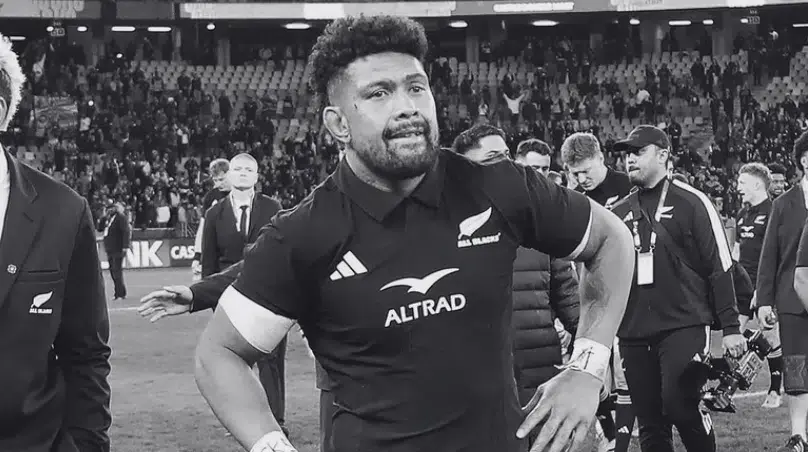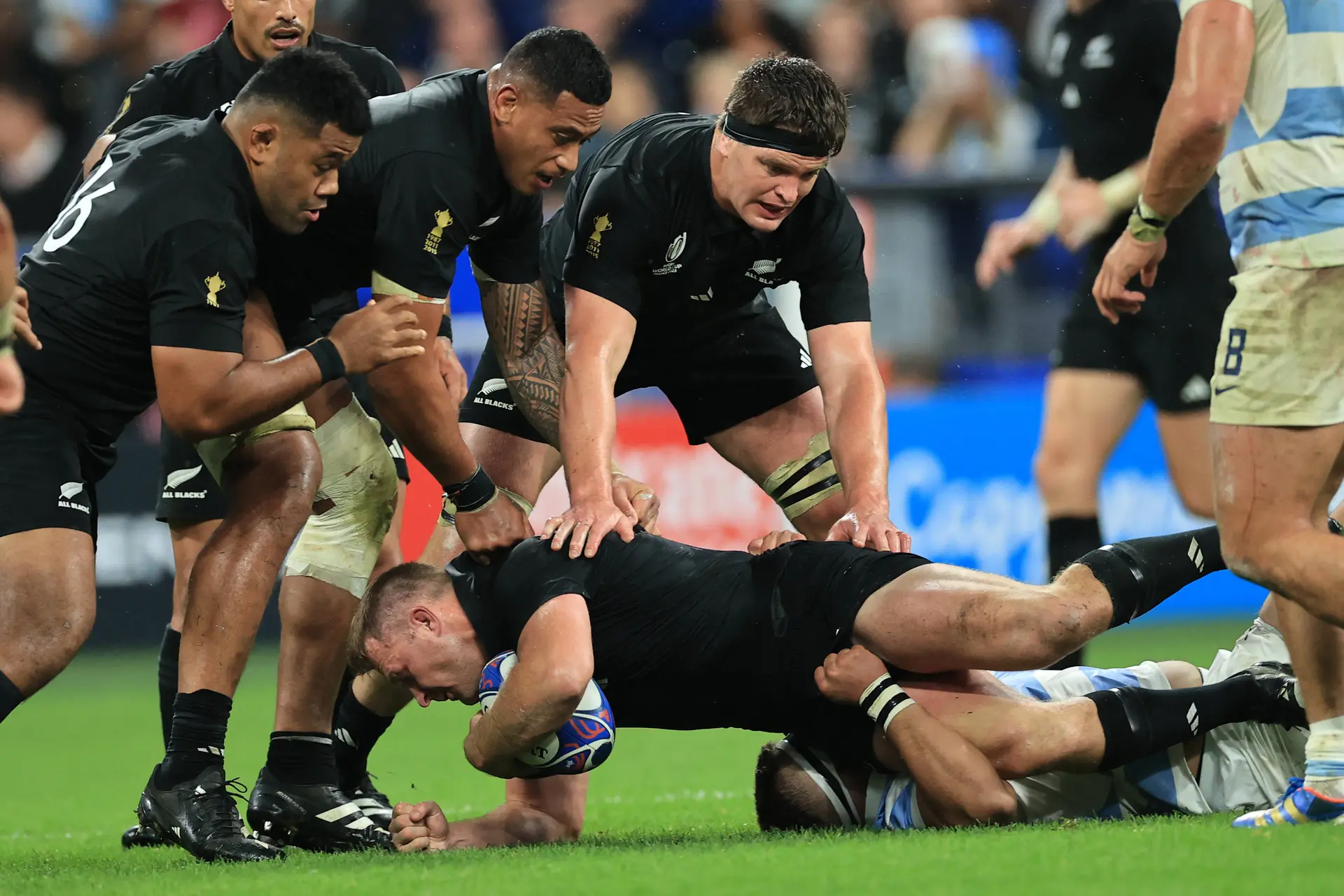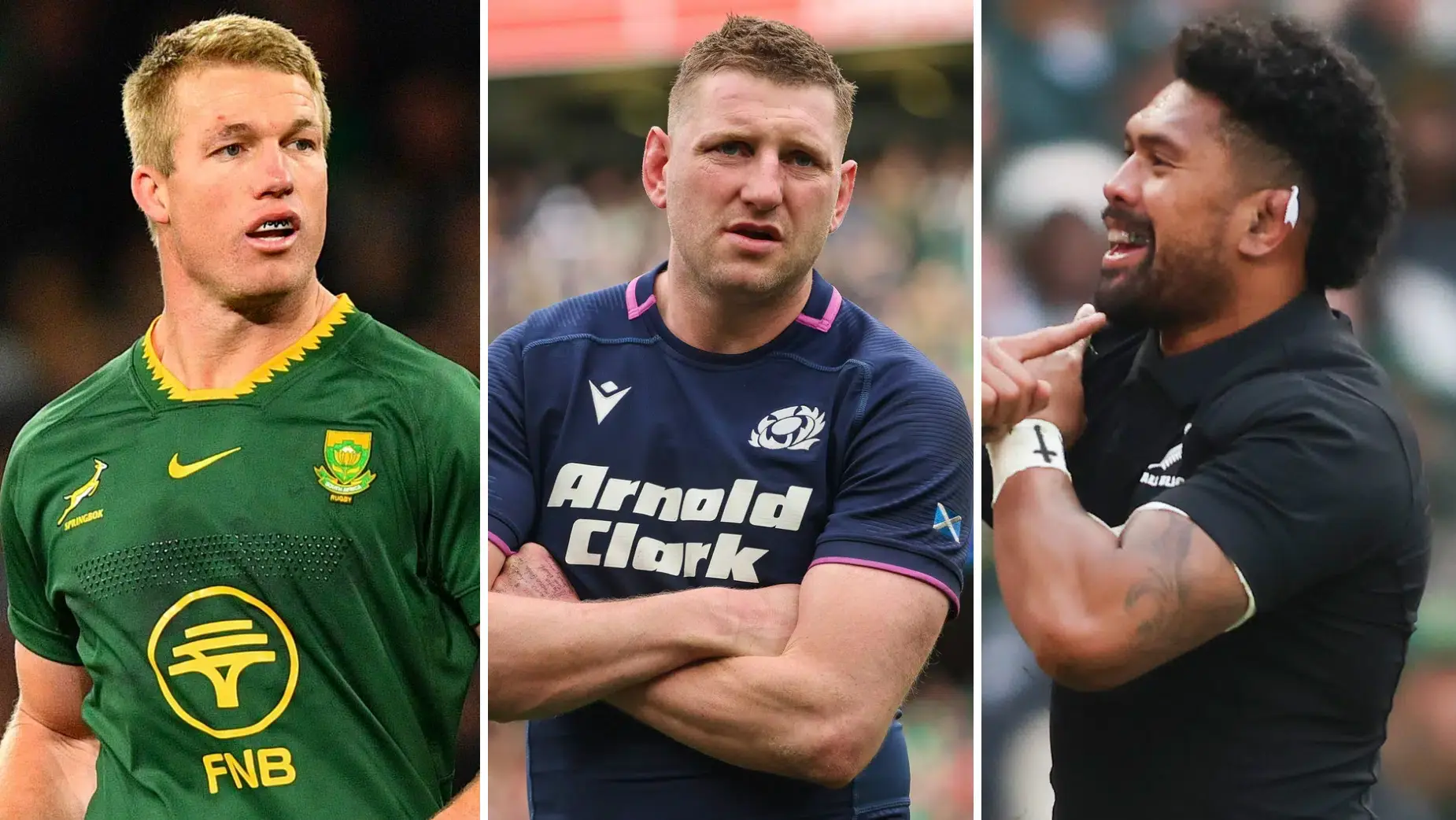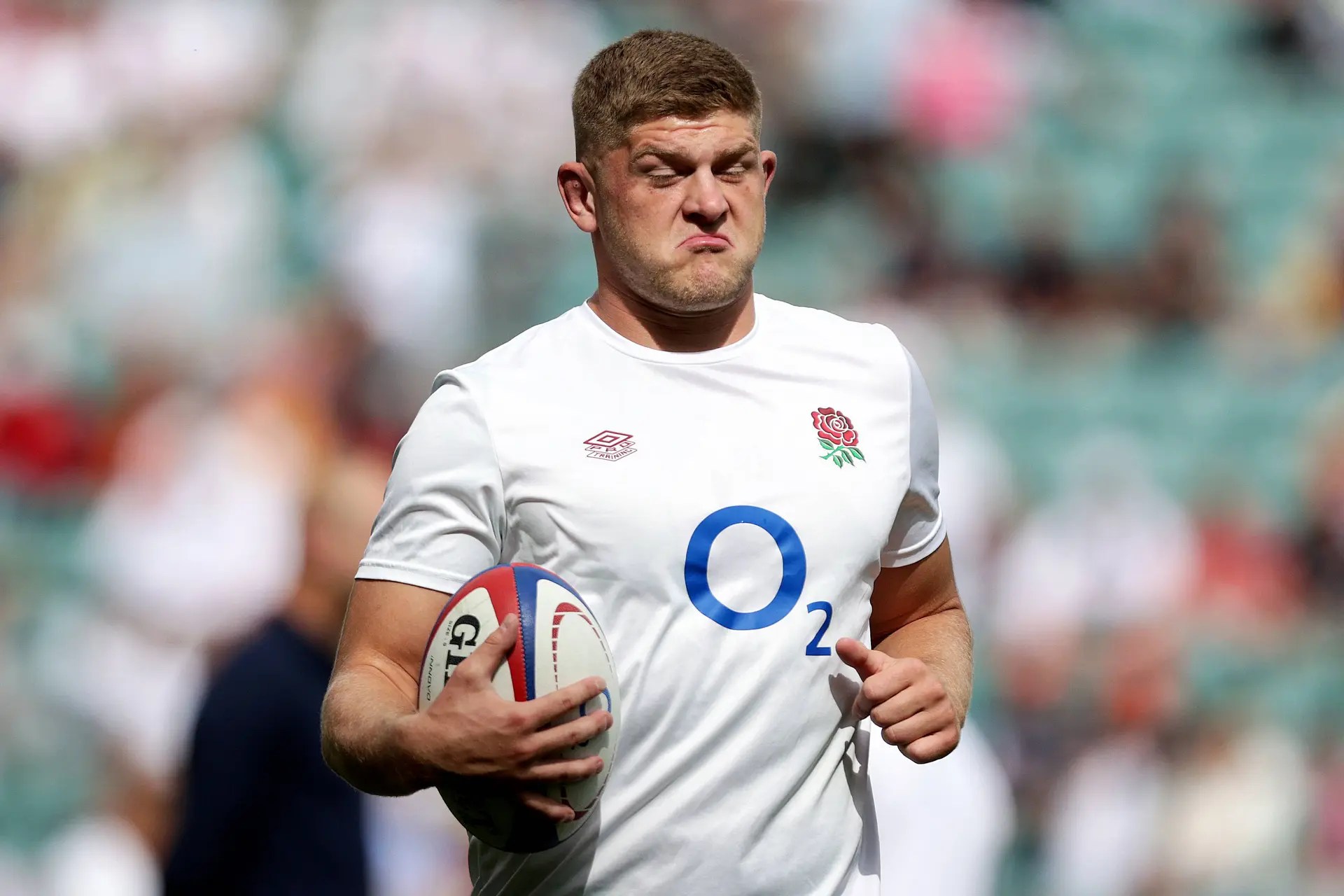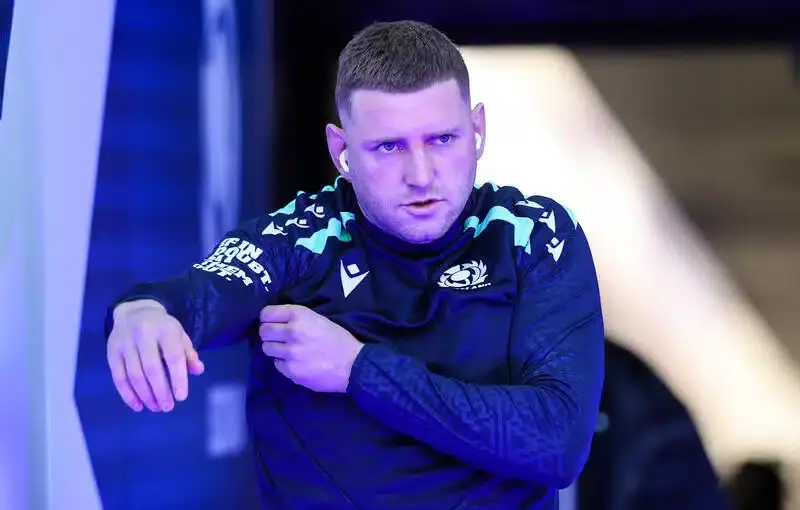
Bath fly-half Finn Russell is set to be one of the most sought-after names in world rugby next summer, with clubs from England, France, and Japan already jostling for position to secure his services.
The Scotland and Lions superstar will enter the final year of his £1.2m contract with Bath in July, and according to RugbyPass, at least five major clubs are gearing up to open talks.
Join the RUCK’s WhatsApp community here and get the latest news sent straight to your messages.
Russell’s incredible CV
The 32-year-old is one of the most gifted playmakers in the game, having racked up 397 points in 81 appearances for Scotland. Only Chris Paterson, Greig Laidlaw, and Gavin Hastings have scored more for their country.
A key figure in Glasgow Warriors' PRO12-winning squad in 2015, Russell later became a star at Racing 92, making 107 appearances in five seasons before joining Bath following Scotland’s early exit from the 2023 Rugby World Cup.
Racing reunion on the cards?
One of Russell’s potential destinations is a return to Racing 92, but his move could hinge on the future of another big-name fly-half—Owen Farrell. The former England captain’s contract expires at the same time, and Racing’s decision may depend on his next move.
Russell remains highly regarded at La Défense Arena, and was even seen deep in conversation with Racing president Laurent Travers after watching Scotland’s 32-15 defeat to South Africa at Murrayfield last weekend.
Who else is in the race?
Stade Français have also thrown their hat in the ring, while over in Japan, Urayasu D-Rocks—coached by Greig Laidlaw—are keen to reunite the Scottish duo in Japan Rugby League One.
Closer to home, former Premiership and Champions Cup winners Saracens are said to be monitoring the situation, while Bristol Bears owner Steve Lansdown has made Russell his top target.
With his dazzling attacking style and big-game experience, Russell’s next move could shake up the rugby landscape—watch this space.
EDITORS PICKS:
- Three ex-Lions were not impressed with Warren Gatland as head coach, including Finn Russell
- RFU confirms player has been banned for ‘racially abusing’ opponent
- Nigel Owens settles the debate on rugby’s best stadium for atmosphere
- Alun Wyn Jones didn’t even blink when asked who his toughest opponent was
- Arnold Schwarzenegger’s rugby-playing son is the spitting image of his legendary father
Jonathan ‘Jiffy’ Davies picks his greatest all-time British & Irish Lions XV
Dual-code rugby legend Jonathan Davies has undertaken the formidable task of selecting his ultimate British & Irish Lions XV for his new book, The Greatest Lions XV Ever, co-authored with Alun Wyn Bevan and published by Gomer Press.
All-Time Lions Dream Team
Fullback: JPR Williams (Wales)
John Peter Rhys "JPR" Williams was a cornerstone of Welsh rugby during the 1970s. Known for his fearless defense and counter-attacking prowess, he earned 55 caps for Wales and participated in eight Tests for the Lions. His iconic playing style, characterized by low socks and distinctive sideburns, left an indelible mark on the sport.
Jiffy said: "In attack, JPR was to be seen either working in tandem with his wing three-quarters or terrifying defensive lines. He was also a towering figure in defence, safe as houses under a high ball and with a penchant for demolishing attackers."
Wing: Gerald Davies (Wales)
Thomas Gerald Reames Davies, celebrated for his electrifying speed and sidestep, was instrumental in Wales' dominance during the 1970s. Earning 46 caps for Wales and five for the Lions, his agility and tactical acumen made him a formidable opponent.
Jiffy said: "I have so many fond memories of seeing him taking on opponents—often with a swagger which very few have the right to exhibit. He wove, he probed, he varied his angles of running and was always in position to counter-attack from deep in tandem with his full-back."
Centre: Jeremy Guscott (England)
Jeremy Guscott was renowned for his elegance and composure on the field. With 65 caps for England and eight for the Lions, his intuitive play and versatility made him a central figure in the backline.
Jiffy said: "Jerry restored fans’ faith in the aesthetic and artistic qualities of the game. I always appreciated his effortless style. Opponents were unable to predict whether he was going to run, pass or kick. Everything he did was instinctive, and this made him a very difficult player to read."
Centre: Mike Gibson (Ireland)
Michael Gibson, a stalwart of Irish rugby, was celebrated for his versatility and footballing intelligence. Accumulating 69 caps for Ireland and 12 for the Lions, his adaptability allowed him to excel in multiple backline positions.
Jiffy said: "Mike Gibson was the complete footballer, ‘phenomenal’ according to The New Zealand Rugby Annual. In an interview, Brian O’Driscoll paid a sincere tribute to one of Irish rugby’s greatest ever players: ‘At times when Irish rugby wasn’t successful, he was always the shining light.'"
Wing: JJ Williams (Wales)
John James "JJ" Williams, with his background as a sprinter, brought exceptional pace to the rugby field. Earning 30 caps for Wales and seven for the Lions, his try-scoring ability was pivotal in many crucial matches.
Jiffy said: "His combination of electrifying speed and breathtaking audacity disarmed organised defences on the Lions tour of South Africa in 1974."
Fly-half: Barry John (Wales)
Barry John, dubbed "The King," was celebrated for his tactical brilliance and composure under pressure. With 25 caps for Wales and five for the Lions, his performance on the 1971 New Zealand tour solidified his legendary status.
Jiffy said: "Who is it to be, Phil or Barry? Roy of the Rovers or The King? My heart says Phil. My head says Barry. And, ultimately, it is with my head that I have to pick this team. For what he achieved in New Zealand in 1971, Barry John will wear the No 10 shirt."
Scrum-half: Gareth Edwards (Wales)
Gareth Edwards is widely regarded as one of the greatest rugby players of all time. With 53 caps for Wales and 10 for the Lions, his dynamic play and leadership were instrumental in his teams' successes.
Jiffy said: "If you put on the field the 15 best players to have played in the distinctive Lions red, the No 9 shirt would automatically be handed to Gareth Owen Edwards."
Prop: Ian McLauchlan (Scotland)
Ian "Mighty Mouse" McLauchlan was known for his strength and tenacity in the scrum. Earning 43 caps for Scotland and playing in eight Tests for the Lions, his performance on the 1971 tour to New Zealand was particularly noteworthy.
Jiffy said: "In the first Test against New Zealand at Dunedin in 1971, McLauchlan charged down a clearance kick by Alan Sutherland in his own 22 and scored a crucial try in a 9-3 win. It set the tone for the whole series."
Hooker: Keith Wood (Ireland)
Keith Wood, nicknamed "The Raging Potato," was celebrated for his dynamic play and leadership. With 58 caps for Ireland and five for the Lions, his athleticism and skill set new standards for the hooker position.
Jiffy said: "One of the finest hookers of his generation. He had pace, athleticism, strength in tight situations, coolness under pressure, explosive running, superb kicking and handling skills, leadership along with scrummaging expertise."
Prop: Fran Cotton (England)
Francis "Fran" Cotton was a formidable presence in the front row. Earning 31 caps for England and participating in seven Tests for the Lions, his strength and technique were highly regarded.
Jiffy said: "Cotton was a man-mountain; physical, solid with a powerful upper body, a player of immense strength."
Lock: Willie John McBride (Ireland)
William "Willie John" McBride holds the record for the most Lions caps, with 17 appearances. His leadership on the 1974 South Africa tour is legendary, and he earned 63 caps for Ireland.
Jiffy said: "His performances, on and off the pitch, as captain in South Africa in 1974 remain the stuff of legends, a staple of after dinner speeches in rugby clubs the world over. Abrasive and uncompromising, he was also cool-headed even in the often violent heat of Test match battle.”
Lock: Gordon Brown (Scotland)
Gordon Brown, affectionately known as "Broon frae Troon," was one of Scotland’s finest second-row forwards. With 30 caps for Scotland and eight for the Lions, his toughness and work ethic made him a key figure in the legendary 1974 tour of South Africa.
Jiffy said: "When the going got tough, Brown always got going and he was not scared to mix it with some of the more unsavoury elements in the All Blacks and Springbok sides. He may well have been baby-faced, but he had the heart and the armoury of a warrior."
Flanker: Fergus Slattery (Ireland)
Fergus Slattery, a dynamic and aggressive flanker, was a crucial part of Ireland’s success in the 1970s. Earning 61 caps for Ireland and playing in eight Lions Tests, he was a tireless worker with exceptional leadership skills.
Jiffy said: "One of those old-fashioned flankers who put the complete and utter fear of God in midfield backs generally—and mere fly-halves especially."
Number 8: Mervyn Davies (Wales)
Mervyn "Merv the Swerve" Davies was a towering presence at No. 8, known for his intelligence, leadership, and dominance in the lineout. He won 38 caps for Wales and played in eight Tests for the Lions, captaining the team in 1976 before his career was tragically cut short due to illness.
Jiffy said: "Tall and gangly with his trademark moustache, he appeared awkward and cumbersome off the field, but once he stepped onto the pitch, he was transformed into an all-action hero, a natural leader who added gravitas to any team with which he was involved."
Richard Hill was the ultimate team player—an unselfish, intelligent, and relentless competitor. With 71 caps for England and five for the Lions, he played a key role in England’s 2003 Rugby World Cup triumph and was a crucial part of the Lions' 1997 series win in South Africa.
Flanker: Richard Hill (England)
Richard Hill was the ultimate team player—an unselfish, intelligent, and relentless competitor. With 71 caps for England and five for the Lions, he played a key role in England’s 2003 Rugby World Cup triumph and was a crucial part of the Lions' 1997 series win in South Africa.
Jiffy said: "A thoroughly decent human being, loyal and hardworking, he devoted himself to the team at all times, to the point of self-sacrifice. While some flankers are self-proclaimed all-action heroes, making big and very visible hits in the open field, or in search of the eye-catching run and the try-scoring opportunity, Hill used his considerable brain, brawn, and bravery in the trenches, in the sapping close-quarters confrontations, forever scrapping and wrestling, grappling and grunting."
QUIZ: Can You Name the England XV that Won the 2020 Six Nations?
England last won the Six Nations in 2020, in what was a crowning achievement during the Eddie Jones era. Coming off the back of the 2019 Rugby World Cup Final heartbreak, England bounced back to win their seventh Six Nations title since the competition's Italian expansion in 2000.
England secured the trophy with a win in Rome, as they handed Italy a one-sided 34-5 bonus point defeat. We are challenging you to remember who started for England that day, as the match was played in front of an empty stadium during the Covid-19 Pandemic.
You have five minutes to provide your answers, good luck!