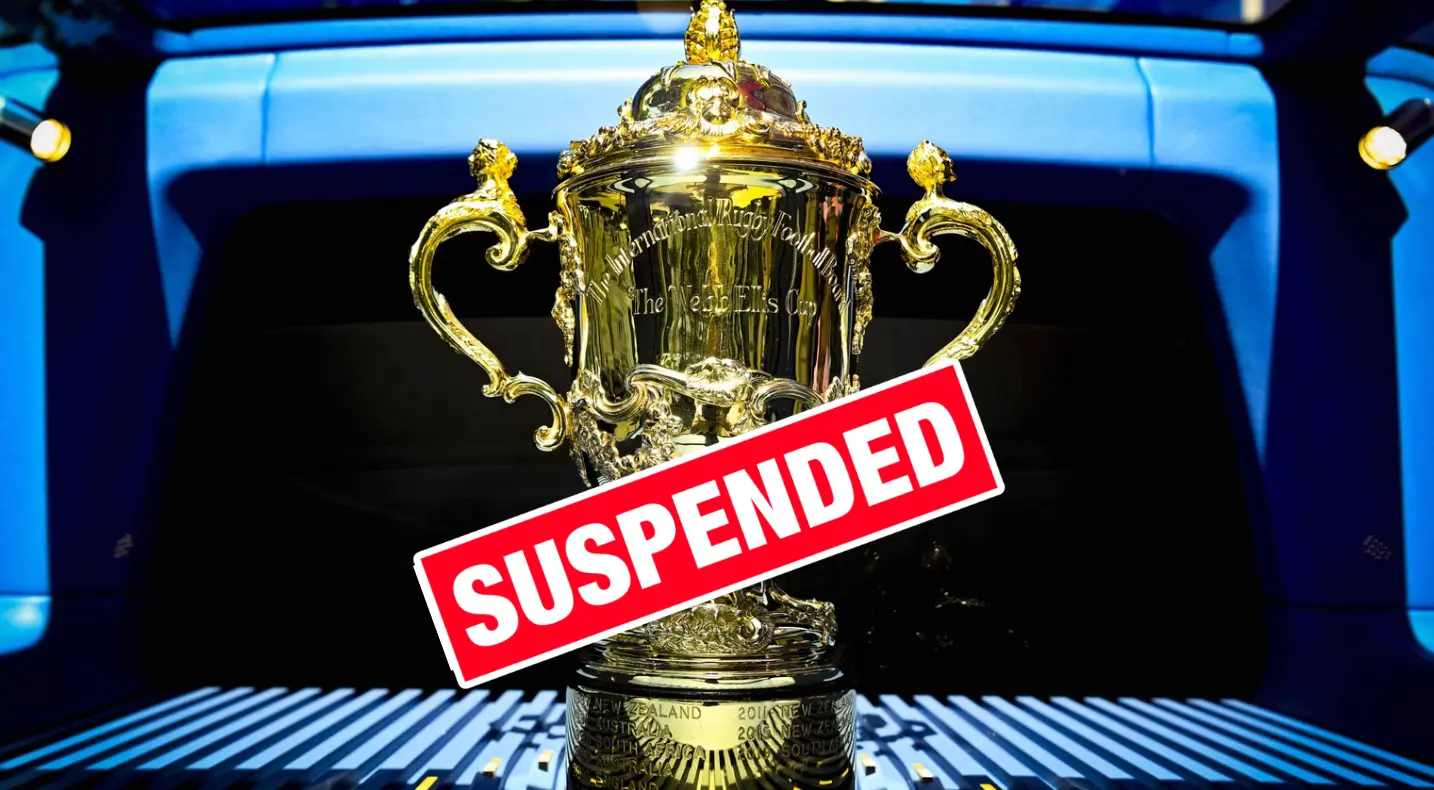

Former South Africa winger Sbu Nkosi has been handed a three-year suspension by World Rugby after testing positive for a banned substance earlier this year.
reports that the 28-year-old tested positive for traces of an anabolic steroid commonly used by bodybuilders.
Join the RUCK’s WhatsApp community here and get the latest news sent straight to your messages.
South African newspaper Rapport
His suspension will reportedly be served retroactively, starting from 16 July this year.
The 2019 Rugby World Cup winner, who made 16 Test appearances and scored nine tries for the Springboks between 2018 and 2021, will be ineligible to play until he is 31, severely limiting his chances of a return to the international stage.
Nkosi, 28, had recently joined the Cheetahs on a one-year deal, following spells with the Bulls and Sharks.
He was a key member of South Africa's 2019 World Cup-winning squad in Japan.
McGeechan didn’t hesitate when naming the best three rugby players in history
A legendary player and coach, McGeechan has spent decades at the heart of the sport, guiding teams and observing the finest talents rugby has to offer.
Without hesitation, McGeechan named his top three rugby players of all time, each of whom left an indelible mark on the game with their extraordinary skill, leadership, and impact on the global stage.
#3. Jonah Lomu
Full Name: Jonah Tali Lomu
Date of Birth: May 12, 1975
Died: November 18, 2015
Nationality: New Zealand
Position: Wing
Date of Birth: May 12, 1975
Died: November 18, 2015
Nationality: New Zealand
Position: Wing
Overview:
Jonah Lomu was a rugby union sensation and one of the sport's first global superstars. Standing at 6'5" and weighing over 120 kg (260 lbs), Lomu combined size, speed, and agility in a way that had never been seen before on a rugby field. He revolutionized the role of a winger, using his power and blistering pace to dominate opponents, and became a household name during the 1995 Rugby World Cup.
Jonah Lomu was a rugby union sensation and one of the sport's first global superstars. Standing at 6'5" and weighing over 120 kg (260 lbs), Lomu combined size, speed, and agility in a way that had never been seen before on a rugby field. He revolutionized the role of a winger, using his power and blistering pace to dominate opponents, and became a household name during the 1995 Rugby World Cup.

Career Highlights:
Lomu burst onto the international stage as a 19-year-old during the 1995 Rugby World Cup in South Africa, where his performance made him an overnight sensation. Most notably, he scored four tries in a semi-final against England, including one unforgettable try where he ran through and over England's defenders. Although New Zealand did not win the tournament, Lomu's impact was undeniable.
Lomu burst onto the international stage as a 19-year-old during the 1995 Rugby World Cup in South Africa, where his performance made him an overnight sensation. Most notably, he scored four tries in a semi-final against England, including one unforgettable try where he ran through and over England's defenders. Although New Zealand did not win the tournament, Lomu's impact was undeniable.
He continued to be a key figure for the All Blacks until 2002, earning 63 caps and scoring 37 tries. Lomu's career was cut short due to a rare kidney condition, nephrotic syndrome, which eventually forced his retirement and led to a kidney transplant in 2004.
Legacy:
Despite his illness limiting his playing career, Lomu’s influence on rugby was immense. He brought the sport to a global audience and remains one of rugby’s most iconic figures. His untimely death in 2015 at age 40 was met with widespread mourning, highlighting the lasting impression he made on the sport and its fans.
Despite his illness limiting his playing career, Lomu’s influence on rugby was immense. He brought the sport to a global audience and remains one of rugby’s most iconic figures. His untimely death in 2015 at age 40 was met with widespread mourning, highlighting the lasting impression he made on the sport and its fans.
McGeechan wrote: "Illness and injury ultimately slowed him down. But his performances at the 1995 World Cup, just as the game was turning professional, will never be forgotten. The game needed a superstar, and it got one in Lomu. He was brilliant for rugby."
#2. Dan Carter
Full Name: Daniel William Carter
Date of Birth: March 5, 1982
Nationality: New Zealand
Position: Fly-half
Date of Birth: March 5, 1982
Nationality: New Zealand
Position: Fly-half
Overview:
Dan Carter is widely regarded as one of the greatest rugby union players in history. Known for his precision, consistency, and tactical brilliance, Carter played a pivotal role for the New Zealand All Blacks, becoming one of the team's most iconic players. His skillset as a fly-half included exceptional kicking, sharp decision-making, and a calm demeanor under pressure.
Dan Carter is widely regarded as one of the greatest rugby union players in history. Known for his precision, consistency, and tactical brilliance, Carter played a pivotal role for the New Zealand All Blacks, becoming one of the team's most iconic players. His skillset as a fly-half included exceptional kicking, sharp decision-making, and a calm demeanor under pressure.
Career Highlights:
Carter made his international debut for the All Blacks in 2003 and enjoyed a stellar career that spanned over a decade. He amassed 1,598 points in 112 international matches, making him the highest point scorer in rugby history. Carter was a crucial part of New Zealand’s 2011 and 2015 Rugby World Cup-winning teams. Despite missing the 2011 final due to injury, he returned to lead his side in 2015, being named the Player of the Match in the final against Australia.
Carter made his international debut for the All Blacks in 2003 and enjoyed a stellar career that spanned over a decade. He amassed 1,598 points in 112 international matches, making him the highest point scorer in rugby history. Carter was a crucial part of New Zealand’s 2011 and 2015 Rugby World Cup-winning teams. Despite missing the 2011 final due to injury, he returned to lead his side in 2015, being named the Player of the Match in the final against Australia.

Post-Rugby:
After retiring from international rugby in 2015, Carter continued to play at club level in France and Japan before retiring from all forms of rugby in 2021. Off the field, he has been involved in numerous charitable and business ventures, further cementing his legacy as a respected figure in world sport.
After retiring from international rugby in 2015, Carter continued to play at club level in France and Japan before retiring from all forms of rugby in 2021. Off the field, he has been involved in numerous charitable and business ventures, further cementing his legacy as a respected figure in world sport.
McGeechan wrote that Carter “really was the complete 10. His defence was immaculate, he could break himself, he could bring others in to play, his kicking from hand and from tee was incredibly accurate. He also changed the way the game was played with his kicking from his own 22m and his kicking to compete. The greatest of the modern era in my opinion.’’
#1. Gareth Edwards
Full Name: Gareth Owen Edwards
Date of Birth: July 12, 1947
Nationality: Welsh
Position: Scrum-half
Date of Birth: July 12, 1947
Nationality: Welsh
Position: Scrum-half
Overview:
Gareth Edwards is often hailed as one of the greatest rugby players of all time and a Welsh national hero. His remarkable career as a scrum-half for both Wales and the British & Irish Lions is remembered for his athleticism, leadership, and instinctive rugby intelligence. His vision and game management skills were second to none, and he played a key role in the golden era of Welsh rugby during the 1970s.
Gareth Edwards is often hailed as one of the greatest rugby players of all time and a Welsh national hero. His remarkable career as a scrum-half for both Wales and the British & Irish Lions is remembered for his athleticism, leadership, and instinctive rugby intelligence. His vision and game management skills were second to none, and he played a key role in the golden era of Welsh rugby during the 1970s.
Career Highlights:
Edwards earned 53 caps for Wales between 1967 and 1978, helping the team to multiple Five Nations (now Six Nations) Championship titles, including several Grand Slams. His combination with fly-half Barry John created one of the most formidable half-back pairings in rugby history. Edwards was also part of the British & Irish Lions' successful 1971 tour of New Zealand and the 1974 tour of South Africa, both of which are considered among the greatest achievements in rugby history.
Edwards earned 53 caps for Wales between 1967 and 1978, helping the team to multiple Five Nations (now Six Nations) Championship titles, including several Grand Slams. His combination with fly-half Barry John created one of the most formidable half-back pairings in rugby history. Edwards was also part of the British & Irish Lions' successful 1971 tour of New Zealand and the 1974 tour of South Africa, both of which are considered among the greatest achievements in rugby history.
One of his most famous moments came in 1973, when he scored what is widely considered the greatest try of all time for the Barbarians against New Zealand.

Post-Rugby:
Since retiring, Edwards has remained involved in rugby as a commentator and ambassador for the sport. He has been honored with numerous accolades, including a CBE (Commander of the Order of the British Empire), and his legacy as a rugby icon endures to this day.
Since retiring, Edwards has remained involved in rugby as a commentator and ambassador for the sport. He has been honored with numerous accolades, including a CBE (Commander of the Order of the British Empire), and his legacy as a rugby icon endures to this day.
He wrote: "My favourite scrum-half of all time happens to be my favourite player of all time. Gareth Edwards was and always will be the master. The Greatest.’’