The lock is rugby’s great paradox: towering enforcers who do the game’s hardest work, yet often remain under-celebrated. They call the lineouts, clear the rucks, set the tone and hold the whole pack together.
and get the latest rugby news straight to your phone.
We look at the 10 men who’ve defined that role in the 21st century—leaders, warriors and quiet giants whose influence shaped championships, rivalries and eras from deep within the engine room.
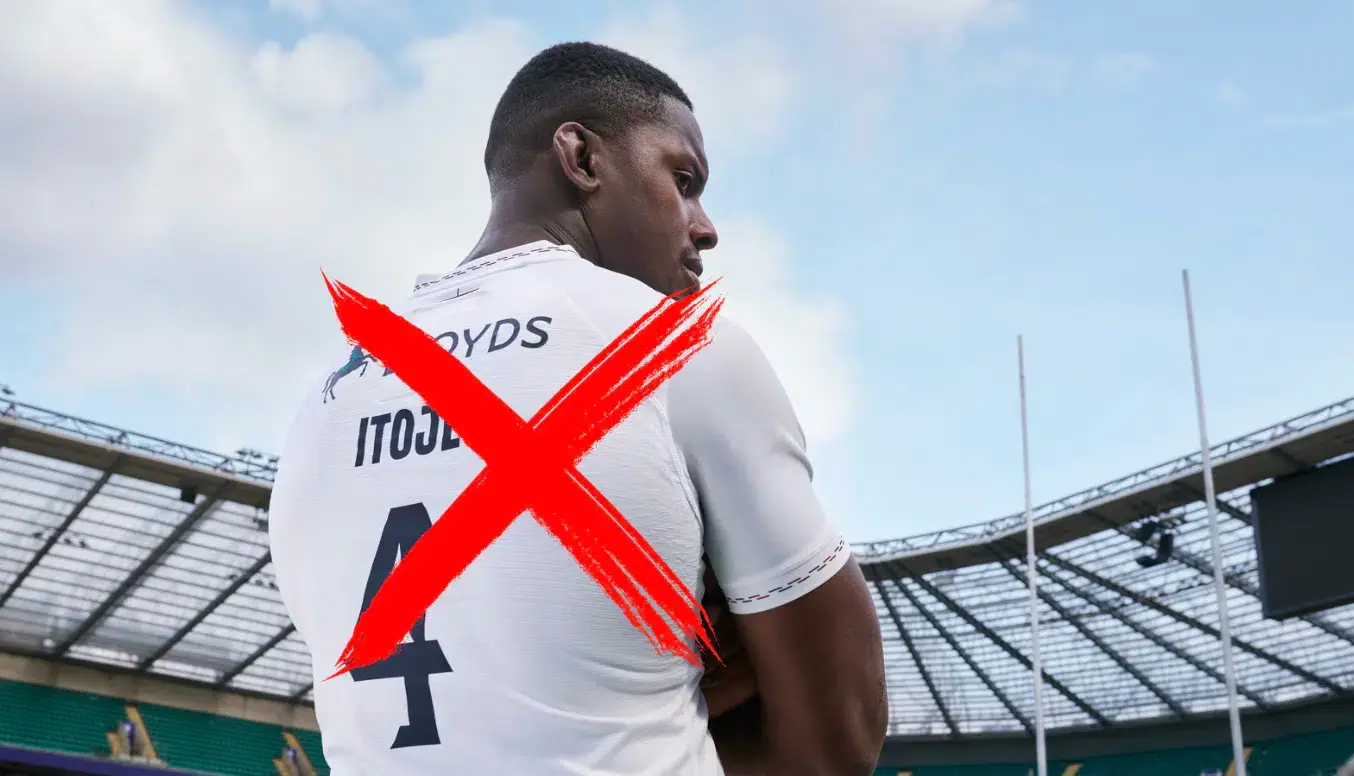
10 Maro Itoje
Relentless energy and competitive fire have made Maro Itoje the heartbeat of English rugby. Rising quickly after signing with Saracens in 2012, he became central to their Premiership and European successes before stepping seamlessly into international rugby. England’s 2016 Grand Slam announced him to the world, and he soon became indispensable across three Lions tours, even captaining the side.
His blend of intelligence, athleticism and leadership has earned multiple World Player of the Year nominations. In 2025 he joined the 100-cap club, split between England and the Lions, cementing his status as a defining modern forward. Still in his prime, he continues to set standards for England on and off the field.
9 Fabien Pelous
Unshakeable authority defined Fabien Pelous throughout his long career with France and Toulouse. His durability made him the nation’s all-time appearance leader and, for a period, the most-capped lock in world rugby. Known for a calm but uncompromising presence, he guided France through an intensely competitive era and became the first French captain to beat all three southern giants—Australia, New Zealand and South Africa.
His 118-cap career, with 100 appearances at lock, showcased remarkable consistency and longevity. A 2017 Hall of Fame induction recognised not just his achievements but his influence on French forward play. Pelous remains a symbol of the grit and steel that defined France’s pack in the early 21st century.
8 Alun Wyn Jones
Relentless competitiveness and extraordinary longevity turned Alun Wyn Jones into rugby’s most-capped player. Emerging as Wales’ emotional core, he delivered decade-long consistency while helping the side to three Grand Slam triumphs. His influence stretched far beyond his 158 Welsh caps; he also became a Lions institution, touring four times and captaining the 2021 squad after an astonishing injury comeback.
Award-winning performances, including being named best player of the 2019 Six Nations, defined his peak years. By the time he retired in 2023, Jones had become rugby’s ultimate warrior—tough, humble and endlessly reliable. His legacy lies not only in records but in the standards he set for leadership and resilience.
7 Eben Etzebeth
Few players command the same aura as Eben Etzebeth, whose physical presence has shaped Springbok rugby for more than a decade. Since debuting in 2012, he has become South Africa’s most-capped player and one of the sport’s most intimidating enforcers. His role in the 2019 and 2023 World Cup triumphs showcased a fearsome blend of power, aggression and surprising athleticism.
Teammates trust him implicitly; opponents brace for impact. Though his career has carried controversy—including a recent 12-week suspension—his influence on South Africa’s pack is undeniable. With over 140 caps, two world titles and a reputation carved from countless collisions, Etzebeth stands as one of the modern era’s most formidable locks.
6 Brad Thorn
An unparalleled cross-code journey turned Brad Thorn into one of rugby’s most unique champions. Beginning as a league star with the Brisbane Broncos, he later shifted to union, bringing unmatched physicality and professionalism. In the second row he flourished, collecting honours across hemispheres: a Rugby World Cup with New Zealand, Super Rugby titles and even a Heineken Cup—becoming the first player to win all three.
His 59 All Black caps included lifting the 2011 World Cup at age 36, making him the oldest player to feature in and win a final. Thorn’s 22-year career showcased resilience, adaptability and ferocious work ethic, leaving a legacy few dual-code athletes can match.
5 Brodie Retallick
A rare blend of size, skill and intelligence propelled Brodie Retallick into the All Blacks’ engine room almost instantly after his 2012 debut. His early success with the Chiefs, including back-to-back Super Rugby titles, set the tone for a career defined by excellence. Retallick passed 100 caps for New Zealand, anchoring their 2015 World Cup victory and consistently delivering world-class performances.
A 2014 World Player of the Year award—earned as the youngest ever—validated his global impact. Comparisons to the legendary Colin Meads became common as he redefined expectations of a modern lock: mobile, skilful and relentless. Even while playing in Japan later in his career, his place among the greats was already secure.
4 Nathan Sharpe
Steady leadership and relentless consistency made Nathan Sharpe the Wallabies’ cornerstone for more than a decade. Starting at the Reds before becoming the inaugural captain of the Western Force, he helped shape rugby’s expansion in Australia. Sharpe’s 116 Tests included 20 as captain, and he was twice awarded the John Eales Medal for his impact and reliability.
Known particularly for his line-out mastery, he remained central to Australia’s plans even when injury crises forced him to postpone retirement and lead the side through 2012. His final year was arguably his finest, ending with national player-of-the-year honours. Sharpe’s career stands as a testament to loyalty, durability and understated excellence.
3 Paul O’Connell
Towering standards and uncompromising commitment turned Paul O’Connell into Ireland’s spiritual leader for over a decade. With Munster he became the heartbeat of their European success, while for Ireland he steered the team to three Six Nations titles, including the famous 2009 Grand Slam.
As captain of Munster, Ireland and the Lions, he inspired through clarity, intensity and presence rather than theatrics. His 108 caps placed him among Ireland’s most-capped players, but it was the intangibles—work ethic, honesty, relentlessness—that cemented his legend. Forced into retirement by injury after the 2015 World Cup, he transitioned into coaching, continuing to shape Ireland’s forward play. O’Connell remains a symbol of Irish pride, resilience and leadership.
2 Victor Matfield
Masterful line-out control and brilliant rugby intelligence made Victor Matfield the architect of South Africa’s forward success. With the Bulls he formed a devastating partnership with Bakkies Botha, translating that dominance onto the international stage. His ability to dismantle opposition set pieces became central to the Springboks’ 2007 World Cup triumph, where he was named Player of the Tournament.
Matfield captained sides that broke significant records, including a historic win over the All Blacks in New Zealand in 2008. Though he initially retired after the 2011 World Cup, he returned to add even more caps to an already remarkable career. Calm, athletic and endlessly influential, Matfield stands among the most complete locks ever to play the game.
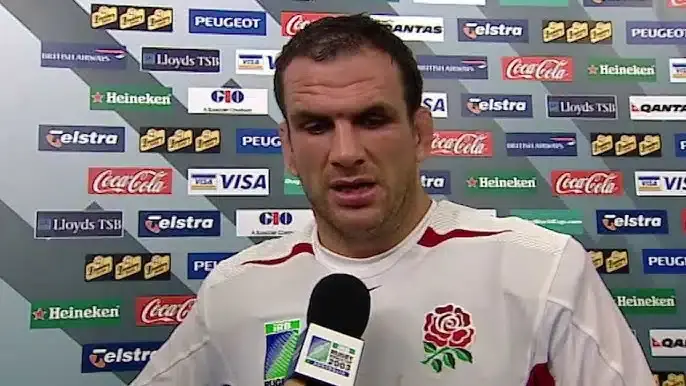
1 Martin Johnson
Commanding presence and unrivalled leadership made Martin Johnson the ultimate English lock. Across 16 seasons with Leicester and England, he became the sport’s gold standard for authority and composure. His captaincy defined an era: Grand Slam success, European titles with Leicester and, most memorably, the 2003 Rugby World Cup triumph. Johnson also became the first player to lead the Lions on two tours, reinforcing his reputation as rugby’s respected general.
His 84 caps were marked by brutal physicality and sharp tactical instincts, while at club level he delivered four straight Premiership titles and consecutive European Cups. More than his achievements, it was the aura of control he carried that set him apart. For many, he remains the greatest lock of all time.
Quiz: Name these 10 retro rugby players
From jaw-dropping tries to unforgettable moments (and yes, some questionable haircuts), these players defined a golden era of the game. If their names don’t instantly come to mind, we suggest a quick trip to YouTube to jog your memory. Trust us, it’s worth it.
Ready to test your knowledge? Let’s see if you’ve still got it. Good luck!
More Quizzes:
TRENDING


LATEST NEWS
LATEST COMMENTS
- Jordie Barrett over Damian de Allende is far from being correct. The hype around Dupont is also overreaching, he's probably 4th in the world and has been since the 2023 WC. He also avoids certain matchups which is strange. The rest of the list is pretty good apart from minor subjective biases.JasonMarlow16-09-2026
Loading