20 Rugby World Cup Facts You Probably Didn’t Know
Rugby World Cup 2019Friday, 12 February 2021 at 15:21


The Rugby World Cup is the most viewed rugby tournament and takes place every four years to determine the world champion.
The World Cup is held by World Rugby, and the 2019 tournament will take place in Japan.
Here is a list of 19 interesting Rugby World Cup facts to get you into the soccer spirit for the 2019 World Cup in Japan:
RUGBY WORLD CUP FACTS:
1. King Jonny
England’s 2003 World Cup hero Jonny Wilkinson remains the top points-scorer in finals history, with 277, from one try, 28 conversions, 58 penalties and 14 drop-goals.
2. Most tries
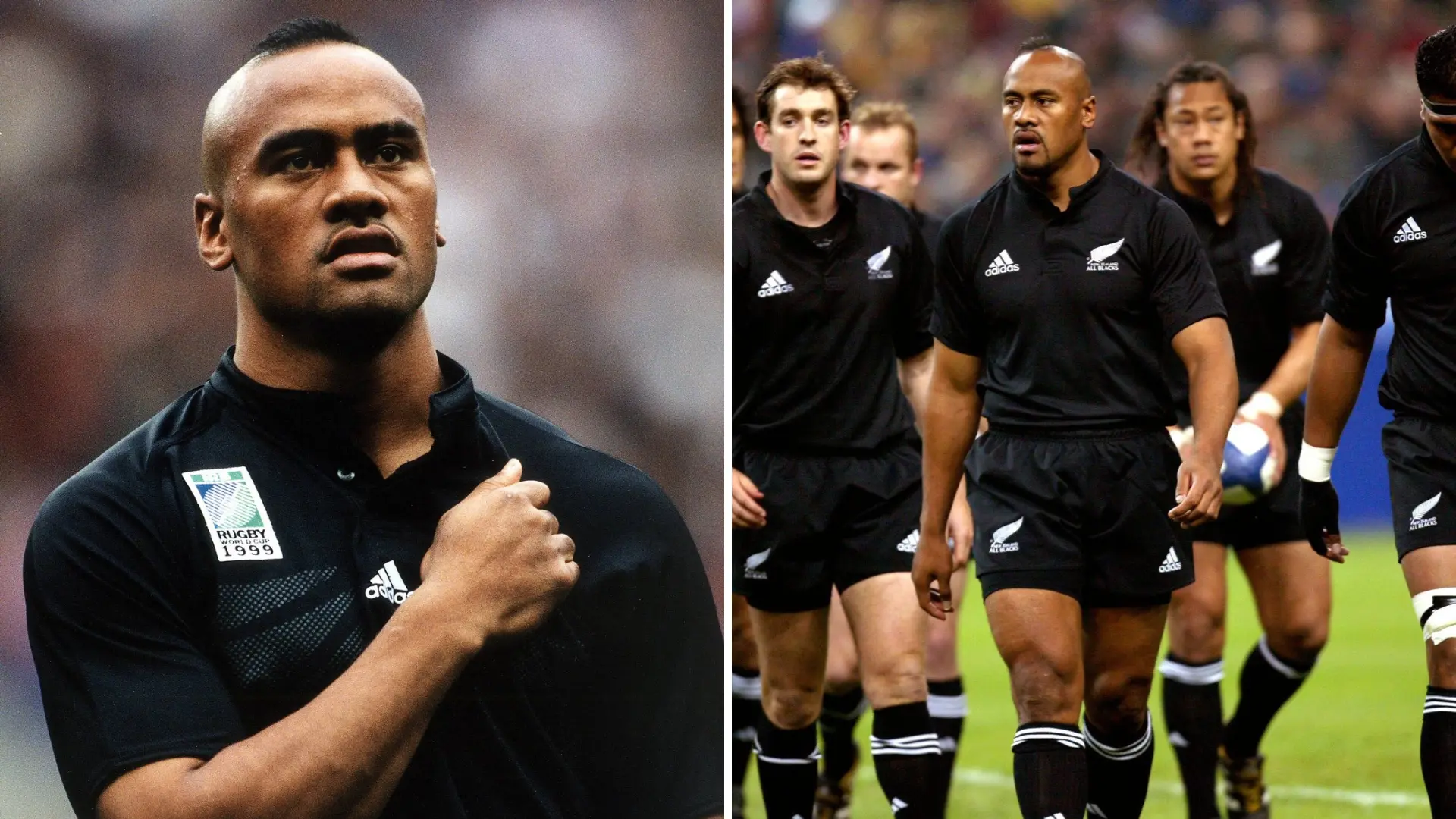
New Zealand’s Jonah Lomu in 1995 and South Africa’s Bryan Habana in 2007 share the record for the most tries in one competition, with eight.

2nd TRY of the match scored by Bryan Habana of South Africa against USA - Photo mandatory by-line: Gareth Davies/Pinnacle - Tel: +44(0)1363 881025 - Mobile:0797 1270 681 - VAT Reg No: 183700120 - 07/10/2015 - SPORT - RUGBY UNION - RUGBY WORLD CUP 2015 - POOL B- South Africa v USA - Olympic Stadium, Queen Elizabeth Olympic Park, London, England.
3. Seeing red
Canada is the only team to have received two red cards in one match, in a 20-0 defeat to South Africa in 1995, Gareth Rees and Rod Snow the culprits.
4. Same whistle...
The same whistle is blown for the opening game of every Rugby World Cup tournament. It was first used in 1905 by a Welsh referee during a game between England and New Zealand.

5. Biggest winning margin – 142 Australia v Namibia 2003
The Wallabies routed Namibia in 2003, on a scoreline of 142-0. New Zealand are the only team to score more points in a match, defeating Japan 145-17 in 1995.null
6. Fun bus
England prop Jason Leonard made a record 22 appearances, and featured in four World Cups from 1991 to 2003.

7. Reigning champions
Before the first Rugby World Cup in 1987, the USA was technically the reigning international champion because they had won the gold medal at the 1924 Summer Olympics rugby tournament.
8. Multi-World Cups
Namibian Rudie van Vuuren appeared in both the cricket and rugby union World Cups in 2003.
9. Australia has won two World Cups in the Northern Hemisphere.
There have been no such discomforts for the Wallabies, as they have captured their two World Cups in 1991 and 1999, both in the Northern Hemisphere.
10. Young gun
Wales wing George North is the youngest World Cup finals try-scorer, at 19 years and 166 days, with two tries in the 81-7 victory over Namibia in 2011.

11. Drop-goal
South Africa’s five drop-goals in the 44-21 quarter-final victory over England in 1999 remains the World Cup record, Jannie de Beer responsible for all five.
12. Double hat-trick
Marc Ellis boasts the most tries in one World Cup match, with six in New Zealand’s 145-17 triumph over Japan in 1995.
13. Shock
2007 is the only World Cup, where All Blacks failed to reach at least into a Semi-Final
14. Is there a Women's Rugby World Cup?
Yes, the Women's Rugby World Cup is held every four years. The next tournament is scheduled for 2021 but the host has yet to be decided.
15. Winners
New Zealand (1987, 2011, 2015) has won the Rugby World Cup three times. Australia (1991, 1999) and South Africa (1995, 2007) and have each won twice.
16. Northern first
The first (and only so far) non-southern hemisphere country to win the world cup was England in 2003.
17. The Trophy
The World Cup winners are awarded the William Webb Ellis Cup - William Webb Ellis was the Rugby School pupil who, according to popular myth, invented the game.

A picture shows the Webb Ellis Cup, the trophy awarded to the winner of the Rugby World Cup, during a photo call at a press conference to launch the venues and schedule for the 2015 Rugby World Cup at Twickenham Stadium in west London, on May 2, 2013. AFP PHOTO / ANDREW COWIE (Photo credit should read ANDREW COWIE/AFP/Getty Images)
18. Captain Fantastic
New Zealand legend Richie McCaw is the only captain to win consecutive Rugby World Cup wins (2011 & 2015).
19. Oh no...
England are the only host nation who failed to get out of their pool during the 2015 Rugby World Cup.
20. How does the Rugby World Cup work?
There are 20 teams at the Cup.
They are: Ireland, Scotland, Russia, Japan, Samoa, New Zealand, South Africa, Namibia, Italy, England, France, USA, Tonga, Argentina, Australia, Wales, Fiji, Uruguay, Georgia and Canada
There are four pools of five countries. Sides play all the others in their pool play. The top two in each pool go into the knock-out stages.
Teams progress through quarter-finals to semi-finals and then to a final, if successful. There is also a third and fourth play-off for the bronze medal for the losing semi-finalist.
TRENDING






LATEST NEWS




LATEST COMMENTS
- Jordie Barrett over Damian de Allende is far from being correct. The hype around Dupont is also overreaching, he's probably 4th in the world and has been since the 2023 WC. He also avoids certain matchups which is strange. The rest of the list is pretty good apart from minor subjective biases.JasonMarlow16-09-2026
Loading