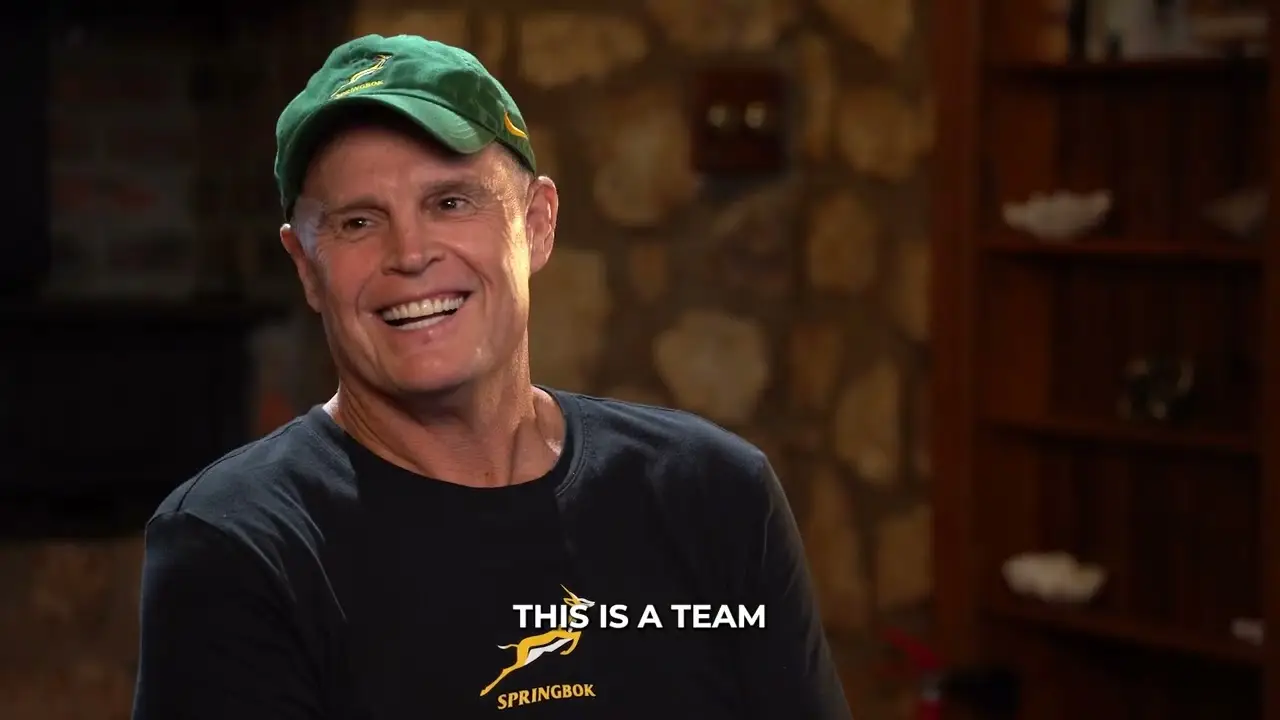
The mastermind of the Springboks, Rassie Erasmus is considered by those across the land of green and gold as the greatest head coach within the game today.
Love the Springboks? Follow RUCK's new dedicated South African rugby Instagram page @RUCKBoks today!
The 53-year-old has enjoyed remarkable success at the helm of the Springboks, having overseen South Africa's back-to-back Rugby World Cups triumphs in 2019 and 2023.
He is one of the most recognisable figures in world rugby, and a unique character who is always looking for new ways to re-invent his tactical approach and keep the edge over his opponents.
The originator of the 7-1 bench split and the father of the 'bomb squad', Rassie has defined an era of green and gold success. He's now eyeing up an unprecedented third Rugby World Cup title in a row.
But away from the trophies and tactical headlines, Erasmus has faced some significant challenges in his life. From a serious battle with a rare autoimmune disease and the breakdown of his marriage, in this article we take a closer look at the man behind the Boks.
Rassie Erasmus' playing career
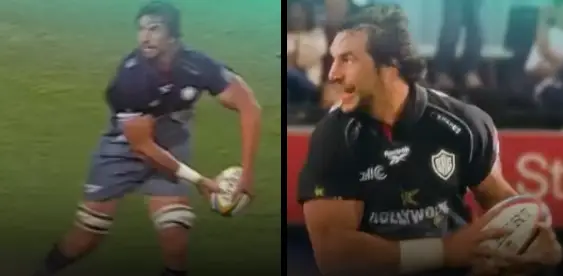
Long before he became the brains behind the Springboks, Erasmus was a hard-hitting and intelligent back-row forward.
Born in Despatch in the Eastern Cape, he spent his entire club career in South Africa across stints with Free State [now the Cheetahs], the Lions and the Stormers.
Erasmus made his Springbok debut in 1997 and went on to win 36 Test caps in the famous green and gold between 1997 and 2001.
A versatile asset across the back row, Erasmus could play at flanker or number eight and quickly developed a reputation as a clever player who understood the game exceptionally well.
He captained South Africa upon a single test match - against Australia in the 1999 Tri Nations - and was part of the Springbok squad that finished third at that same year's Rugby World Cup.
Rassie's playing career was eventually cut short by injuries, but it was already clear that Erasmus had the sort of rugby brain that could take him far beyond his playing days.
How Rassie became a coaching giant
Erasmus' transition into coaching began with the Free State Cheetahs, where he helped guide the province to Currie Cup success in 2005 and 2006.
His first role with the Springboks followed in 2007, as he was brought on as a Technical Advisor for Rugby World Cup winning head coach Jake White.
Erasmus subsequently moved out to Western Province and joined up with the Stormers, and stayed within the Springboks ranks.
He was re-appointed as Technical Specialist for the 2011 Rugby World Cup, but Rassie would soon take his career on a rather unexpected course.
In what's considered arguably the biggest gamble of his coaching career, in 2016, Erasmus moved to Ireland to take charge of Munster. It was his time in Limerick that helped establish his reputation outside South Africa.
He was named Pro12 Coach of the Year after guiding Munster to the semi-finals in the 2016/17 season, and he returned to South Africa with boundless momentum.
Erasmus returned as the Springboks' director of rugby and worked closely with head coach Allister Coetzee, before ultimately taking charge himself ahead of the 2019 Rugby World Cup.
What followed changed the course of South African rugby. The Springboks won the 2019 RWC in Japan, beating England in the final. Rassie remained a central figure behind the scenes and was instrumental in South Africa's second successive World Cup triumph in 2023.
His battle with a serious illness
One of the most difficult periods of Erasmus' life came in 2019, when he was diagnosed with microscopic polyangiitis, or MPA.
The condition is a rare autoimmune disease which causes inflammation of the body's blood vessels.
In Erasmus' case, it affected his windpipe, lungs and kidneys and became a potentially life-threatening illness. Remarkably, he continued working with the Springboks as they prepared for the 2019 World Cup in Japan.
Erasmus even underwent chemotherapy as part of his treatment, including during the World Cup itself.
His treatment had to be carefully managed during the tournament, with doses adjusted so that he could cope with the demands of leading the team.
His initial intensive treatment was completed in March 2020, and he was able to return to his demanding role with South African rugby.
Importantly, MPA is not considered something that can simply be "cured". Erasmus' condition has gone into remission, but the disease can relapse and requires ongoing medical monitoring and treatment.
His experience appears to have changed his outlook on life.
Erasmus has previously expressed about how enduring such a serious illness left him with a different perspective on life and where the game of rugby falls into it and it's ongoing challenges.
Rassie Erasmus' marriage and family life
Further away from rugby, Erasmus has always been fiercely protective of his family.
He was married to Nicolene for over 20 years before the couple separated in 2024.
The pair have three daughters together, yet the family are no longer whole.
Despite their separation, the family has remained close and continues to support one another.
Erasmus has [rather rightfully] generally avoided putting his private life in the spotlight, particularly when it comes to his children.
That is unsurprising given the intense scrutiny that comes with being in charge of the Springboks.
A difficult childhood
Erasmus' upbringing also helps explain some of the personality that has made him such a fascinating figure in rugby.
He grew up in Despatch in the Eastern Cape and was raised by a supportive mother who encouraged his sporting ambitions. However, it has been previously reported how his father struggled with alcoholism.
The experience had a profound effect on him and helped shape his attitude towards family and life.
Erasmus has never been particularly interested in presenting himself as a polished public figure. His personality can be blunt, unconventional and at times provocative.
But beneath that is a coach who places enormous importance on his players and the people around him. Everyone has their story and has experienced hardships in life, so it's important that rugby fans see the person behind the head coach role.
5 FAMOUS RASSIE ERASMUS STORIES
1. The traffic lights
One of Erasmus' more unusual coaching innovations came during the Springboks' preparations for the 2019 World Cup.
With communication between coaches and players subject to World Rugby restrictions, Erasmus used a surprisingly simple solution.
He sat in the coaching box with physical red, amber and green traffic lights, using them as signals for the players on the pitch.
It was another example of Erasmus' willingness to think outside the box - whilst being quite literally stuck inside a technical box.
2. The infamous water-boy role
Erasmus took that approach even further during the 2021 British & Irish Lions tour.
He famously wore a bib and operated as a member of the South African water-carrier team, allowing him to communicate directly with players and provide his insight during matches.
World Rugby subsequently tightened the regulations around the role, effectively putting an end to coaches using water-carrier positions to communicate tactical instructions.
It became one of the more memorable examples of Erasmus pushing the boundaries, as the Springboks went on to win the Test series 2-1.
3. A bizarre accident sends Rassie to A&E
Erasmus has also had his fair share of bad luck away from the rugby pitch.
In 2024, he was hospitalised after suffering serious chemical burns in a freak household accident involving a powerful cleaning detergent.
He later returned to work, but the incident provided another reminder of just how eventful the South African coach's life has been away from the rugby field.
4. Late changes to the play-book
If there is one thing Rassie Erasmus does particularly well, it is keeping the opposition guessing.
Ahead of the second Test against the All Blacks in Cape Town during Rugby's Greatest Rivalry Series, Erasmus took that to another level.
He made three changes to his starting XV less than an hour before kick-off – including swapping his entire front row.
Gerhard Steenekamp, Deon Fourie and Thomas du Toit were promoted from the bench to start, with Malcolm Marx, Ox Nche and Wilco Louw moving in the opposite direction.
The changes came after Handre Pollard had already withdrawn with a calf injury earlier in the week, while Cheslin Kolbe was also brought into the starting side after recovering quicker than expected.
Erasmus defended the dramatic front-row reshuffle as a tactical decision based on forecasts of wet weather in Cape Town.
The rain ultimately failed to arrive in the way expected, but the move perfectly summed up the Springbok coach's willingness to make unconventional calls – and keep the opposition guessing right up until kick-off.
5. SOCIAL MEDIA CONTROVERSY
Erasmus' relationship with social media has provided plenty of headlines over the years.
He became increasingly outspoken about refereeing decisions after creating his Twitter account following the Springboks' 2019 World Cup triumph.
He would often use sarcasm and carefully worded posts to make his feelings known. That approach eventually landed him in serious trouble.
In 2022, Erasmus posted a series of videos criticising refereeing decisions following South Africa's defeats by Ireland and France.
The posts attracted widespread criticism, with legendary referee Nigel Owens among those to condemn his behaviour.
World Rugby subsequently suspended Erasmus for two matches over the social media controversy.
But even after the punishment, his habit of questioning decisions and online commenting has remained one of the more distinctive – and controversial – parts of the Rassie Erasmus story.