
For most referees, consistency is everything. Learn the
laws, apply them, and make sure 30 players operate within the same framework
for 80 minutes. The 745 Game asks them to do something entirely different.
In association with our partners at ACME Whistles, we caught up with two
giants of refereeing from both the RFL (League) Ben Thaler; and RFU (Union)
Luke Pearce who have been tasked with overseeing the game this weekend that
combines elements of both sports.
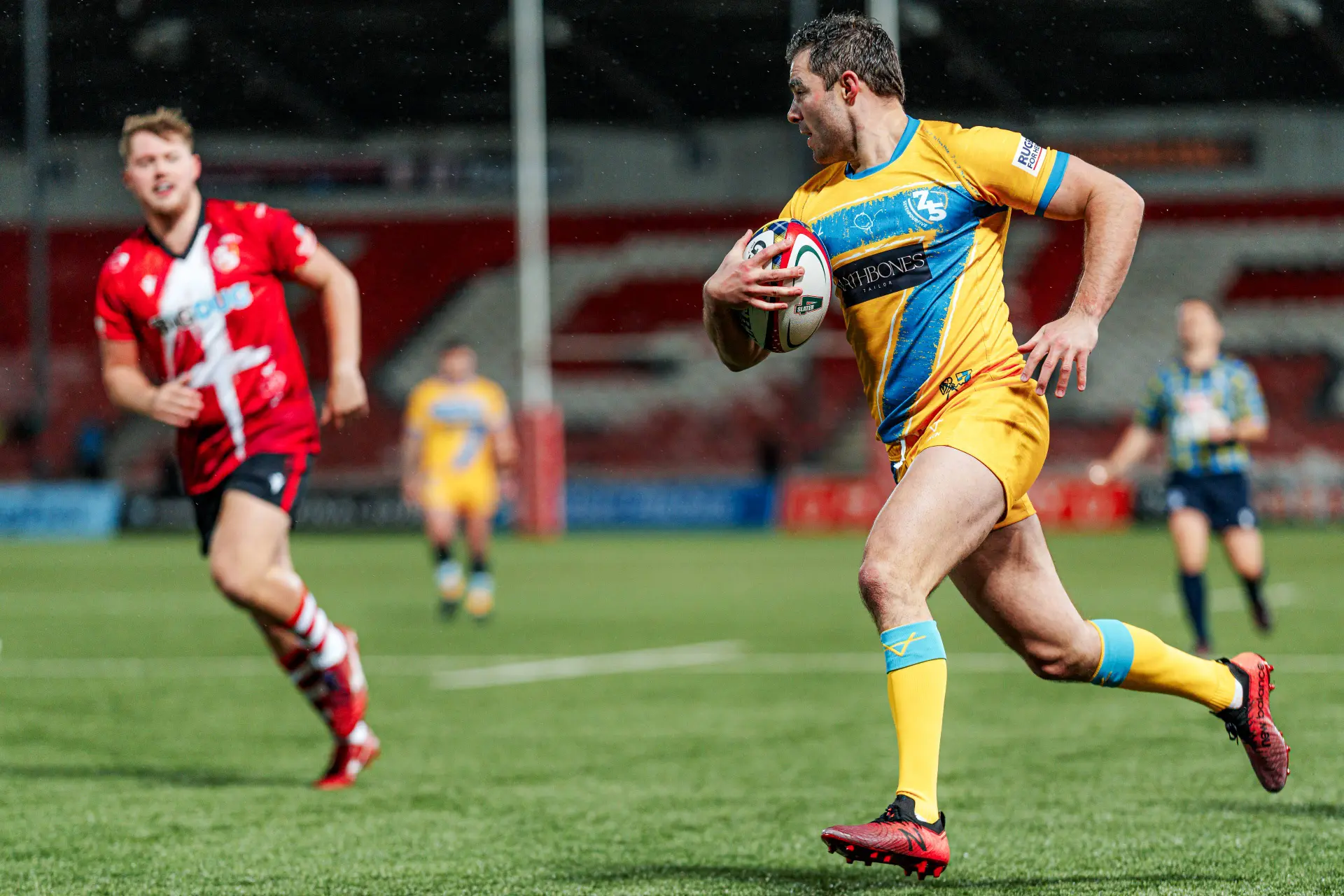
Created to unite the worlds of Rugby Union and Rugby League
in support of the fight against Motor Neurone Disease (MND), the annual fixture
blends elements of both codes into one hybrid spectacle.
Think of it as rugby union and rugby league meeting halfway.
But while fans may be intrigued by what happens when league
players line up alongside union stars, spare a thought for the men holding the
whistles.
"It's a mixture of both codes," explained Ben
Thaler. "The idea that Ed and Rob had originally with Doddie was to mix
the rules of rugby union and rugby league together. It’s fast paced where the
ball was in play a lot more making it a great game for the spectators as well."
The hybrid laws are unlike anything seen elsewhere in rugby.
The game is played 13-a-side, with six forwards and seven backs. Teams receive
six tackles before a turnover, just like rugby league, but also retain
uncontested five-man lineouts and uncontested scrums. Players can steal the
ball one-on-one before the tackle is completed, while the tackled player must
still present the ball and an attacking player must step over it before play
continues. Two referees officiate every game, one focusing on the tackle area
and the other policing offside lines.
For Pearce, however, the finer details of the law book are
almost secondary.
"The rules are there to give the game structure,"
he said. "But our job is to create an experience where everyone is safe but
that's still going to be entertaining."
If that sounds relaxed, it is by design.
Unlike elite professional rugby, where every penalty is
scrutinised and every decision analysed from multiple angles, 745 is intended
to be a celebration of rugby and a fundraising vehicle first and foremost.
However, that doesn't mean that there is a lack of
intensity. "This is the third year of the event, so we have some
experience now as to what it’ll be like, and I've noticed that the physicality
is still 100% there," said Pearce. "The lads are turning up to raise
money for charity, no doubt about it. But they are also there to represent
their codes and put in the big hits as well. Most of these players are probably
35-plus and have had hell of a career, but they're still not shy of standing
their ground."
One of the most distinctive features of the game is the
presence of two referees. While it sounds unusual to union supporters, the
approach has clear practical benefits when dealing with a format that fuses two
codes.
"We copy the model the NRL used to have,"
explained Thaler. "One's around the ruck, and one's keeping them back five
metres. We want them to play. You could stand there and penalise everything and
blow scrums every two minutes, but the aim is to keep it flowing and the ball
in play because that's what people come to see."
Pearce added; "It sounds daft, but over the last two
years it’s a game that’s been played with common sense," he said. "No
one's out to hurt each other. They'll put the odd shot on because they quite
enjoy that, but everyone knows where the line is."
Beyond the novelty of the laws, both men believe the game's
greatest achievement is the way it brings together two codes that historically
spent much of their existence apart.
"The one thing that you see the similarity of, and it's
not really to do with the rugby, is the camaraderie off the field," said
Pearce. "Everyone's there for one reason – to support the charity. You're
just trying to make the best it can be."
Thaler agrees; "It really shows that both sports can
come together," he said. "It’s about humanity. About people, and
decency, and illness, and trying to raise awareness. I just think it's
something really special."
That sense of perspective runs through every conversation
about 745.
While the hybrid laws generate headlines and the unusual
sight of union legends tackling league greats draws crowds, both officials are
clear about the real reason the game exists.
"I think it's more grounding than anything else,"
said Pearce. "We sometimes treat sport as the be-all and end-all. There
are bigger things in life than when you blow your whistle and you're right or
wrong. At this game, every single person is trying to raise some cash for the
people who are suffering terribly with this disease."
For Thaler, whose own family has experienced a devastating
neurological condition, the connection is deeply personal.
"If it's the only thing that I referee every year, I'd
be more than happy," he said. "The camaraderie, the fun, the respect
people have for each other is brilliant."
Ultimately, that's what makes 745 different. Yes, it's a
hybrid rugby match. Yes, it's an experiment that blends two sets of laws and
requires two referees to keep everything moving. But through the eyes of the
officials charged with making it work; the laws are almost the least important
part.
The whistle may start the game, but it's friendship, unity
and a shared determination to fight MND that truly keeps 745 moving forward.
Box out…
The basics
- 13 players per team (six forwards, seven backs)
- Unlimited substitutions
- Each team gets six tackles before possession changes hands
- Two referees officiate the game, one from rugby union and one from rugby league
What happens at the tackle?
This is where the game most
resembles rugby league.
- Once a player is tackled and gets a knee on the ground, the tackle is complete
- The player must place the ball on the floor
- At least one attacking player must step over the ball
- Play then restarts from the tackle area
- Defenders must retreat five metres
- Two markers are allowed at the tackle area
Can you steal the ball?
Yes, but only before the tackle is
completed.
- One-on-one ball steals are allowed
- Once the ball carrier has a knee on the ground, the chance to steal has gone
What about scrums?
The game keeps scrums from rugby union
but removes the contest.
- Knock-ons and forward passes result in uncontested scrums
- Scrums feature proper rugby union formations
- The attacking team chooses which side of the field the scrum is set on
- Scrums are formed 20 metres in from touch
And lineouts?
Yes, they're in too.
- Ball into touch results in a five-man uncontested lineout
- Teams can still use lifting and lineout moves
- It provides one of the most recognisable rugby union elements of the game
How do teams score?
- Try = 5 points
- Conversion = 2 points
- Penalty goal = 2 points
- Drop goal = 2 points
Teams can also bring on a
specialist goal kicker solely for kicks at goal.
What happens from penalties?
This is a clever blend of both
codes.
- Teams can kick for touch and restart with a lineout
- Or they can take a quick tap and attack immediately
- Union gets the tactical option of territory
- League gets the chance to keep the game moving
The format in one sentence
Imagine rugby league's speed and
tackle count mixed with rugby union's scrums, lineouts and tactical kicking,
all played by legends from both codes to raise money for the fight against MND.