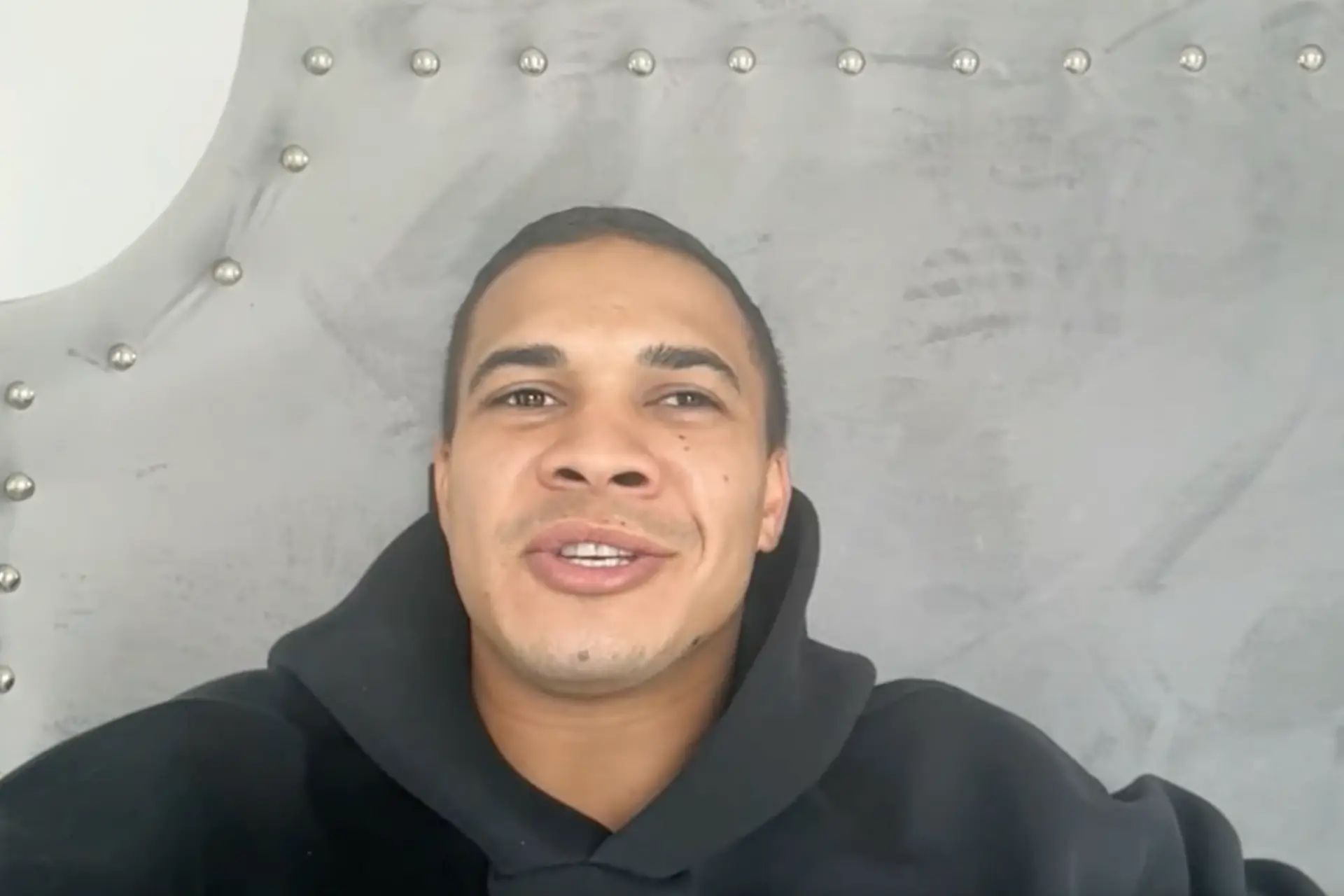
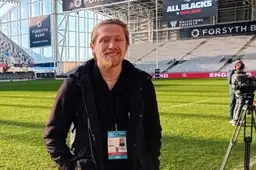
Tristan Leyds admits Albion Athletic had some hard conversations after their disappointing opening weekend in Cardiff.
But those conversations proved decisive.
Don't miss out. Pick up your tickets for the next Ultimate Sevens event now!
After being knocked out at the first hurdle in Cardiff, Albion returned to Biarritz a week later and produced a stunning response, beating Sol Feroz 20-12, Clan Taran 21-5 and Pacific Current 13-0 to claim the club's first Ultimate Sevens title.
For Leyds, the transformation started in the meeting room.
“I think we weren't happy with the standard we set, or the standard we played at in Cardiff,” Leyds said.
“And instead of trying to fix it on the field, we kind of came together in meetings and reviewed our game, started reviewing our training sessions, which is what you'll usually do back home, but now sitting with boys from different countries, trying to get everyone aligned.”
That process of getting a collection of international players to operate as one team proved crucial. Leyds believes the moment Albion truly clicked came during their opening match in Biarritz.
“I think the first game in Biarritz, when we had the little scuffle at the end, it's kind of where I saw all the boys are locked in and playing for each other,” he said.
“That moment where we had the scuffle, everyone jumping in, protecting your teammate. I think that's where we kind of locked in and knew that we're now playing as a team, playing now for Albion.”
It was a remarkable turnaround for a side eliminated in its opening game in Cardiff, but it also demonstrated one of the unique challenges of Ultimate Sevens.
The six franchises are filled with players who would normally be international rivals, often speaking different languages and accustomed to completely different systems.
‘We got everyone aligned’
“It was difficult trying to communicate as to what each player wants,” Leyds admitted.
One of the French players in the Albion squad has limited English, but Leyds says his willingness to ask questions has helped the group overcome the language barrier.
“If we get a message across and he doesn't understand it, he's happy to put up his hand to say he doesn't understand, and we'll quickly ask [Stephen] Parez to just explain it to him in French.”
And then there is Fiji star Vuiviwa Naduvalo.
“Naduvalo doesn't say much. If you ask him something or tell him something, he'll just give you a thumbs up and execute it.”
For Leyds, communication has been central to turning a collection of individuals into a team.
“I think us being open to talking to each other and kind of knowing what the other guy wants on the field, we addressed that in meetings, so that's how we got everyone aligned for Biarritz.”
The reward was an Albion side that grew stronger throughout the weekend.
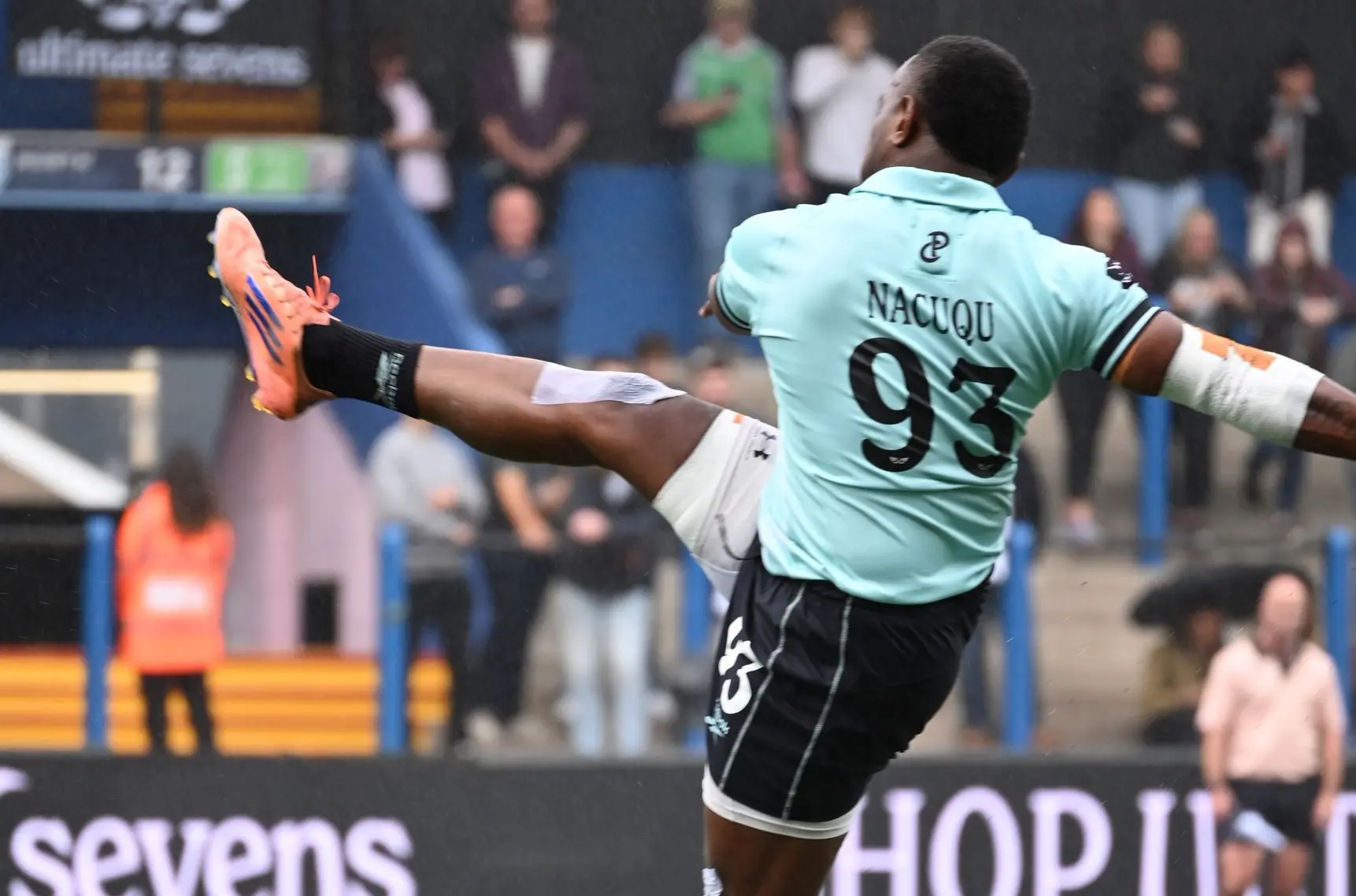
Naduvalo scored twice in the opening victory over Sol Feroz, before Albion powered past Cardiff champions Clan Taran 21-5 in the semi-final.
They then produced their strongest defensive performance of the tournament to shut out Pacific Current 13-0 in the final.
‘Forget about Biarritz’
Despite lifting the Biarritz trophy, Leyds and his teammates have had little time to celebrate.
The Grand Final in London comes just days after their success in France, and Albion's coaching staff have already told the players to forget what happened last weekend.
“Just before the flight, [Shannon] Fraser, our coach, kind of just said, let's forget about Biarritz,” Leyds said.
“We were on top, so kind of trying to get ourselves grounded again, knowing how to get back to zero and prepare for the next tournament.”
That message is particularly important in a competition where the margin for error is tiny.
“Sometimes after victory you can feel like you're on the moon, and then with this game so quick you get humbled really quickly.”
Albion have earned a top-three seeding after their performances across the opening events, meaning they will go straight into the semi-finals in London.
Leyds sees that as both a reward and a potential disadvantage.
“We're lucky to have qualified in top three seeds. So we got one of the semi-final spots,” he said.
“I guess that's also the downfall to that, we don't have the first game, you know, to get that blowout.
“So us, the semi-final being our first game, and teams already... when it's in the bag, it's going to be a bit difficult because we need to match their energy.”
‘There’s no time to switch off’
One of the biggest adjustments for the world's leading sevens players has been the radically shortened format.
Ultimate Sevens matches last just 10 minutes, with no half-time and very little opportunity to recover during the game.
“That two-minute break in between at half-time is really something I'll never take for granted anymore,” Leyds said.
“You've just got to stay locked in from the minute go. You can't even switch off after a try.”
The rapid turnaround between matches has also been a major adjustment.
“The gaps between games are way shorter than the World Series,” Leyds said.
“The first week, it was something to get used to, but once you stay locked in and time kind of moves really quickly, you kind of get used to it.
“You know you can't. There's no time to switch off.”
‘Way harder to prepare’
The unusual format also makes preparing for opponents considerably more difficult.
On the World Series, teams know what they are likely to face. Players have studied opponents repeatedly throughout the season, while national sides have clearly defined playing systems.
Ultimate Sevens throws all of that out of the window.
“With Ultimate Sevens, it's really difficult to prepare for the next team because you're not playing a Fiji that's throwing the ball around, or a South Africa that's playing attractive rugby, or the Frenchies that's playing hard rugby.
“You're kind of playing a mix.”
Instead, players share knowledge about their new teammates' habits.
“You kind of look at the individuals in the team, and amongst ourselves, we kind of chat.
‘Okay, this is how they like to play. These two like coming hard. This is what the Fijians are going to bring,’ and things like that.”
For Leyds, that uncertainty is part of the appeal.
“It’s way harder to prepare, but yeah, it's exciting because anything can happen in the game.”
‘This is the big one’
Now Albion head to London's Gtech Community Stadium for the Grand Final, with the inaugural Ultimate Sevens championship reaching its conclusion.
For Leyds, there is an added incentive after two tournaments played on synthetic surfaces.
“The bodies are more excited to play on grass,” he said. “I've been taking a lot of bumps and bruises, so the guys will be happy to get some grass under their feet.”
But the surface will be secondary to the pressure of the occasion.
“Credit to the coaching staff, they really said we must just forget about the win in Biarritz. We were on top.
“Anything can happen in this London tournament. This is the big one when it takes all.
“So I think the eagerness and motivation for every team is going to be much, much bigger.”
Albion have already shown that they can respond to adversity.
They arrived in Biarritz after a first-round exit in Cardiff and left with the men's trophy.
Now, with the championship on the line in London, Leyds knows they will have to do it all over again.
“Hopefully, whatever team comes our way, we'll assess who they have, what individuals they have and who kind of the game revolves around.
“Assess that early enough before we go into the game, and then hopefully we get the W and take it into the final.”