England captain Jamie George has had his say, regarding the controversial comments made by his teammate Joe Marler about the All Blacks’ Haka. Marler posted on social media platform X; “the Haka is ridiculous, it needs binning”.
“It’s only any good when teams actually front it with some sort of reply. Like the [rugby] league boys did last week.” The Harlequin added.
After deleting his X account for a short while, the loose-head returned to the social sphere and added; “Context is everything. Just having a bit of fun trying to spark interest in a mega rugby fixture. Some wild responses. Big Love x.” He then went on to say: “Also needed to satisfy my narcissism.”
Jamie George was scheduled to speak with the reporting media this afternoon, and after walking in to the room full of reporters the Saracen quipped about his incoming questioning; “Let me guess… Thank you Joe Marler! Come on then, let’s have it.”
What followed was an intriguing discussion about the ceremonial Maori war dance, and George’s thoughts on the Haka as a spectacle within Test match rugby. However, before he addressed his own thoughts on facing the Haka he expressed how he should have expected the charismatic Marler to make add fuel to this Saturday’s fire.

“To be honest with you, it’s classic Joe if I’m honest. He’s always been a little bit close to the line, hasn’t he, I suppose, with certain social media posts. So nothing comes as a surprise with Joe. No, it’s not unhelpful.
“It’s a conversation that Joe and I actually had had the week before; thoughts on it, what can we do back to it, all that kind of thing. I guess he’s sort of prodded the bear a little bit.”

“We’ve (George and Marler) chatted a little bit this week and I just said, ‘cheers mate, thanks very much.'”
The Saracen is certainly a fan of the Haka, and expressed how he treasures his early rugby memories of watching the All Blacks ahead of a match. As George has progressed through his career he has been educated about the Haka by Pacific Island teammates and opponents, and the hooker has a great deal of respect for the Maori culture.
“I really enjoy it. Growing up as a big rugby fan it was always something I enjoyed watching, and I’ve been lucky enough to face it a few times. I love the history of it. Joe and I, we don’t always agree on everything, so we disagree on this certain topic.
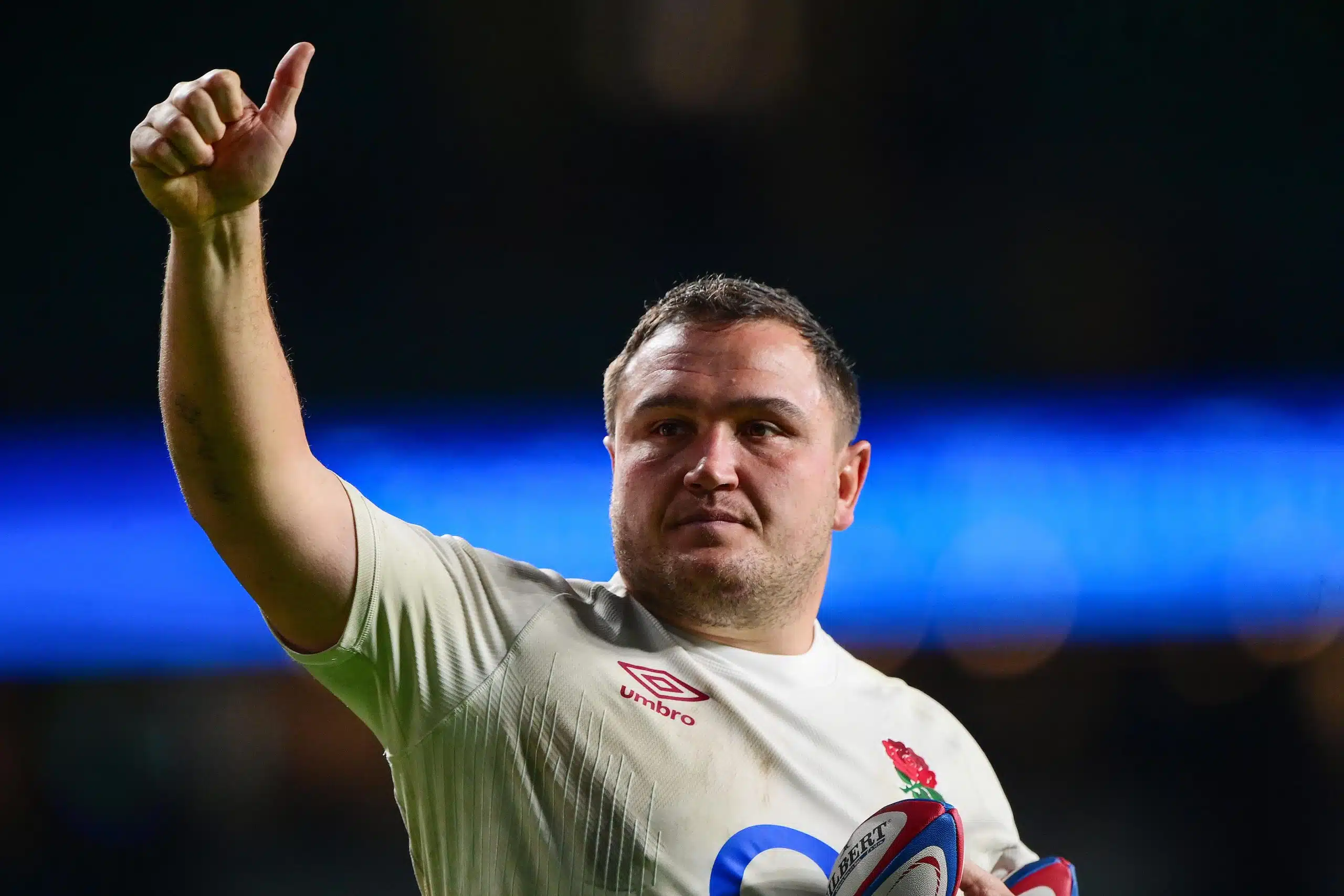
“I love it (the Haka), I’ve got a pretty good understanding of it having travelled New Zealand, of what New Zealand and Maori culture is. I have friends from the Pacific Islands that have explained to me pretty well what it’s all about, that’s it’s a challenge that you lay done. It’s a brilliant part of the game and a great spectacle.”
Two England players that have lived experience of New Zealand culture are Chandler Cunningham-South and Ethan Roots. Cunningham-South has been named to start on the blindside flank this Saturday, against the nation of which he spent the majority of his childhood growing up in.
Whilst there has not been space for Ethan Roots in this weekend’s England squad, the Exeter Chiefs man has also previously shared his New Zealand heritage with George, with the England skipper pulling on the teachings of his teammates to heighten his appreciation of the Haka.
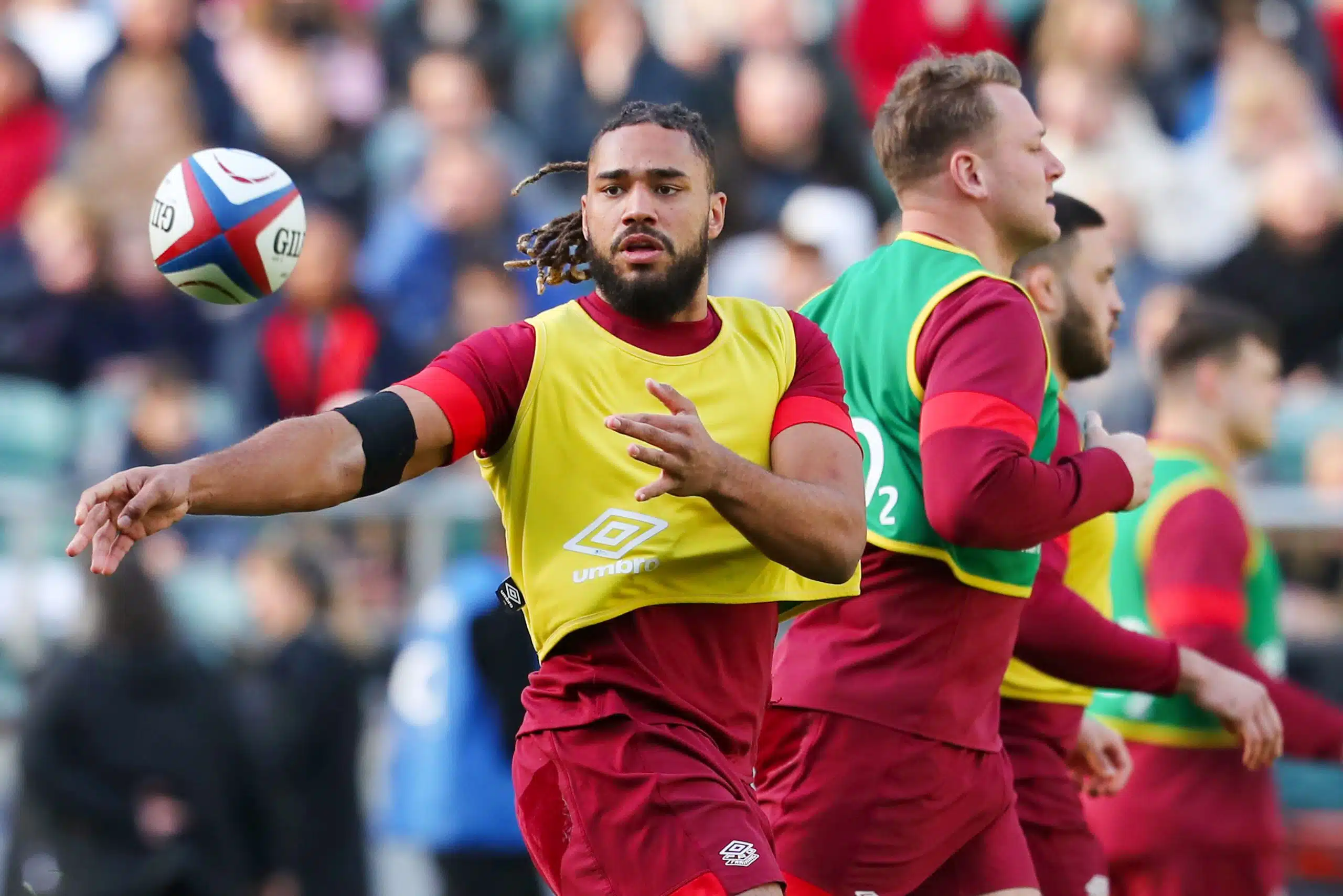
“I think what we did well in the Summer was we obviously had a bit of inside scoop with Ethan Roots and Chandler Cunningham-South, having grown up in New Zealand themselves. So, we sort of dug into it a little bit there and asked their opinion.”
England’s latest Test match was against the All Blacks, as Steve Borthwick’s side wrapped up their Summer tour of Japan and New Zealand in the formidable Eden Park fortress. England decided to take a step forward in response to the Haka in Auckland, which symbolised England’s intent to not take a step backwards to their opponents.
George was also apart of the 2019 Rugby World Cup semi-final, which saw the England players form a ‘V’ in response to the All Blacks Haka. Coincidentally, Marler was again at the forefront of the response, as he stepped over the half-way line and was subsequently fined for his efforts.
“The V shape was interesting. Obviously, Eddie (Jones) was a coach at the time who had faced the All Blacks a lot more than any of us. And I think it was him that came up with the idea. It was pitched to us the night before the game.

“It’s not a big talking point other than when Joe tweets about it. It’s not a huge talking point because we’re playing against the All Blacks. It’s a huge game for us. When you play against the All Blacks, you’ll remember every game you play against the All Blacks, whether it’s at home, whether it’s away, whether it’s at a World Cup or not.”
“We would just speak about it in the captain’s meeting the night before the game. You sometimes have to cover off logistical stuff. There might be something going on in the warm-up and someone performing or whatever it might be. Those are the little things that as a captain you need to make the team aware of.
“Taking a step forward for us symbolised that we weren’t going to take a step back, and we welcomed the challenge. So, that’s what it meant to us at the time.”
George was asked about whether England have anything up their sleeves for Saturday’s face-off against the Haka, then the All Blacks lay down the challenge for the first time at the re-christened Allianz Stadium. Whilst George did not give anything away in terms of immediate plans, the hooker did express how a response is appropriate if done with respect, with the decision to be discussed ahead of the match.

“We’ll have a little chat about it, myself and some of the senior players. But, yeah, there might be something.”
“What I love about the Haka at Twickenham is you hear the noise, you hear the theatre that comes with the haka. That’s part of what I love about it. It’s not just our reaction. It’s the fans’ reaction.
“It’s the cheering, all the chanting that goes on with it. That’s the stuff that makes rugby special. That’s why I’ve always been a huge fan of it.”
“I think as long as it (a response) is respectable, then yes. If it comes from the right place, yes. I think there is certainly a limit to it. But, again, that’s my understanding from speaking to friends of mine who have performed the Haka and have a good understanding of it. So, yeah, I think that you should be entitled to that.”
Foreign-born players in the 2024 Autumn Nations Series breakdown by country
Here’s a look at the foreign-born players representing the home nations – England, Scotland, Wales, and Ireland – and the unique backgrounds they bring to their squads.
Scotland – 17 players
Scotland’s foreign-born players come from a mix of rugby powerhouse nations, adding depth and versatility:
Ewan Ashman (Canada) – This hooker was born in Canada but moved to Scotland at an early age. Known for his dynamic carries, Ashman brings a Canadian spark to the Scottish front row.
Dylan Richardson (South Africa) – The South African-born Richardson is a hard-hitting back-rower who qualified for Scotland through his mother. He’s known for his physical presence and adaptability on the field.
Will Hurd (England) – Although born in England, Hurd made his mark in Scotland’s rugby system and earned his cap for the Scottish team.
Nathan McBeth (South Africa) – Originally from South Africa, McBeth brings strong scrummaging skills and qualified to represent Scotland, further strengthening their pack.
Elliot Millar-Mills (England) – Born in England but committed to Scottish rugby, Millar-Mills is another versatile prop adding depth to the front row.
Pierre Schoeman (South Africa) – Schoeman’s powerful scrummaging and dynamic open play have quickly made him a fan favourite. The South African-born prop has fully embraced his Scottish allegiance.
Ewan Johnson (England) – A dependable lock, Johnson’s English roots have helped balance out the squad with a variety of playing experiences.
Josh Bayliss (England) – A back-rower who qualifies through his Scottish heritage, Bayliss adds further English flair to the Scotland back row.
Jack Dempsey (Australia) – Formerly capped for Australia, Dempsey now dons Scottish colours, bringing experience and physicality to the Scottish pack.
Ali Price (England) – The scrum-half was born in England but developed his career in Scotland, becoming a critical component of their attacking play.
Ben White (England) – Born in England, White offers a fresh scrum-half option, helping Scotland maintain momentum in open play.
Tom Jordan (New Zealand) – A New Zealand-born fly-half, Jordan represents Scotland, bringing tactical insight and calm playmaking to the squad.
Rory Hutchinson (England) – Known for his speed and footwork, Hutchinson brings a dynamic English background to the Scottish backline.
Sione Tuipulotu (Australia) – Born in Australia with Tongan heritage, Tuipulotu brings strength and flair to Scotland’s midfield options.
Arron Reed (England) – Reed’s English roots add depth to Scotland’s wing options, known for his acceleration and finishing abilities.
Kyle Rowe (England) – Another English-born wing, Rowe’s explosive pace is a significant asset for Scotland in attack.
Duhan van der Merwe (South Africa) – A South African powerhouse wing, van der Merwe is known for his destructive running and finishing prowess, making him a standout in the Scottish squad.