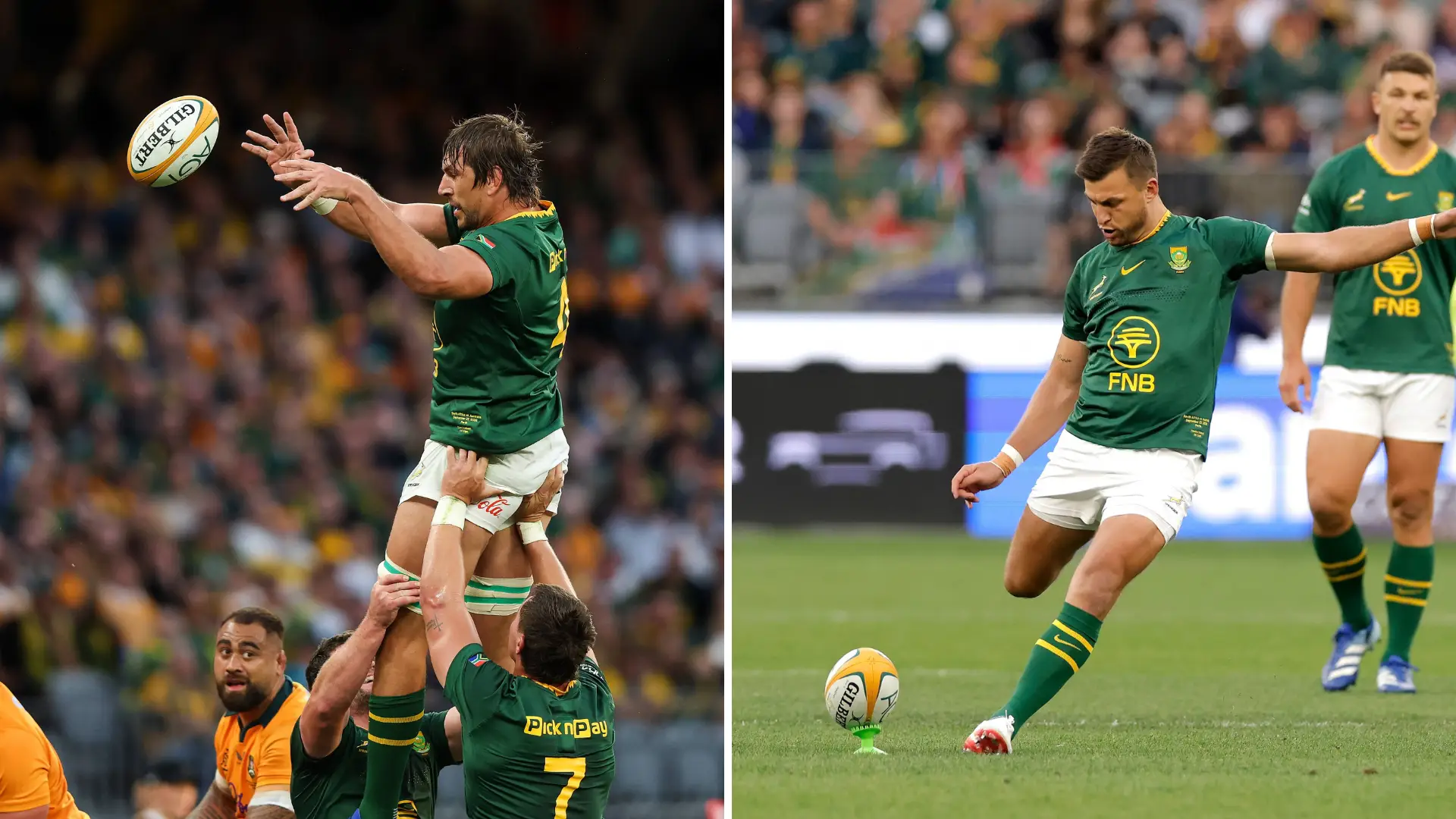

South Africa’s shock 42-38 defeat against Australia could have major consequences for a handful of Springboks fighting to remain in Rassie Erasmus’ plans.
Erasmus made 13 changes to his starting XV for the one-off Test in Perth, giving several players a rare opportunity to push their case as the build-up to the 2027 Rugby World Cup continues.
Instead, the Wallabies raced into a 42-17 lead before a remarkable late Springbok fightback against an Australia side reduced to 11 men made the final score much closer.
You can see exactly how every player performed in our Springboks player ratings.
With competition for places only getting stronger, some established names could now find opportunities increasingly difficult to come by.
Here are four Springboks who could have played one of their final Tests in green and gold.
1. Aphelele Fassi
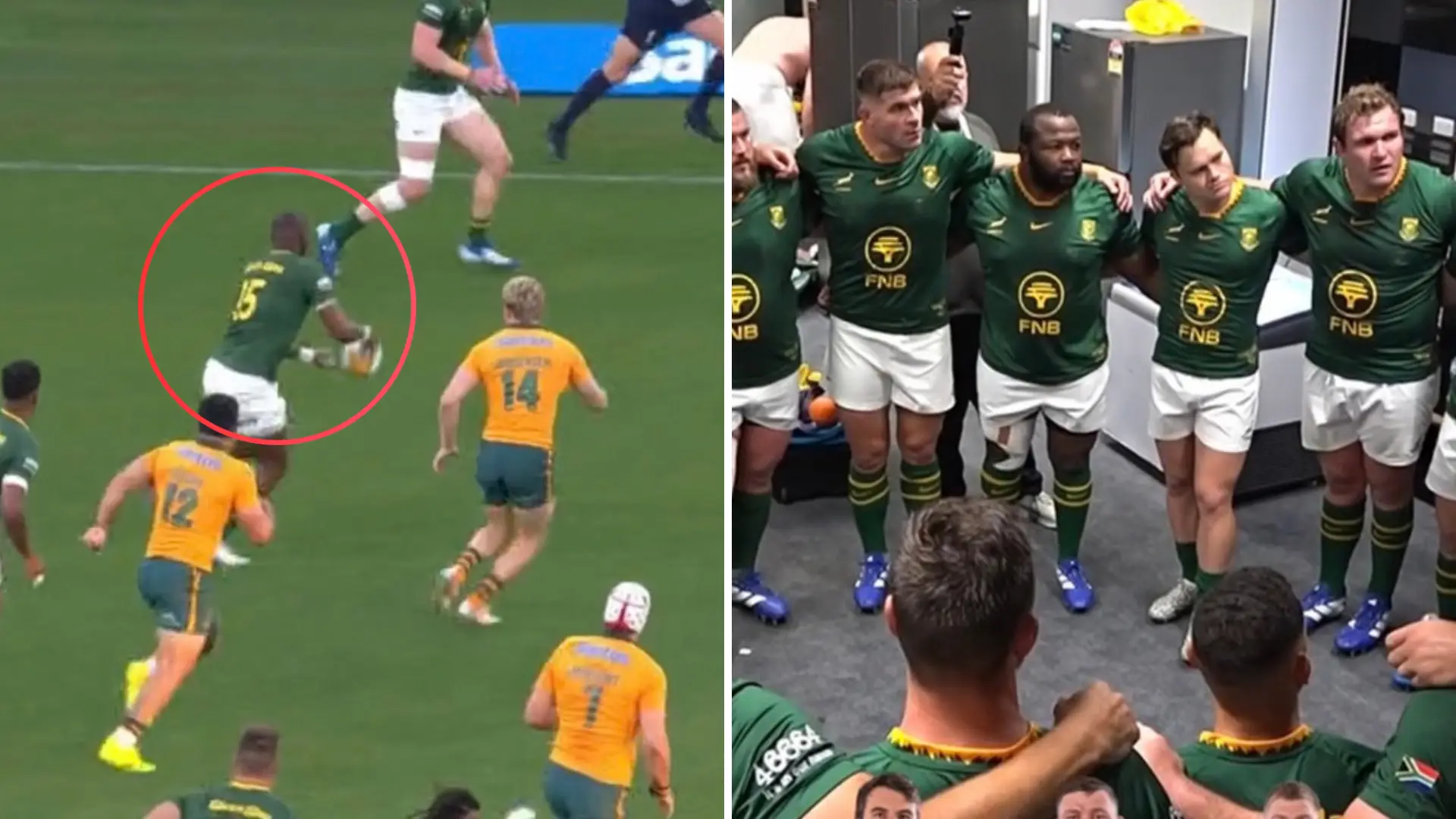
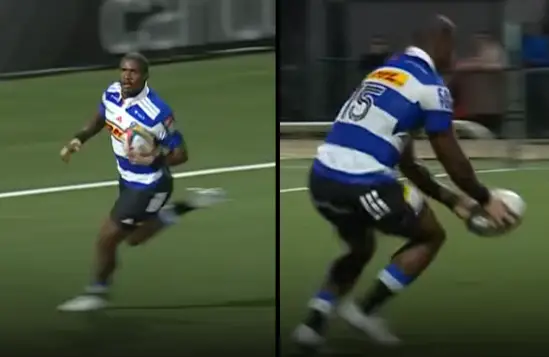
This felt like a huge opportunity for Fassi. Unfortunately, very little went his way.
The 28-year-old endured a difficult afternoon at fullback, particularly underneath the high ball. One error was punished by Len Ikitau, while there were other costly mistakes during a difficult afternoon.
Planet Rugby handed Fassi just 4/10, highlighting his problems in the aerial battle and the fact he missed both of his attempted tackles.
There were some good moments — most notably his involvement in Edwill van der Merwe’s first-half try — but the mistakes were costly.
The bigger problem for Fassi is the competition.
Damian Willemse has regularly worn the No.15 jersey in major Tests, while South Africa also have considerable depth across the back three.
Fassi entered the game with 18 caps. After what happened in Perth, he may face a serious battle to win number 19.
2. Herschel Jantjies
Jantjies’ selection raised eyebrows before a ball had even been kicked.
The 30-year-old was handed the No.9 jersey despite barely featuring for South Africa this season, effectively jumping ahead of several scrum-halves who had been more involved in Erasmus’ plans.
Springbok assistant coach Mzwandile Stick revealed before the game that Jantjies had played only around 25 minutes of Test rugby this season, but insisted his performances in training had earned him an opportunity.
That made Perth a huge audition.
Jantjies struggled to take it.
Planet Rugby handed the 2019 World Cup winner just 4/10, questioning his decision-making before he was replaced by Morne van den Berg after 48 minutes.
Van den Berg’s introduction only added to the pressure.
The 28-year-old has looked increasingly impressive when given opportunities by Erasmus and again made an impact from the bench, crossing for a try during South Africa’s late fightback.
With Grant Williams and Cobus Reinach also in the conversation, the competition at scrum-half is fierce.
Jantjies has fought his way back from the international wilderness before, but after surprisingly jumping the queue for Perth and failing to make the opportunity count, he could find himself right back down it.
3. Handre Pollard
This would comfortably be the biggest call of the lot.
Pollard remains one of the most important Springboks of the Erasmus era and played a decisive role in their back-to-back Rugby World Cup triumphs.
But South Africa are beginning to look towards a new generation.
Sacha Feinberg-Mngomezulu has increasingly looked comfortable running the Springbok attack and has put genuine pressure on Pollard’s status in the pecking order.
Pollard returned from injury to start in Perth and kicked his goals, but was unable to wrestle control back as Australia took command.
The 32-year-old has already spoken about his future, with reaching the 2027 Rugby World Cup still a major goal.
As we previously reported when Pollard discussed his retirement plans, however, even he accepts there is plenty of rugby to be played before then.
It would be a major surprise if Perth proved to be Pollard’s final appearance.
But with Feinberg-Mngomezulu emerging and Erasmus continuing to evolve his squad, his days as South Africa’s automatic first-choice 10 appear to be under serious pressure.
4. Franco Mostert
Time is the biggest factor here.
Mostert remains an incredibly dependable Springbok and worked tirelessly alongside Eben Etzebeth in Perth.
RugbyPass gave him 6/10, noting his work in defence and around the field.
He certainly wasn't among South Africa’s biggest problems.
But Mostert is now 35.
The double World Cup winner went into the Australia Test with 84 caps and will be 36 by the time the 2027 Rugby World Cup begins.
South Africa are also continuing to build depth in the second row, meaning Erasmus will eventually have to make some difficult calls over his veterans.
Mostert’s versatility, experience and extraordinary work-rate continue to make him valuable.
At this stage of his career, though, every Test could potentially be his last.
Definitely. I’d avoid having links sitting at the end of paragraphs as sources. They should feel like part of the article, with the anchor text giving the reader a reason to click.
Five quirky facts about Handre Pollard
Handre Pollard is one of the biggest names in South African rugby.
The Springboks fly-half has won two Rugby World Cups and produced some huge moments in the green and gold.
His international future has become a talking point too, with Pollard recently making his retirement intentions clear.
But there is plenty you might not know about the 32-year-old.
Here are five quirky facts about Handre Pollard.
1. Doctors once feared he could lose his arm
Pollard suffered a major health scare in 2016.
He had shoulder surgery while recovering from a knee injury. He then picked up a serious infection in hospital.
The situation became so bad that doctors raised the possibility of amputating his arm.
Pollard spent six weeks in hospital and received antibiotics for around seven hours a day.
Thankfully, the treatment worked.
Speaking about the ordeal in an interview with The Guardian, Pollard explained how the experience changed his outlook on rugby and life.
2. His wife was a champion athlete
Pollard isn't the only talented athlete in his family.
His wife, Marise, competed as an 800m runner and became a South African national champion.
The couple married in December 2017.
As detailed in Rugby World's profile of the Springbok star, Marise has also spoken about Pollard's quiet personality.
It's quite a contrast to the man trusted to call the shots in some of South Africa's biggest Tests.
3. He broke a bone during a World Cup final
Pollard scored 22 points as South Africa beat England 32-12 in the 2019 Rugby World Cup final.
What makes that even more impressive is that he was injured.
Pollard fractured his eye socket during the match.
The injury required surgery and meant he missed South Africa's World Cup trophy tour.
He also finished the tournament as its leading points scorer with 69, another detail highlighted in Rugby World's look at Pollard's career.
4. He was a world champion while still at school
Pollard was marked out as a star from a very young age.
He earned a provincial call-up at under-13 level while still at primary school.
Then came something even more remarkable.
Pollard helped South Africa win the 2012 Junior World Championship while he was still a schoolboy.
His rise continued rapidly, with World Rugby naming Pollard its Junior Player of the Year two years later.
By then, a senior Springbok career was already calling.
5. His Test debut came days after a junior World Cup
Pollard's rise from junior to senior rugby was incredibly quick.
In June 2014, he captained South Africa to the Junior World Championship final against England.
England won 21-20, with Maro Itoje captaining the opposition.
Just days later, Pollard was named to start for the senior Springboks against Scotland.
He was only 20.
As World Rugby recalled when looking back at his remarkable rise, Pollard scored 13 points as South Africa cruised to a 55-6 victory.
More than a decade later, the fly-half isn't ready to call time on his international career just yet.
Pollard has made it clear that another World Cup remains in his sights, although the growing competition at fly-half means his route to 2027 could be very different from the one he took to his first two titles.