England squad depth faces scrutiny ahead of Six Nations opener
TrendingThursday, 12 February 2026 at 11:19
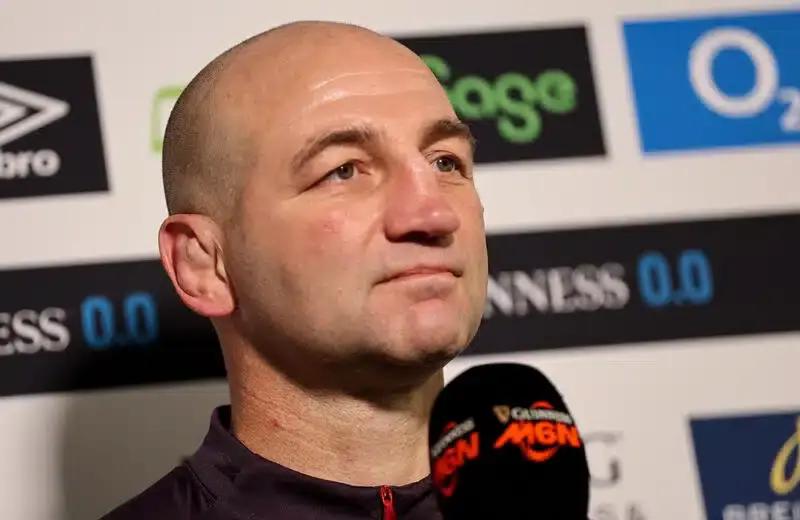

Steve Borthwick’s preparations for the 2026 Six Nations have been anything but straightforward, with a mounting injury list threatening to derail the momentum built during a stellar autumn campaign.
After a year where England re-established themselves as a genuine global force, the expectation was for a settled squad to march into the championship with continuity and confidence. Instead, the head coach found himself managing a complex logistical puzzle just days before the tournament kicked off, forcing a significant test of the squad’s depth and resilience.
For UK bettors and England fans, there was nothing to worry about as England secured a stunning 48-7 victory, more than covering the pre-match -28 handicap. Before the game, the most immediate concern for the England coaching staff lay in the front row, an area where consistency is paramount for success in the Six Nations. The confirmed absence of Will Stuart and Asher Opoku-Fordjour stripped the squad of vital tighthead options, forcing Borthwick to look further down the pecking order than he would have liked at this stage of the cycle. To compound matters, five other players—including prop Fin Baxter and flanker Ben Curry—are currently under an "injury cloud" and have travelled to the training camp primarily for rehabilitation rather than full-contact preparation. This disrupted build-up meant that training sessions often lacked the intensity and cohesion required to fine-tune set-piece drills ahead of a physical encounter with Wales.
In response to these setbacks, Borthwick had to rely on a mix of veteran experience and raw potential to plug the gaps. The recall of 33-year-old Trevor Davison highlights the need for a steady hand in the scrum, but the spotlight is arguably brighter on the uncapped talent brought into the fold. The inclusion of exciting prospects like Greg Fisilau, Vilikesa Sela, and Emmanuel Iyogun suggests that the coaching staff is willing to roll the dice on youth if forced. However, integrating three uncapped players into a high-pressure environment while simultaneously managing the rehabilitation of established stars creates a disjointed training environment that is far from ideal for a tournament opener.
Beyond the pack, the backline is facing its own identity crisis due to fitness concerns surrounding key playmakers. The absence of Ollie Lawrence and Fin Smith, both of whom are managing knocks, disrupted the midfield balance that looked so promising during the autumn victories. Lawrence, in particular, offers a direct physical threat that creates space for the outside backs, and without him, England’s attack became too lateral. Borthwick was forced to reshuffle his backline entirely, moving George Ford back into a starting role.
The statistics certainly supported a degree of optimism, regardless of who is wearing the shirts. Steve Borthwick has named his squad with the express intention of maintaining high standards, as England looks to defend an impressive 11-match winning streak that includes victories over southern hemisphere giants like New Zealand and Argentina. This run of form has instilled a winning culture within the camp that transcends individual personnel. The belief is that the system Borthwick has implemented is robust enough to function even when key components are missing, a hallmark of all great championship-winning sides.
However, the weight of expectation can be a double-edged sword. Being touted as tournament favourites adds a layer of psychological pressure that was perhaps absent during the rebuilding phase of 2024 and 2025. Fans are no longer just hoping for a competitive performance; they are demanding a title charge. The squad announcement confirmed the inclusion of fresh blood, with three uncapped players named in the 36-man group, signalling that the evolution of the team is ongoing despite the pressure to win now. Balancing the development of these younger players like Fisilau and Sela while delivering the immediate results the public expects will be Borthwick’s greatest challenge of the tournament.
The opening fixture against Wales on February 7 took on monumental significance in light of the squad’s fitness struggles, and it delivered. A convincing win instantly dispelled the injury anxieties and validated the depth of the squad, proving that the younger generation is ready to step up.
Momentum in the Six Nations is notoriously hard to arrest once it starts sliding in the wrong direction. Borthwick knows that the fixture list does not get any easier after the opening weekend, making a fast start non-negotiable. The coaching staff will be drilling the message that adversity breeds resilience, hoping to channel the disruption into a siege mentality. England navigated this injury crisis and emerged from the Wales game with a resounding victory, potentially serving as the galvanizing moment that will define their entire campaign.
TRENDING


LATEST NEWS


LATEST COMMENTS
- Jordie Barrett over Damian de Allende is far from being correct. The hype around Dupont is also overreaching, he's probably 4th in the world and has been since the 2023 WC. He also avoids certain matchups which is strange. The rest of the list is pretty good apart from minor subjective biases.JasonMarlow16-09-2026
Loading